
12 Items
Jackson Home
Content Types
 Collections - article
The American Promise: The Speech that Changed a Movement
It was March 15, 1965, when members of the Jackson Family and guests gathered in their homes to listen to President Johnson give this speech. This was also the seventh wedding anniversary for “Sully” and Richie Jean. The President began: “At times history and fate meet at a single time in a single place to shape a turning point in man's unending search for freedom. So it was at Lexington and Concord. So it was a century ago at Appomattox. So it was last week in Selma, Alabama.” Collections - article
Hosting a Movement: Hospitality in the Jackson Home
The Jackson Home was known as “The House by the Side of the Road” for the way it welcomed everyone who came by. It was this welcoming spirit that would place the home at the center of history, as the struggle for Civil Rights came to Selma in 1965. Collections - article
Draft by Draft: The Making of The House by the Side of the Road
The Jackson family’s story shines a spotlight on ordinary people playing a small role in extraordinary moments in history and reminds us of the impact we all can have as well. As Richie Jean writes, “We cannot all be a Martin Luther King Jr., but each and every one of us can make a positive difference in the lives of our families and the people we meet each day. For you see the dream is still alive.” Collections - Video
The House by the Side of the Road: The Jackson Home at Greenfield Village
In 2025, the country celebrates the 60th anniversary of the Voting Rights Act, the culmination of decades of activism by African Americans in the mid-20th century. The Henry Ford in 2023 acquired Dr. Sullivan and Mrs. Richie Jean [Sherrod] Jackson's home — a pivotal location for the Selma voting rights movement — to help preserve this unique story of family, community and justice into the future. Collections - article
More Lessons to Share: The Preservation of the Dr. Sullivan and Richie Jean Sherrod Jackson Home
The Jackson Home is pivotal as one of several key locations to the Selma Voting Rights Movement. Read more about The Henry Ford's preservation process. Collections - article
We Shall Overcome: The 60th Anniversary of the Voting Rights Act
The Civil Rights Act of 1964 was a landmark piece of legislation that forever changed the lives of many people of color in the United States and set the course for other groups to pursue their full rights as citizens. Yet, despite the successful legislation, many Black people and other people of color across the United States, particularly in the South, continued to be denied the right to vote. Collections - Set
Education and Careers of the Jackson Home
The residents of the Jackson home exemplify the transformative power of education. More than a path to professional success and stability, education was a commitment to teaching, mentoring, and inspiring others. Through their training and expertise, Dr. Sullivan and Richie Jean Jackson served their community by providing essential dental care and nurturing future generations.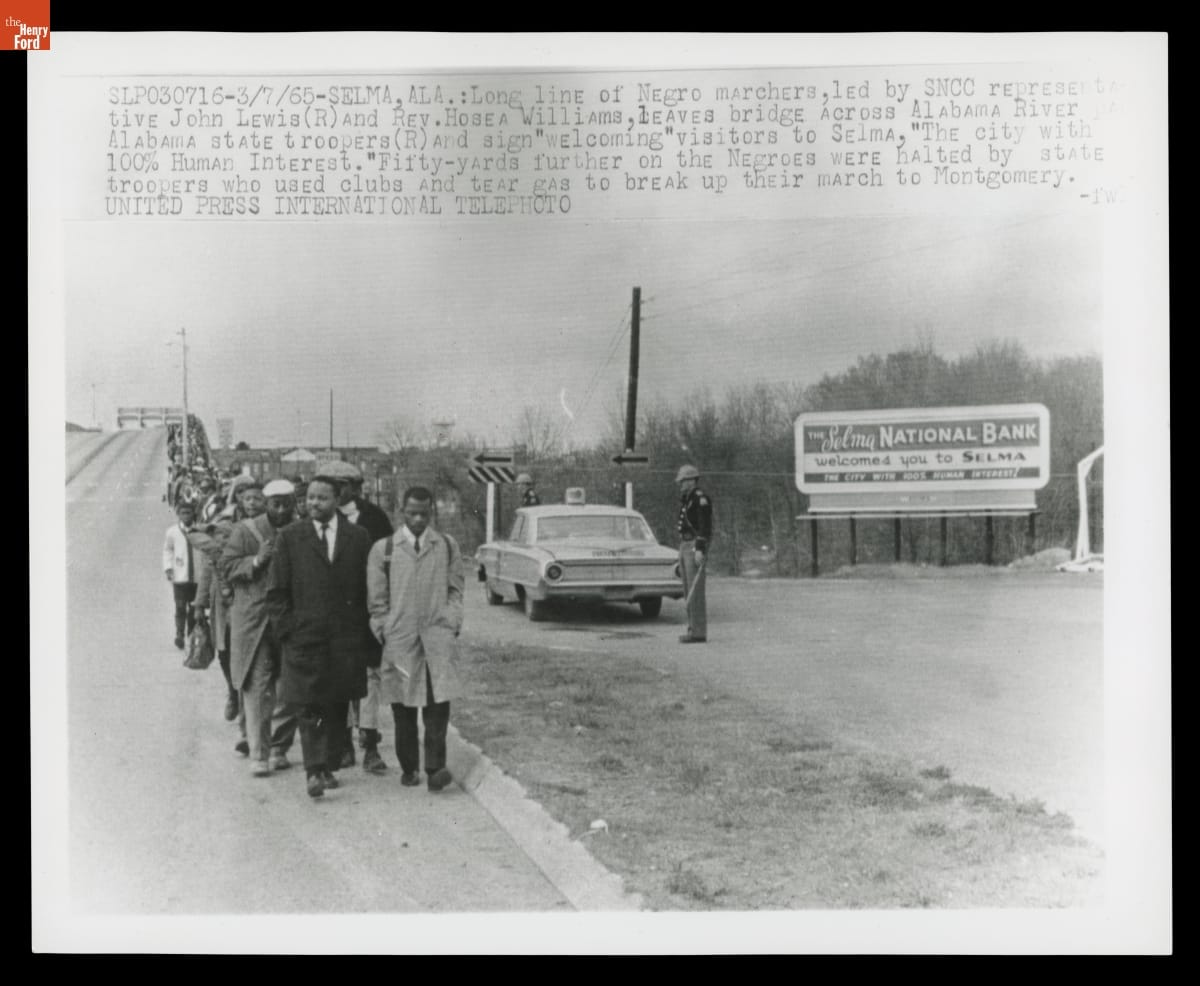 Collections - Set
The Long March to Voting Rights
In 1965, all eyes turned to Selma, Alabama, as the next stage in the fight for civil rights. Dr. Martin Luther King, Jr., the Student Nonviolent Coordinating Committee, the Southern Christian Leadership Conference, and other activists planned a series of marches from Selma to Montgomery to draw attention to the continued struggle for voting rights for Black Americans. Collections - Set
Jackson Home: The House by the Side of the Road
The Jackson Home, originally located in Selma, Alabama, provided refuge and solace for Dr. Martin Luther King Jr. and others who worked, collaborated, strategized, and planned the Selma-to-Montgomery marches of 1965. The marches led to the signing of the Voting Rights Act on August 6, 1965, enshrining voting equality for all Americans as law. Collections - article
Dr. Sullivan Jackson: Saxophonist
Music is a part of the Jackson family story, from the piano lessons that first brought young Richie Jean Sherrod soon-to-be-Jackson and young Corretta Scott soon-to-be-King together to the family's music room that housed an impressive record collection. In fact, Dr. Sullivan Jackson played tenor saxophone prior to his career as a dentist serving Selma's Black community. Dr. Jackson's time as a musician in the mid-1940s to the early-1950s allowed him to participate in Black American music cultural changes.