
Coming Together in One Spirit: Michiganders in Selma
| Written by | |
|---|---|
| Published | 7/28/2026 |
Coming Together in One Spirit: Michiganders in Selma
| Written by | |
|---|---|
| Published | 7/28/2026 |
Following the "Bloody Sunday” march Rev. Dr. Martin Luther King, Jr. sent a telegram to national religious organizations across the United States, asking for assistance in the fight for voting rights: "[It] is fitting that all Americans help to bear the burden. I call therefore, on clergy of all faiths, representative of every part of the country, to join me in Selma for a ministers march." Tragically, after the “Turn-Around Tuesday” demonstration, a group of white supremacists attacked and murdered visiting minister James Reeb. His death galvanized, rather than deterred, support for the movement, and more people came to Selma. Among them was a delegation from Southeast Michigan made up of nine Catholic laymen and one priest whose stories are told through objects that The Henry Ford recently acquired.
Voting rights marchers in Montgomery, Alabama, 1965. A multitude of protestors from across the country participated in the voting rights movement in Alabama./ THF731419
The Catholic group drove southward from Ann Arbor, Michigan, and arrived in Selma, Alabama, on the evening of March 14, 1965. Among their ranks was Carl Benkert, Jr. Benkert did not seem like a stereotypical protestor; already in his 40s with adult children, he had had a long career in industrial and interior design at companies such as Lear Aviation Corporation, General Motors, and W.B. Ford and Associates. But Dr. King's call to action and Benkert's lifelong religious convictions brought him to Selma to protest injustice. Benkert even paused his work on the interior design of the Whitney Museum of American Art to travel to Alabama. Benkert also loved recording audio of what he believed were important moments and brought a reel-to-reel tape recorder with him to document his experience.

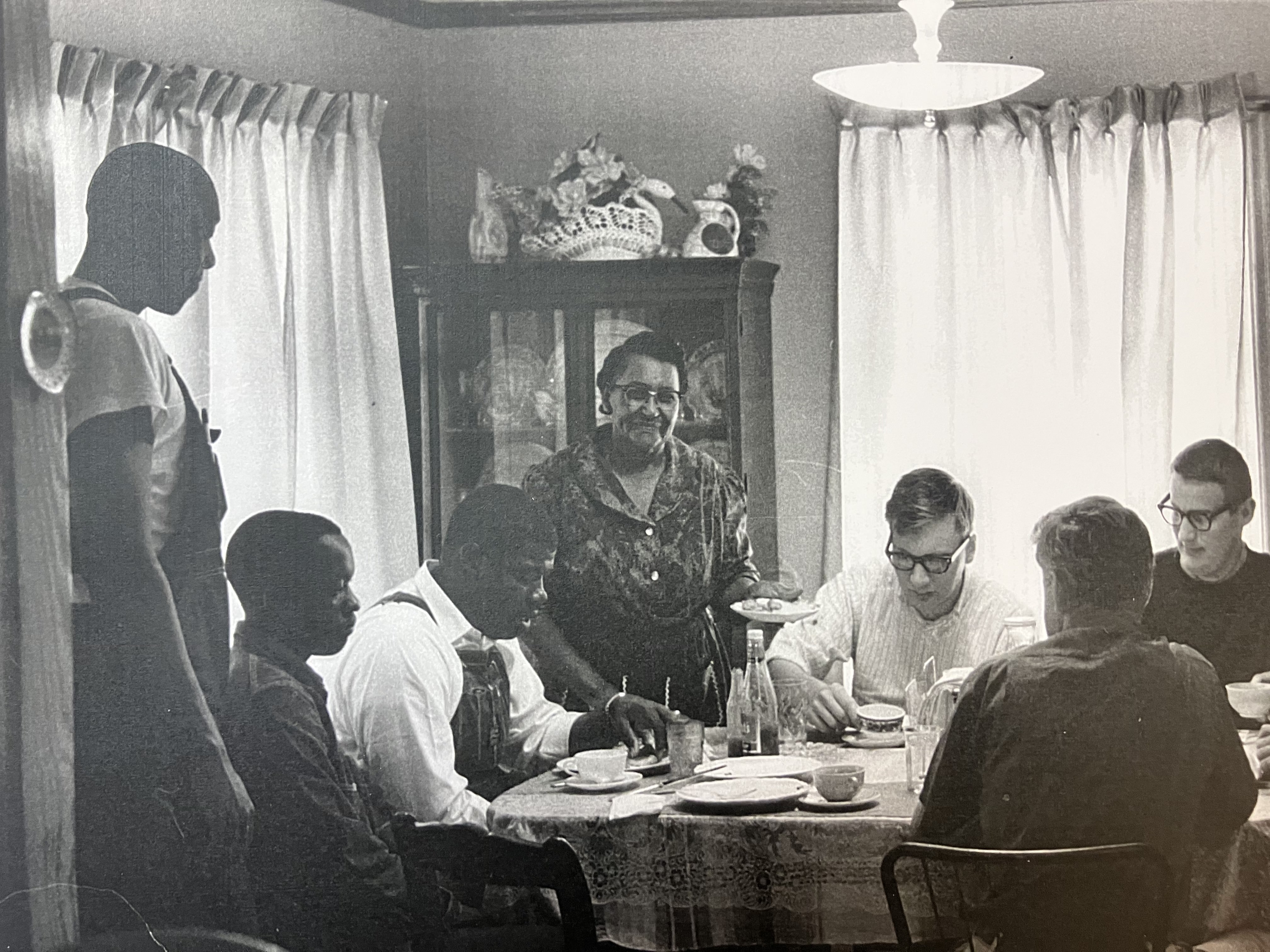
Local Selma families opened their homes to out-of-town demonstrators. Carl Benkert stayed with Mary Dubose, a Black night nurse; every morning after work, Dubose cooked a hearty breakfast for her guests, highlighting the hospitality that sustained the voting rights movement. / Photo by Staff of The Henry Ford
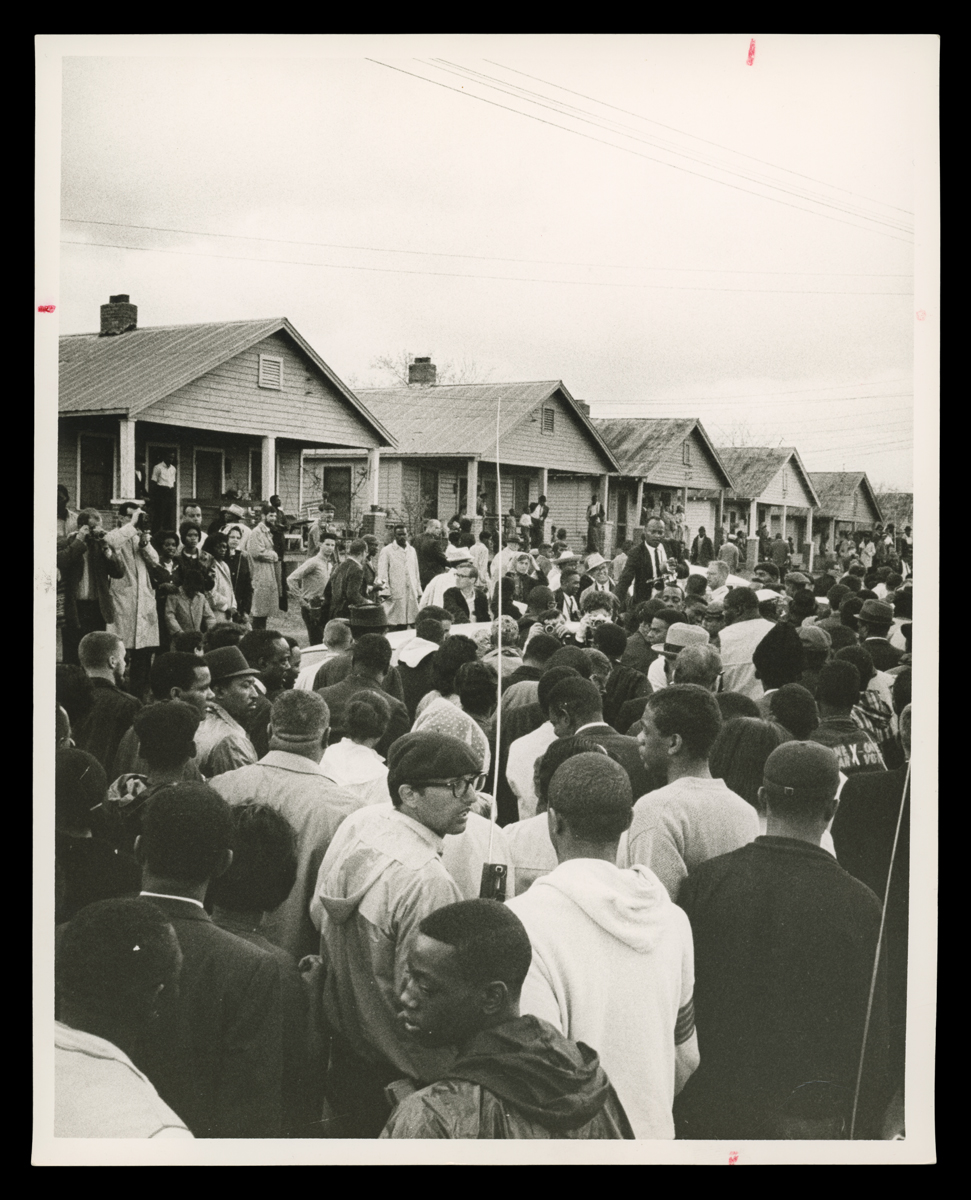
Reeb's memorial service was being held at Brown Chapel AME (African Methodist Episcopal) on the morning of March 15, 1965. A group of protestors gathered outside the church. Law enforcement officers formed a wall nearby to intimidate them. Tension filled the street, Benkert later recalled. Hosea Williams, a leader of the Southern Christian Leadership Conference and Dr. King's right-hand man, then led demonstrators in songs and prayers to focus their energy, a moment that Benkert recorded. Benkert continued recording inside the church as well; he captured the singing of those who came to pay their respects to Reeb. For the rest of that week, Benkert brought his recorder to movement gatherings where songs like "Oh Wallace" and "Which Side Are You On" were "an essential element" of the fight for voting rights.
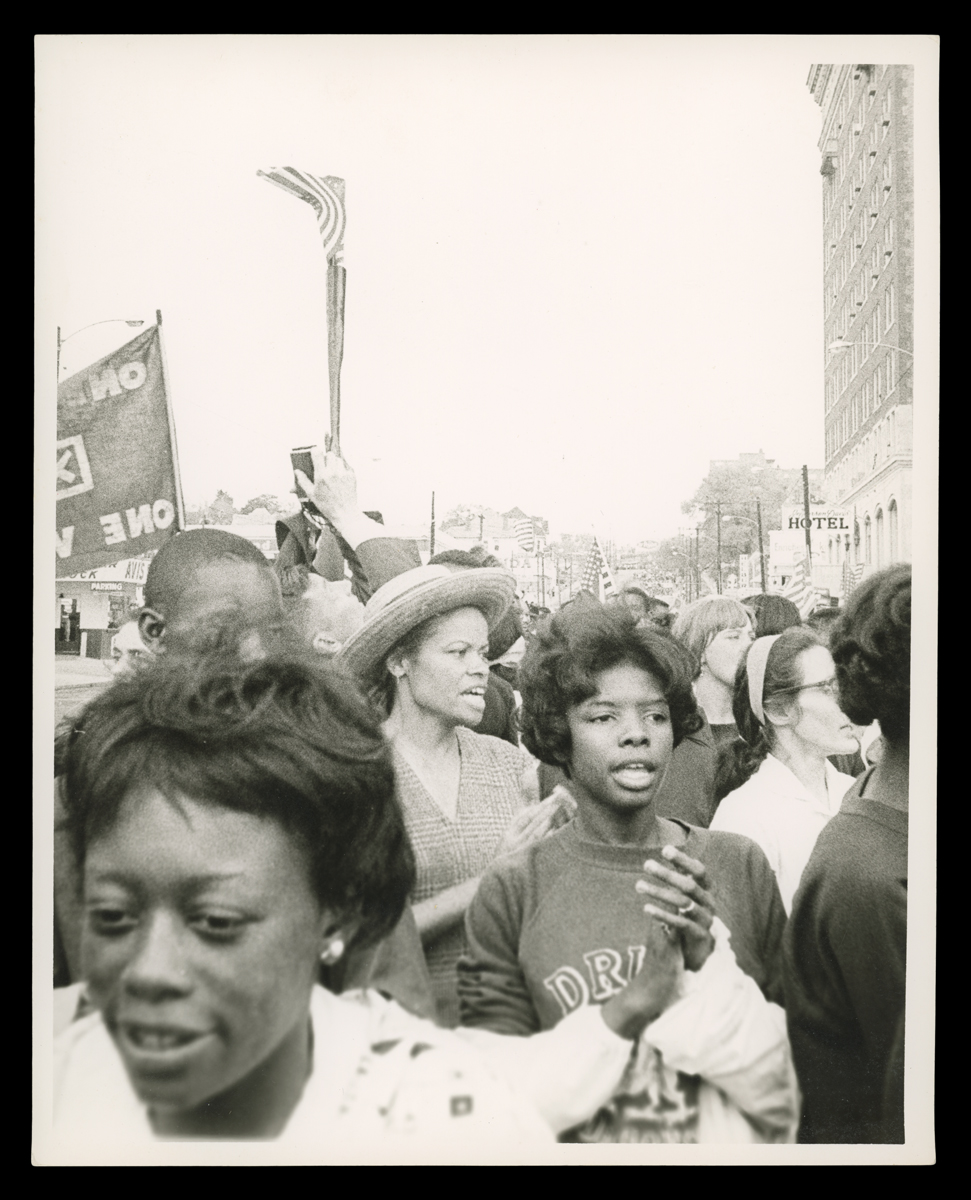
Voting rights marchers singing in Montgomery, March 25, 1965. Carl Benkert later wrote about the power that music had for those who participated in the Selma movement; demonstrators spent hours at Brown Chapel AME, singing together to about their current trials and encouraging each other's perseverance. / THF731447
After Reeb's memorial service, the Catholic group went to protest at the police blockade on nearby Sylvan Street. Local law enforcement had put up this barrier, nicknamed "Selma Wall" or "Berlin Wall," to prevent more marches. It became a symbol of the movement's fight against the Jim Crow laws that denied Black Americans their rights. Protestors, including the Catholic Michiganders, stood at the barrier, with one hundred clergymen in the front, and faced down county and city police. One of those religious leaders at the front was Father Pat Jackson. Jackson was a recently ordained minister, serving the St. Thomas parish in Ann Arbor, Michigan. Horrified by the violence of "Bloody Sunday," Jackson planned a "March for Reparations" in his community to stand in solidarity with the Selma Movement. He then organized the Michigan group's trip after receiving a telegram from the National Catholic Conference on Interracial Justice; he believed that Selma "was the place a priest ought to be." At the wall, Jackson and other activists sang hymns, folk songs, and spirituals with new lyrics that reflected their current situation. They demanded that authorities remove the barrier and allow the protestors to march. The demonstration worked; the blockade ended that night.
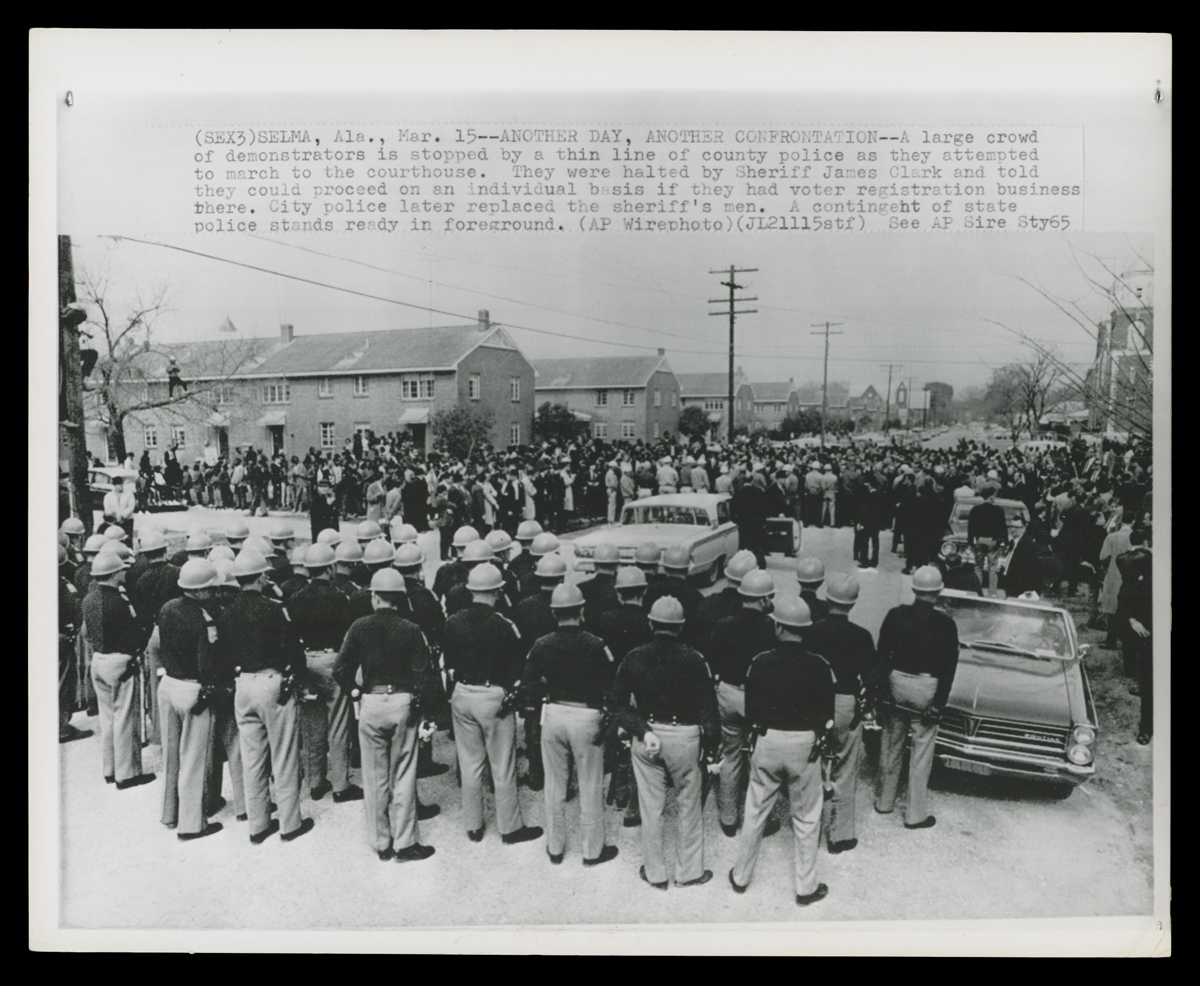
This photo, taken March 15, 1965, shows police blocking the street as demonstrators attempted to march to the Dallas County Courthouse. In the background at right is Brown Chapel AME, the site of James Reeb's memorial service and one of the organizing hubs of the movement./ THF730281
While most the Catholic group returned to Michigan after Reeb's funeral, four of them stayed to participate in more demonstrations. On Tuesday, March 16, around thirty-five protestors were arrested while attempting to picket at the home of Selma's mayor, three of whom were members of the Catholic Michigander group: Jackson, Kenneth Gaertner, and Paul Bokulich. Bokulich, a Wayne State University student from Harper Woods, and Gaertner, a writer from Ann Arbor, were moved to action after watching the violence of "Bloody Sunday" on television. In the jail, Selma's public safety director offered a bail bond to those who were arrested; while Gaertner took the offer, Bokulich and Jackson refused, hoping to highlight the injustices in Selma through their incarceration, saying they intended to stay in jail as their protest." They were transferred into the custody of the Dallas County Sheriff. Hearing of the arrests, the Catholic group's allies back in Michigan tried to contact them, but the sheriff's office kept the group isolated. Jackson and Bokulich were released three days later.
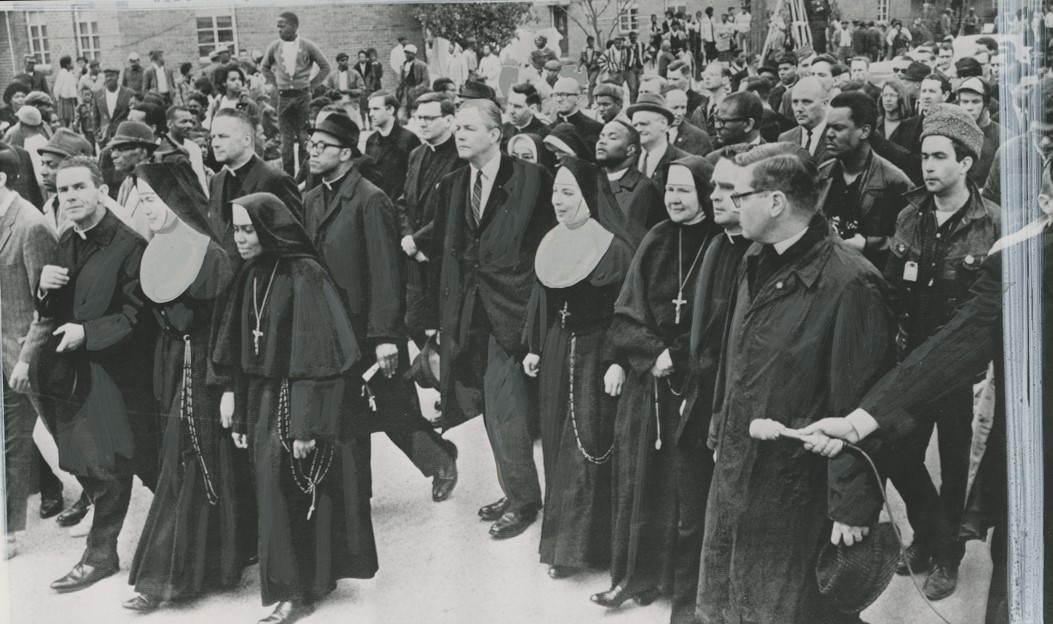
Nuns leading a march in Selma, 1965. Hundreds of religious leaders came to Selma to participate in the protests and often wore their vestments while marching. Of those arrested trying picket the mayor's house on March 16, half were members of the clergy./ THF730279
Local and state officials had worked hard to block an attempted march from Selma to Montgomery, but finally federal forces intervened; on March 17, a U.S. district court judge ruled that suppressing a march violated the First Amendment. Four days later, thousands of demonstrators gathered at Brown Chapel AME to start the journey along US-80. The marchers were anxious to get on the road but prepared for retaliation from law enforcement and counterprotesters. With Dr. King leading the way, the demonstrators covered seven miles on the first day. As evening approached, a campsite was erected, and thousands got into their cars and drove back to Selma. Only three hundred participants were permitted to walk the entire fifty-four-mile route due to the narrowness of the road. Once back in Selma, many demonstrators stayed in town to meet up with the group in Montgomery. Jackson returned to Michigan that night. Bokulich and Benkert were among the three hundred who completed the entire march over the next four days.
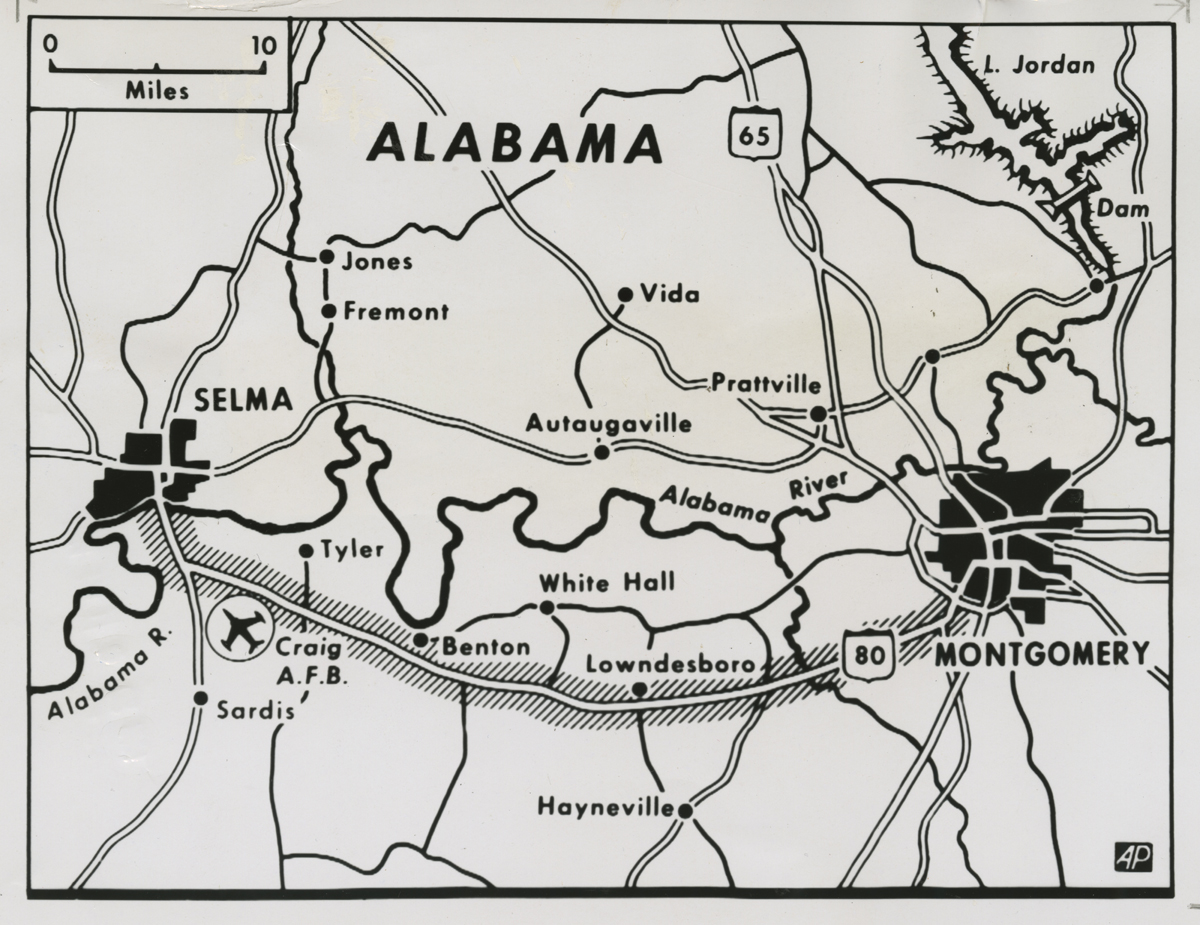
The three hundred marchers took the highlighted route from Selma to Montgomery, covering multiple miles every day and camping out every night./ THF730288
On the road to Montgomery, safety was a major concern, so organizers asked participants to help protect each other. Bokulich volunteered to be a part of the medical team that assisted marchers; Benkert joined the nighttime marshals who patrolled the campsites while others slept. Hard pavement and rainy, chilly weather made for difficult walking and sleeping conditions. From the side of the road, counterprotesters mocked the demonstrators, called out slurs, and accused participating clergy of faking their credentials. Rumors spread that members of the Ku Klux Klan and American Nazi Party had planned ambush attacks. On the second night, a group of young white men showed up to the camp, intent on intimidating the group. Most of these men were local to the Alabama Black Belt, but some had traveled from Texas, Tennessee, and Oklahoma to menace the marchers.
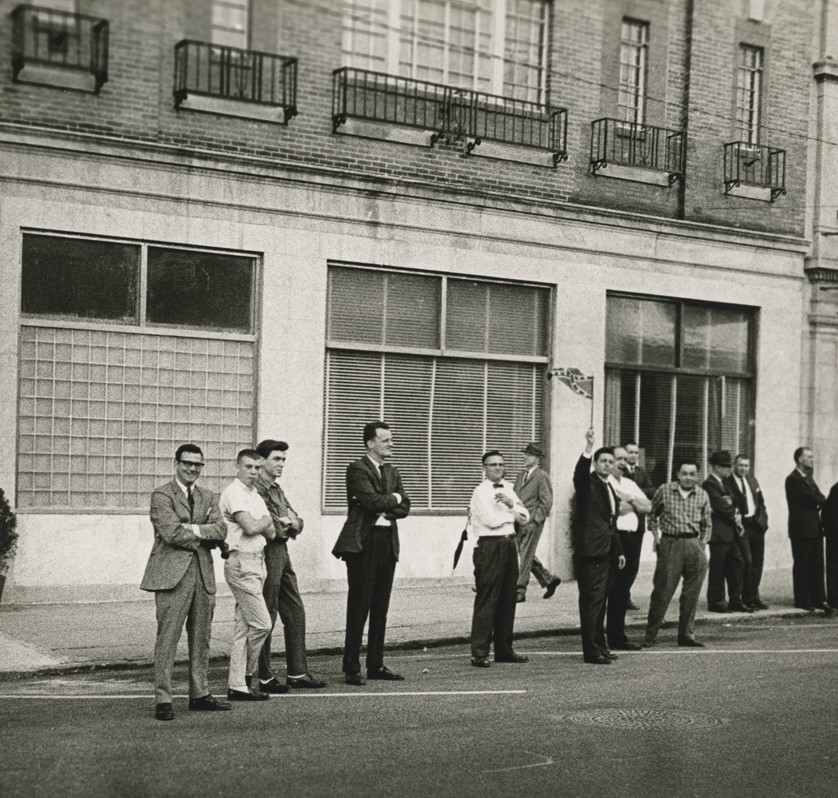
Counterprotesters in Montgomery, Alabama, March 25, 1965. There was immense opposition to the Selma voting movement in Alabama and throughout the South. Federal law enforcement traveled with the marchers to Montgomery to deter violent retribution. However, following the successful march, two protestors—Viola Liuzzo and Jonathan Daniels—were murdered. / THF731439
Allies were also along the route. After long days covering seven to seventeen miles, the three hundred demonstrators were able to camp out on land of those who supported the cause. As the march passed through Black communities, citizens waited for hours to see the procession; some even asked for advice on how to mobilize local political action. During the final night—March 24—celebrities like Harry Belafonte and Joan Baez performed for marchers during what was known as the "Stars for Freedom" rally.
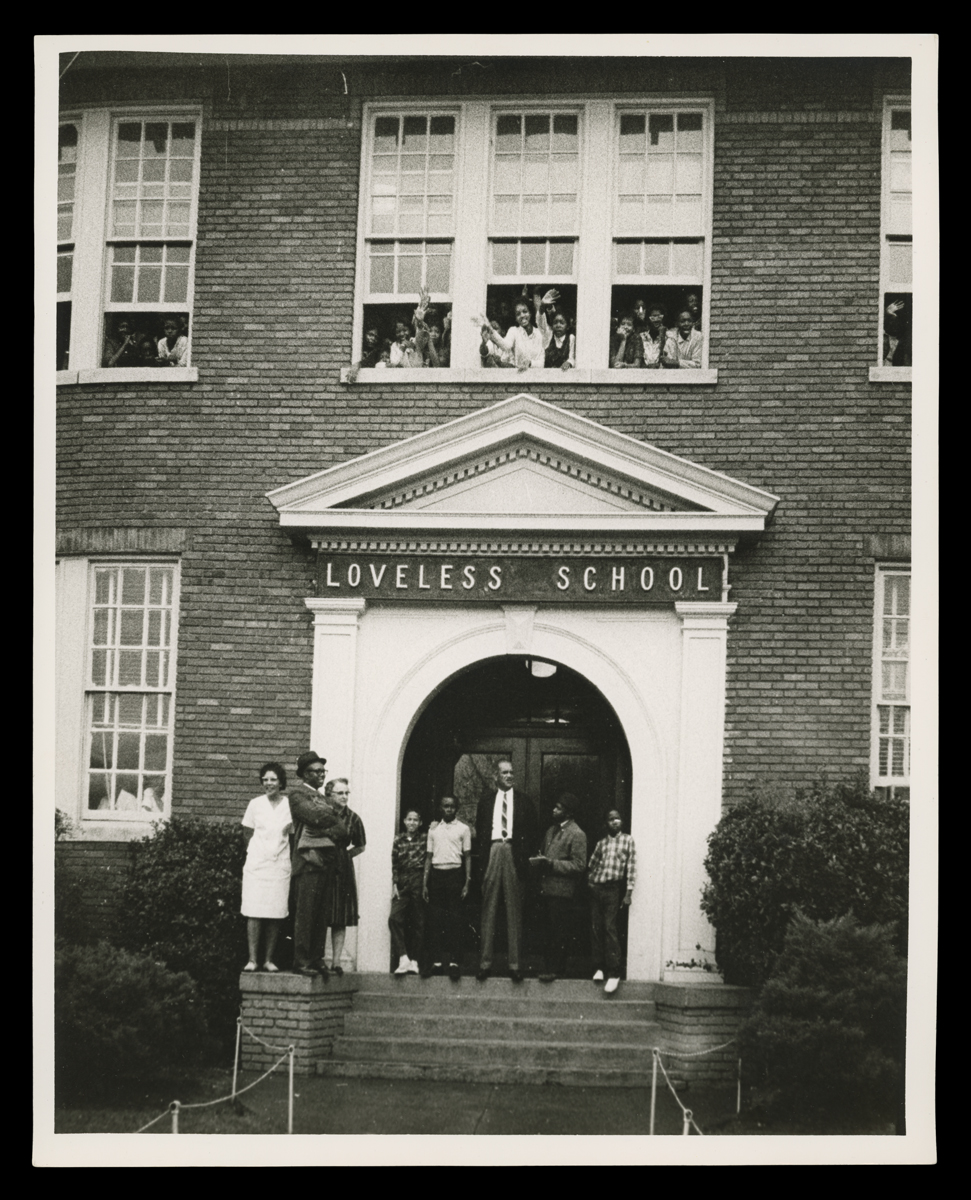
Students and adults from Loveless School in Montgomery, Alabama, watch protestors from Selma arrive on March 25, 1965. The Loveless School was a junior high school for Montgomery's Black population./ THF731415
On March 25, the three hundred demonstrators arrived at their destination: Montgomery, Alabama. Tens of thousands joined them at the State Capitol. There Dr. King got in front of the crowd and gave his famed "How Long? Not Long!" speech. Bokulich later said of the event "It was a joyful celebration. The whole impact of a mass of people coming together in one spirit."
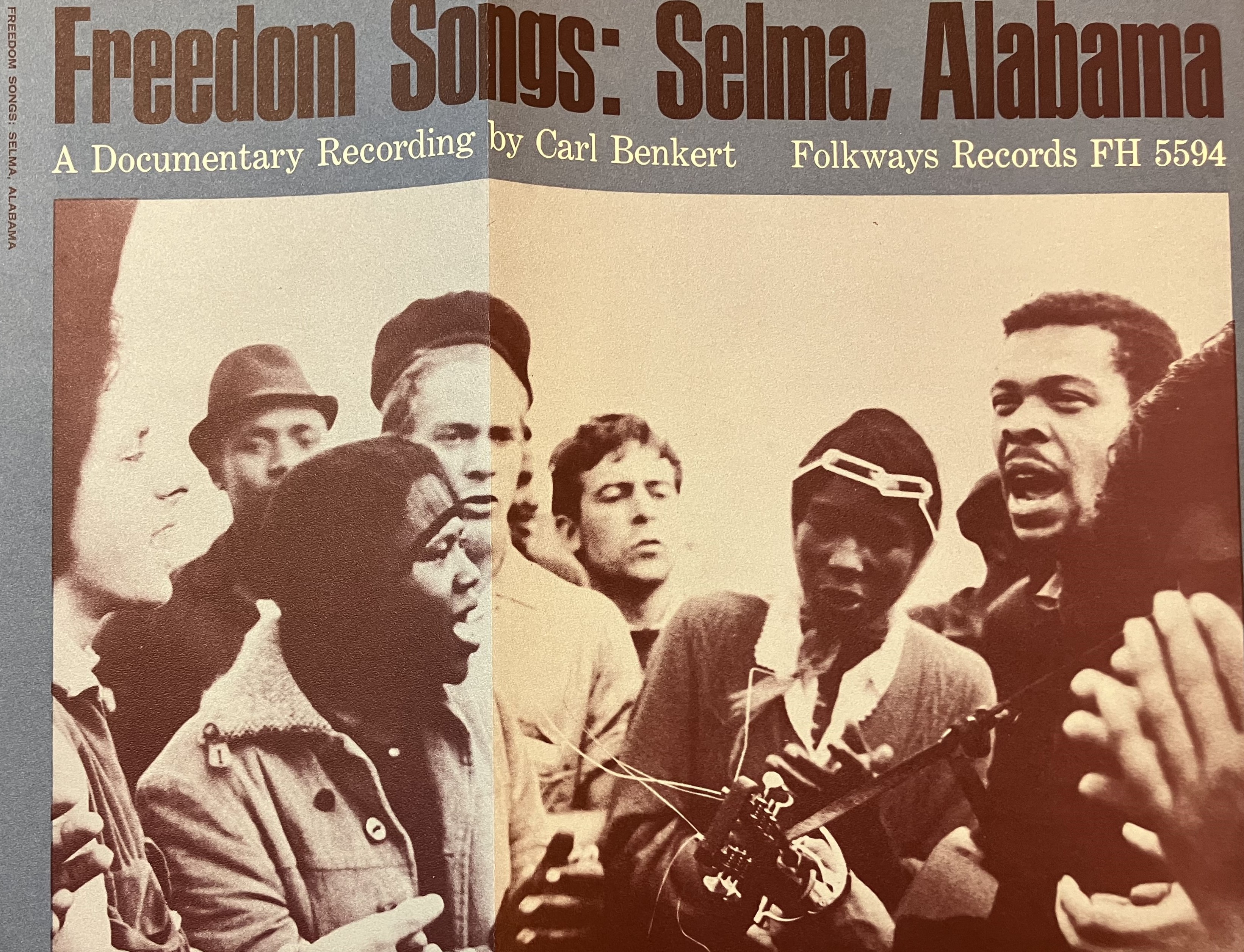
Folkways Records produced some of Carl Benkert's recordings later in 1965, which was advertised in this flyer. / Photo by Staff of The Henry Ford
For those who participated in the Selma to Montogomery Movement, their involvement left a profound impact on them. After hearing Dr. King speak in Montgomery, Paul Bokulich decided to become a civil rights worker. He soon moved from Michigan to Alabama and took a job with the Southern Christian Leadership Conference where he and his future wife, Patricia, worked on voting rights issues until the 1970s. Father Pat Jackson called his time in Selma "the most Christian experience of my life." Jackson returned to his parish in Ann Arbor where he participated in anti-Vietnam War and anti-poverty activism. He was known as a community advocate at the three parishes in which he served until his death at age 46. Carl Benkert's recordings in Selma became one of the living legacies of the movement; the songs were produced by Folkways Records later in 1965 under the title Freedom Songs: Selma, Alabama. He also designed "freedom diplomas" for the Southern Christian Leadership Conference who presented them to teenagers involved in the movement. Benkert was later involved in the anti-Vietnam War, anti-housing discrimination, and environmentalist movements.
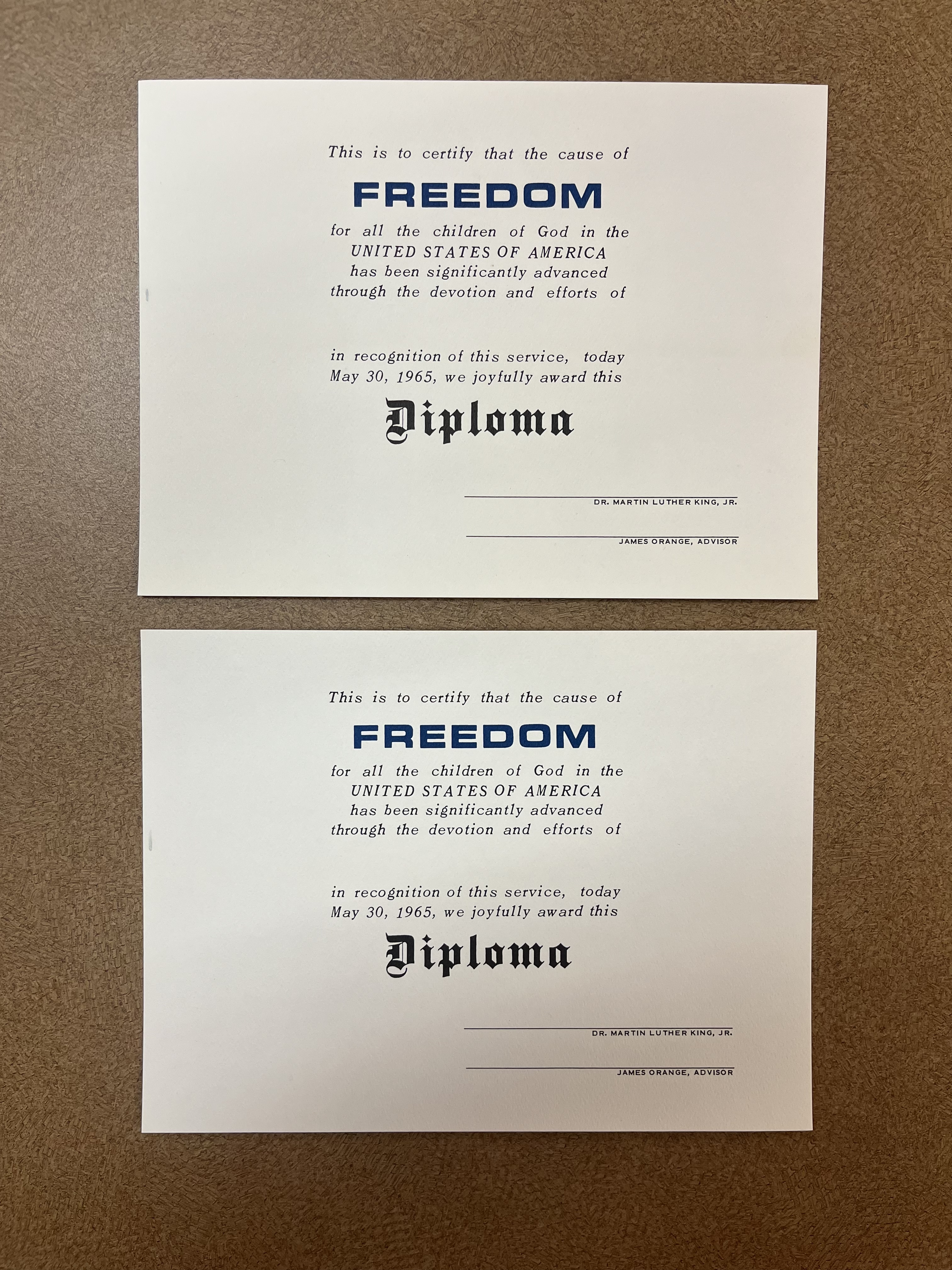
SCLC leader James Orange commissioned Benkert to create these "Freedom Diplomas," which were given out at special ceremony in May 1965. Benkert returned to Selma for that event and recorded it as well./ Photo by Staff of The Henry Ford
Decades after going to Selma, Carl Benkert unearthed a piece of civil rights history that had been forgotten. When Benkert arrived in Selma, he did not just record singing; he recorded everything, including Reeb's memorial service. In doing so, he preserved Dr. King's eulogy for Reeb, which was made public in 2001. Thanks to Benkert not only participating in the movement but also documenting it, you can read or listen to Dr. King's words once thought lost.
Kayla Chenault is an Associate Curator at The Henry Ford.
With gratitude to the staff of Old St. Patrick Catholic Church in Northfield Township, Michigan (where Father Pat Jackson was pastor from 1971 to 1980), who provided information that was crucial to this article, and the Ann Arbor District Library whose archive included extensive news coverage of the Catholic group's Selma experience.
Series | |
|---|---|
Themes |