
Search
- General Motors' EV1 - Take a look at the EV1, probably the best electric car ever produced, through the example in our collection.

- June 22, 2015
- Collections - article
General Motors' EV1
Take a look at the EV1, probably the best electric car ever produced, through the example in our collection.
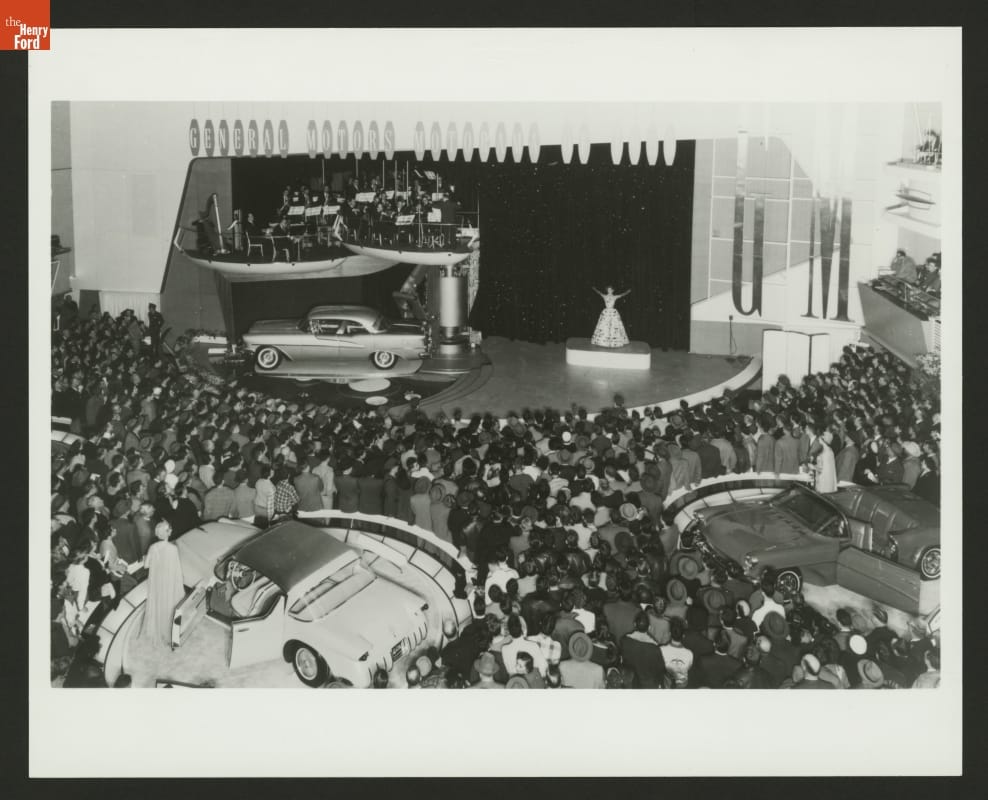
- General Motors Motorama, 1955 - Between 1949 and 1961, General Motors staged its nationally renowned Motorama -- an extravaganza designed to whet people's appetites and boost sales. This photograph shows the use of a unique set of "flying turntables," which whirled cars out of the wings over a rear pool of water and off-stage again.
- 1955
- Collections - Artifact
General Motors Motorama, 1955
Between 1949 and 1961, General Motors staged its nationally renowned Motorama -- an extravaganza designed to whet people's appetites and boost sales. This photograph shows the use of a unique set of "flying turntables," which whirled cars out of the wings over a rear pool of water and off-stage again.
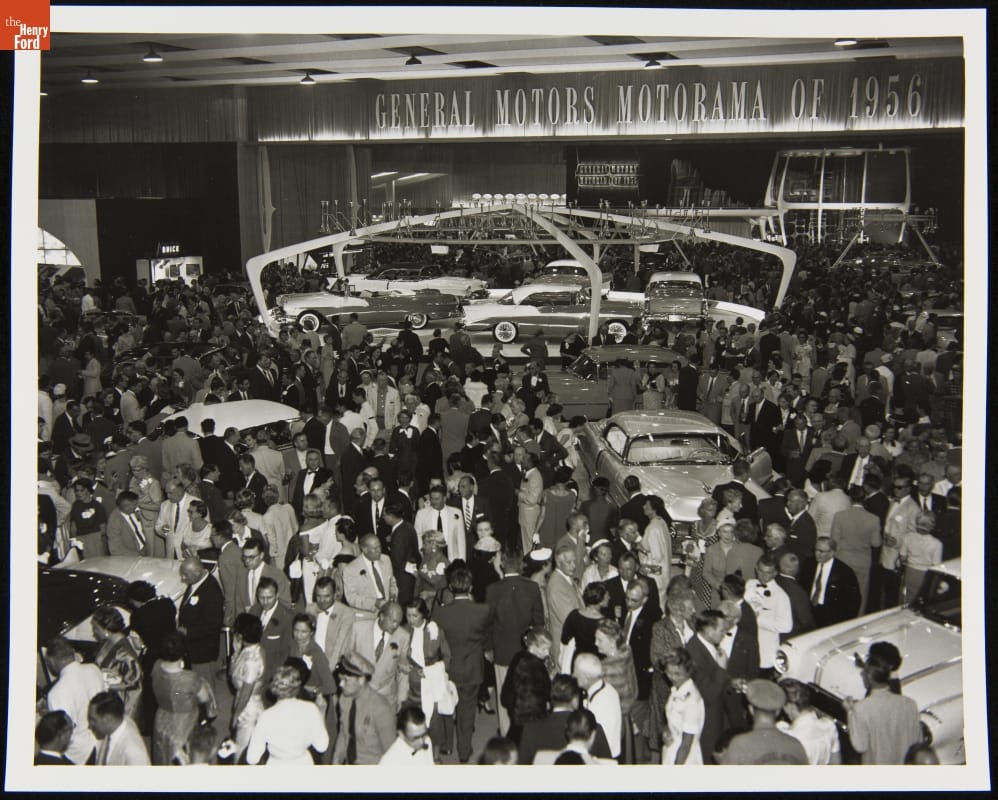
- General Motors Motorama of 1956 - From 1949 to 1961, General Motors hosted a series of semi-regular shows spotlighting futuristic concept cars and aspirational production cars. In 1953, the event was named Motorama and transformed into a traveling show that toured major cities around the United States. Motorama also showcased products from GM subsidiaries, like the "kitchen of the future" equipped with Frigidaire appliances.
- 1956
- Collections - Artifact
General Motors Motorama of 1956
From 1949 to 1961, General Motors hosted a series of semi-regular shows spotlighting futuristic concept cars and aspirational production cars. In 1953, the event was named Motorama and transformed into a traveling show that toured major cities around the United States. Motorama also showcased products from GM subsidiaries, like the "kitchen of the future" equipped with Frigidaire appliances.
- General Motors Lunch Plate, 1960 -

- 1960
- Collections - Artifact
General Motors Lunch Plate, 1960
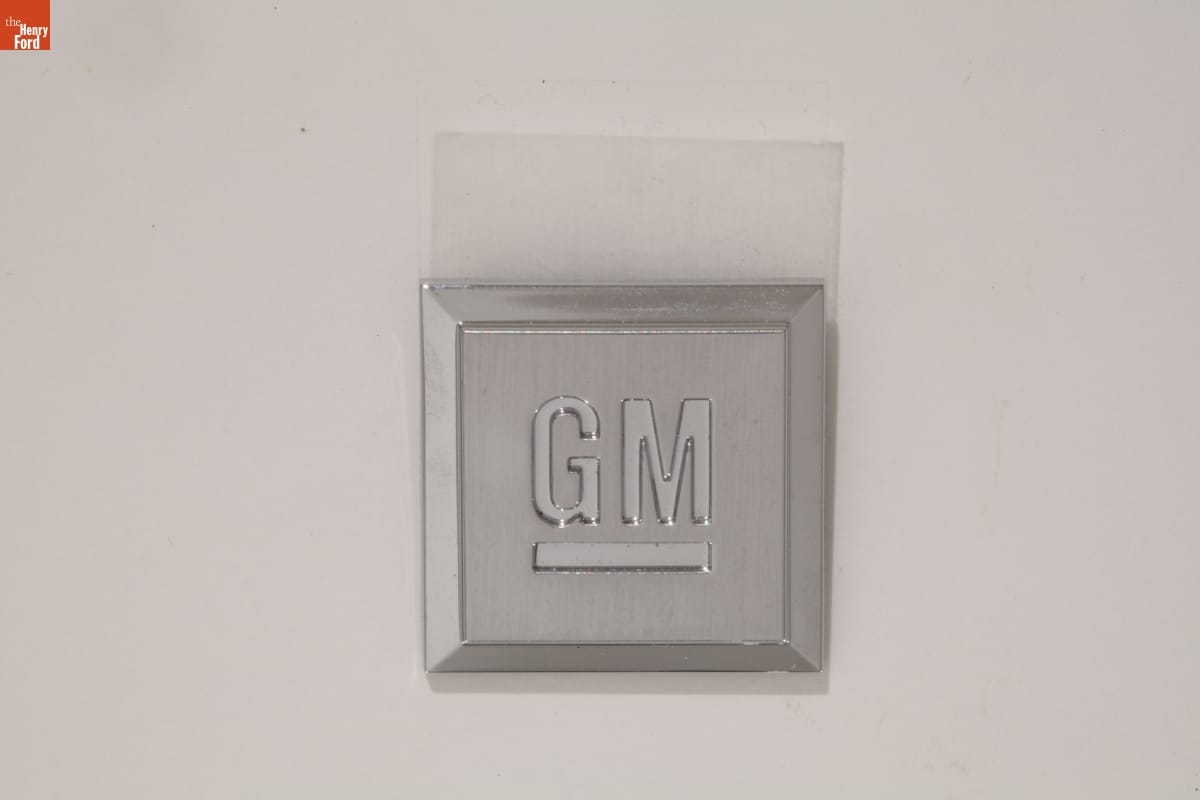
- General Motors Emblem, 1990-2008 - An automobile manufacturer's badge is fundamental to the company's brand identity -- just as the maker's name is often important to <EM>our</EM> identity as consumers and drivers. Early automobile badges tended to be small and often discreetly located; today they have evolved into enlarged, prominently placed, and frequently symmetrical logos -- easy to recognize, even at a glance in a rear-view mirror.
- 1990-2008
- Collections - Artifact
General Motors Emblem, 1990-2008
An automobile manufacturer's badge is fundamental to the company's brand identity -- just as the maker's name is often important to our identity as consumers and drivers. Early automobile badges tended to be small and often discreetly located; today they have evolved into enlarged, prominently placed, and frequently symmetrical logos -- easy to recognize, even at a glance in a rear-view mirror.
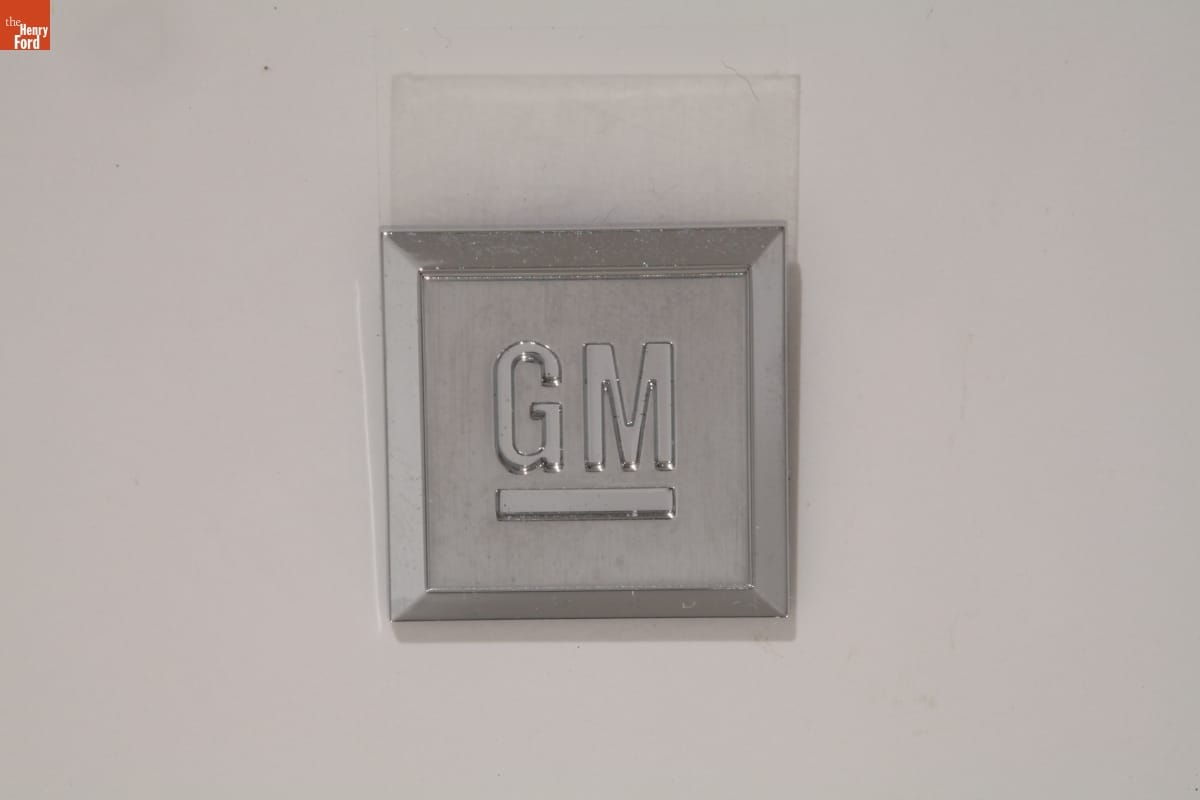
- General Motors Emblem, 1990-2008 - An automobile manufacturer's badge is fundamental to the company's brand identity -- just as the maker's name is often important to <EM>our</EM> identity as consumers and drivers. Early automobile badges tended to be small and often discreetly located; today they have evolved into enlarged, prominently placed, and frequently symmetrical logos -- easy to recognize, even at a glance in a rear-view mirror.
- 1990-2008
- Collections - Artifact
General Motors Emblem, 1990-2008
An automobile manufacturer's badge is fundamental to the company's brand identity -- just as the maker's name is often important to our identity as consumers and drivers. Early automobile badges tended to be small and often discreetly located; today they have evolved into enlarged, prominently placed, and frequently symmetrical logos -- easy to recognize, even at a glance in a rear-view mirror.
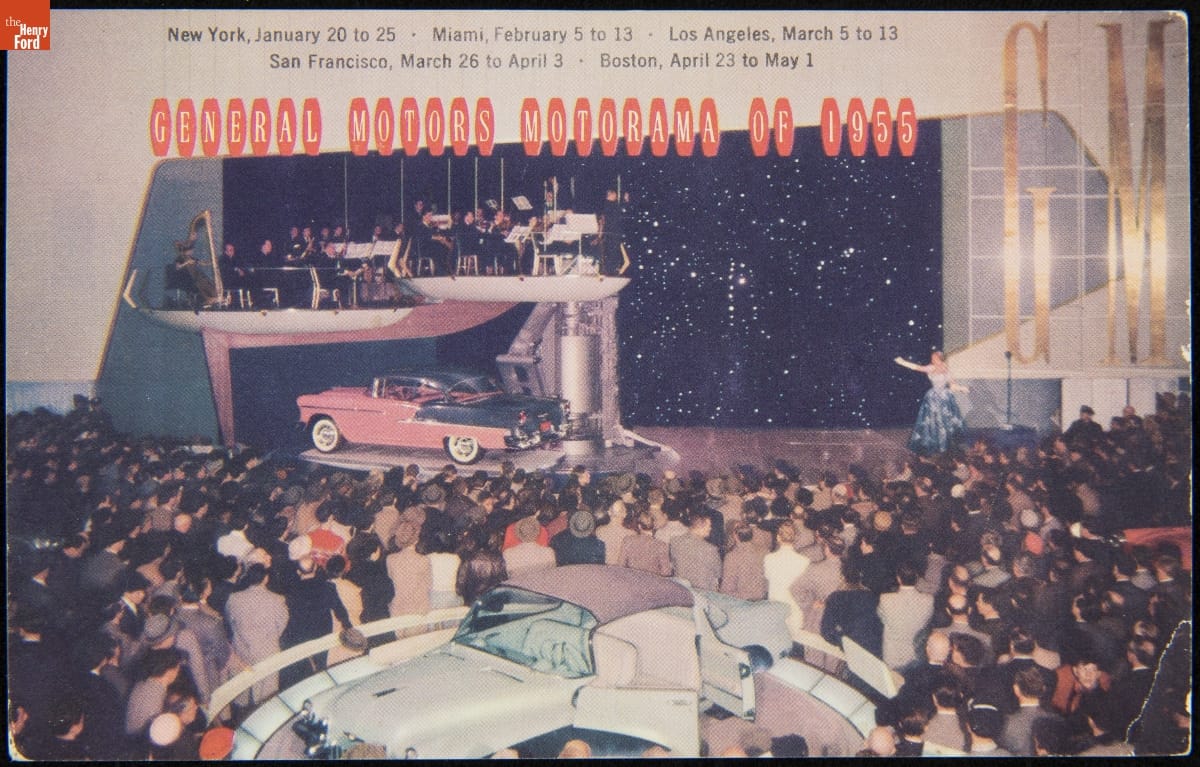
- General Motors Motorama of 1955 - From 1949 to 1961, General Motors hosted a series of semi-regular shows spotlighting futuristic concept cars and aspirational production cars. In 1953, the event was named Motorama and transformed into a traveling show that toured major cities around the United States. Motorama also showcased products from GM subsidiaries, like the "kitchen of the future" equipped with Frigidaire appliances.
- 1955
- Collections - Artifact
General Motors Motorama of 1955
From 1949 to 1961, General Motors hosted a series of semi-regular shows spotlighting futuristic concept cars and aspirational production cars. In 1953, the event was named Motorama and transformed into a traveling show that toured major cities around the United States. Motorama also showcased products from GM subsidiaries, like the "kitchen of the future" equipped with Frigidaire appliances.
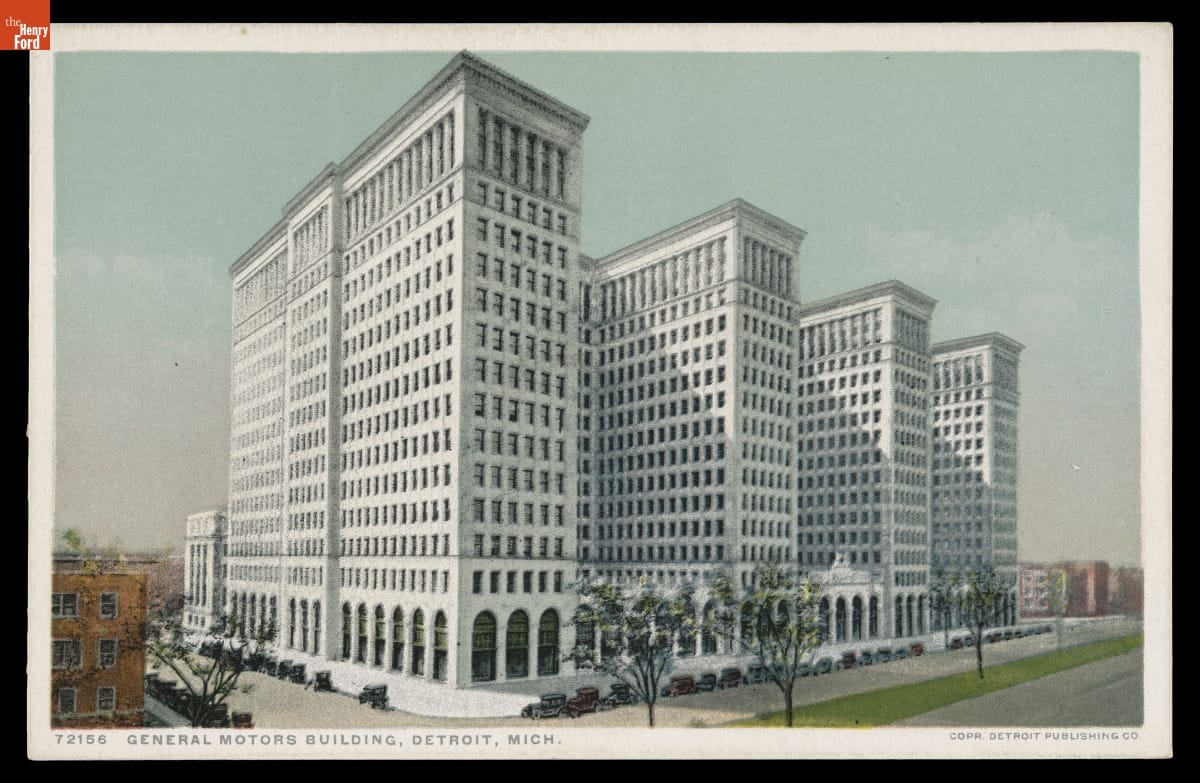
- General Motors Building, Detroit, Michigan - General Motors completed this headquarters building on Detroit's West Grand Boulevard in 1923. Architect Albert Kahn designed the 1.4 million-square-foot neoclassical structure, which anchored the city's New Center area three miles from downtown. GM remained in the complex until 2001. It became home to offices for the State of Michigan and was renamed Cadillac Place.
- circa 1920
- Collections - Artifact
General Motors Building, Detroit, Michigan
General Motors completed this headquarters building on Detroit's West Grand Boulevard in 1923. Architect Albert Kahn designed the 1.4 million-square-foot neoclassical structure, which anchored the city's New Center area three miles from downtown. GM remained in the complex until 2001. It became home to offices for the State of Michigan and was renamed Cadillac Place.
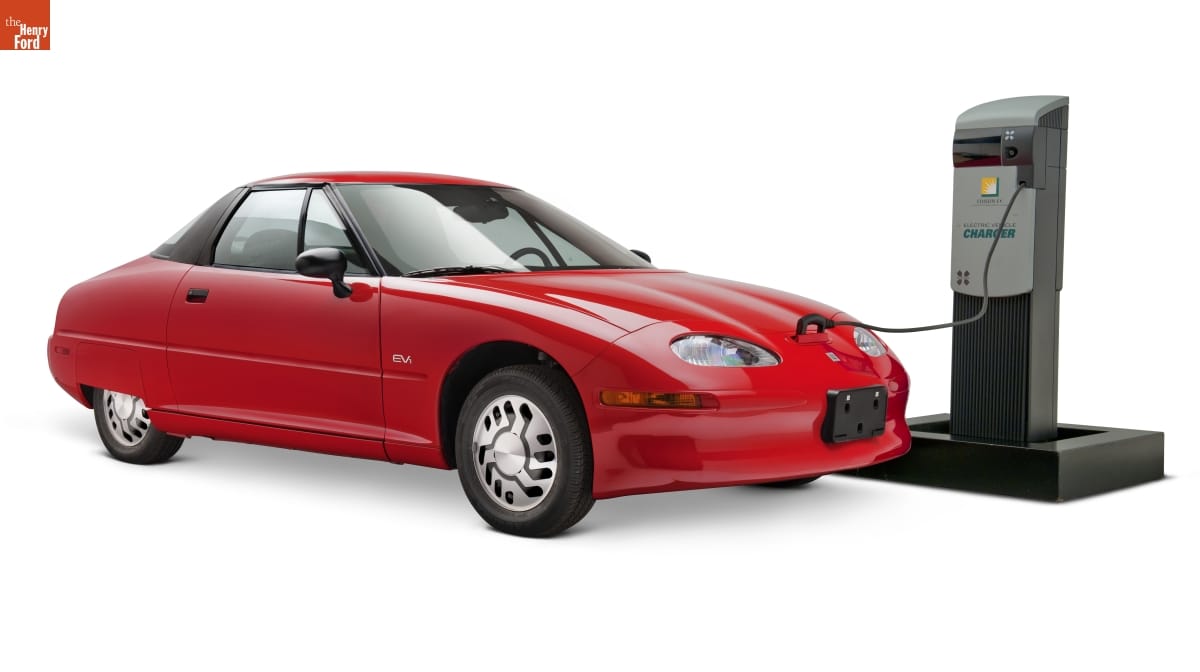
- 1997 General Motors EV1 Electric Coupe - This was the most serious attempt to build an all-purpose electric car since the 1920s. General Motors built 1,117 cars between 1996 and 1999, leasing them to a loyal group that willingly adjusted to battery power's limitations. But GM concluded there were too few electric enthusiasts to support large-scale production and recalled all the cars by the end of 2003. EV1 users objected loudly, but to no avail.
- 1997
- Collections - Artifact
1997 General Motors EV1 Electric Coupe
This was the most serious attempt to build an all-purpose electric car since the 1920s. General Motors built 1,117 cars between 1996 and 1999, leasing them to a loyal group that willingly adjusted to battery power's limitations. But GM concluded there were too few electric enthusiasts to support large-scale production and recalled all the cars by the end of 2003. EV1 users objected loudly, but to no avail.
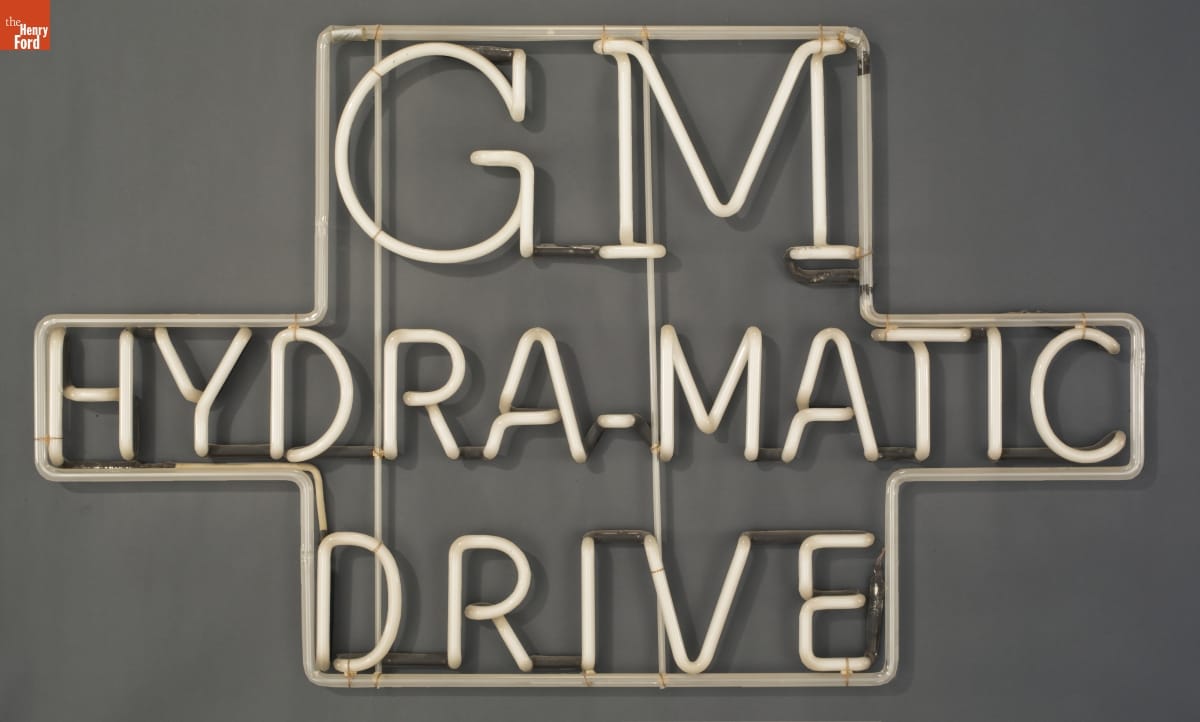
- General Motors Neon Sign, circa 1950 - General Motors introduced Hydra-Matic Drive in its Oldsmobile line for the 1940 model year. It was the first mass-produced, fully automatic transmission in a passenger car. Hydra-Matic Drive quickly proved popular. Other automakers soon developed their own automatic transmissions or bought Hydra-Matic units from GM.
- circa 1950
- Collections - Artifact
General Motors Neon Sign, circa 1950
General Motors introduced Hydra-Matic Drive in its Oldsmobile line for the 1940 model year. It was the first mass-produced, fully automatic transmission in a passenger car. Hydra-Matic Drive quickly proved popular. Other automakers soon developed their own automatic transmissions or bought Hydra-Matic units from GM.