
Search
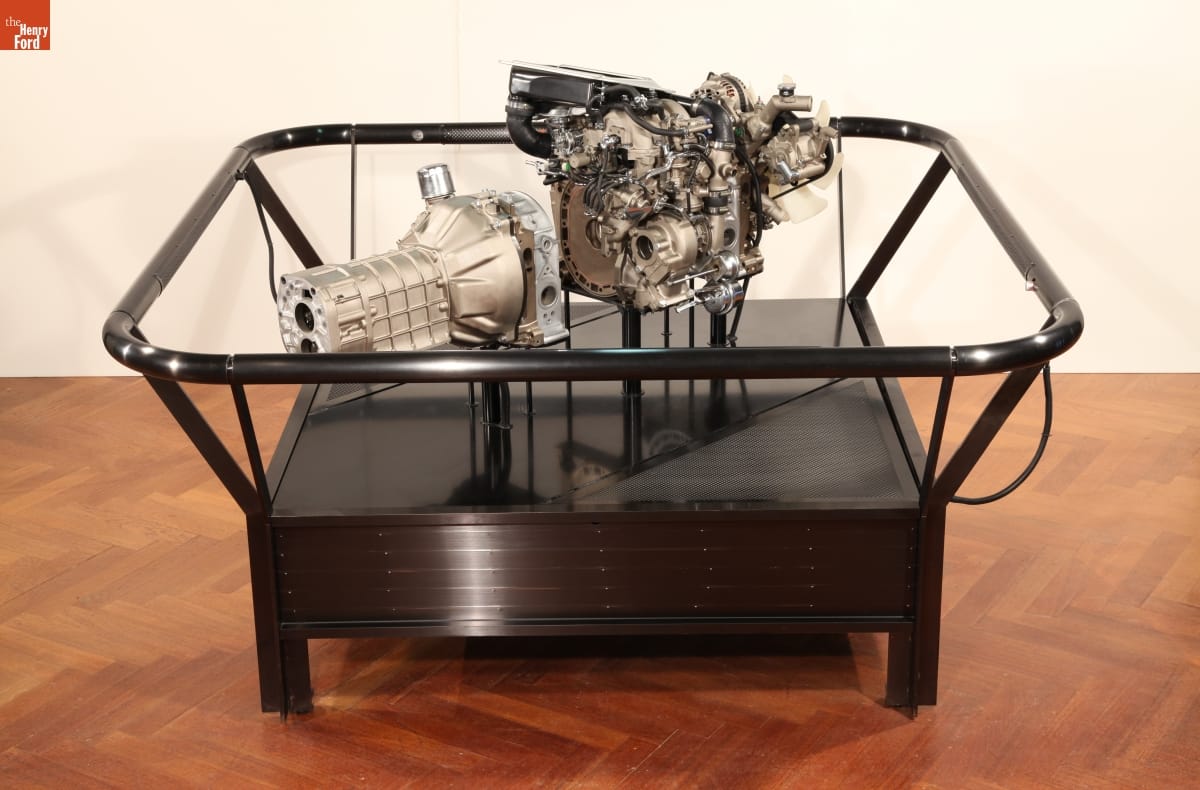
- 1985 Mazda Wankel Rotary Engine - German engineer Felix Wankel conceived the rotary engine as a simpler, lighter, more compact alternative to the traditional piston engine. Various companies tried rotaries, but Mazda was the most successful, with rotary-engine cars dominating its U.S. sales from 1970 through 1972. Owners appreciated the smooth power delivery but not the poor fuel economy. When gas prices rose, Mazda reserved the Wankel rotary for high-performance sports cars.
- 1985
- Collections - Artifact
1985 Mazda Wankel Rotary Engine
German engineer Felix Wankel conceived the rotary engine as a simpler, lighter, more compact alternative to the traditional piston engine. Various companies tried rotaries, but Mazda was the most successful, with rotary-engine cars dominating its U.S. sales from 1970 through 1972. Owners appreciated the smooth power delivery but not the poor fuel economy. When gas prices rose, Mazda reserved the Wankel rotary for high-performance sports cars.
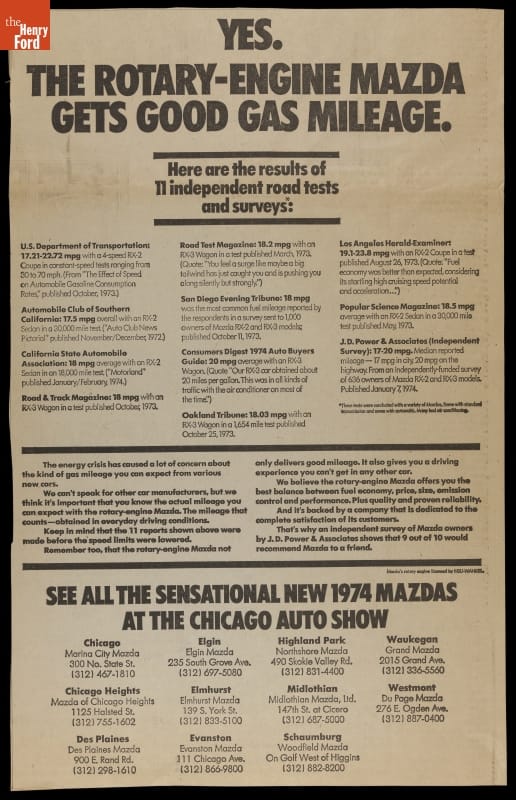
- 1974 Mazda Ad, "Yes. The Rotary-Engine Mazda Gets Good Gas Mileage" - Mazda introduced its first production rotary engine, based on a design by German engineer Felix Wankel, in Japan in 1967. Instead of conventional reciprocating pistons, the rotary power plant used an eccentric rotor to convert internal combustion power into motion. Mazda brought its rotary engine to the American market for 1974. Though compact and lightweight, rotary engines tended to be less fuel efficient.
- February 24, 1974
- Collections - Artifact
1974 Mazda Ad, "Yes. The Rotary-Engine Mazda Gets Good Gas Mileage"
Mazda introduced its first production rotary engine, based on a design by German engineer Felix Wankel, in Japan in 1967. Instead of conventional reciprocating pistons, the rotary power plant used an eccentric rotor to convert internal combustion power into motion. Mazda brought its rotary engine to the American market for 1974. Though compact and lightweight, rotary engines tended to be less fuel efficient.
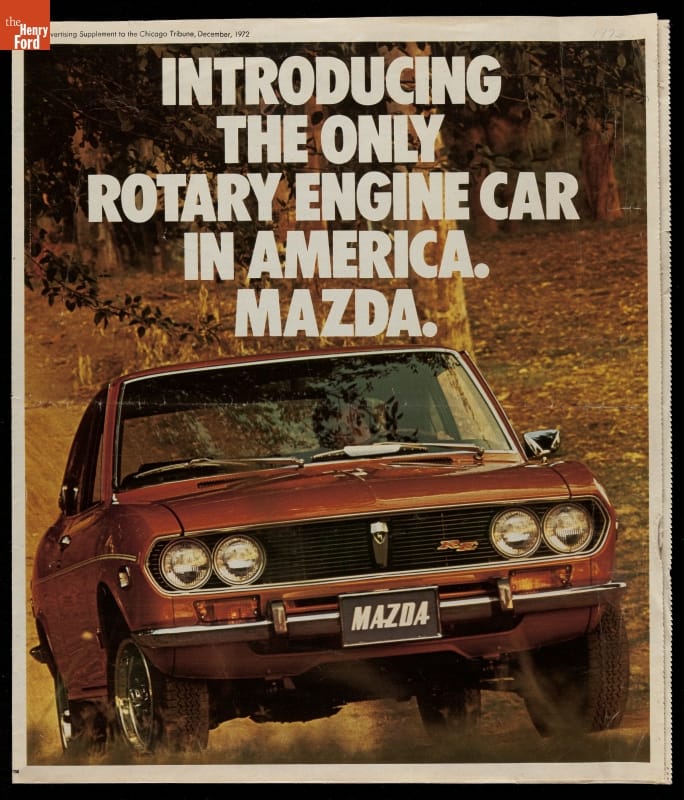
- 1973 Mazda Ad, "Introducing the Only Rotary Engine Car in America, Mazda" - Mazda introduced its first production rotary engine, based on a design by German engineer Felix Wankel, in Japan in 1967. Instead of conventional reciprocating pistons, the rotary power plant used an eccentric rotor to convert internal combustion power into motion. Mazda brought its rotary engine to the American market for 1974. Though compact and lightweight, rotary engines tended to be less fuel efficient.
- December 01, 1972
- Collections - Artifact
1973 Mazda Ad, "Introducing the Only Rotary Engine Car in America, Mazda"
Mazda introduced its first production rotary engine, based on a design by German engineer Felix Wankel, in Japan in 1967. Instead of conventional reciprocating pistons, the rotary power plant used an eccentric rotor to convert internal combustion power into motion. Mazda brought its rotary engine to the American market for 1974. Though compact and lightweight, rotary engines tended to be less fuel efficient.
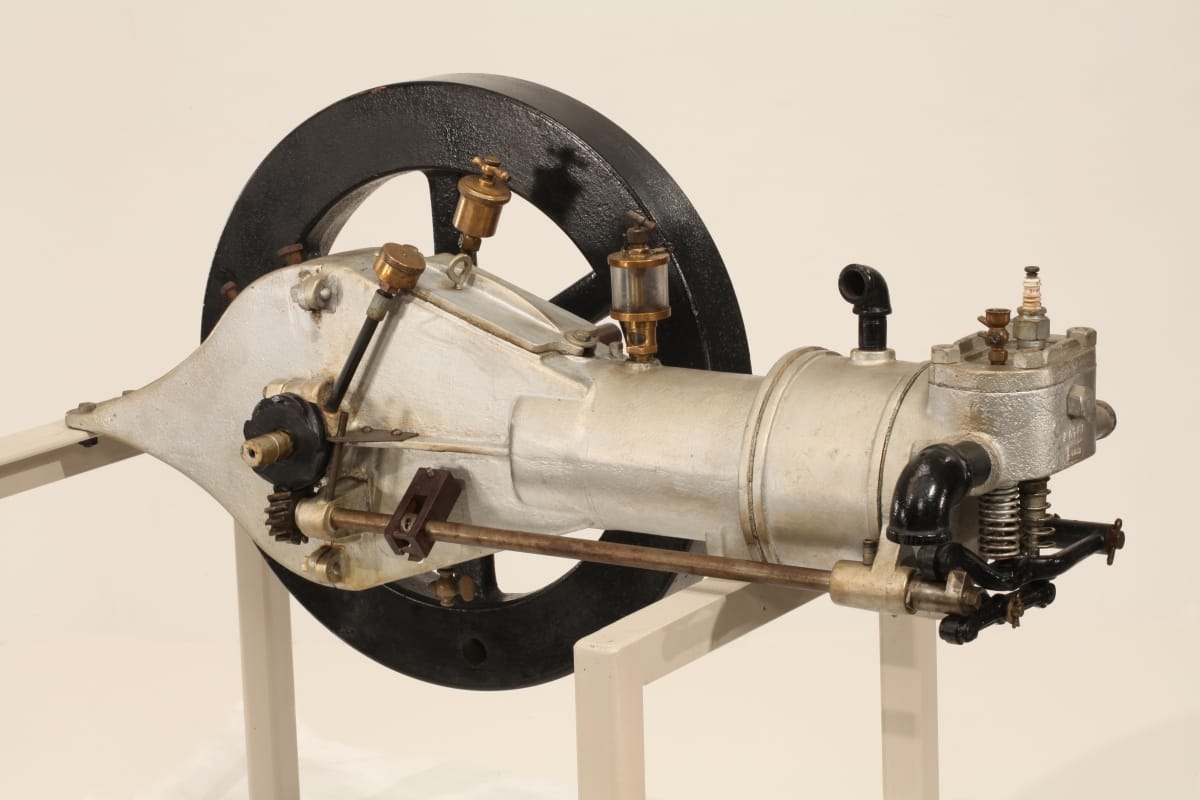
- Engines Exposed: Power, Performance and Innovation - This single-cylinder, four-horsepower engine powered the Oldsmobile Curved Dash runabout. It has one cylinder, one piston, one connecting rod and crank, one balance wheel, and two valves. The complications of larger multi-cylinder engines were eliminated. The engine's simplicity and the vehicle's affordable $650 price made the Curved Dash runabout America's first car produced in large numbers.
- December 20, 2016
- Collections - Set
Engines Exposed: Power, Performance and Innovation
This single-cylinder, four-horsepower engine powered the Oldsmobile Curved Dash runabout. It has one cylinder, one piston, one connecting rod and crank, one balance wheel, and two valves. The complications of larger multi-cylinder engines were eliminated. The engine's simplicity and the vehicle's affordable $650 price made the Curved Dash runabout America's first car produced in large numbers.
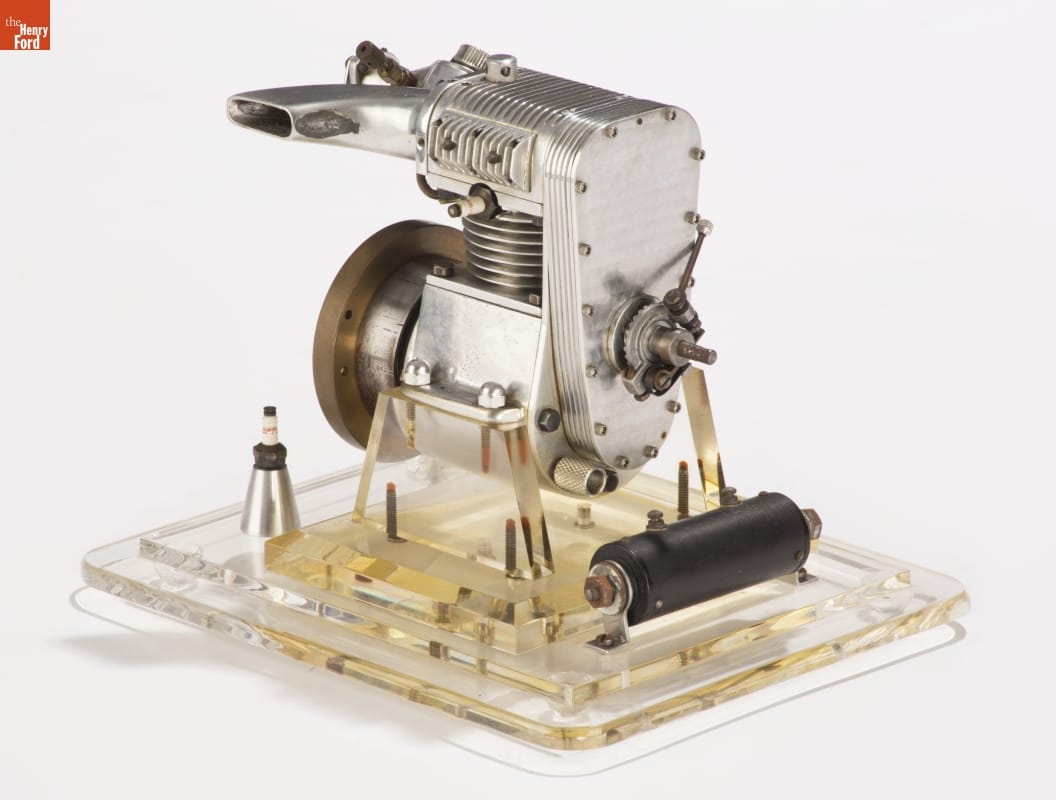
- Prototype Overhead Rotary Valve Engine Built by B.B. Korn, 1940-1949 - Barney Korn was among the most accomplished builders of tether cars in the 1930s and 1940s. His models were always beautifully detailed. Korn even built model cars, boats, and airplanes for Hollywood movies. This prototype overhead-rotary-valve, twin-plug engine was one of Korn's most sophisticated pieces. It showcased his considerable skills as an engineer and machinist.
- 1940-1949
- Collections - Artifact
Prototype Overhead Rotary Valve Engine Built by B.B. Korn, 1940-1949
Barney Korn was among the most accomplished builders of tether cars in the 1930s and 1940s. His models were always beautifully detailed. Korn even built model cars, boats, and airplanes for Hollywood movies. This prototype overhead-rotary-valve, twin-plug engine was one of Korn's most sophisticated pieces. It showcased his considerable skills as an engineer and machinist.
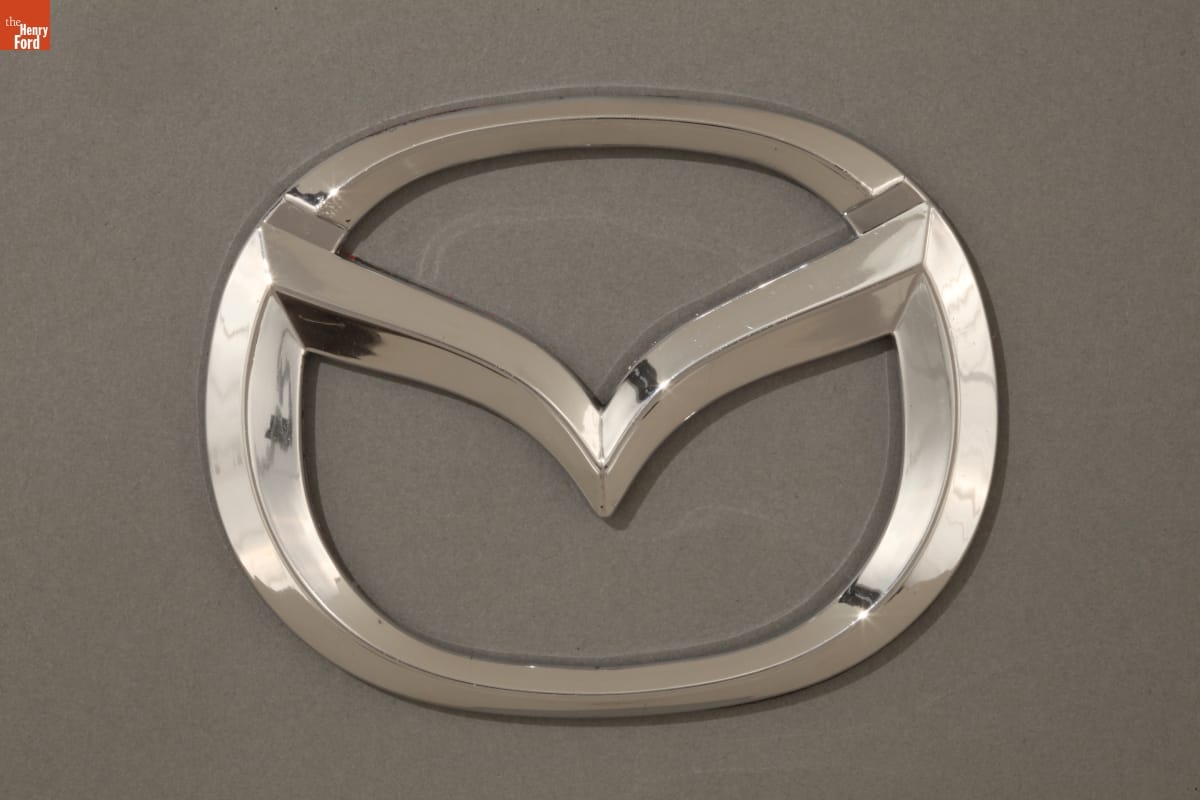
- Mazda Emblem, 2000-2011 - An automobile manufacturer's badge is fundamental to the company's brand identity -- just as the maker's name is often important to <EM>our</EM> identity as consumers and drivers. Early automobile badges tended to be small and often discreetly located; today they have evolved into enlarged, prominently placed, and frequently symmetrical logos -- easy to recognize, even at a glance in a rear-view mirror.
- 2000-2011
- Collections - Artifact
Mazda Emblem, 2000-2011
An automobile manufacturer's badge is fundamental to the company's brand identity -- just as the maker's name is often important to our identity as consumers and drivers. Early automobile badges tended to be small and often discreetly located; today they have evolved into enlarged, prominently placed, and frequently symmetrical logos -- easy to recognize, even at a glance in a rear-view mirror.
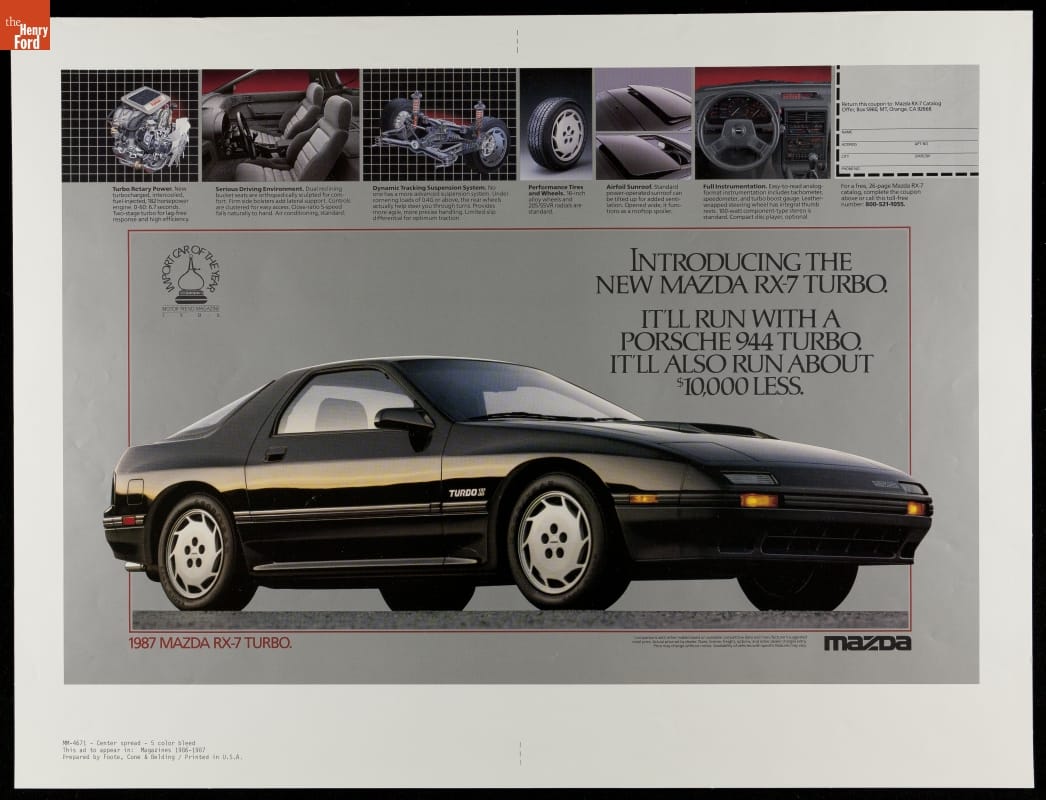
- 1987 Mazda Advertisement, "Introducing the New Mazda RX-7 Turbo" - Mazda built its RX-7 sports car across three generations from 1978-2002. Each version featured a Wankel rotary engine. Instead of conventional reciprocating pistons, the rotary power plant used an eccentric rotor to convert internal combustion power into motion. Though compact and lightweight, rotary engines tended to be less fuel efficient. Available turbochargers boosted the RX-7's horsepower.
- 1987
- Collections - Artifact
1987 Mazda Advertisement, "Introducing the New Mazda RX-7 Turbo"
Mazda built its RX-7 sports car across three generations from 1978-2002. Each version featured a Wankel rotary engine. Instead of conventional reciprocating pistons, the rotary power plant used an eccentric rotor to convert internal combustion power into motion. Though compact and lightweight, rotary engines tended to be less fuel efficient. Available turbochargers boosted the RX-7's horsepower.
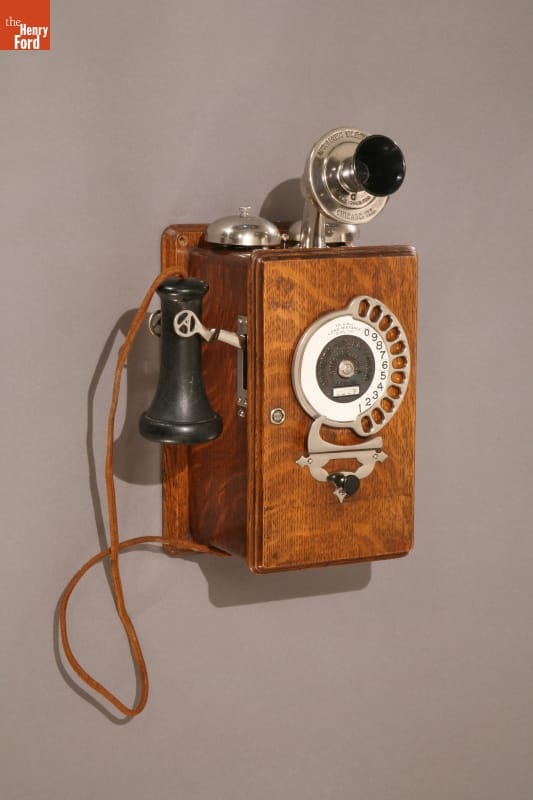
- Rotary Dial Wall Telephone, 1905 -
- 1905
- Collections - Artifact
Rotary Dial Wall Telephone, 1905
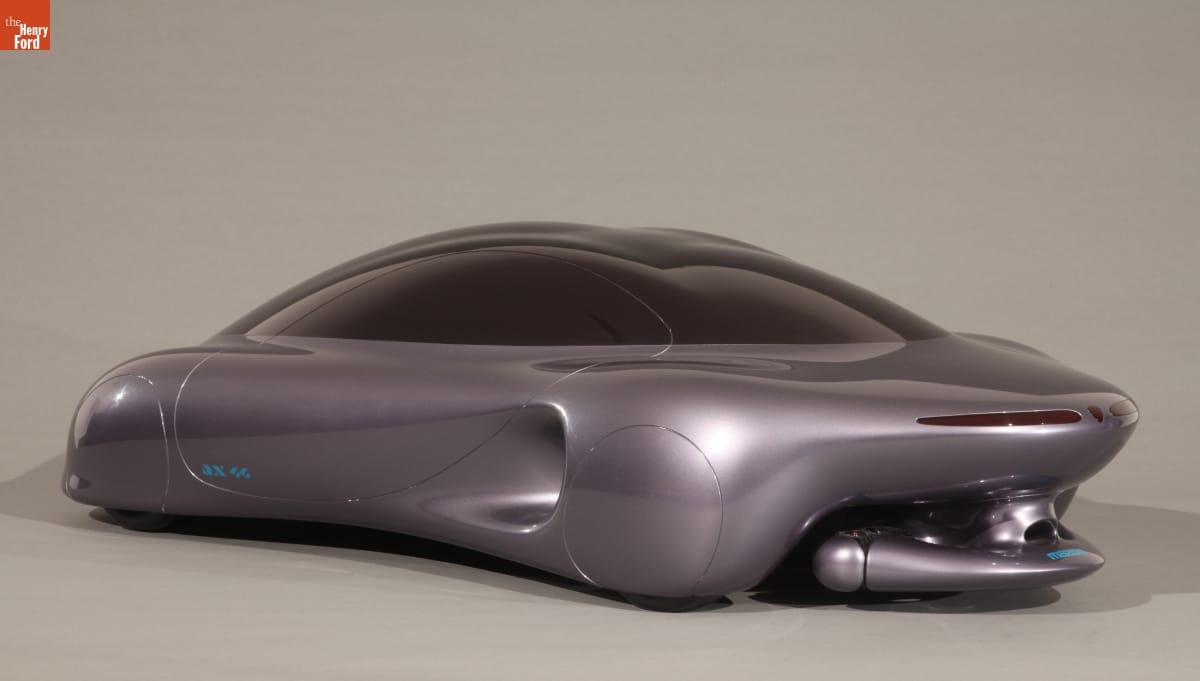
- Mazda RX-44 Scale Model, 1987 - Some design elements in this one-fifth-scale concept model of the Mazda RX-44 echo the company's rotary engine. The four bubbles on the roof are a visual reference to four engine rotors and four passengers, thus the name Mazda RX-44.
- 1987
- Collections - Artifact
Mazda RX-44 Scale Model, 1987
Some design elements in this one-fifth-scale concept model of the Mazda RX-44 echo the company's rotary engine. The four bubbles on the roof are a visual reference to four engine rotors and four passengers, thus the name Mazda RX-44.
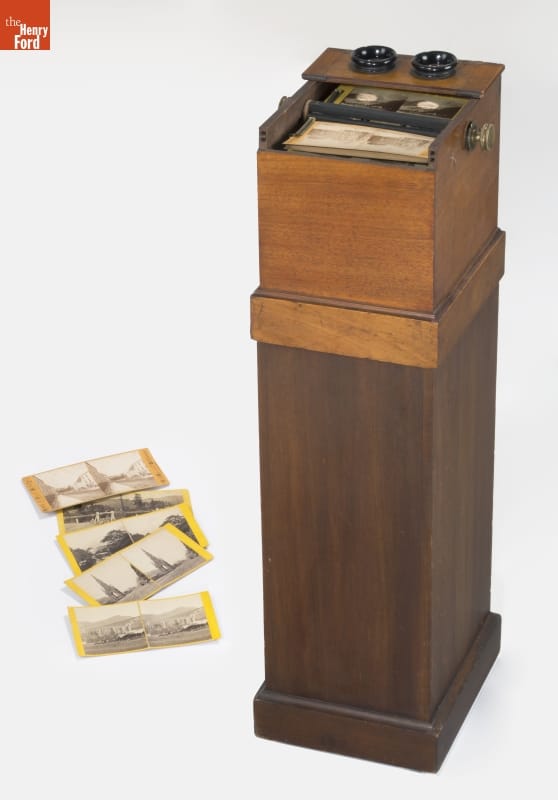
- Rotary Stereoscope, 1880-1900 -
- 1880-1900
- Collections - Artifact
Rotary Stereoscope, 1880-1900