
Search
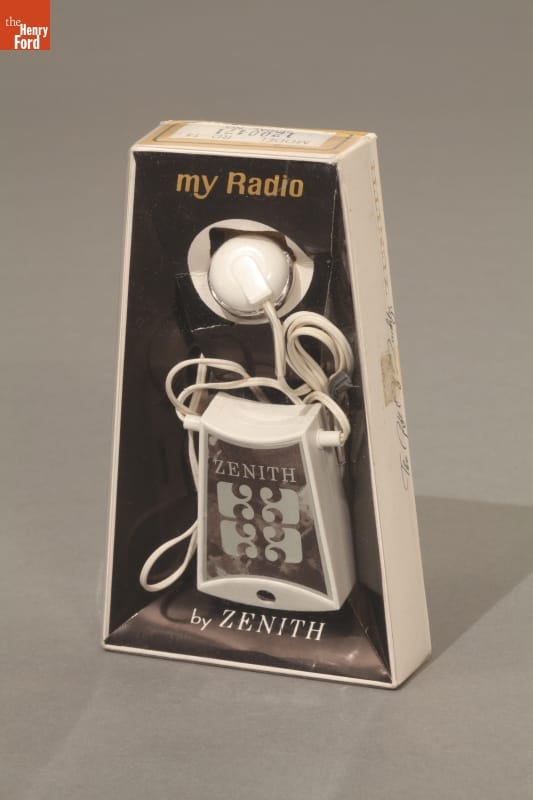
- Zenith "My Radio" Pendant Transistor Radio, circa 1970 - The size of radios shrank following the advent of transistor technology. Even the smallest vacuum tubes were bulky, and their power consumption ensured the need for large batteries. Transistor radios made of lightweight plastics were cheap and truly portable. With the addition of an earphone a radio such as this allowed the listener to enjoy a completely personal listening experience.
- circa 1970
- Collections - Artifact
Zenith "My Radio" Pendant Transistor Radio, circa 1970
The size of radios shrank following the advent of transistor technology. Even the smallest vacuum tubes were bulky, and their power consumption ensured the need for large batteries. Transistor radios made of lightweight plastics were cheap and truly portable. With the addition of an earphone a radio such as this allowed the listener to enjoy a completely personal listening experience.
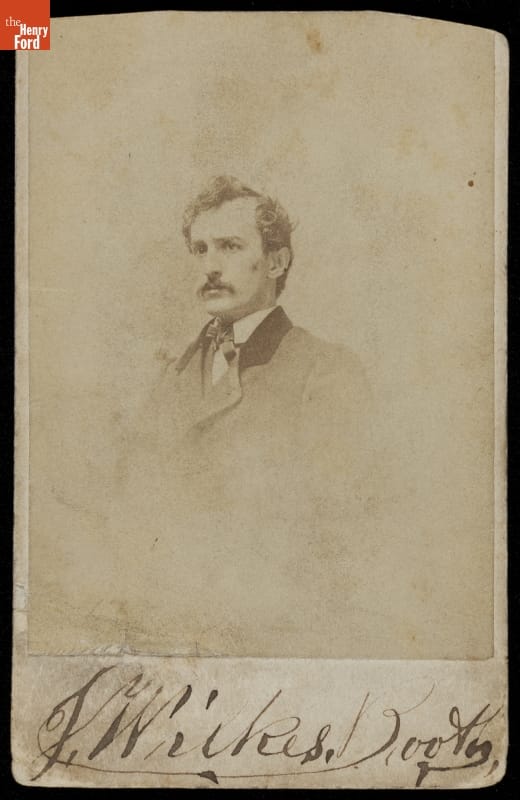
- Autographed Portrait of John Wilkes Booth, circa 1860 - Well-known actor John Wilkes Booth--better remembered for the 1865 assassination of President Abraham Lincoln--posed for this carte-de-visite in a professional photographer's studio around 1860. Cartes-de-visite, small photographic prints on cardboard stock, remained popular from the Civil War in the 1860s through the 1880s. Americans commonly collected and exchanged them to commemorate family members or celebrities.
- circa 1860
- Collections - Artifact
Autographed Portrait of John Wilkes Booth, circa 1860
Well-known actor John Wilkes Booth--better remembered for the 1865 assassination of President Abraham Lincoln--posed for this carte-de-visite in a professional photographer's studio around 1860. Cartes-de-visite, small photographic prints on cardboard stock, remained popular from the Civil War in the 1860s through the 1880s. Americans commonly collected and exchanged them to commemorate family members or celebrities.
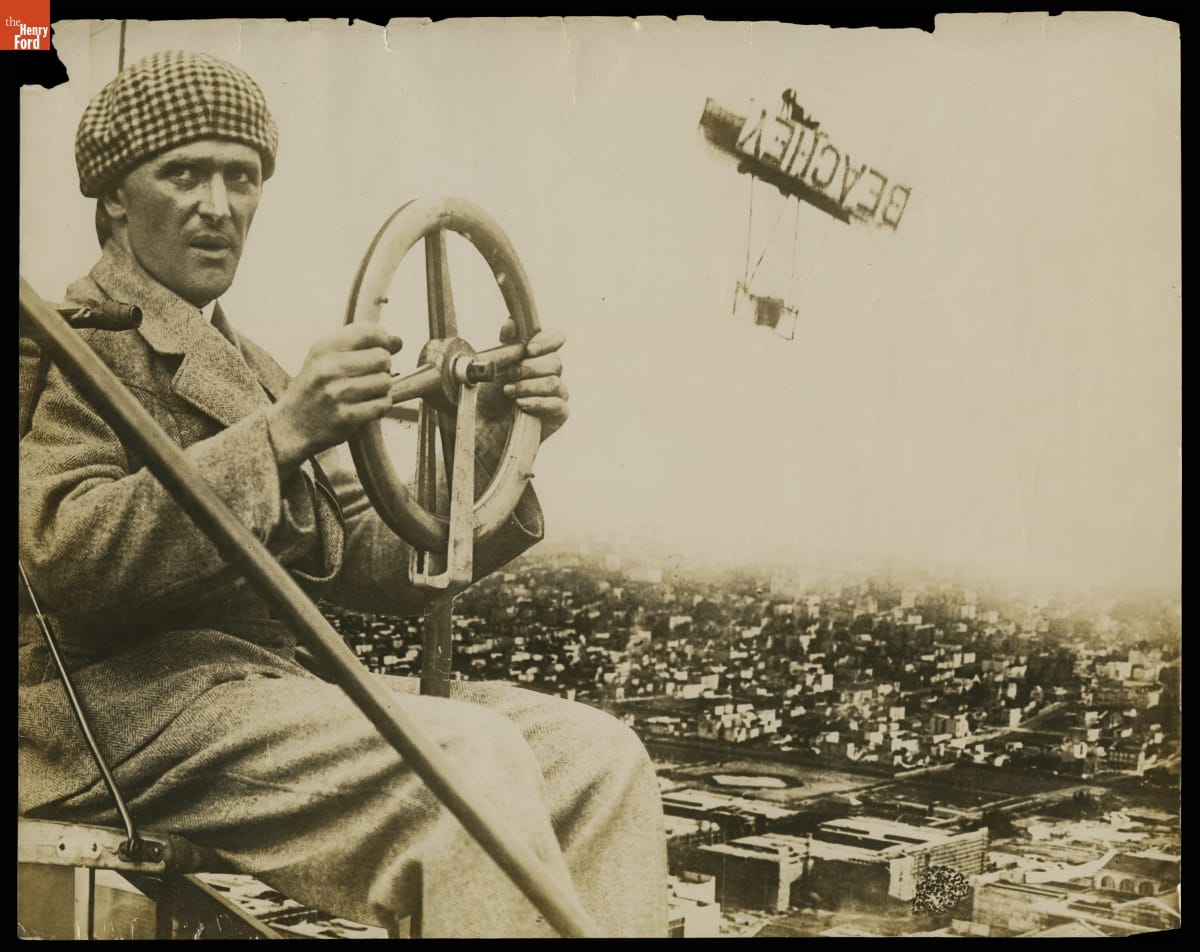
- Lincoln Beachey Stunt Flying over San Francisco, California, circa 1915 - Lincoln Beachey is remembered as America's first great stunt flyer. He perfected a series of aerobatic maneuvers -- including spins, dives, spirals, and loops -- and earned fame and fortune by staging heart-stopping exhibition flights for audiences across the country. Beachey died when the wings broke loose from his airplane during a stunt flight over San Francisco Bay in 1915.
- circa 1915
- Collections - Artifact
Lincoln Beachey Stunt Flying over San Francisco, California, circa 1915
Lincoln Beachey is remembered as America's first great stunt flyer. He perfected a series of aerobatic maneuvers -- including spins, dives, spirals, and loops -- and earned fame and fortune by staging heart-stopping exhibition flights for audiences across the country. Beachey died when the wings broke loose from his airplane during a stunt flight over San Francisco Bay in 1915.
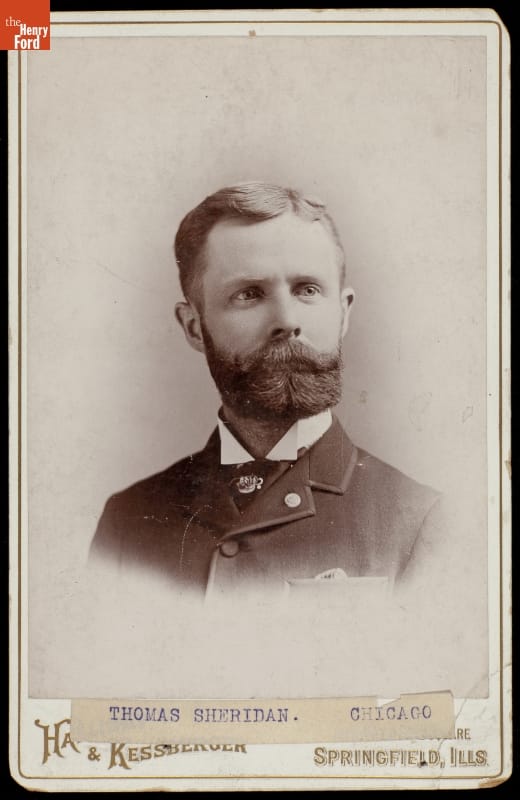
- Thomas Sheridan, Professional Bicyclist, circa 1890 - Thomas F. Sheridan was a cyclist and active in the League of American Wheelmen. He served as vice president of that organization in the 1890s. League members were early advocates of good roads and the rights of cyclists.
- circa 1890
- Collections - Artifact
Thomas Sheridan, Professional Bicyclist, circa 1890
Thomas F. Sheridan was a cyclist and active in the League of American Wheelmen. He served as vice president of that organization in the 1890s. League members were early advocates of good roads and the rights of cyclists.
- First McDonald's Restaurant Crew, Des Plains, Illinois, circa 1964 - In its early years as a franchise, McDonald's hired only males, dressed neatly in white as seen at this restaurant in Des Plaines, Illinois, about 1964.
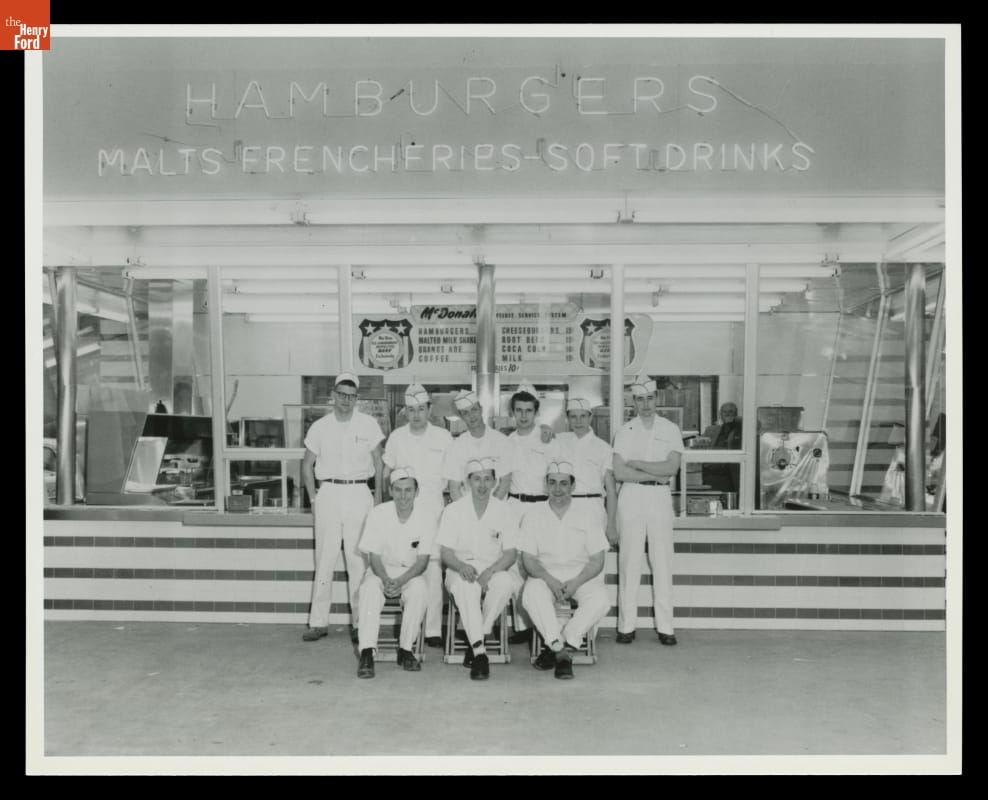
- circa 1964
- Collections - Artifact
First McDonald's Restaurant Crew, Des Plains, Illinois, circa 1964
In its early years as a franchise, McDonald's hired only males, dressed neatly in white as seen at this restaurant in Des Plaines, Illinois, about 1964.
- Label, "J. Berry's Fine Confections," 1886-1905 -
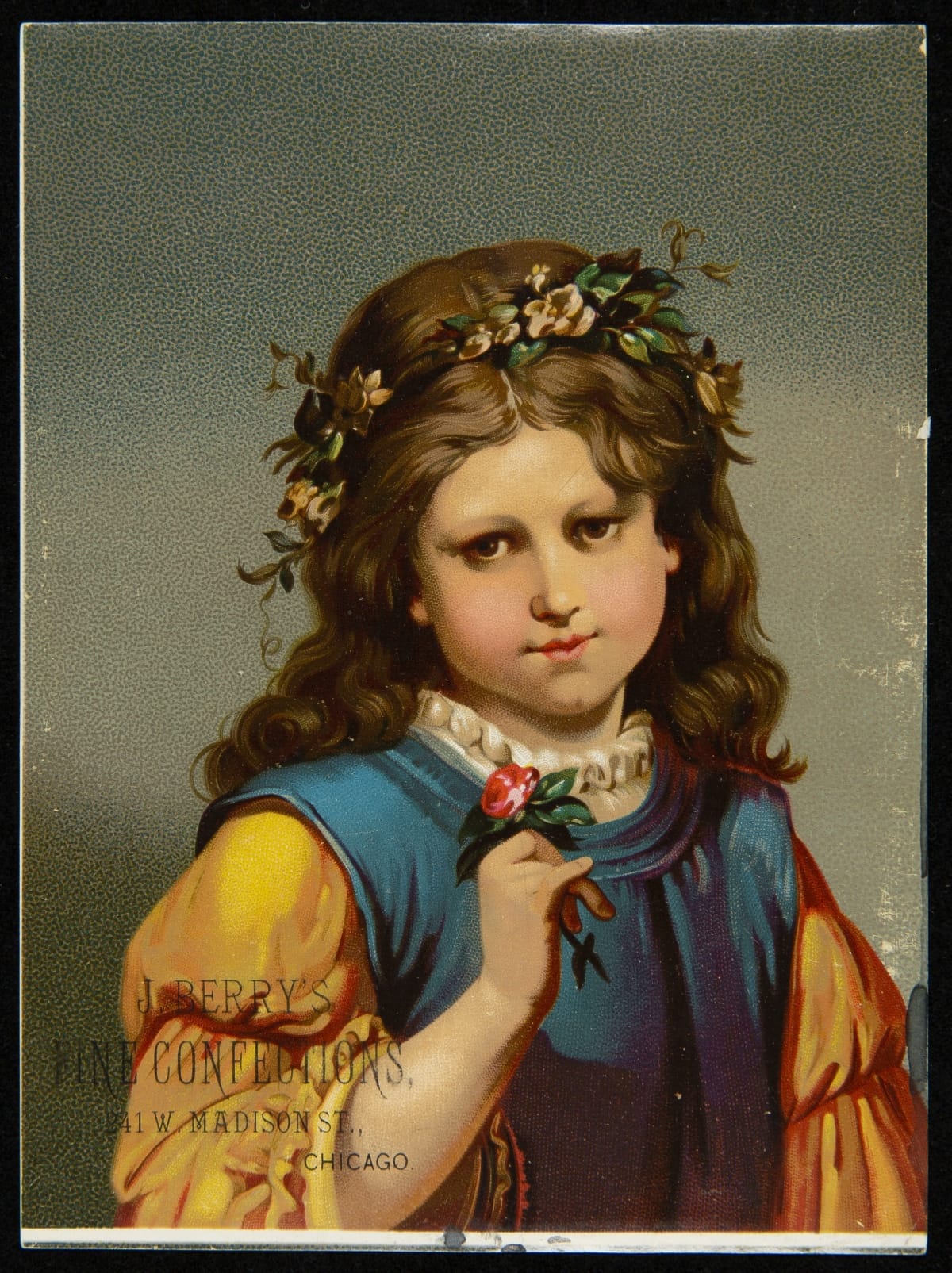
- 1886-1905
- Collections - Artifact
Label, "J. Berry's Fine Confections," 1886-1905
- Man Wearing a Large Bow Tie, 1860 -
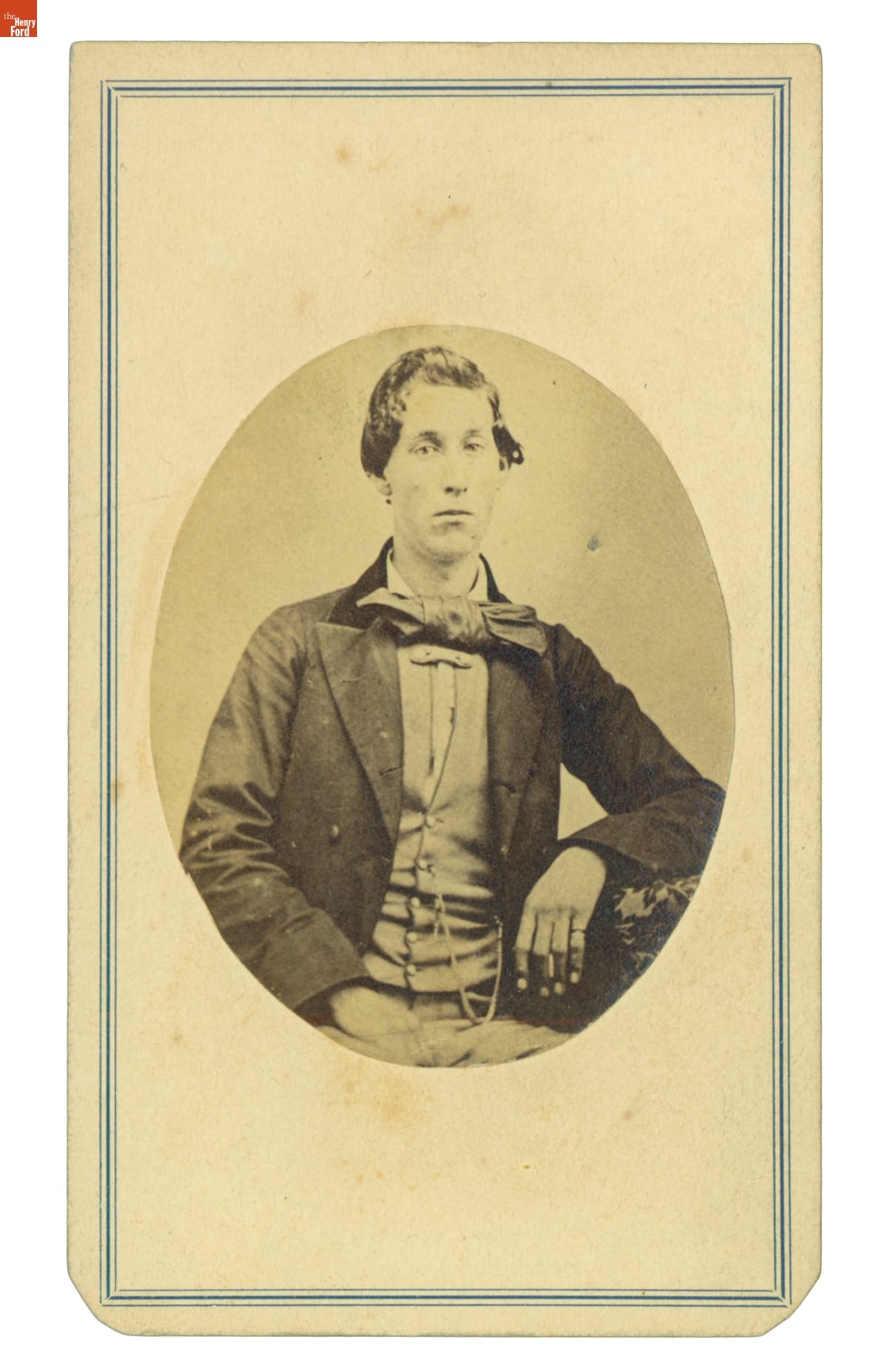
- 1860
- Collections - Artifact
Man Wearing a Large Bow Tie, 1860
- Henry Ford's Private Railroad Car "Fair Lane," 1921 - By 1920, Henry and Clara Ford found it increasingly difficult to travel with any degree of privacy. They purchased a private railcar and named it <EM>Fair Lane</EM>. The car had four private rooms, an observation lounge, a dining room, and a fully equipped kitchen. It could accommodate eight passengers. The couple made over 400 trips using <EM>Fair Lane</EM> before selling the passenger car in 1942.

- June 23, 1921
- Collections - Artifact
Henry Ford's Private Railroad Car "Fair Lane," 1921
By 1920, Henry and Clara Ford found it increasingly difficult to travel with any degree of privacy. They purchased a private railcar and named it Fair Lane. The car had four private rooms, an observation lounge, a dining room, and a fully equipped kitchen. It could accommodate eight passengers. The couple made over 400 trips using Fair Lane before selling the passenger car in 1942.
- "Meter-Ice" Coin Operated Refrigerator Meter, 1935-1945 -
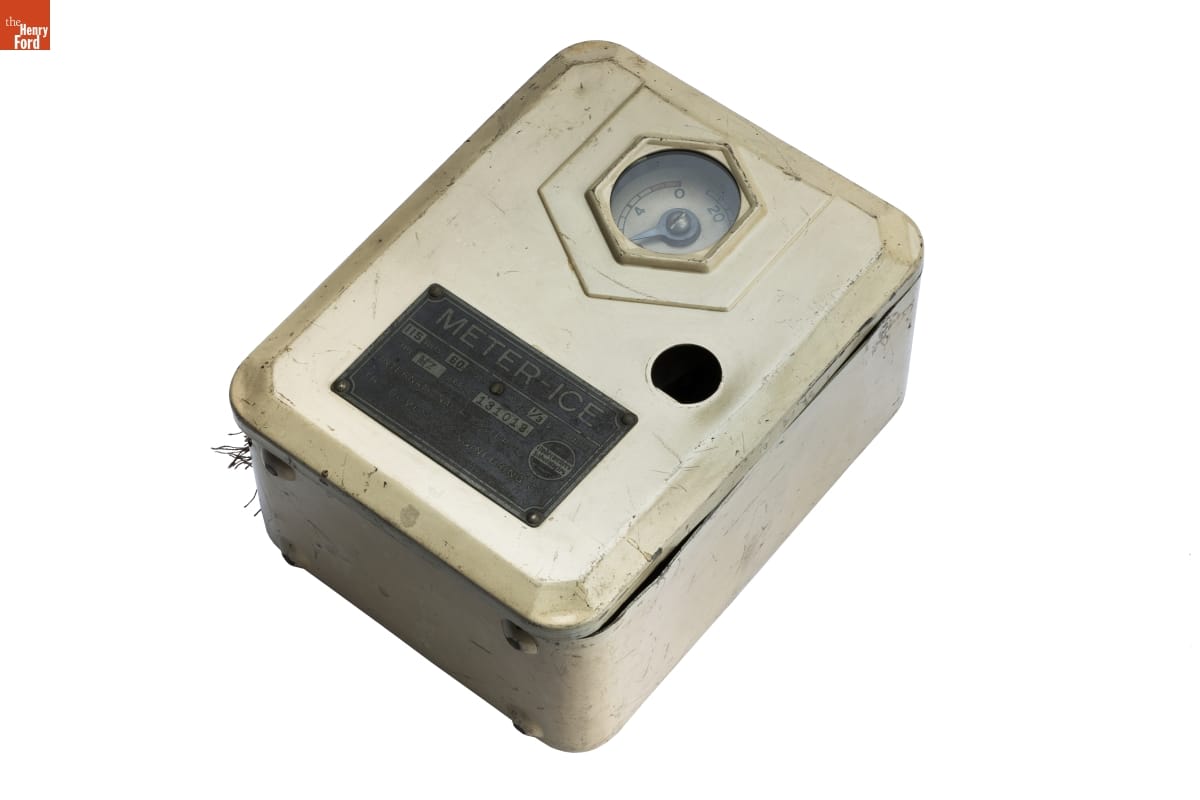
- 1935-1945
- Collections - Artifact
"Meter-Ice" Coin Operated Refrigerator Meter, 1935-1945
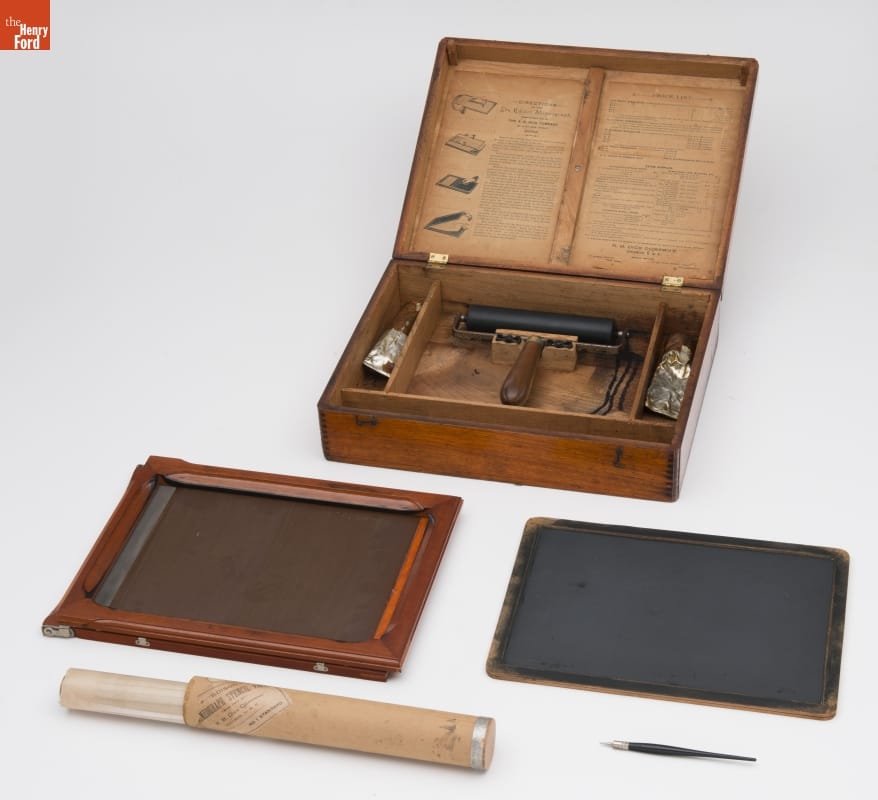
- Edison No. 1 Mimeograph, 1887 - Thomas Edison received a patent in 1876 for "Autographic Printing," covering the electric pen and flatbed press; a patent for "Autographic Stencils" followed in 1880. The mimeograph was invented by Albert Blake Dick in 1887, who licensed and refined Edison's patents. This low-cost, stencil-based printing technology was popular until displaced by photocopying machines and offset printing in the 1960s.
- 1887
- Collections - Artifact
Edison No. 1 Mimeograph, 1887
Thomas Edison received a patent in 1876 for "Autographic Printing," covering the electric pen and flatbed press; a patent for "Autographic Stencils" followed in 1880. The mimeograph was invented by Albert Blake Dick in 1887, who licensed and refined Edison's patents. This low-cost, stencil-based printing technology was popular until displaced by photocopying machines and offset printing in the 1960s.