
Search
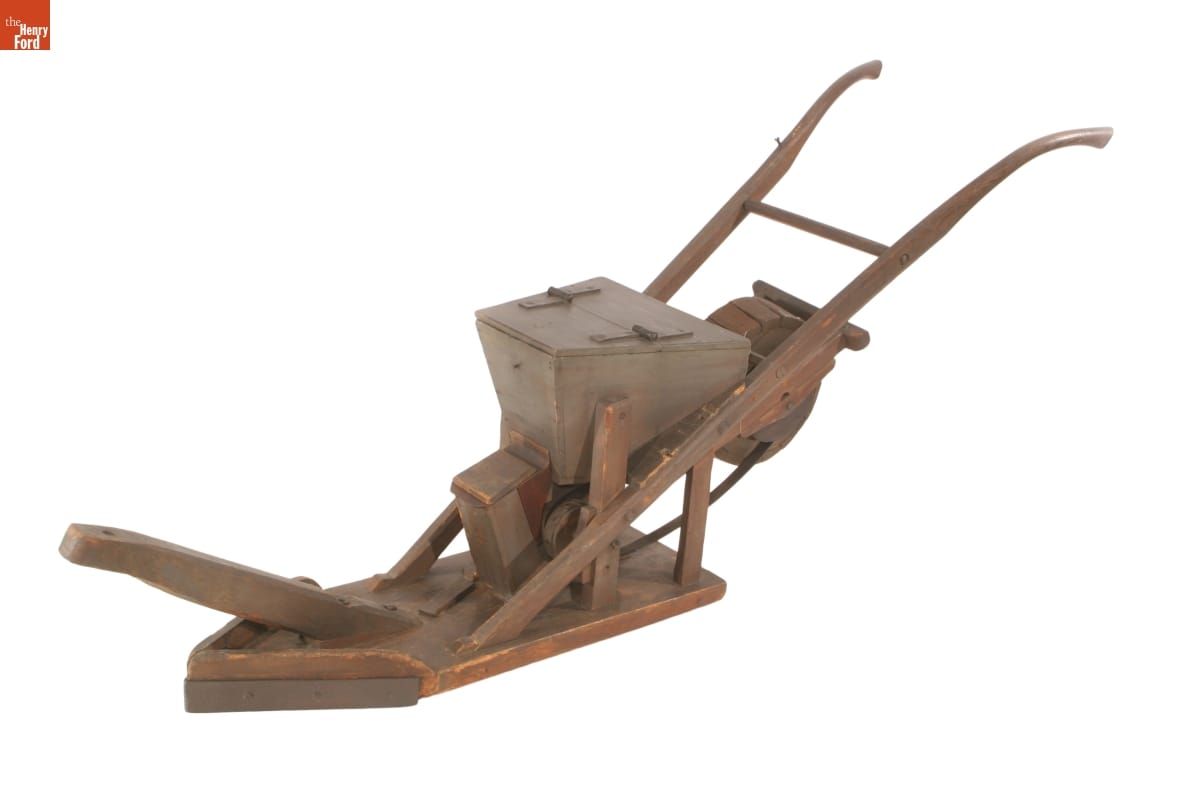
- One Row Corn Planter, circa 1855 - Farmers planted corn in hills during the 19th century. That started a year-round effort to raise food for livestock and farm family. Some used single-row planters like this. Then they cultivated with a shovel plow until corn was knee-high. They then planted squash or pumpkins to keep down weeds and retain moisture (a form of double cropping). At harvest they husked ears (to feed pigs) and shocked stalks (to feed cattle).
- circa 1855
- Collections - Artifact
One Row Corn Planter, circa 1855
Farmers planted corn in hills during the 19th century. That started a year-round effort to raise food for livestock and farm family. Some used single-row planters like this. Then they cultivated with a shovel plow until corn was knee-high. They then planted squash or pumpkins to keep down weeds and retain moisture (a form of double cropping). At harvest they husked ears (to feed pigs) and shocked stalks (to feed cattle).
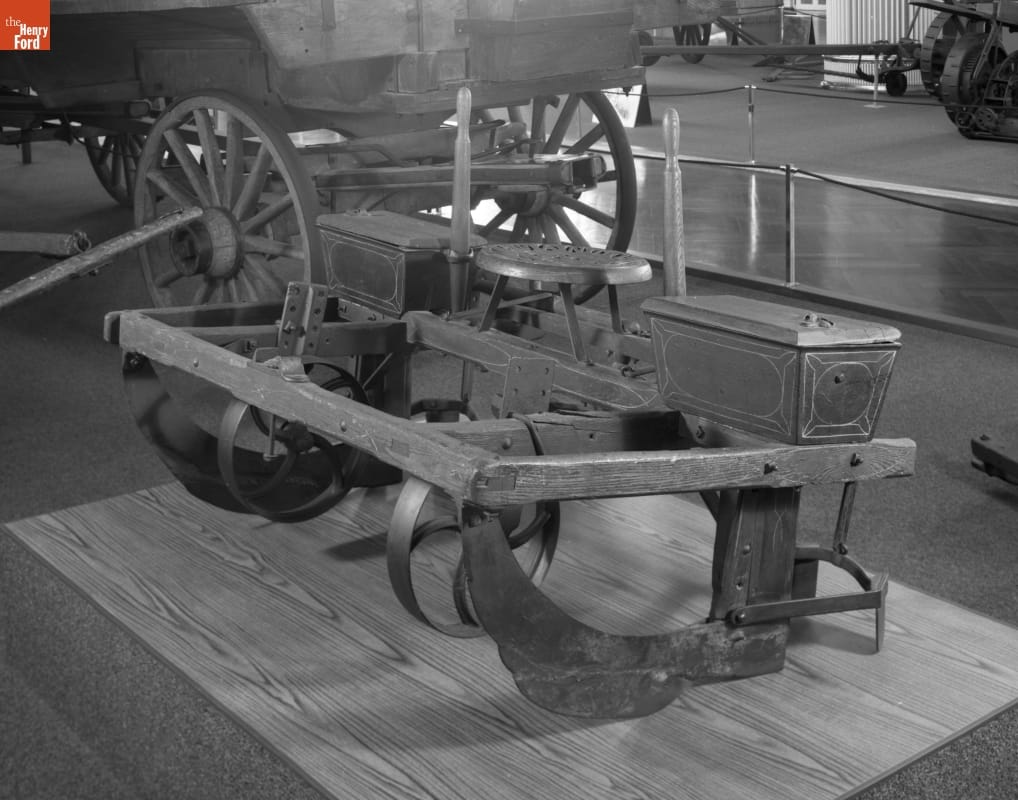
- Corn Planter, circa 1875 - Farmers started a year-round effort to raise food for livestock and the farm family by planting corn in hills. Double-row planters cut the time required to plant in half. Farmers cultivated with a shovel plow until corn was knee-high. They then planted squash or pumpkins to retain soil moisture (a form of double cropping). At harvest they husked ears (to feed pigs) and shocked stalks (to feed cattle).
- circa 1875
- Collections - Artifact
Corn Planter, circa 1875
Farmers started a year-round effort to raise food for livestock and the farm family by planting corn in hills. Double-row planters cut the time required to plant in half. Farmers cultivated with a shovel plow until corn was knee-high. They then planted squash or pumpkins to retain soil moisture (a form of double cropping). At harvest they husked ears (to feed pigs) and shocked stalks (to feed cattle).
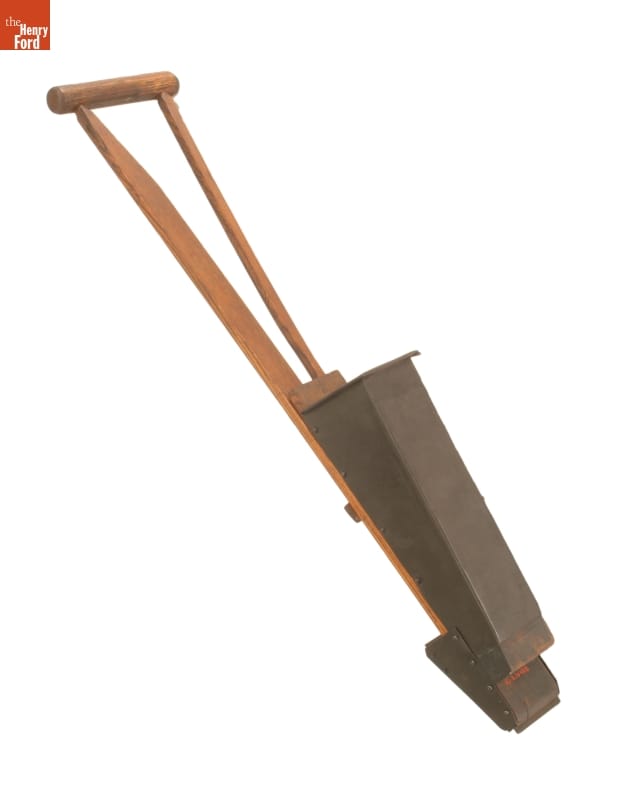
- Hand Corn Planter, 1890 - Beginning in the 1850s, farmers could plant corn by jabbing the metal tip of this planter into the ground. Activating the lever would drop the seeds into the hole. This device may have sped up planting, but it remained a tool for small acreage farms or planting areas missed by horse-drawn mechanical seed drills.
- circa 1890
- Collections - Artifact
Hand Corn Planter, 1890
Beginning in the 1850s, farmers could plant corn by jabbing the metal tip of this planter into the ground. Activating the lever would drop the seeds into the hole. This device may have sped up planting, but it remained a tool for small acreage farms or planting areas missed by horse-drawn mechanical seed drills.
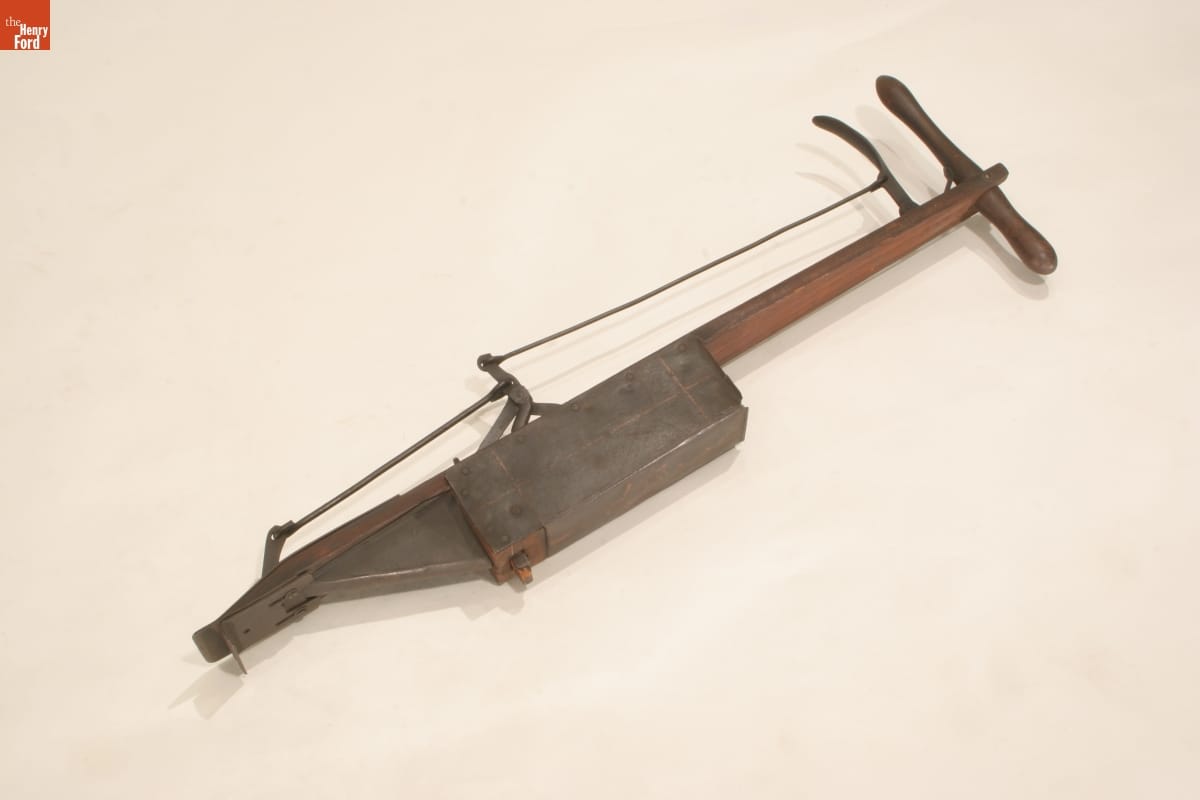
- Hand Corn Planter, circa 1882 - Beginning in the 1850s, farmers could plant corn by jabbing the metal tip of this planter into the ground. Activating the lever would drop the seeds into the hole. This device may have sped up planting, but it remained a tool for small acreage farms or planting areas missed by horse-drawn mechanical seed drills.
- circa 1882
- Collections - Artifact
Hand Corn Planter, circa 1882
Beginning in the 1850s, farmers could plant corn by jabbing the metal tip of this planter into the ground. Activating the lever would drop the seeds into the hole. This device may have sped up planting, but it remained a tool for small acreage farms or planting areas missed by horse-drawn mechanical seed drills.
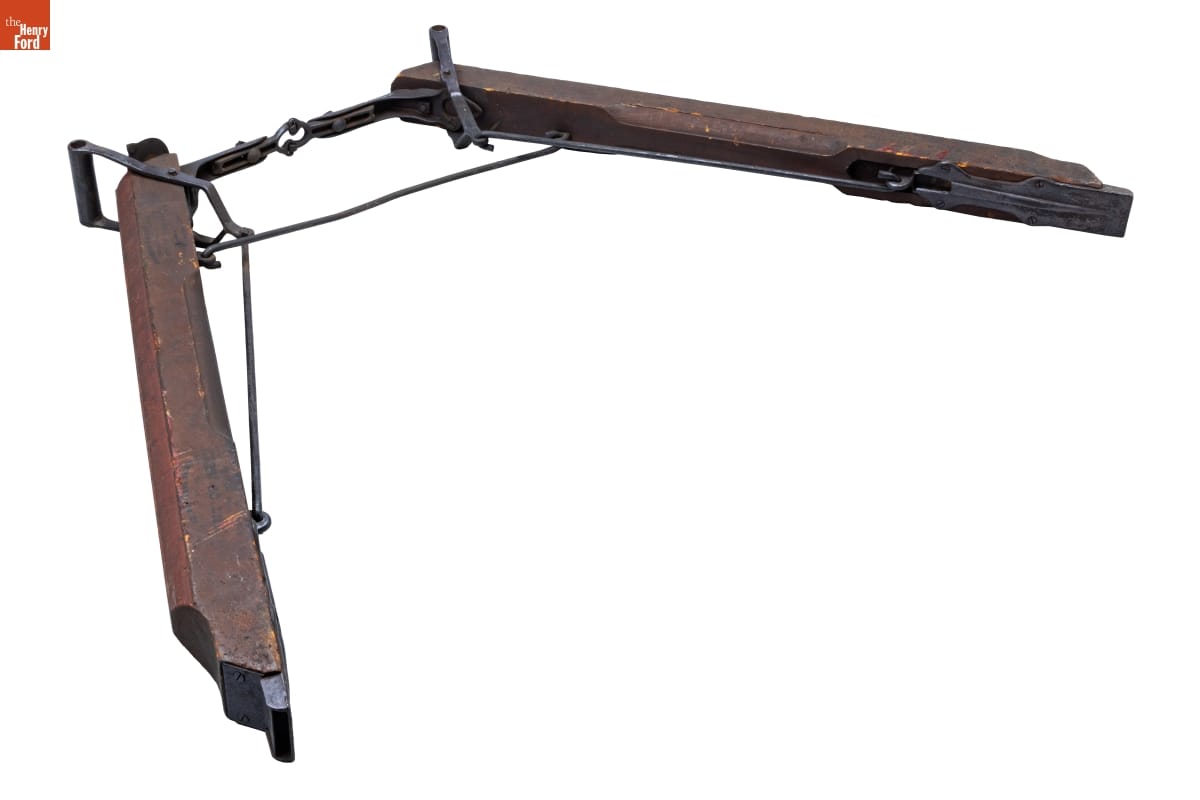
- Hand Planter - Beginning in the 1850s, farmers could plant corn by jabbing the metal tip of this planter into the ground. Activating the lever would drop the seeds into the hole. This device may have sped up planting, but it remained a tool for small acreage farms or planting areas missed by horse-drawn mechanical seed drills.
- Collections - Artifact
Hand Planter
Beginning in the 1850s, farmers could plant corn by jabbing the metal tip of this planter into the ground. Activating the lever would drop the seeds into the hole. This device may have sped up planting, but it remained a tool for small acreage farms or planting areas missed by horse-drawn mechanical seed drills.
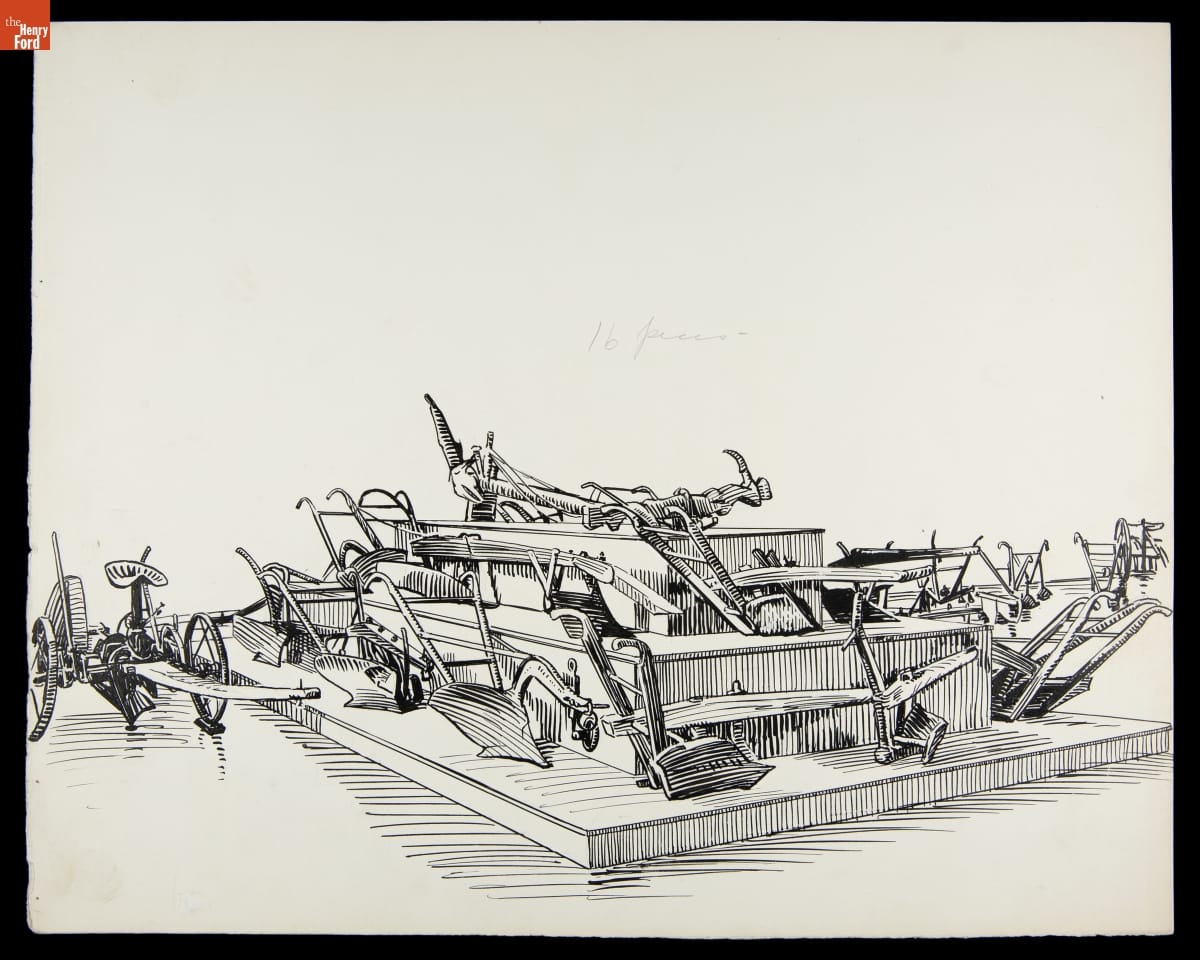
- Agricultural Equipment in Henry Ford Museum, circa 1941 - Irving Bacon, a Ford Motor Company employee and Henry Ford's personal artist, created pen-and-ink drawings to illustrate guidebooks for the Edison Institute Museum and Greenfield Village (now The Henry Ford) when they officially opened to the public in 1933. An illustrated souvenir guidebook helped visitors navigate the exhibits and grounds. Ford also used these drawings in other company publications.
- circa 1941
- Collections - Artifact
Agricultural Equipment in Henry Ford Museum, circa 1941
Irving Bacon, a Ford Motor Company employee and Henry Ford's personal artist, created pen-and-ink drawings to illustrate guidebooks for the Edison Institute Museum and Greenfield Village (now The Henry Ford) when they officially opened to the public in 1933. An illustrated souvenir guidebook helped visitors navigate the exhibits and grounds. Ford also used these drawings in other company publications.
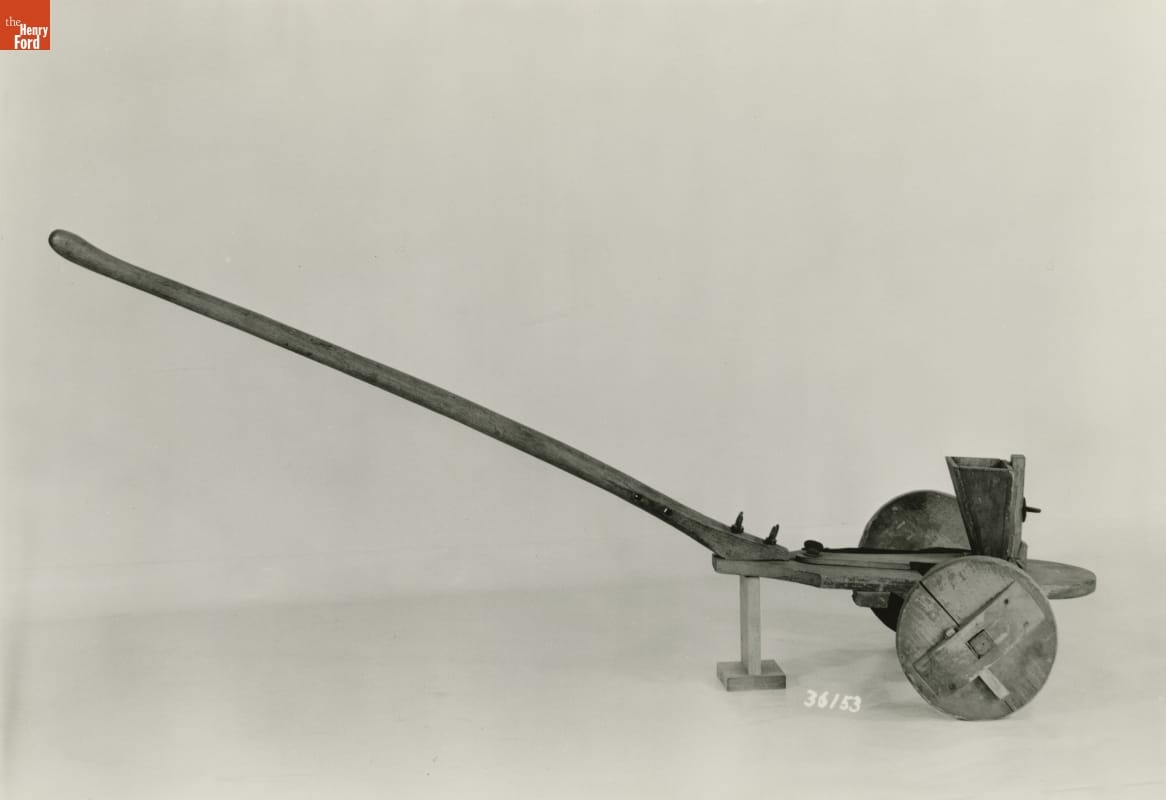
- Garden Seed Planter, circa 1850 - Americans have always sought to replace manual labor with machines, even if just for planting garden seeds. This early example of a mechanical planter is made almost entirely of wood. The seed is deposited by a slide in the base of the hopper, which is tripped by cogs on the inside of the planter's wheel.
- circa 1850
- Collections - Artifact
Garden Seed Planter, circa 1850
Americans have always sought to replace manual labor with machines, even if just for planting garden seeds. This early example of a mechanical planter is made almost entirely of wood. The seed is deposited by a slide in the base of the hopper, which is tripped by cogs on the inside of the planter's wheel.
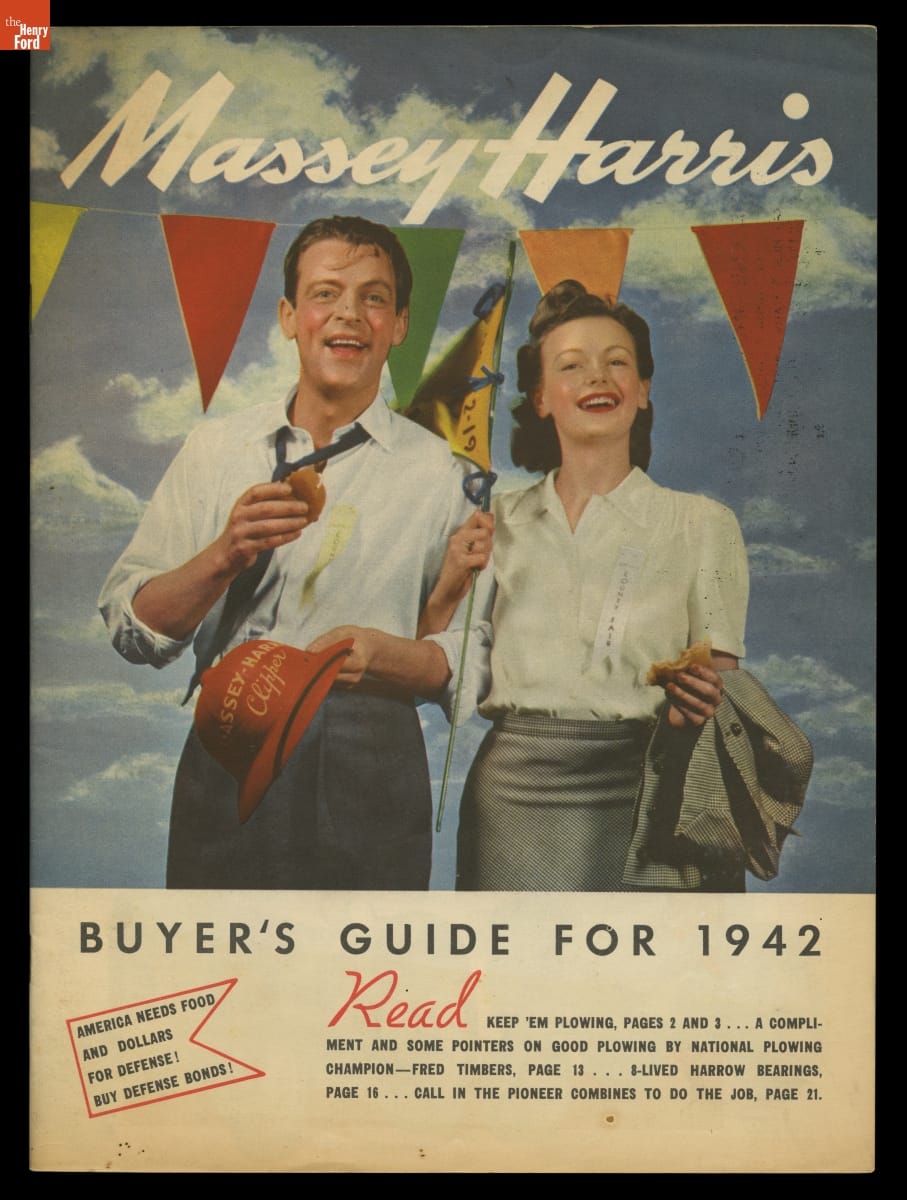
- Massey-Harris Buyer's Guide for 1942 - It took hundreds of years to perfect machinery that could combine the three major steps of harvesting grain: reaping, or cutting the crop; threshing to loosen the grain from the chaff; and disposing of the straw while retaining the grain. Massey-Harris introduced practical self-propelled "combines" in 1938. One driver could operate them, reducing the need for hired help during the labor shortages of World War II.
- 1942
- Collections - Artifact
Massey-Harris Buyer's Guide for 1942
It took hundreds of years to perfect machinery that could combine the three major steps of harvesting grain: reaping, or cutting the crop; threshing to loosen the grain from the chaff; and disposing of the straw while retaining the grain. Massey-Harris introduced practical self-propelled "combines" in 1938. One driver could operate them, reducing the need for hired help during the labor shortages of World War II.
- Corn Planter, circa 1880 - Farmers started a year-round effort to raise food for livestock and the farm family by planting corn in hills. Double-row planters cut the time required to plant in half. Farmers cultivated with a shovel plow until corn was knee-high. They then planted squash or pumpkins to retain soil moisture (a form of double cropping). At harvest they husked ears (to feed pigs) and shocked stalks (to feed cattle).
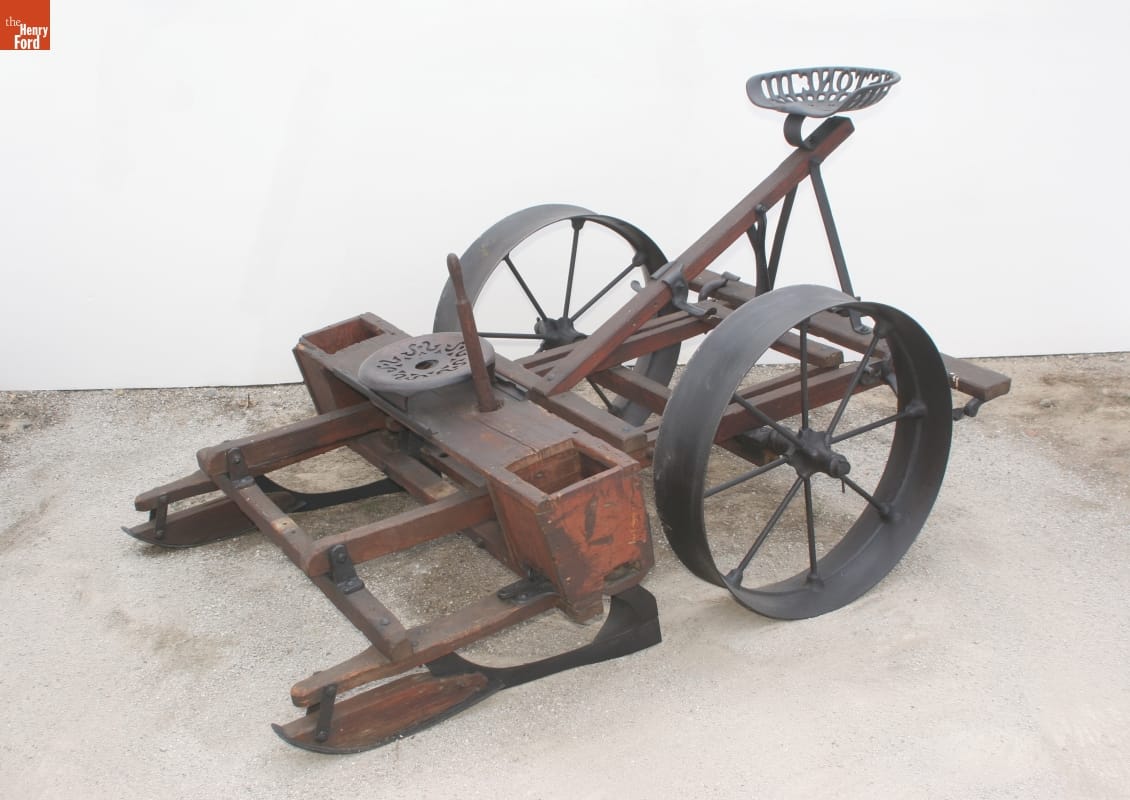
- circa 1880
- Collections - Artifact
Corn Planter, circa 1880
Farmers started a year-round effort to raise food for livestock and the farm family by planting corn in hills. Double-row planters cut the time required to plant in half. Farmers cultivated with a shovel plow until corn was knee-high. They then planted squash or pumpkins to retain soil moisture (a form of double cropping). At harvest they husked ears (to feed pigs) and shocked stalks (to feed cattle).
- Hand Planter, 1850-1910 -
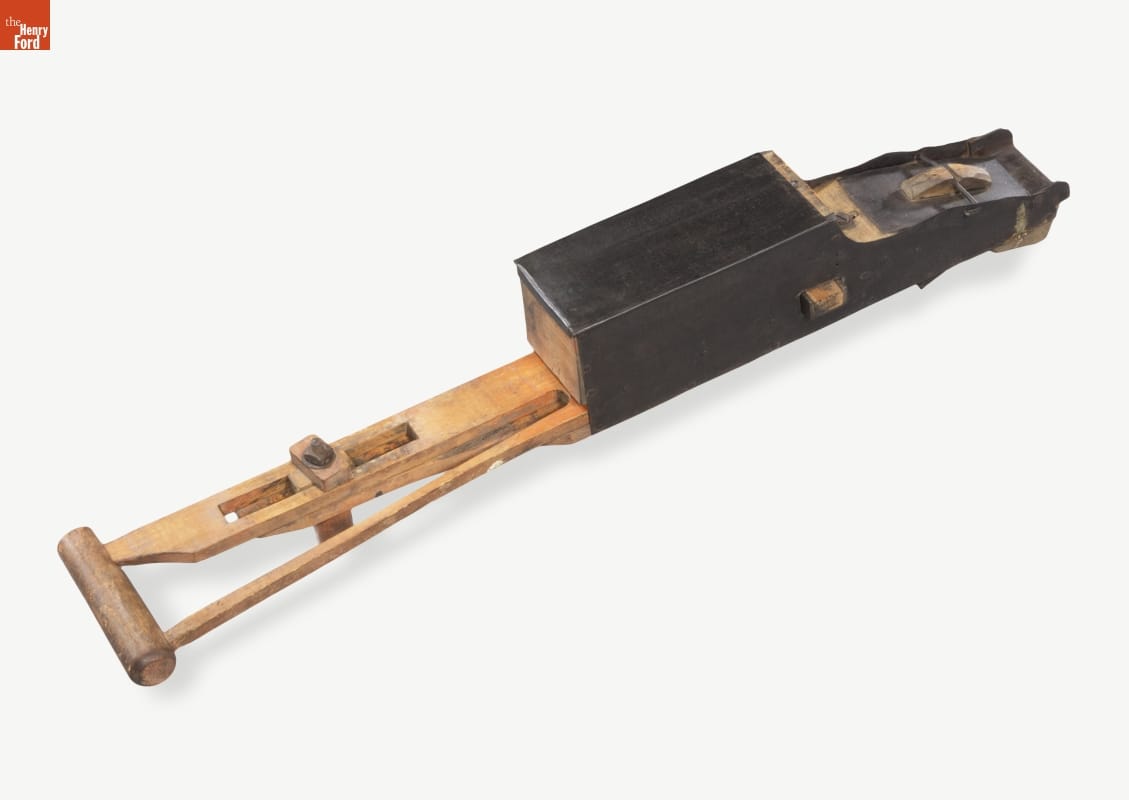
- 1850-1910
- Collections - Artifact
Hand Planter, 1850-1910