
Search
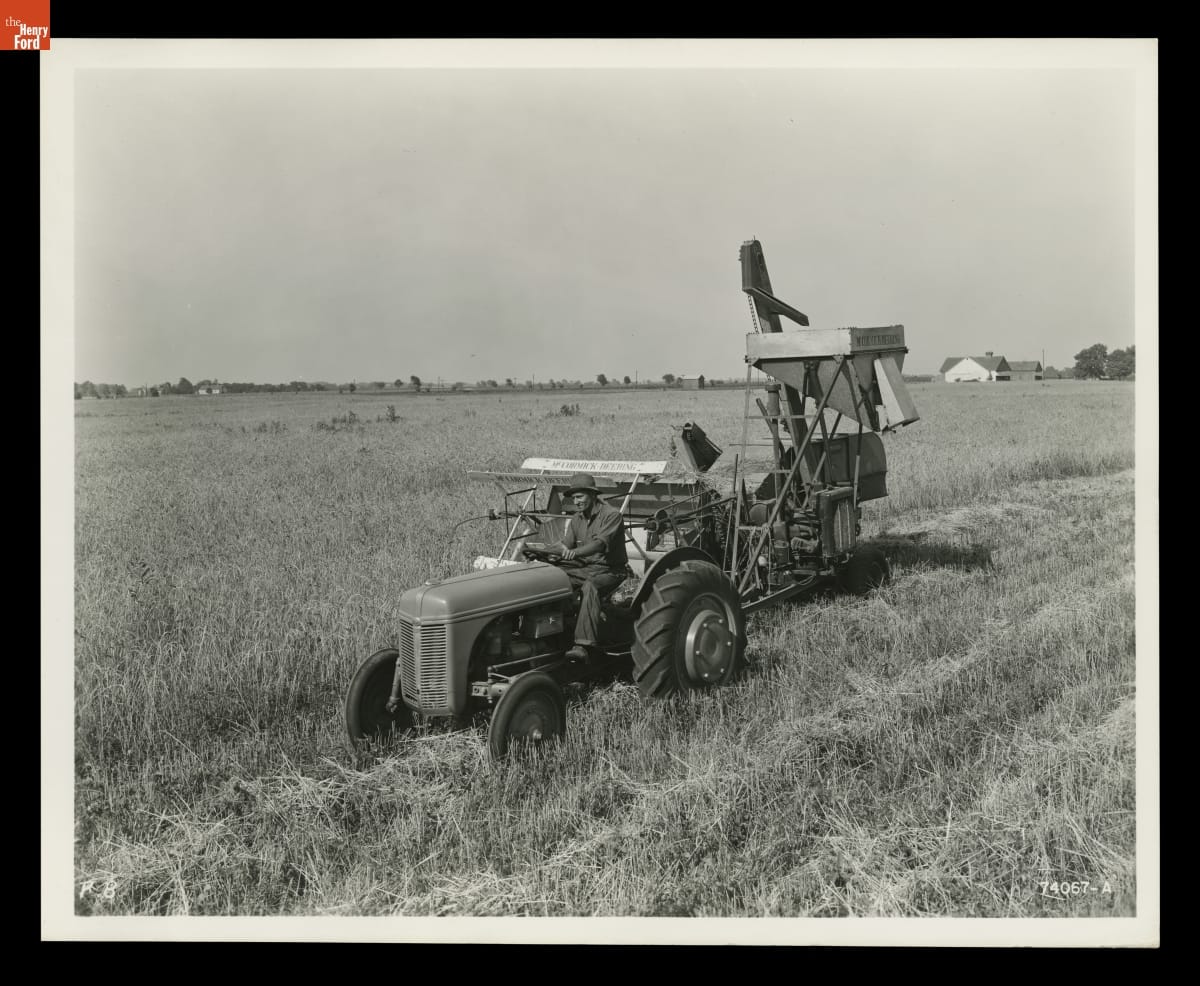
- Man Harvesting Wheat Using a Ford-Ferguson Tractor with Combine Attached, Indiana, August 1940 - Ford Motor Company introduced the 9N tractor in 1939. It featured the "Ferguson System:" a 3-point hydraulic hitch-and-lift system invented by Irishman Harry Ferguson. Ferguson's revolutionary hitch kept agricultural implements, like the combine seen here, in line with the tractor. It also provided stability. By 1940, nearly 8 percent of tractors sold in the U.S. were 9Ns.
- August 05, 1940
- Collections - Artifact
Man Harvesting Wheat Using a Ford-Ferguson Tractor with Combine Attached, Indiana, August 1940
Ford Motor Company introduced the 9N tractor in 1939. It featured the "Ferguson System:" a 3-point hydraulic hitch-and-lift system invented by Irishman Harry Ferguson. Ferguson's revolutionary hitch kept agricultural implements, like the combine seen here, in line with the tractor. It also provided stability. By 1940, nearly 8 percent of tractors sold in the U.S. were 9Ns.
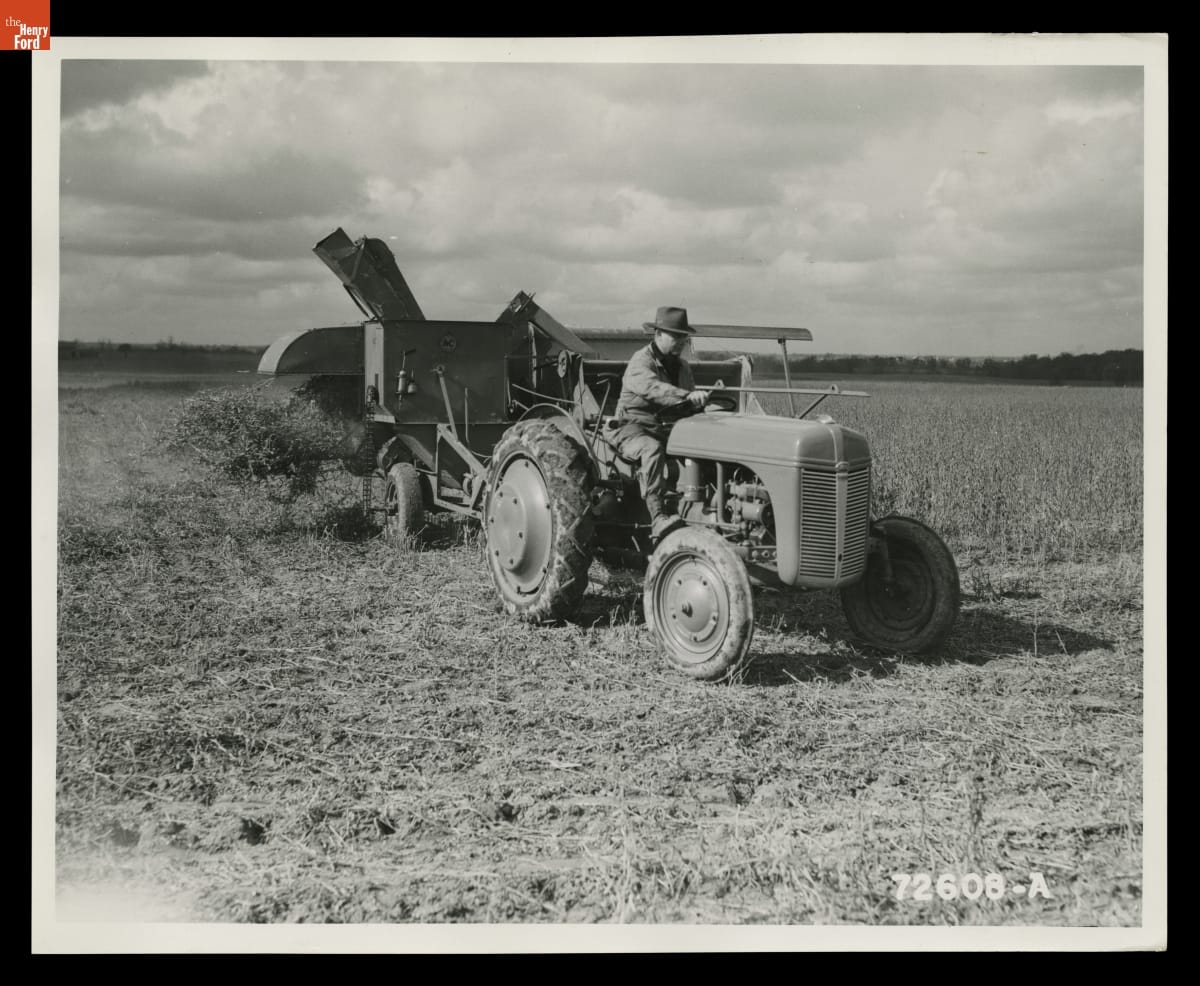
- Ford-Ferguson Model 9N Tractor Pulling a Combine, Macon, Michigan, November 1939 - Henry Ford acquired thousands of acres of farmland in southeast Michigan, collectively known as the Ford Farms. Much of the Farms' acreage was dedicated to one of Ford's agricultural interests at that time: soybeans. This 1939 image shows a tractor-drawn combine harvesting soybeans in Macon, Michigan.
- November 01, 1939
- Collections - Artifact
Ford-Ferguson Model 9N Tractor Pulling a Combine, Macon, Michigan, November 1939
Henry Ford acquired thousands of acres of farmland in southeast Michigan, collectively known as the Ford Farms. Much of the Farms' acreage was dedicated to one of Ford's agricultural interests at that time: soybeans. This 1939 image shows a tractor-drawn combine harvesting soybeans in Macon, Michigan.
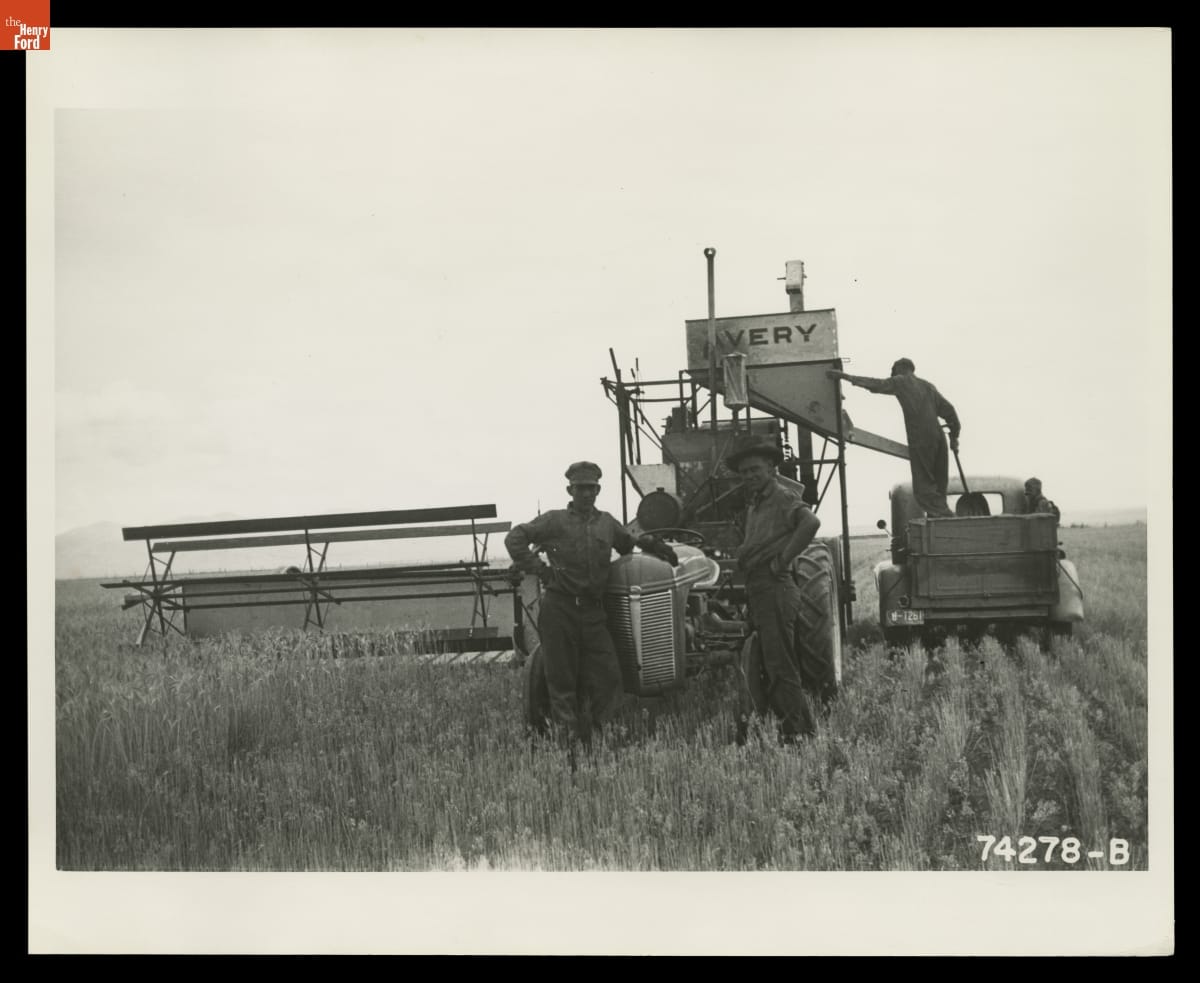
- Ford Ferguson Tractor Pulling an Avery Combine, September 1940 - Ford Motor Company introduced the 9N tractor in 1939. It featured the "Ferguson System:" a 3-point hydraulic hitch-and-lift system invented by Irishman Harry Ferguson. Ferguson's revolutionary hitch kept agricultural implements, like the combine seen here, in line with the tractor. It also provided stability. By 1940, nearly 8 percent of tractors sold in the U.S. were 9Ns.
- September 06, 1940
- Collections - Artifact
Ford Ferguson Tractor Pulling an Avery Combine, September 1940
Ford Motor Company introduced the 9N tractor in 1939. It featured the "Ferguson System:" a 3-point hydraulic hitch-and-lift system invented by Irishman Harry Ferguson. Ferguson's revolutionary hitch kept agricultural implements, like the combine seen here, in line with the tractor. It also provided stability. By 1940, nearly 8 percent of tractors sold in the U.S. were 9Ns.
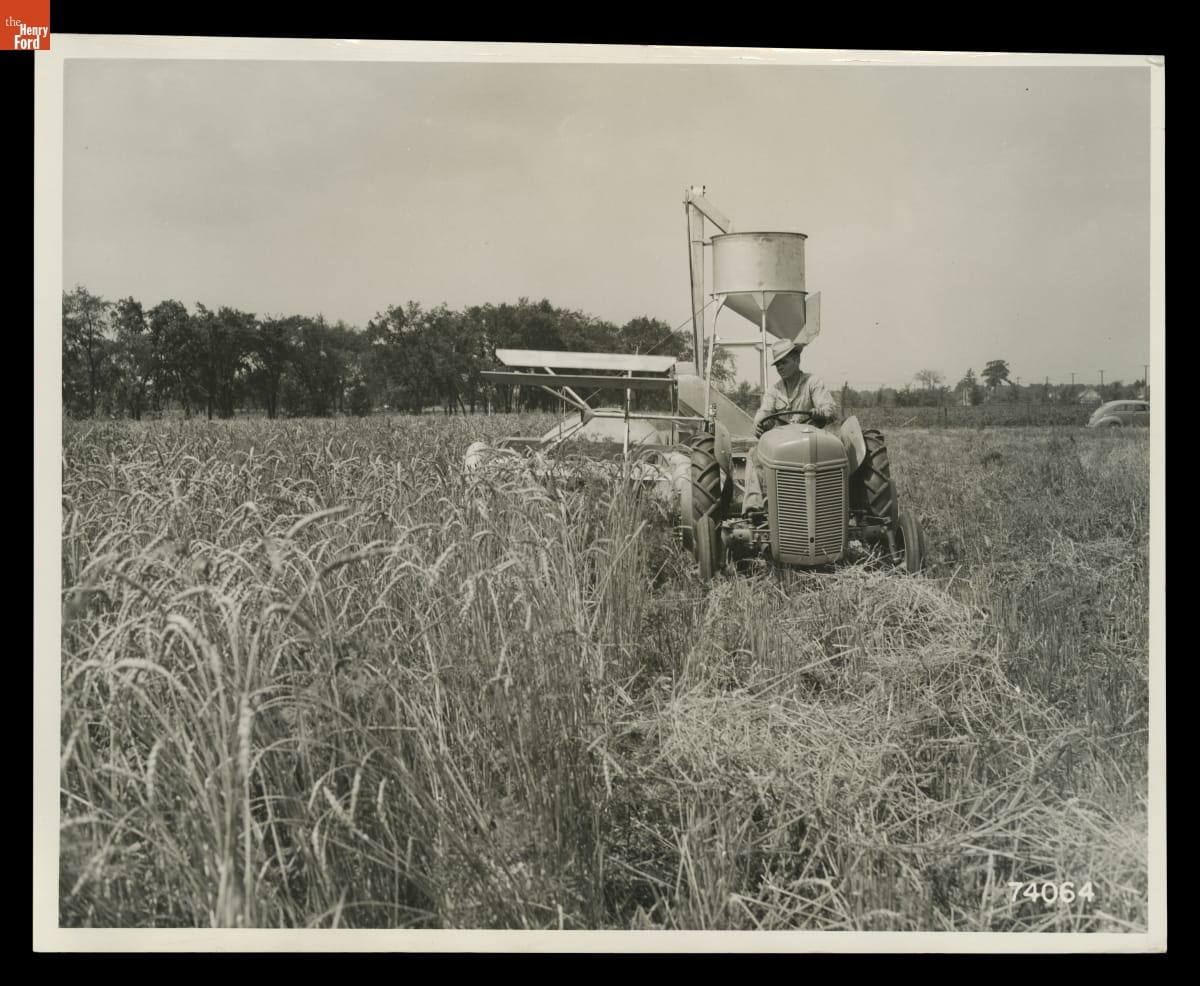
- Man Driving a Ford-Ferguson Tractor with Ferguson Combine Attached, August 1940 - Ford Motor Company introduced the 9N tractor in 1939. It featured the "Ferguson System:" a 3-point hydraulic hitch-and-lift system invented by Irishman Harry Ferguson. Ferguson's revolutionary hitch kept agricultural implements, like the combine seen here, in line with the tractor. It also provided stability. By 1940, nearly 8 percent of tractors sold in the U.S. were 9Ns.
- August 05, 1940
- Collections - Artifact
Man Driving a Ford-Ferguson Tractor with Ferguson Combine Attached, August 1940
Ford Motor Company introduced the 9N tractor in 1939. It featured the "Ferguson System:" a 3-point hydraulic hitch-and-lift system invented by Irishman Harry Ferguson. Ferguson's revolutionary hitch kept agricultural implements, like the combine seen here, in line with the tractor. It also provided stability. By 1940, nearly 8 percent of tractors sold in the U.S. were 9Ns.
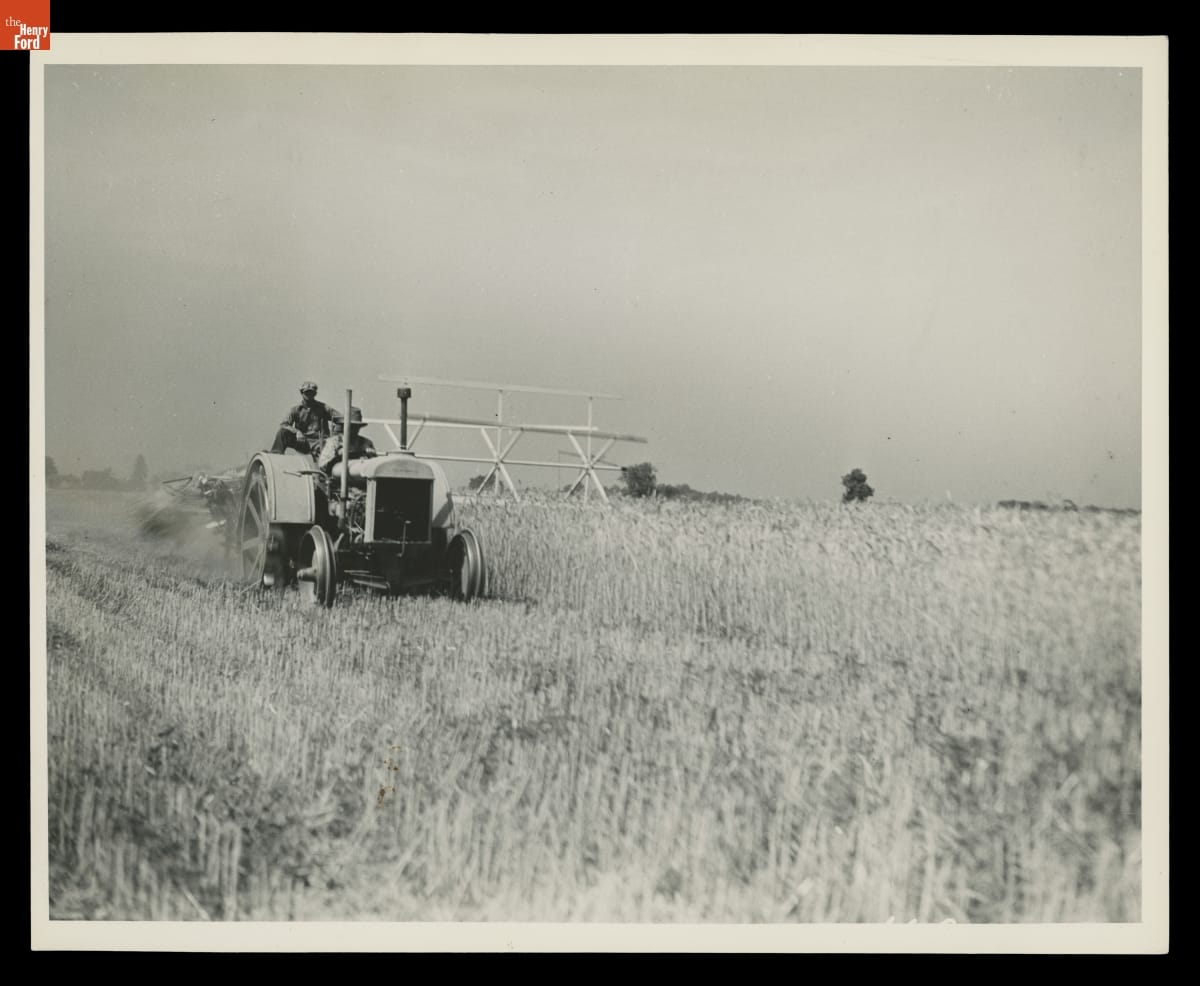
- Harvesting Wheat with Tractor and Combine, Belleville, Michigan, July 1936 - It took hundreds of years to perfect machinery that could combine the three major steps of harvesting grain: reaping, or cutting the crop; threshing to loosen the grain from the chaff; and disposing of the straw while retaining the grain. This image shows a tractor-drawn "combine" harvesting wheat in 1936. Around this time, manufacturers finally introduced labor-saving self-propelled combines.
- July 13, 1936
- Collections - Artifact
Harvesting Wheat with Tractor and Combine, Belleville, Michigan, July 1936
It took hundreds of years to perfect machinery that could combine the three major steps of harvesting grain: reaping, or cutting the crop; threshing to loosen the grain from the chaff; and disposing of the straw while retaining the grain. This image shows a tractor-drawn "combine" harvesting wheat in 1936. Around this time, manufacturers finally introduced labor-saving self-propelled combines.
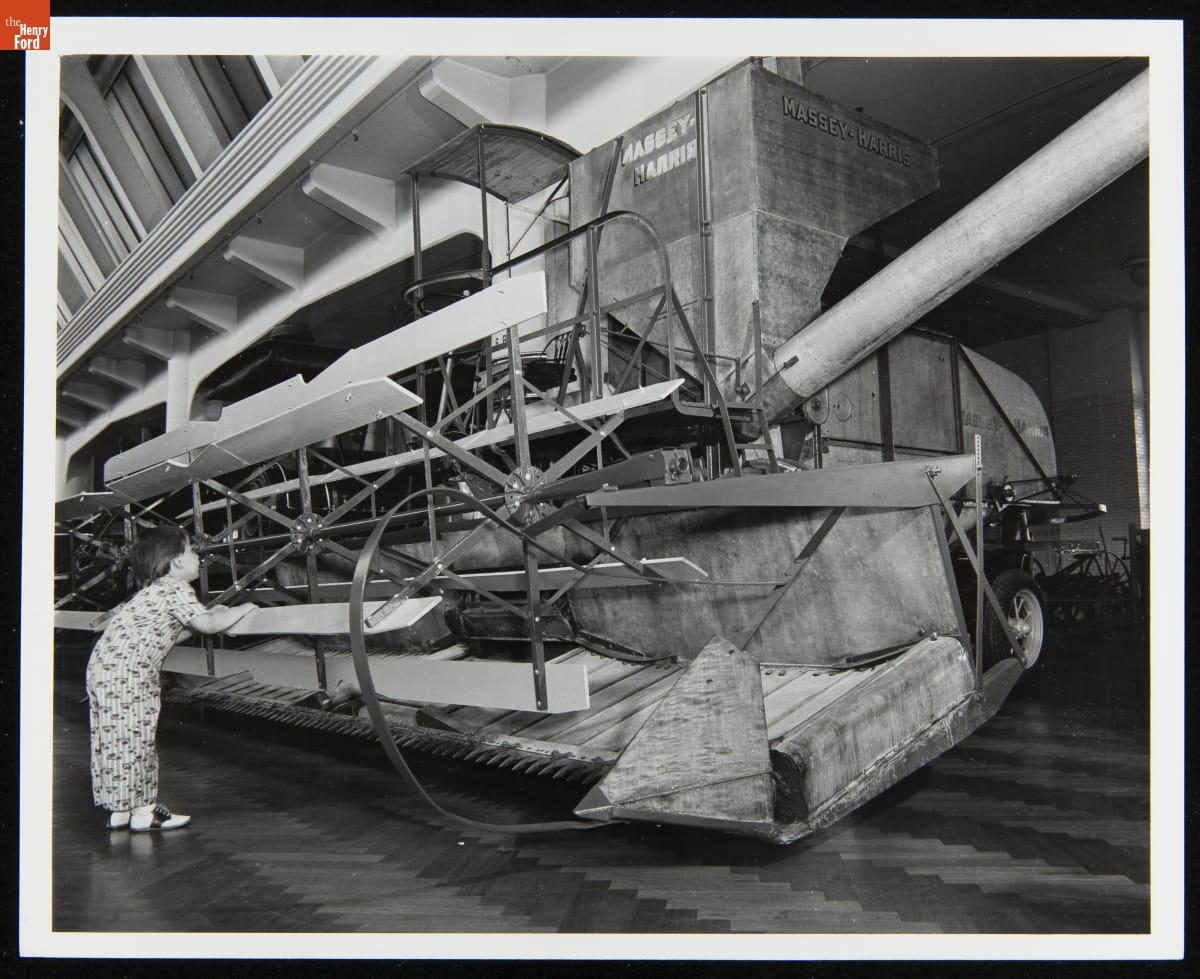
- Child with the Massey-Harris Model 20 Self-Propelled Combine in Henry Ford Museum, June 1977 - "Combines" combine the major tasks of grain harvest: cutting and gathering the crop, threshing and separating the kernels from the chaff, and disposing of the straw. The Massey-Harris Model 20, introduced in 1938, culminated over 100 years of mechanical improvements. One driver operated the self-propelled machine, which reduced the need for hired help during the labor shortages of World War II.
- June 06, 1977
- Collections - Artifact
Child with the Massey-Harris Model 20 Self-Propelled Combine in Henry Ford Museum, June 1977
"Combines" combine the major tasks of grain harvest: cutting and gathering the crop, threshing and separating the kernels from the chaff, and disposing of the straw. The Massey-Harris Model 20, introduced in 1938, culminated over 100 years of mechanical improvements. One driver operated the self-propelled machine, which reduced the need for hired help during the labor shortages of World War II.
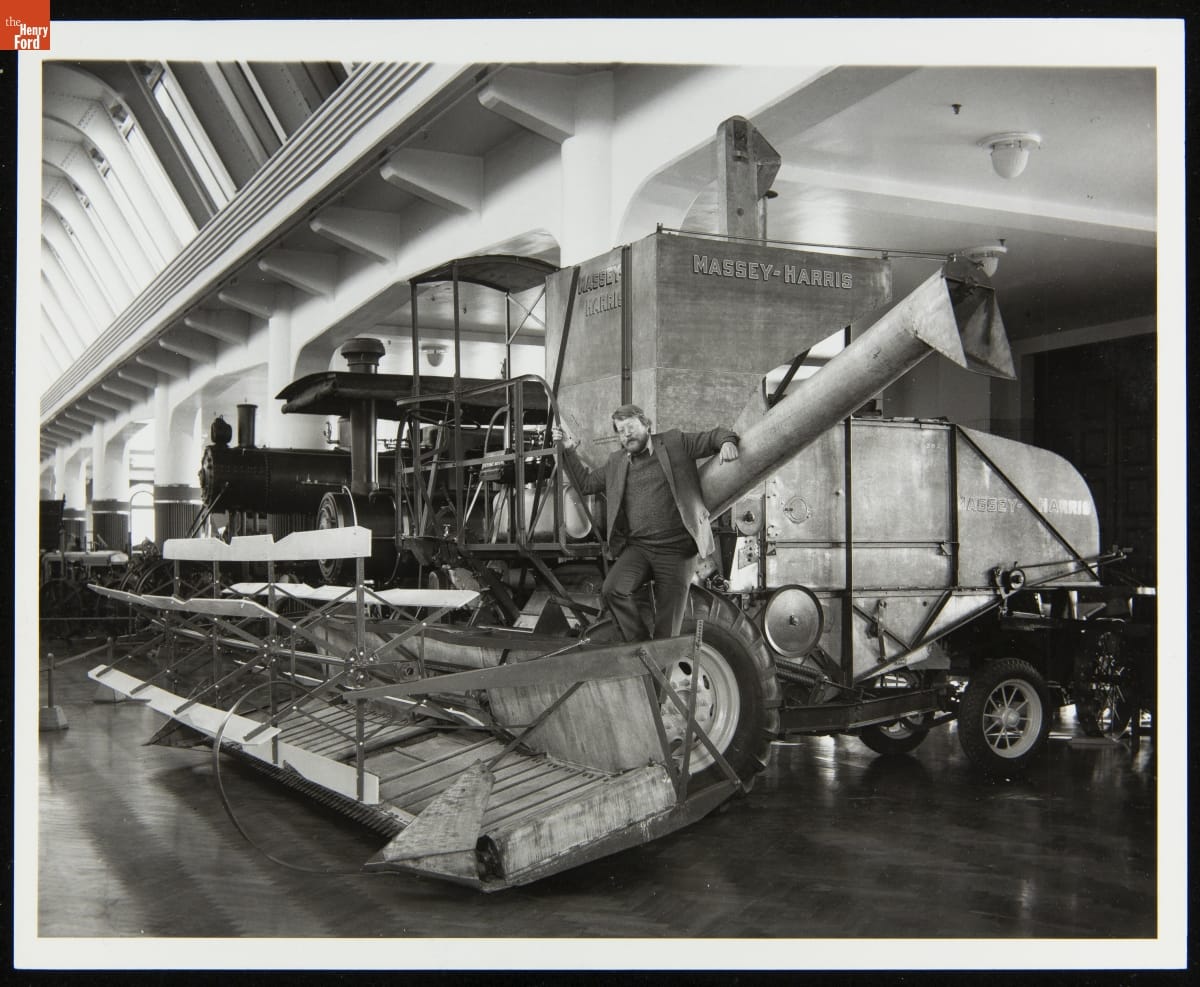
- Peter Cousins with the Massey-Harris Model 20 Self-Propelled Combine in Henry Ford Museum, 1977 - "Combines" combine the major tasks of grain harvest: cutting and gathering the crop, threshing and separating the kernels from the chaff, and disposing of the straw. The Massey-Harris Model 20, introduced in 1938, culminated over 100 years of mechanical improvements. One driver operated the self-propelled machine, which reduced the need for hired help during the labor shortages of World War II.
- 1977
- Collections - Artifact
Peter Cousins with the Massey-Harris Model 20 Self-Propelled Combine in Henry Ford Museum, 1977
"Combines" combine the major tasks of grain harvest: cutting and gathering the crop, threshing and separating the kernels from the chaff, and disposing of the straw. The Massey-Harris Model 20, introduced in 1938, culminated over 100 years of mechanical improvements. One driver operated the self-propelled machine, which reduced the need for hired help during the labor shortages of World War II.
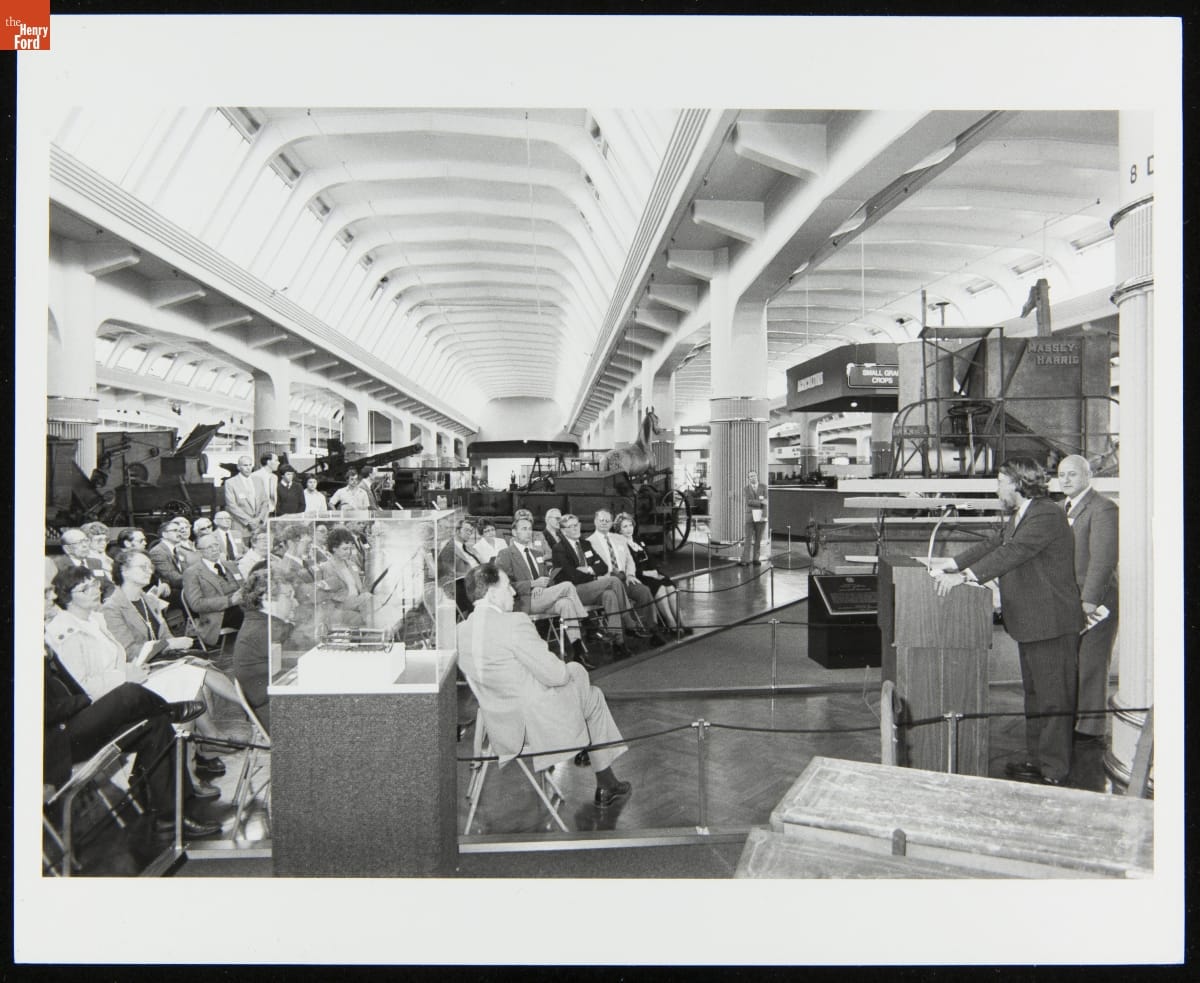
- Peter Cousins Speaking at the ASAE Landmark Dedication of the Massey-Harris Model 20 Self-Propelled Combine, April 23, 1982 - The American Society of Agricultural Engineers designated the 1938 Massey-Harris Model 20 combine a "Landmark of Agricultural Engineering" in 1982. The machine, which culminated over 100 years of improvement in mechanical harvesters, provided valuable relief to the labor shortages of World War II. Among the speakers at the landmark dedication, held near Henry Ford Museum's Model 20 combine, was then-curator of agriculture Peter Cousins.
- April 23, 1982
- Collections - Artifact
Peter Cousins Speaking at the ASAE Landmark Dedication of the Massey-Harris Model 20 Self-Propelled Combine, April 23, 1982
The American Society of Agricultural Engineers designated the 1938 Massey-Harris Model 20 combine a "Landmark of Agricultural Engineering" in 1982. The machine, which culminated over 100 years of improvement in mechanical harvesters, provided valuable relief to the labor shortages of World War II. Among the speakers at the landmark dedication, held near Henry Ford Museum's Model 20 combine, was then-curator of agriculture Peter Cousins.
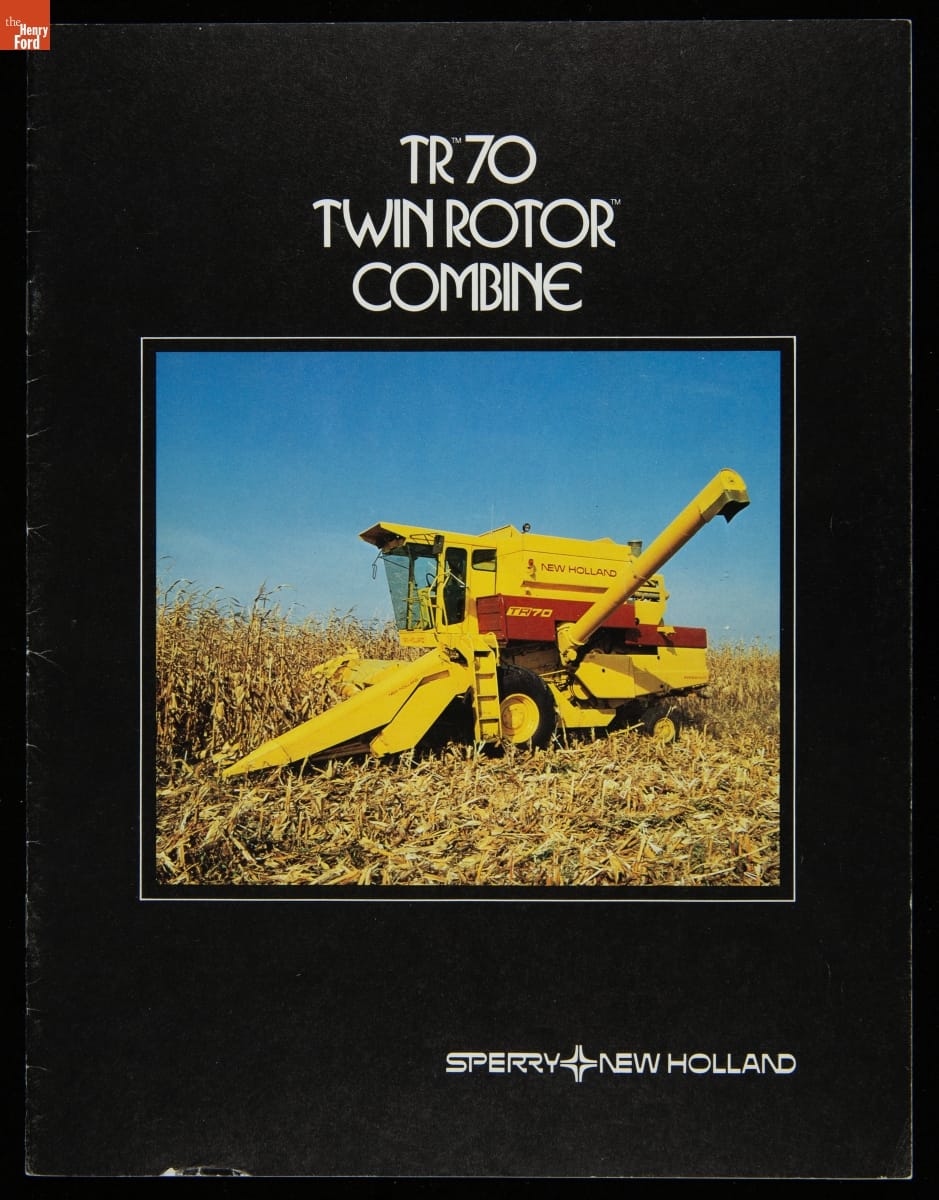
- Sperry Rand Corporation - Sperry New Holland Division Catalog, "TR70 Twin Rotor Combine," 1977 - Engineers designed the TR70 as a compact machine suitable for hilly terrain. The twin rotors (TR) shelled corn or threshed grain and moved it through the combine's body. Setting the rotors at an angle (axial) shortened the machine. Farmers changed the front-end attachment to harvest corn, beans, or wheat. Photographs and diagrams in this catalog helped explain additional features.
- 1977
- Collections - Artifact
Sperry Rand Corporation - Sperry New Holland Division Catalog, "TR70 Twin Rotor Combine," 1977
Engineers designed the TR70 as a compact machine suitable for hilly terrain. The twin rotors (TR) shelled corn or threshed grain and moved it through the combine's body. Setting the rotors at an angle (axial) shortened the machine. Farmers changed the front-end attachment to harvest corn, beans, or wheat. Photographs and diagrams in this catalog helped explain additional features.
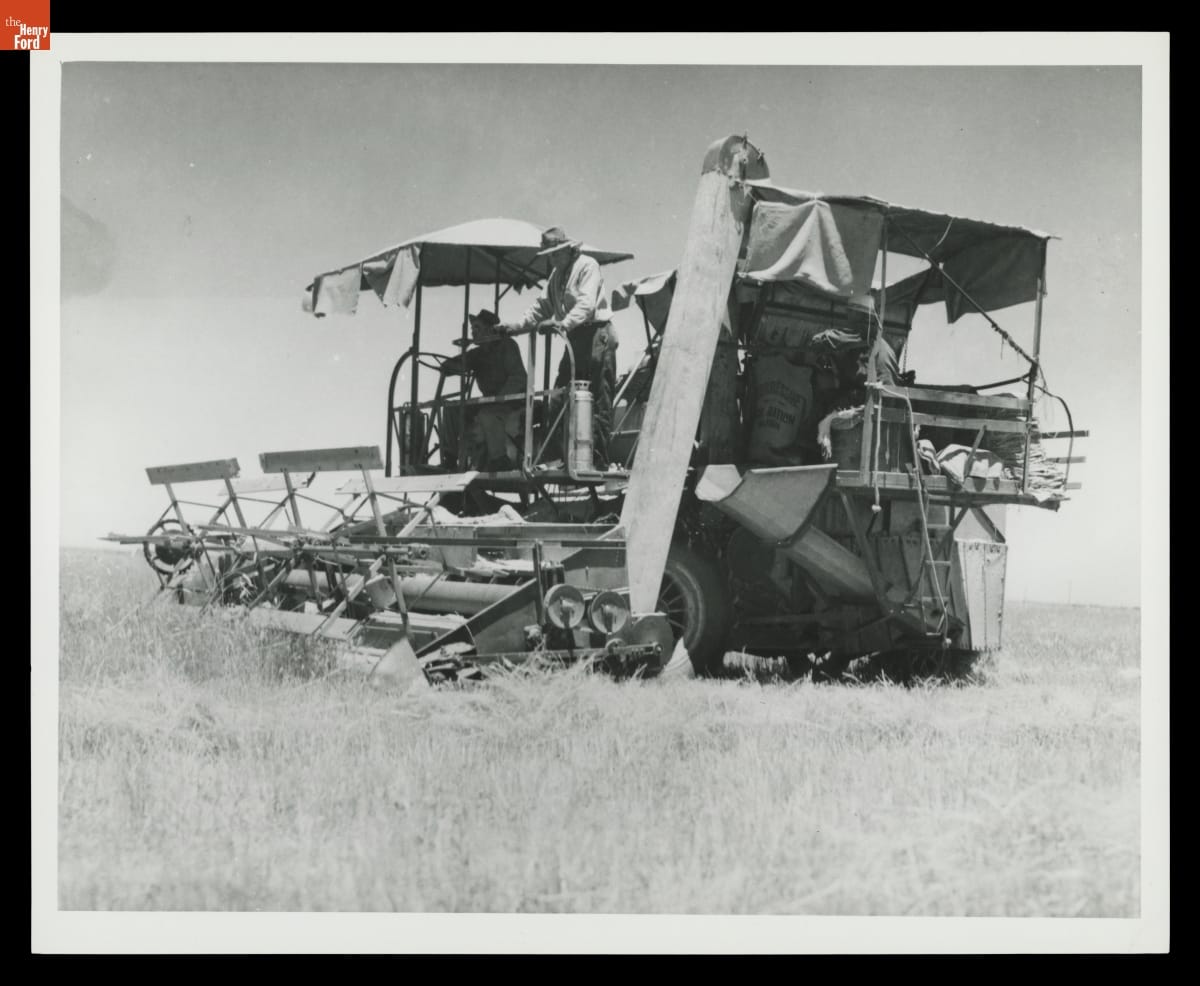
- Massey-Harris Model 20 Self-Propelled Combine in Use, Eastern Washington, circa 1940 - "Combines" combine the major tasks of grain harvest: cutting and gathering the crop, threshing and separating the kernels from the chaff, and disposing of the straw. The Massey-Harris Model 20, introduced in 1938, culminated over 100 years of mechanical improvements. One driver operated the self-propelled machine, which reduced the need for hired help during the labor shortages of World War II.
- circa 1940
- Collections - Artifact
Massey-Harris Model 20 Self-Propelled Combine in Use, Eastern Washington, circa 1940
"Combines" combine the major tasks of grain harvest: cutting and gathering the crop, threshing and separating the kernels from the chaff, and disposing of the straw. The Massey-Harris Model 20, introduced in 1938, culminated over 100 years of mechanical improvements. One driver operated the self-propelled machine, which reduced the need for hired help during the labor shortages of World War II.