
Search
- Label, "J. Berry's Fine Confections," 1886-1905 -
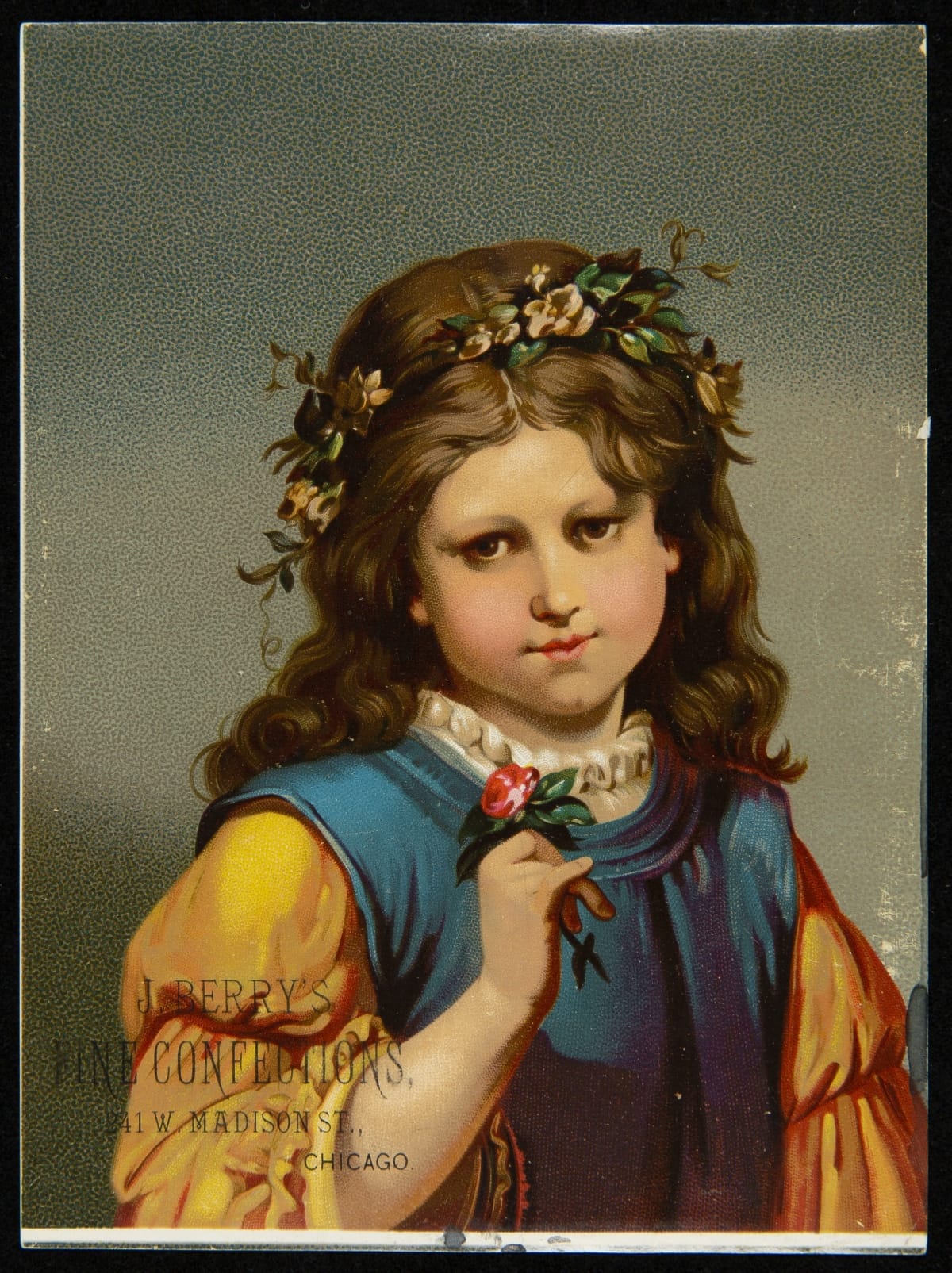
- 1886-1905
- Collections - Artifact
Label, "J. Berry's Fine Confections," 1886-1905
- "Hi! - and a Happy Birthday to You!," circa 1980 - Gwen Frostic (1906-2001) was an artist, author, poet, entrepreneur, and nature lover. In the 1940s, Frostic bought a printing press and started a printing business doing commercial jobs, but most notably, she carefully carved linoleum blocks to create nature-inspired works of art. Frostic created block prints for the next fifty years that graced her books, note cards, and greeting cards.
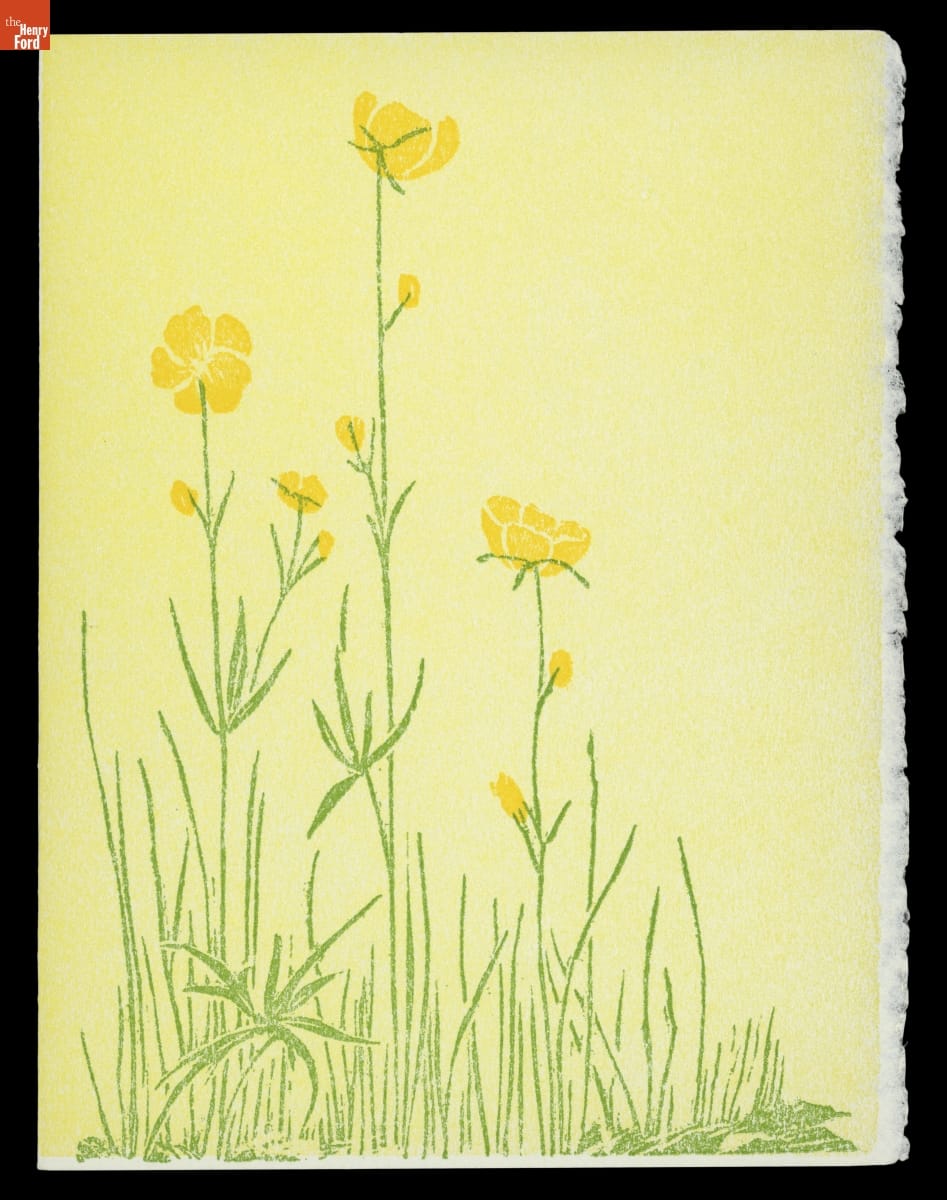
- circa 1980
- Collections - Artifact
"Hi! - and a Happy Birthday to You!," circa 1980
Gwen Frostic (1906-2001) was an artist, author, poet, entrepreneur, and nature lover. In the 1940s, Frostic bought a printing press and started a printing business doing commercial jobs, but most notably, she carefully carved linoleum blocks to create nature-inspired works of art. Frostic created block prints for the next fifty years that graced her books, note cards, and greeting cards.
- Composition Paper from a School Desk, 1940-1960 -

- 1940-1960
- Collections - Artifact
Composition Paper from a School Desk, 1940-1960
- German Irises Growing in a Nursery, circa 1923 -
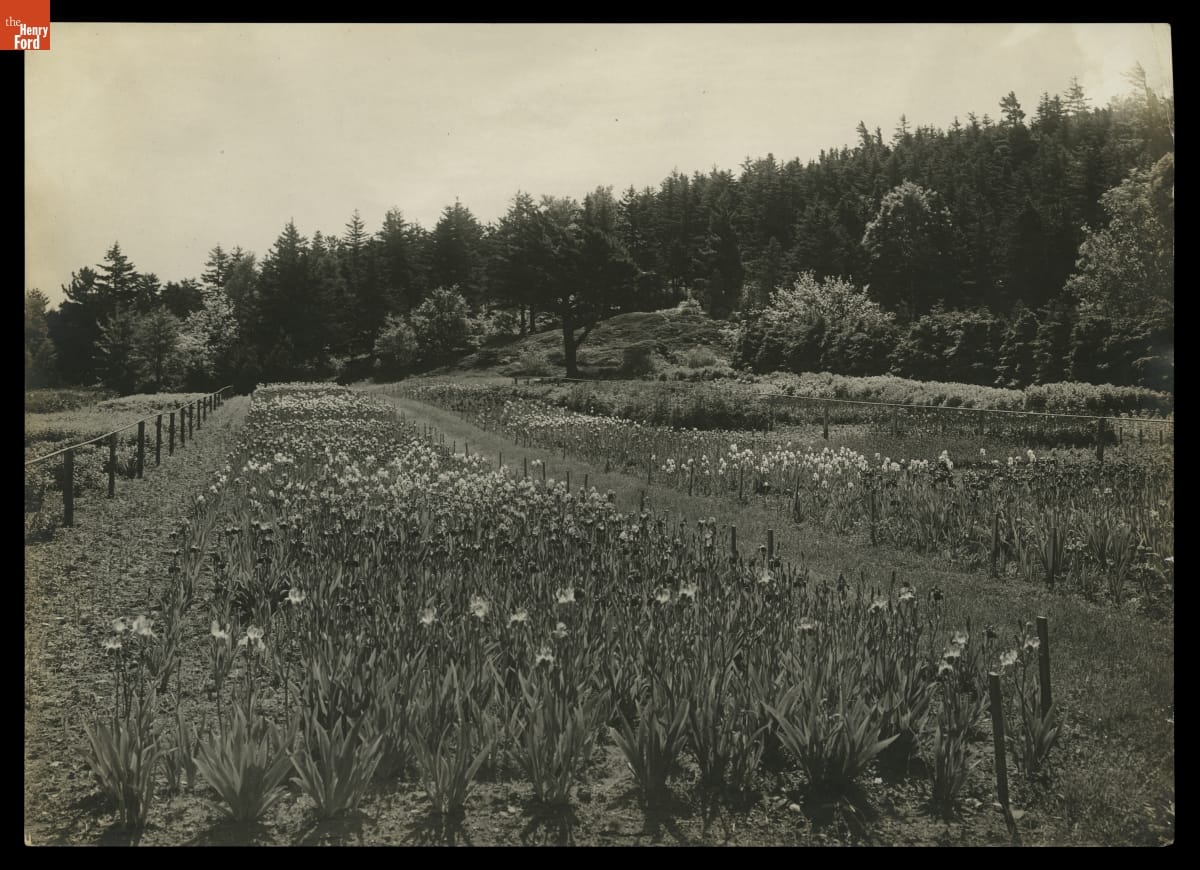
- circa 1923
- Collections - Artifact
German Irises Growing in a Nursery, circa 1923
- Candleholder, 1940-1950 - The Van Briggle Pottery was among the most important and longest-lasting art potteries. The pottery, established in 1901 and located in Colorado Springs, Colorado, is known for its satin matte glazes perfected by its founder, Artus Van Briggle. The pottery produced works for more than one hundred years, finally closing its doors in the early 2010s.
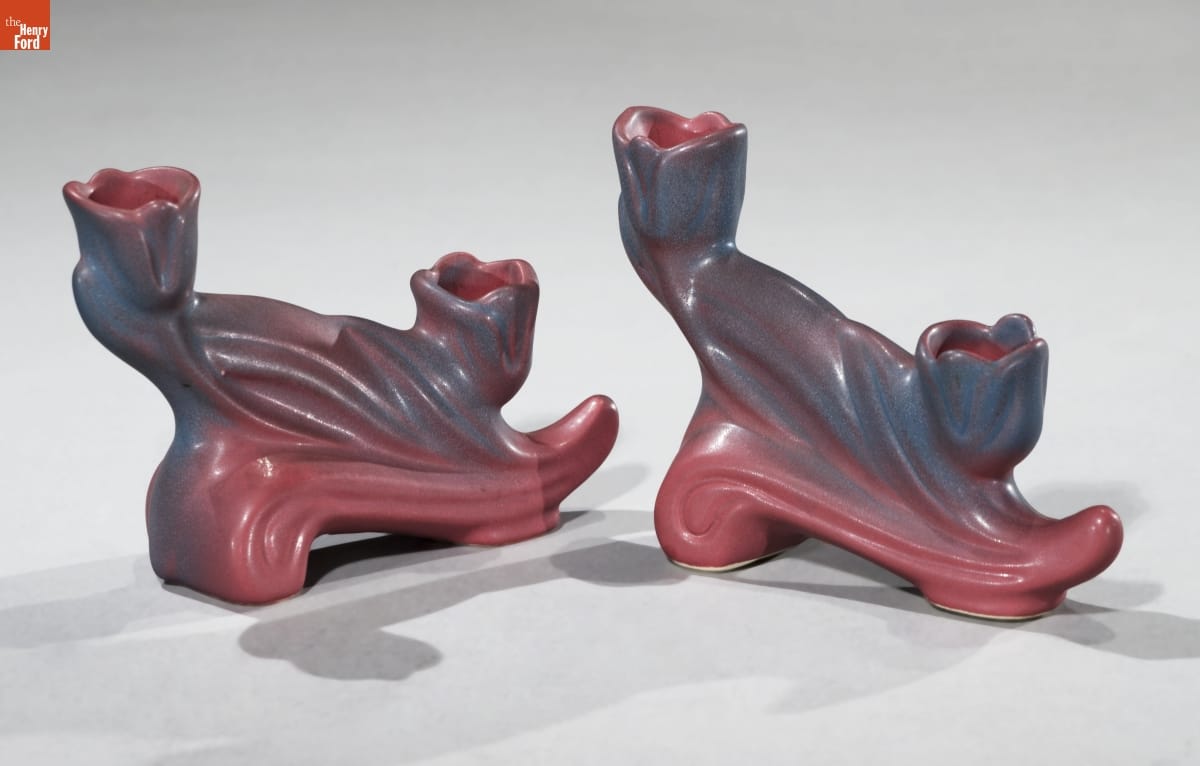
- 1940-1950
- Collections - Artifact
Candleholder, 1940-1950
The Van Briggle Pottery was among the most important and longest-lasting art potteries. The pottery, established in 1901 and located in Colorado Springs, Colorado, is known for its satin matte glazes perfected by its founder, Artus Van Briggle. The pottery produced works for more than one hundred years, finally closing its doors in the early 2010s.
- Ewer, 1936-1940 - During the Great Depression of the 1930s, American art potteries produced inexpensive wares to boost waning sales. The Niloak Pottery Company of Benton, Arkansas, made this ewer (a pitcher or jug, usually decorative, with a wide mouth) as part of a low-cost line introduced in 1931. It features Niloak's matte pink and green-gray glaze combination known as Ozark Dawn.
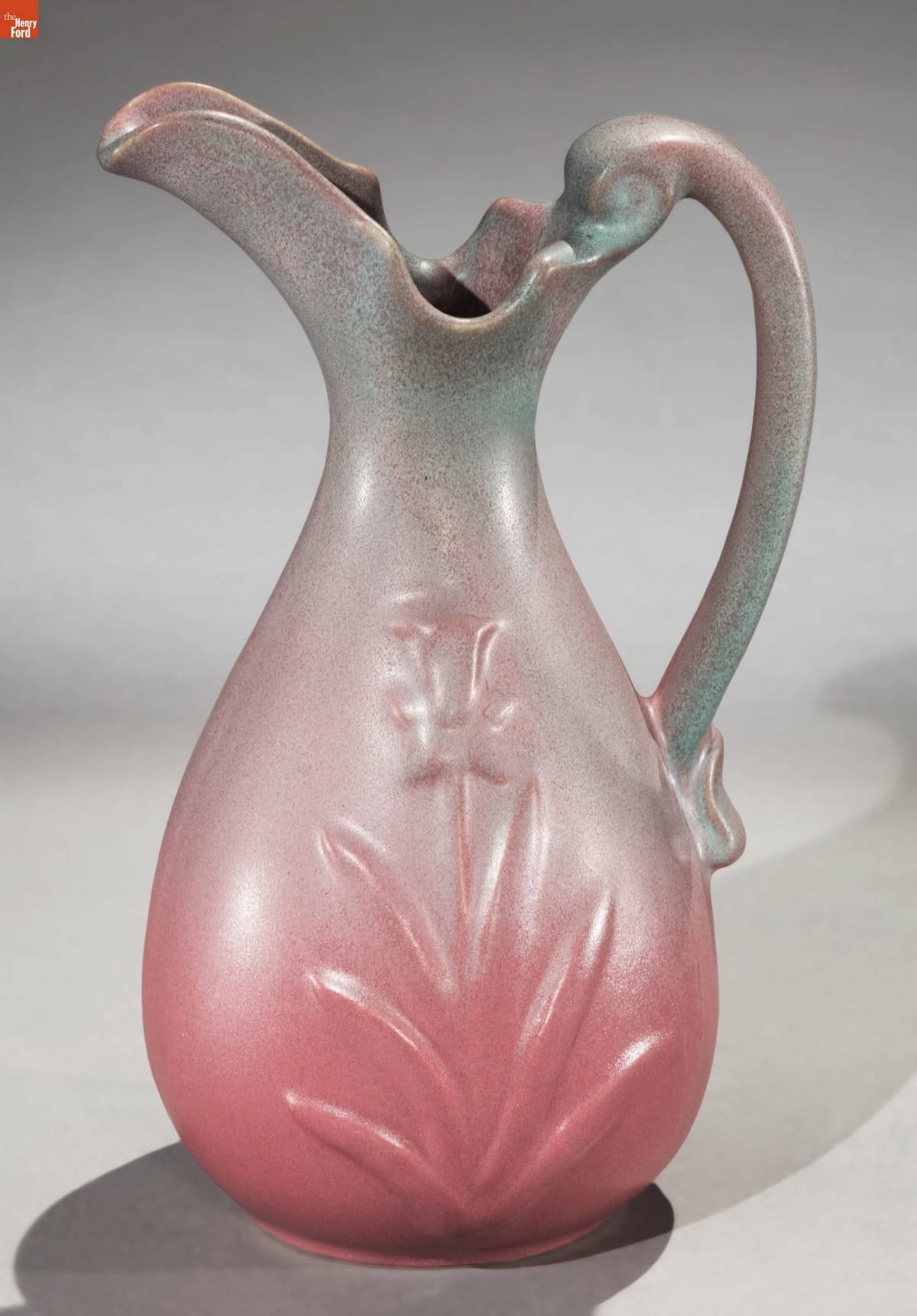
- 1936-1940
- Collections - Artifact
Ewer, 1936-1940
During the Great Depression of the 1930s, American art potteries produced inexpensive wares to boost waning sales. The Niloak Pottery Company of Benton, Arkansas, made this ewer (a pitcher or jug, usually decorative, with a wide mouth) as part of a low-cost line introduced in 1931. It features Niloak's matte pink and green-gray glaze combination known as Ozark Dawn.
- Flask, 1830-1834 - Glass factories in America began producing inexpensive, mold-formed flasks in the early 1800s. These figured flasks appealed to America's common man. Many of these flasks contained symbols of national pride or political or cultural affiliation. Embellishments on other flasks, like this one, were purely decorative, though you will find an anchor -- a symbol of hope -- on the reverse.
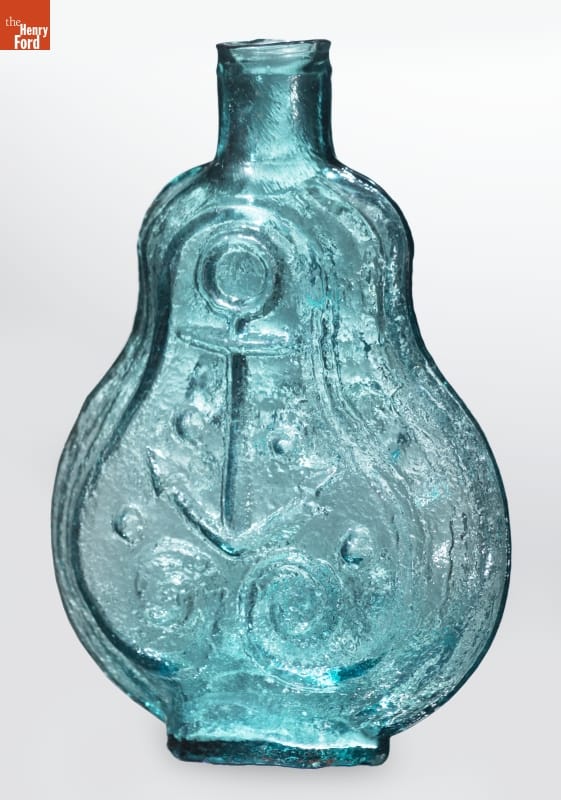
- 1830-1834
- Collections - Artifact
Flask, 1830-1834
Glass factories in America began producing inexpensive, mold-formed flasks in the early 1800s. These figured flasks appealed to America's common man. Many of these flasks contained symbols of national pride or political or cultural affiliation. Embellishments on other flasks, like this one, were purely decorative, though you will find an anchor -- a symbol of hope -- on the reverse.
- Orchard Box by Kimiake Higuchi, 2007 - New centers of glassmaking emerged as studio glass spread in the 1980s, creating a truly international movement. In Japan, studio glass artist Kimiake Higuchi referenced the Art Nouveau style of the 1890s for inspiration. She revived a popular glassmaking technique known as "pate-de-verre" to achieve opaque finishes and used color schemes and botanical motifs that further echo the Art Nouveau.
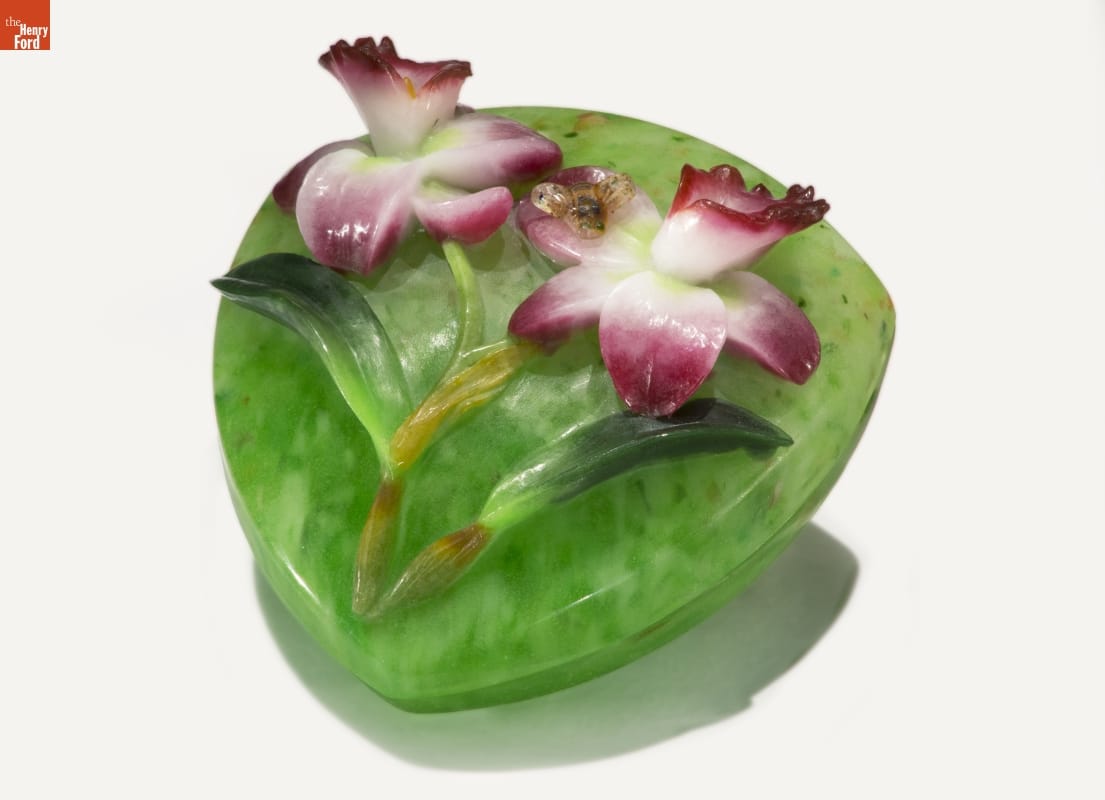
- 2007
- Collections - Artifact
Orchard Box by Kimiake Higuchi, 2007
New centers of glassmaking emerged as studio glass spread in the 1980s, creating a truly international movement. In Japan, studio glass artist Kimiake Higuchi referenced the Art Nouveau style of the 1890s for inspiration. She revived a popular glassmaking technique known as "pate-de-verre" to achieve opaque finishes and used color schemes and botanical motifs that further echo the Art Nouveau.
- "A Field of Burbank's Shasto Daisies, Santa Rosa, Cal.," circa 1915 - Luther Burbank (1849-1926), an American horticulturalist, gained a reputation for selective breeding that yielded more than 800 new fruits, vegetables, flowers, and other plants. One of his most enduring inventions, the Shasta daisy, released in 1901, took him 17 years to perfect. He praised its grace, beauty, abundance of bloom, hardiness, and persistence, even as he released three "new" Shasta daisy varieties in 1904.
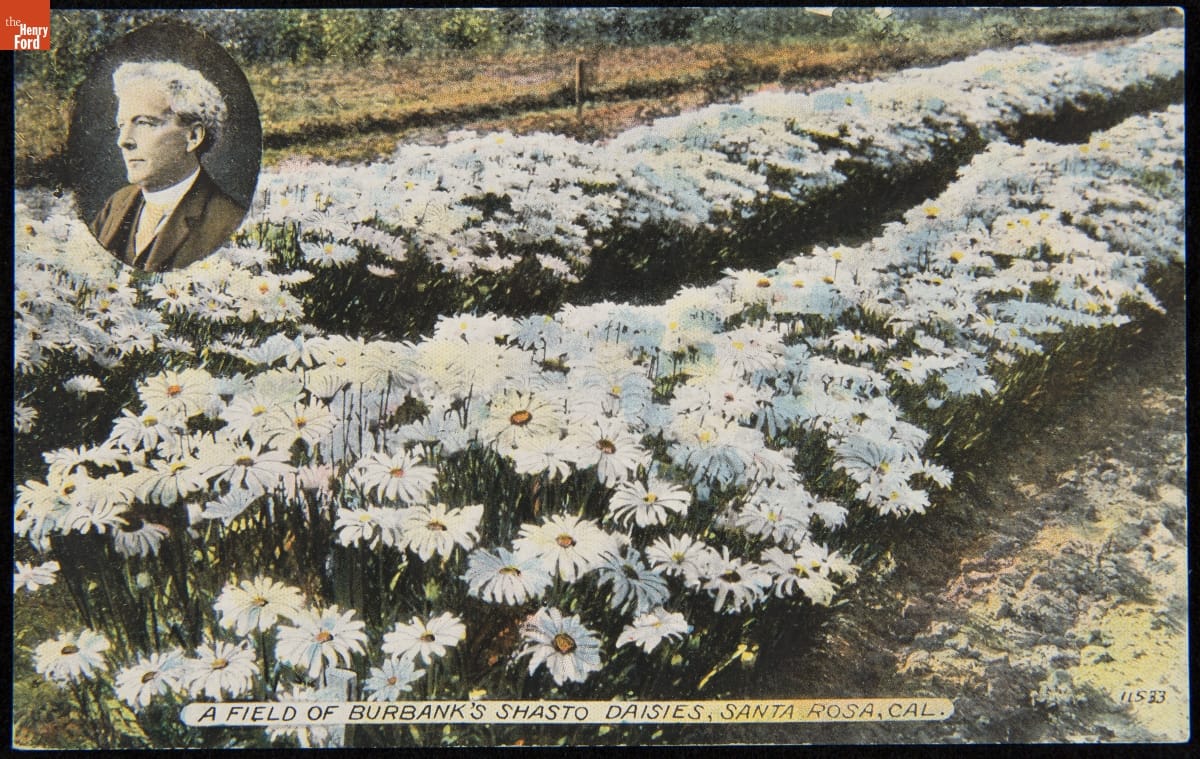
- circa 1915
- Collections - Artifact
"A Field of Burbank's Shasto Daisies, Santa Rosa, Cal.," circa 1915
Luther Burbank (1849-1926), an American horticulturalist, gained a reputation for selective breeding that yielded more than 800 new fruits, vegetables, flowers, and other plants. One of his most enduring inventions, the Shasta daisy, released in 1901, took him 17 years to perfect. He praised its grace, beauty, abundance of bloom, hardiness, and persistence, even as he released three "new" Shasta daisy varieties in 1904.
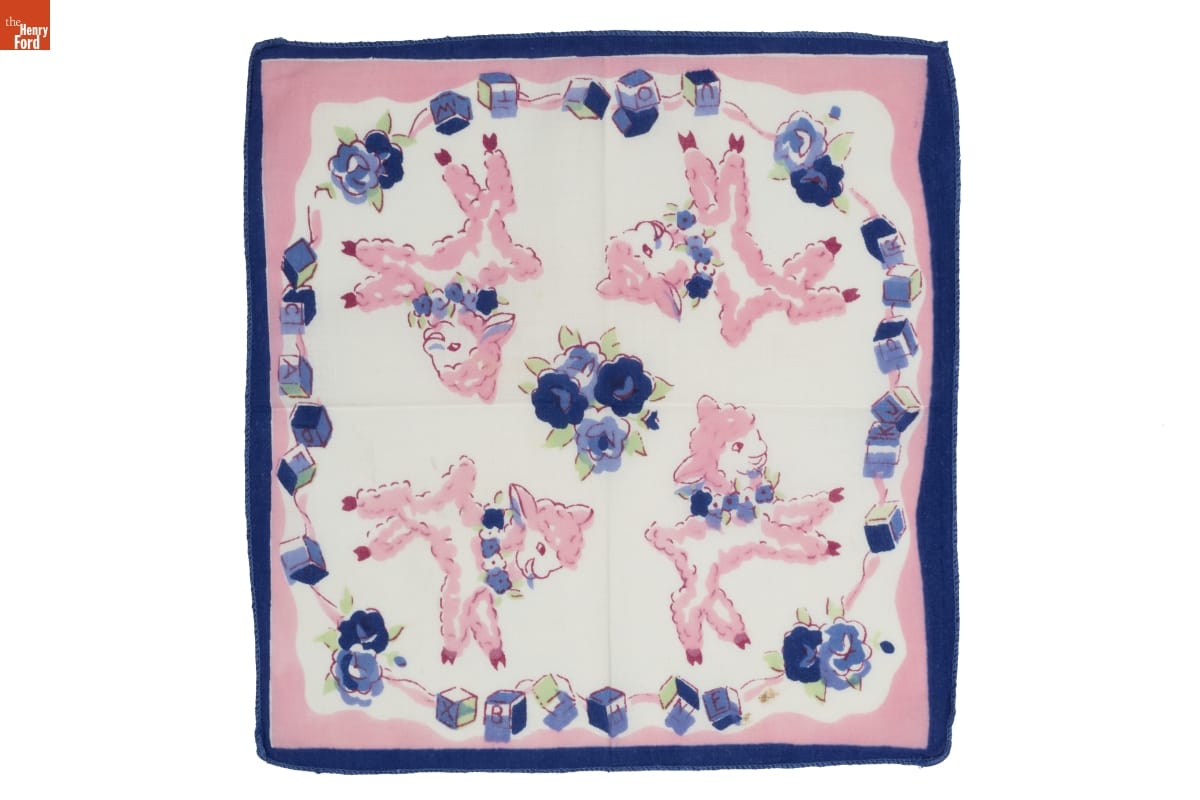
- Child's Handkerchief, 1945-1955 - Before disposable tissues became popular, people carried cloth handkerchiefs to help with sneezes and sniffles. Children's versions were made with images and in colors designed to appeal to these smaller folk.
- 1945-1955
- Collections - Artifact
Child's Handkerchief, 1945-1955
Before disposable tissues became popular, people carried cloth handkerchiefs to help with sneezes and sniffles. Children's versions were made with images and in colors designed to appeal to these smaller folk.