
Search
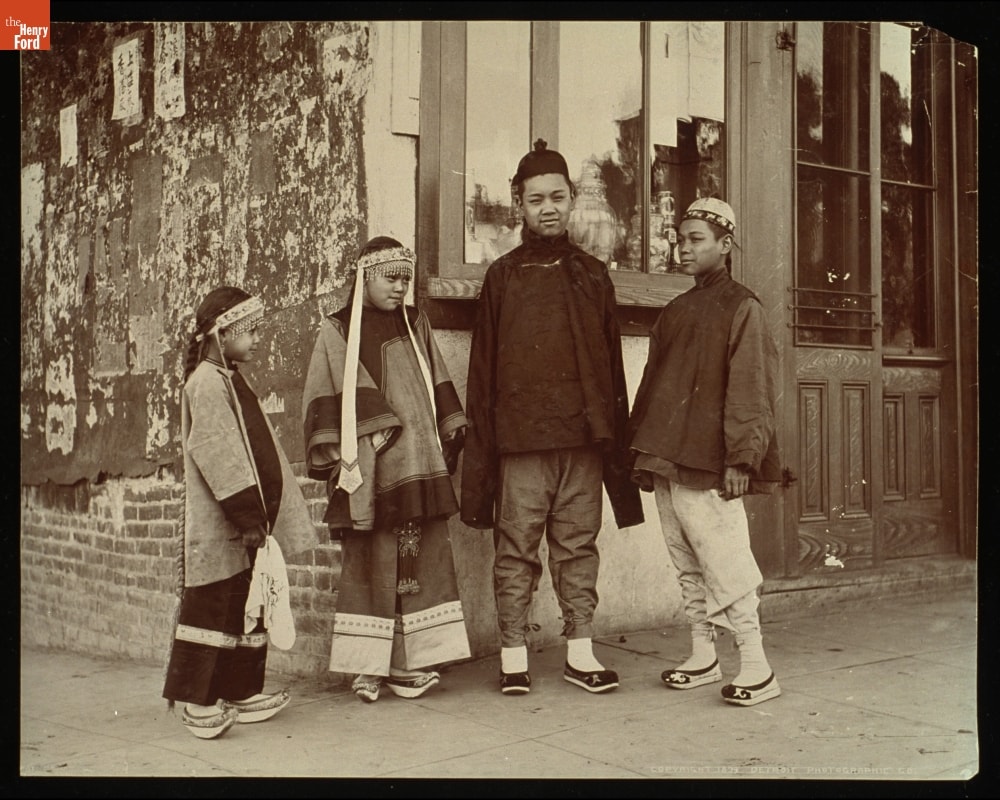
- Children in Chinatown, San Francisco, California, 1899 - From 1895 to 1924, the Detroit Publishing Company was one of the major image publishers in the world. The company's wide-ranging stock of original photographs documented life and landscapes from across the nation and around the globe. From the tens of thousands of negatives, the company created prints, postcards, lantern slides, panoramas, and other merchandise for sale to educators, businessmen, advertisers, homeowners and travelers.
- 1899
- Collections - Artifact
Children in Chinatown, San Francisco, California, 1899
From 1895 to 1924, the Detroit Publishing Company was one of the major image publishers in the world. The company's wide-ranging stock of original photographs documented life and landscapes from across the nation and around the globe. From the tens of thousands of negatives, the company created prints, postcards, lantern slides, panoramas, and other merchandise for sale to educators, businessmen, advertisers, homeowners and travelers.
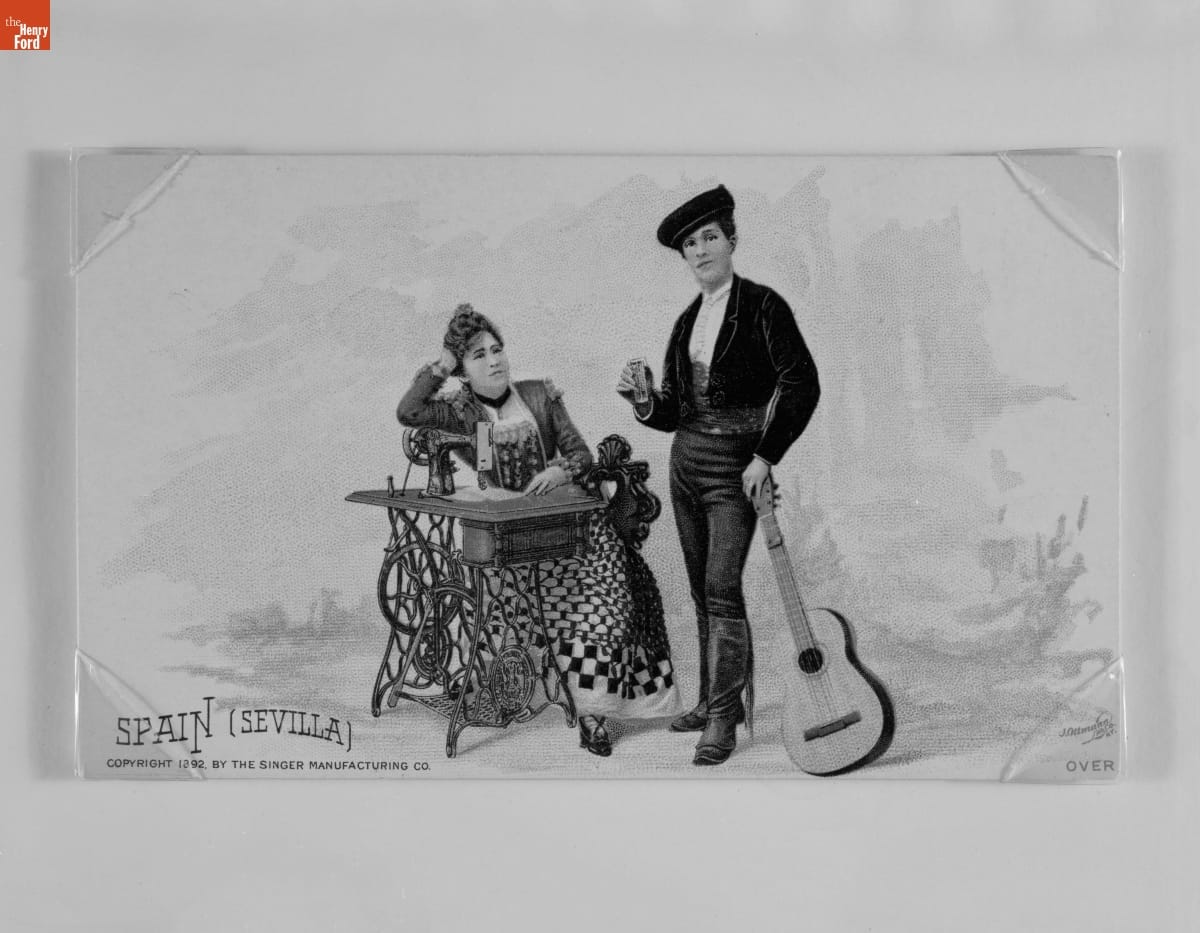
- Trade Card for Singer Sewing Machine, "Spain (Sevilla)," 1892 - In the last third of the nineteenth century, an unprecedented variety of consumer goods and services flooded the American market. Advertisers, armed with new methods of color printing, bombarded potential customers with trade cards. Americans enjoyed and often saved the vibrant little advertisements found in product packages or distributed by local merchants. Many survive as historical records of commercialism in the United States.
- 1892
- Collections - Artifact
Trade Card for Singer Sewing Machine, "Spain (Sevilla)," 1892
In the last third of the nineteenth century, an unprecedented variety of consumer goods and services flooded the American market. Advertisers, armed with new methods of color printing, bombarded potential customers with trade cards. Americans enjoyed and often saved the vibrant little advertisements found in product packages or distributed by local merchants. Many survive as historical records of commercialism in the United States.
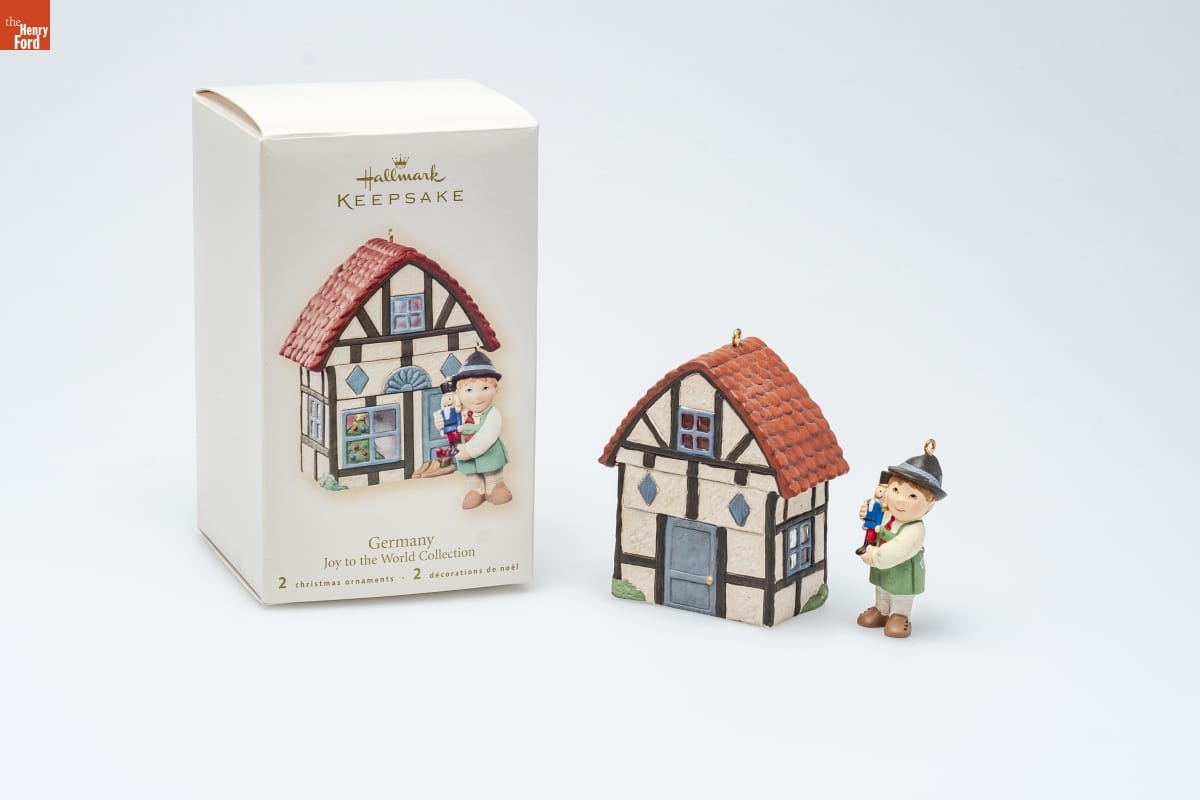
- Hallmark "Joy to the World Collection: Germany" Christmas Ornaments, 2007 - Already known for greeting cards, Hallmark introduced a line of Christmas ornaments in 1973. The company's annual release of an increasing array of ornaments revolutionized Christmas decorating, appealing to customers' interest in marking memories and milestones as well as expressing one's personality and unique tastes.
- 2007
- Collections - Artifact
Hallmark "Joy to the World Collection: Germany" Christmas Ornaments, 2007
Already known for greeting cards, Hallmark introduced a line of Christmas ornaments in 1973. The company's annual release of an increasing array of ornaments revolutionized Christmas decorating, appealing to customers' interest in marking memories and milestones as well as expressing one's personality and unique tastes.
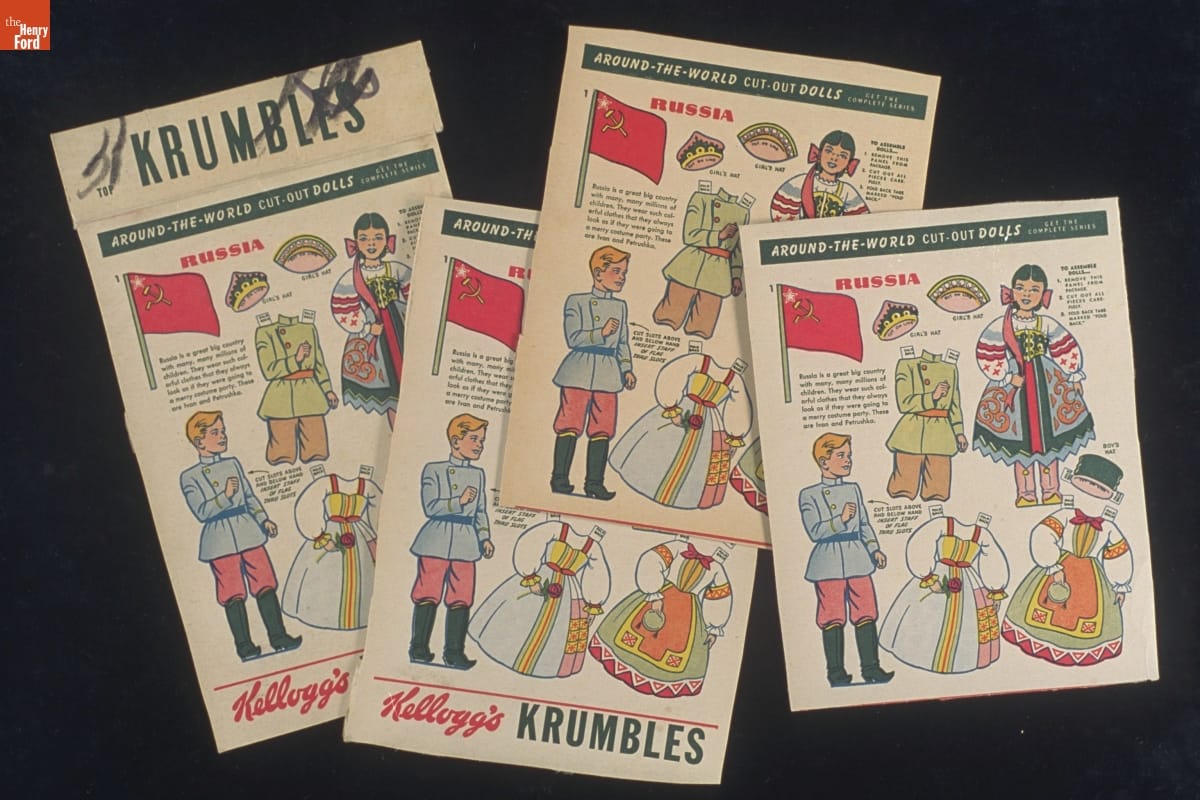
- Kellogg's Krumbles Around-the-World Cut-Out Dolls, Russia, 1946-1949 - The breakfast food manufacturer Kellogg's created attractive advertising premiums to entice customers to buy its products. In the late 1940s, as the United States became a global leader, the company printed cut-out paper dolls of children from around the world on the backs of Kellogg's Krumbles cereal boxes. Kellogg's Krumbles, a tasty toasted whole wheat cereal, was one of the company's best-selling products.
- 1946-1949
- Collections - Artifact
Kellogg's Krumbles Around-the-World Cut-Out Dolls, Russia, 1946-1949
The breakfast food manufacturer Kellogg's created attractive advertising premiums to entice customers to buy its products. In the late 1940s, as the United States became a global leader, the company printed cut-out paper dolls of children from around the world on the backs of Kellogg's Krumbles cereal boxes. Kellogg's Krumbles, a tasty toasted whole wheat cereal, was one of the company's best-selling products.
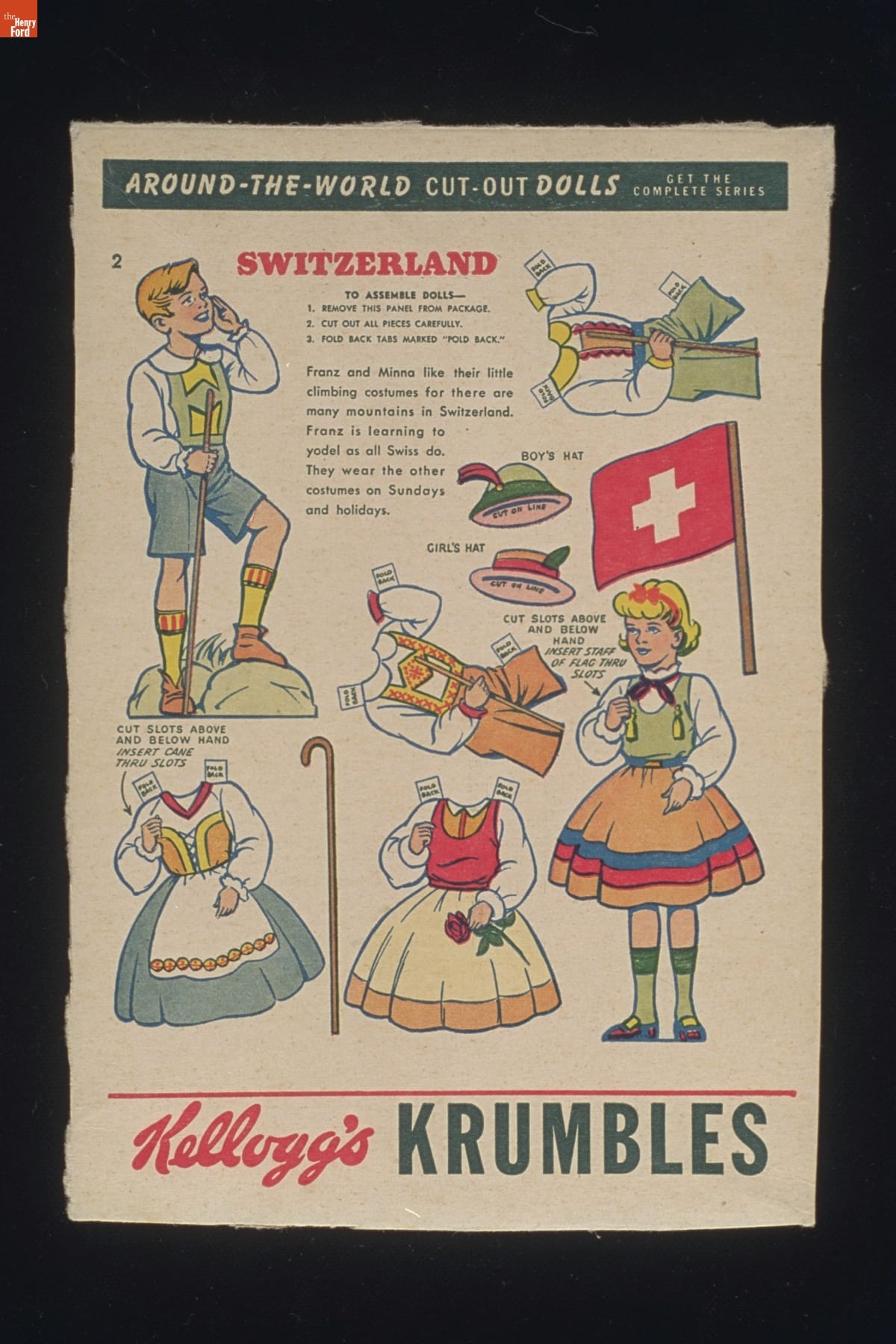
- Kellogg's Krumbles Around-the-World Cut-Out Dolls, Switzerland, 1946-1949 - The breakfast food manufacturer Kellogg's created attractive advertising premiums to entice customers to buy its products. In the late 1940s, as the United States became a global leader, the company printed cut-out paper dolls of children from around the world on the backs of Kellogg's Krumbles cereal boxes. Kellogg's Krumbles, a tasty toasted whole wheat cereal, was one of the company's best-selling products.
- 1946-1949
- Collections - Artifact
Kellogg's Krumbles Around-the-World Cut-Out Dolls, Switzerland, 1946-1949
The breakfast food manufacturer Kellogg's created attractive advertising premiums to entice customers to buy its products. In the late 1940s, as the United States became a global leader, the company printed cut-out paper dolls of children from around the world on the backs of Kellogg's Krumbles cereal boxes. Kellogg's Krumbles, a tasty toasted whole wheat cereal, was one of the company's best-selling products.
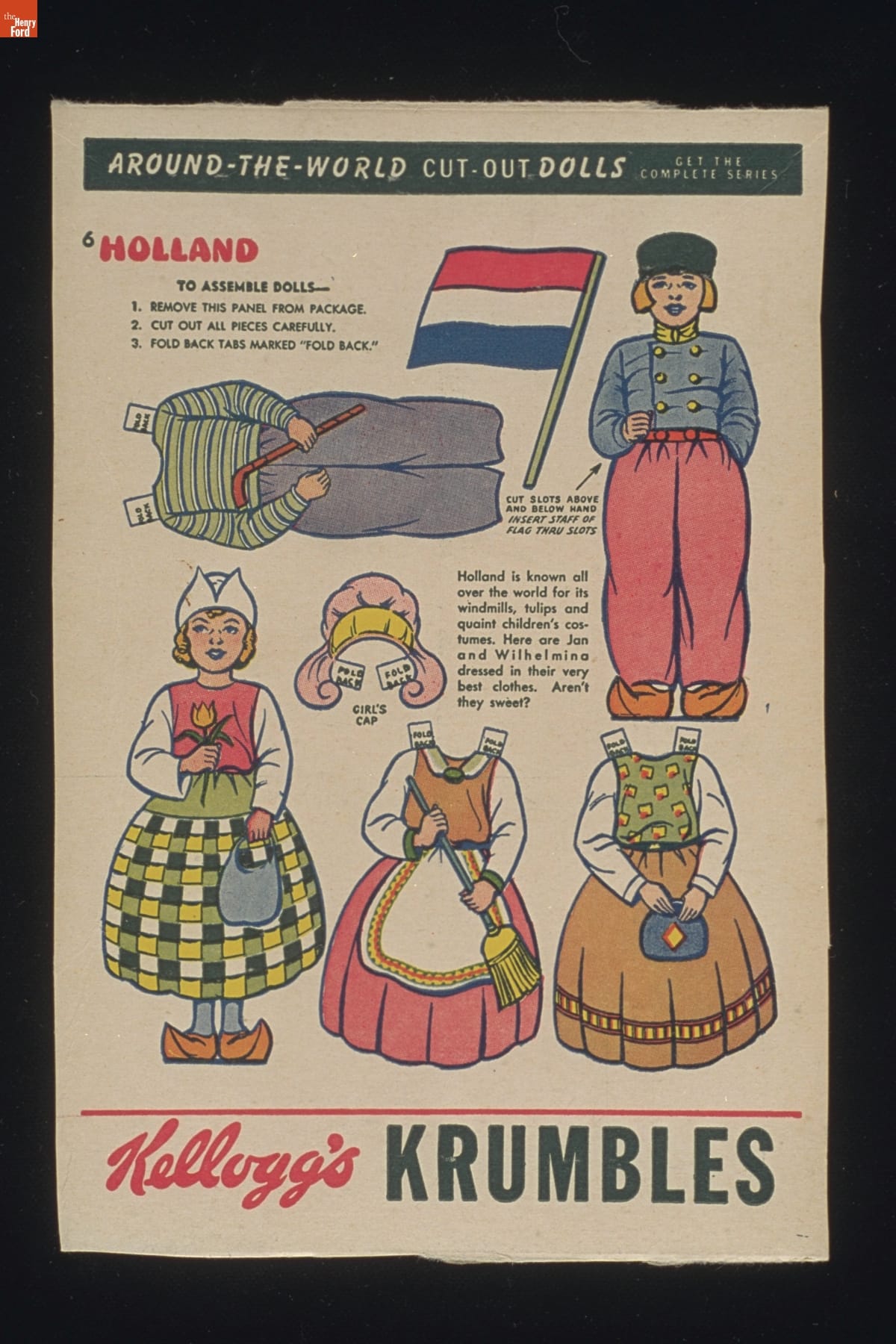
- Kellogg's Krumbles Around-the-World Cut-Out Dolls, Holland, 1946-1949 - The breakfast food manufacturer Kellogg's created attractive advertising premiums to entice customers to buy its products. In the late 1940s, as the United States became a global leader, the company printed cut-out paper dolls of children from around the world on the backs of Kellogg's Krumbles cereal boxes. Kellogg's Krumbles, a tasty toasted whole wheat cereal, was one of the company's best-selling products.
- 1946-1949
- Collections - Artifact
Kellogg's Krumbles Around-the-World Cut-Out Dolls, Holland, 1946-1949
The breakfast food manufacturer Kellogg's created attractive advertising premiums to entice customers to buy its products. In the late 1940s, as the United States became a global leader, the company printed cut-out paper dolls of children from around the world on the backs of Kellogg's Krumbles cereal boxes. Kellogg's Krumbles, a tasty toasted whole wheat cereal, was one of the company's best-selling products.
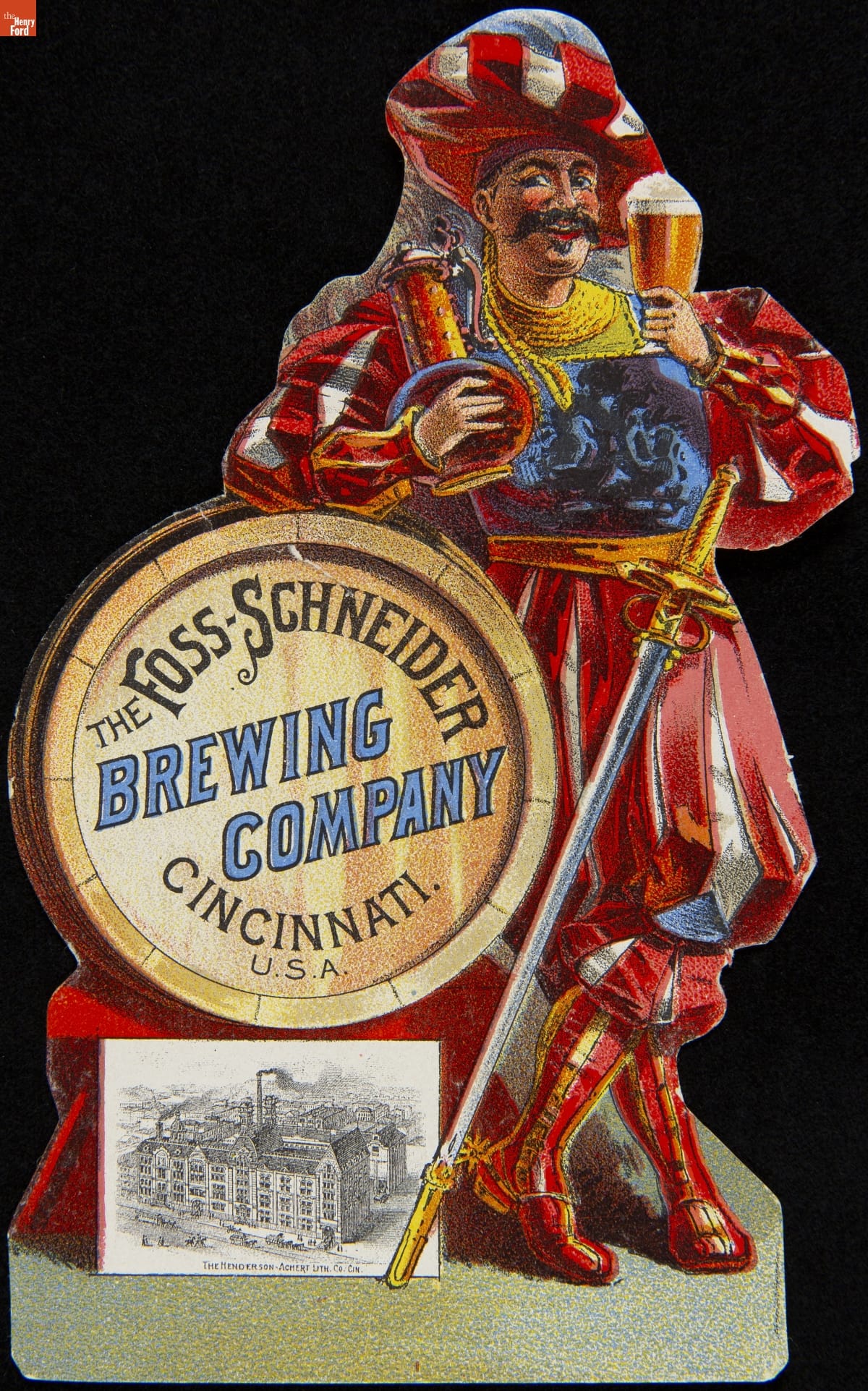
- Trade Card for Foss-Schneider Brewing Company, 1880-1900 - In the last third of the nineteenth century, an unprecedented variety of consumer goods and services flooded the American market. Advertisers, armed with new methods of color printing, bombarded potential customers with trade cards. Americans enjoyed and often saved the vibrant little advertisements found in product packages or distributed by local merchants. Many survive as historical records of commercialism in the United States.
- 1880-1900
- Collections - Artifact
Trade Card for Foss-Schneider Brewing Company, 1880-1900
In the last third of the nineteenth century, an unprecedented variety of consumer goods and services flooded the American market. Advertisers, armed with new methods of color printing, bombarded potential customers with trade cards. Americans enjoyed and often saved the vibrant little advertisements found in product packages or distributed by local merchants. Many survive as historical records of commercialism in the United States.
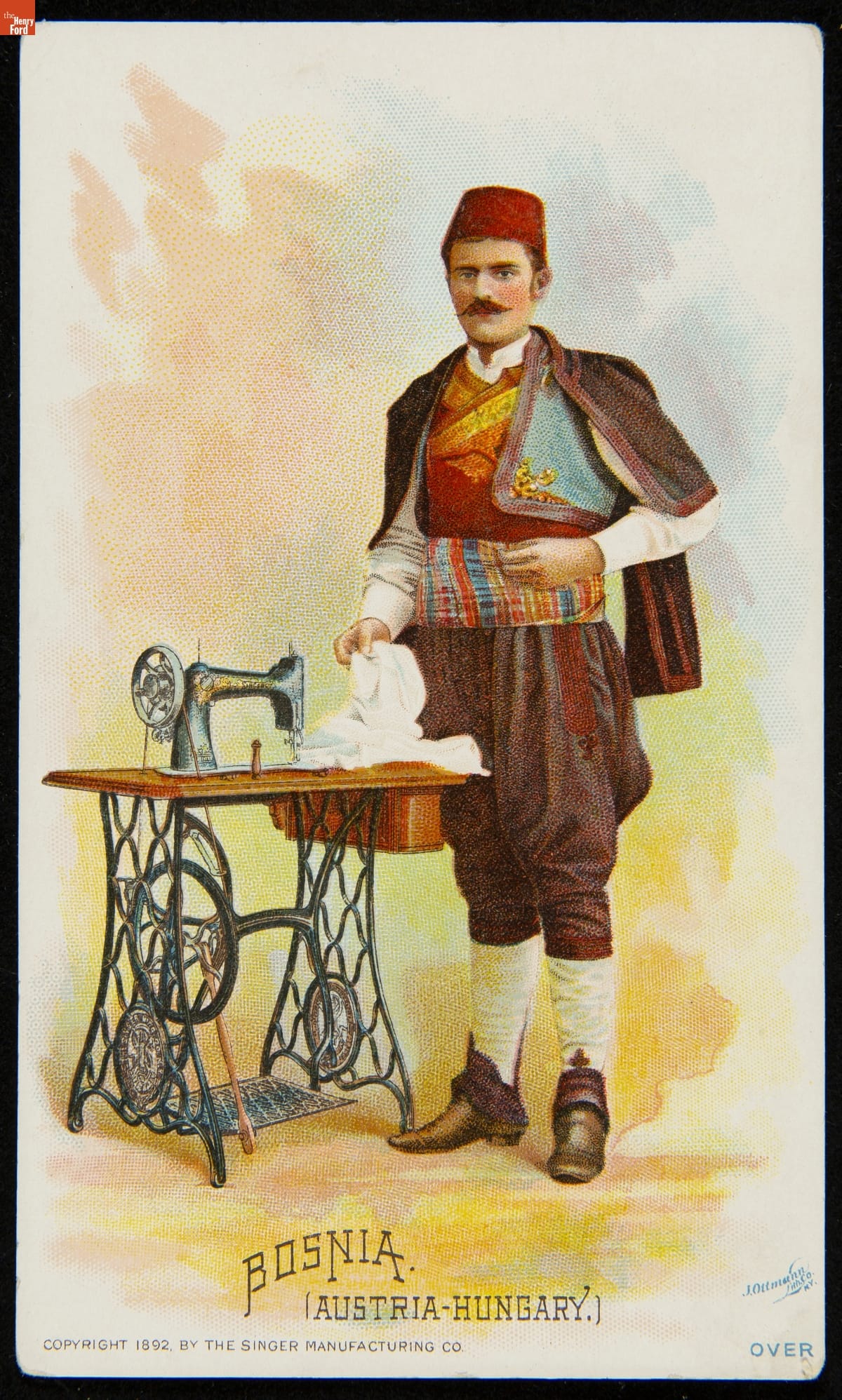
- Trade Card for Singer Sewing Machines, 1892 - As color printing gained momentum in the late 19th century, trade cards became a major means of advertising goods and services. Americans enjoyed and often saved the vibrant little advertisements found in product packages or distributed by local merchants. The Singer Sewing Machine Company had a series of trade cards, like this one, offering images of Singer machine users from around the world in their national dress.
- circa 1892
- Collections - Artifact
Trade Card for Singer Sewing Machines, 1892
As color printing gained momentum in the late 19th century, trade cards became a major means of advertising goods and services. Americans enjoyed and often saved the vibrant little advertisements found in product packages or distributed by local merchants. The Singer Sewing Machine Company had a series of trade cards, like this one, offering images of Singer machine users from around the world in their national dress.
- Trade Card for Singer Sewing Machines, 1892 - As color printing gained momentum in the late 19th century, trade cards became a major means of advertising goods and services. Americans enjoyed and often saved the vibrant little advertisements found in product packages or distributed by local merchants. The Singer Sewing Machine Company had a series of trade cards, like this one, offering images of Singer machine users from around the world in their national dress.
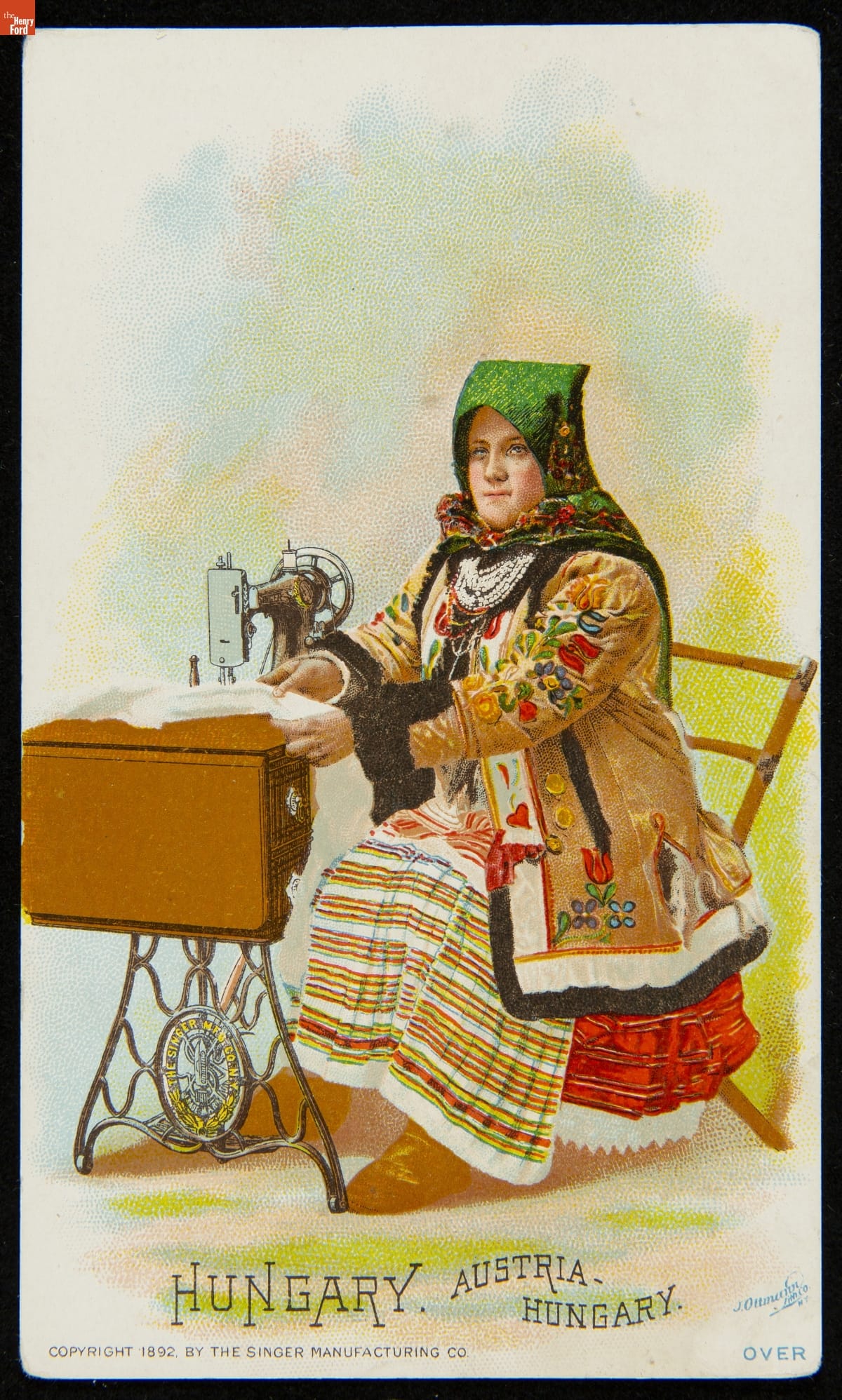
- circa 1892
- Collections - Artifact
Trade Card for Singer Sewing Machines, 1892
As color printing gained momentum in the late 19th century, trade cards became a major means of advertising goods and services. Americans enjoyed and often saved the vibrant little advertisements found in product packages or distributed by local merchants. The Singer Sewing Machine Company had a series of trade cards, like this one, offering images of Singer machine users from around the world in their national dress.
- Trade Card for Singer Sewing Machines, 1894 - As color printing gained momentum in the late 19th century, trade cards became a major means of advertising goods and services. Americans enjoyed and often saved the vibrant little advertisements found in product packages or distributed by local merchants. The Singer Sewing Machine Company had a series of trade cards, like this one, offering images of Singer machine users from around the world in their national dress.
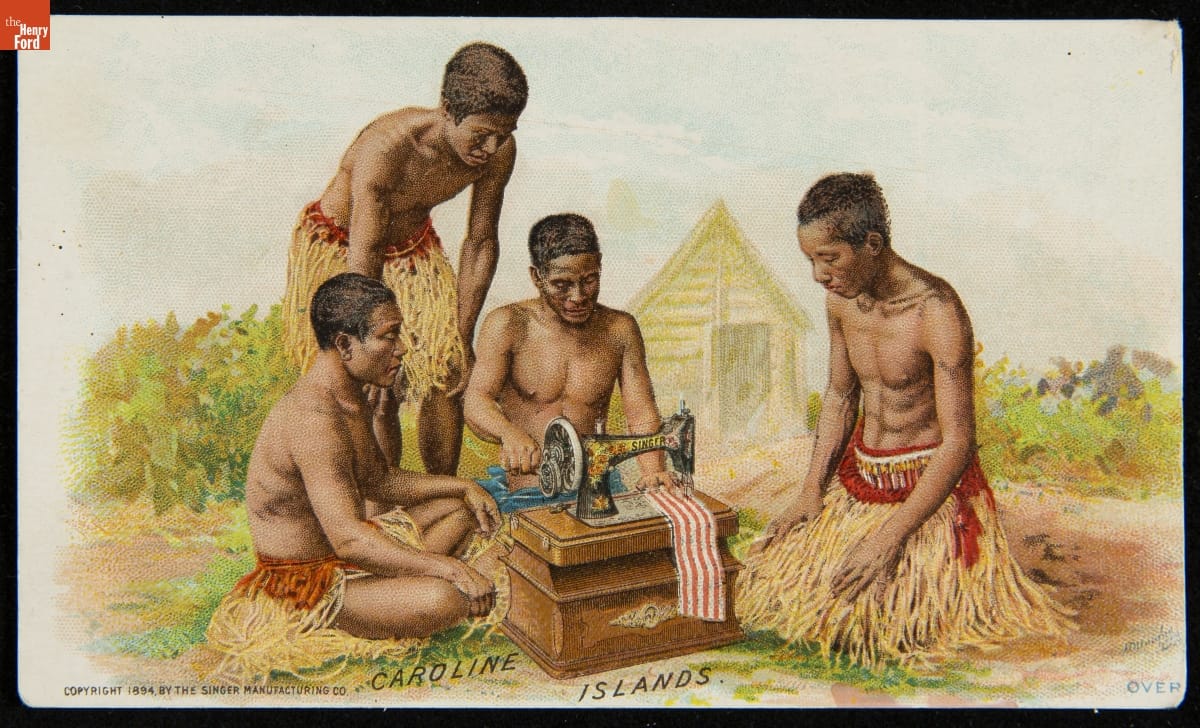
- 1894
- Collections - Artifact
Trade Card for Singer Sewing Machines, 1894
As color printing gained momentum in the late 19th century, trade cards became a major means of advertising goods and services. Americans enjoyed and often saved the vibrant little advertisements found in product packages or distributed by local merchants. The Singer Sewing Machine Company had a series of trade cards, like this one, offering images of Singer machine users from around the world in their national dress.