
Search
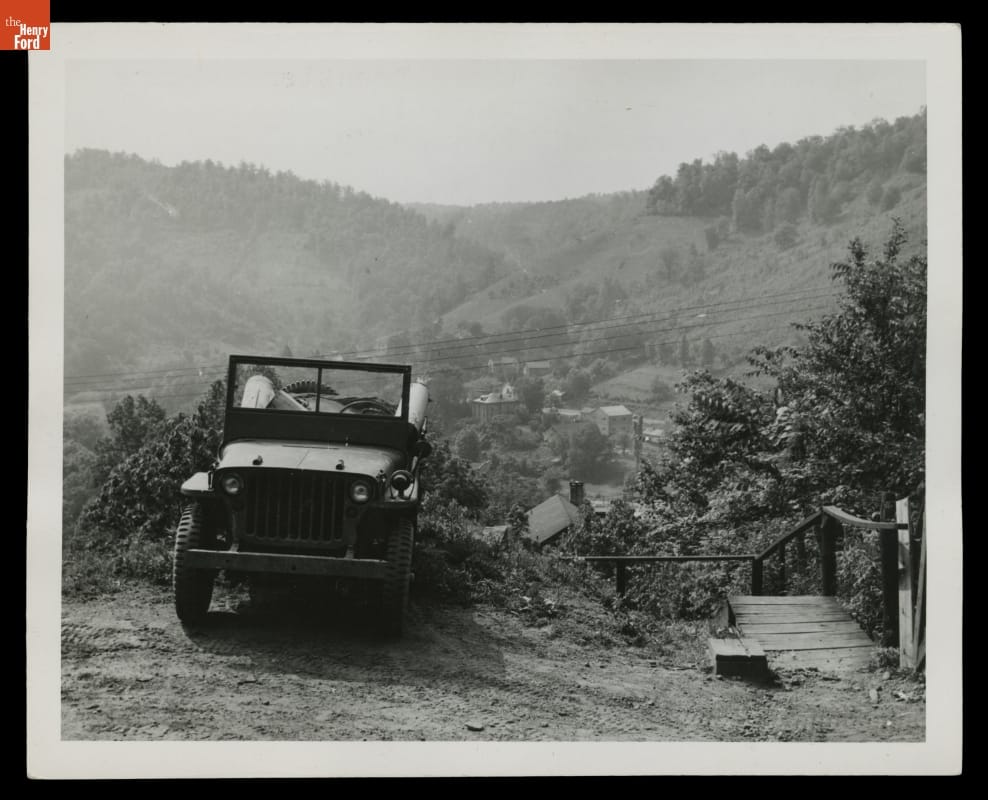
- Frontier Nursing Service Jeep on Mountain Road near Hospital, Wendover, Kentucky, 1945 - The Frontier Nursing Service, established by Mary Breckinridge in 1925, brought qualified nurse-midwives and modern, life-saving healthcare to parts of eastern Kentucky that were accessible only by horse. In the early 1940s, a jeep could navigate the mountainous terrain and Breckinridge asked her patrons for help. Clara Ford, a longtime benefactor, secured one. Breckinridge named the jeep "Jane," Mrs. Ford's middle name.
- 1945
- Collections - Artifact
Frontier Nursing Service Jeep on Mountain Road near Hospital, Wendover, Kentucky, 1945
The Frontier Nursing Service, established by Mary Breckinridge in 1925, brought qualified nurse-midwives and modern, life-saving healthcare to parts of eastern Kentucky that were accessible only by horse. In the early 1940s, a jeep could navigate the mountainous terrain and Breckinridge asked her patrons for help. Clara Ford, a longtime benefactor, secured one. Breckinridge named the jeep "Jane," Mrs. Ford's middle name.
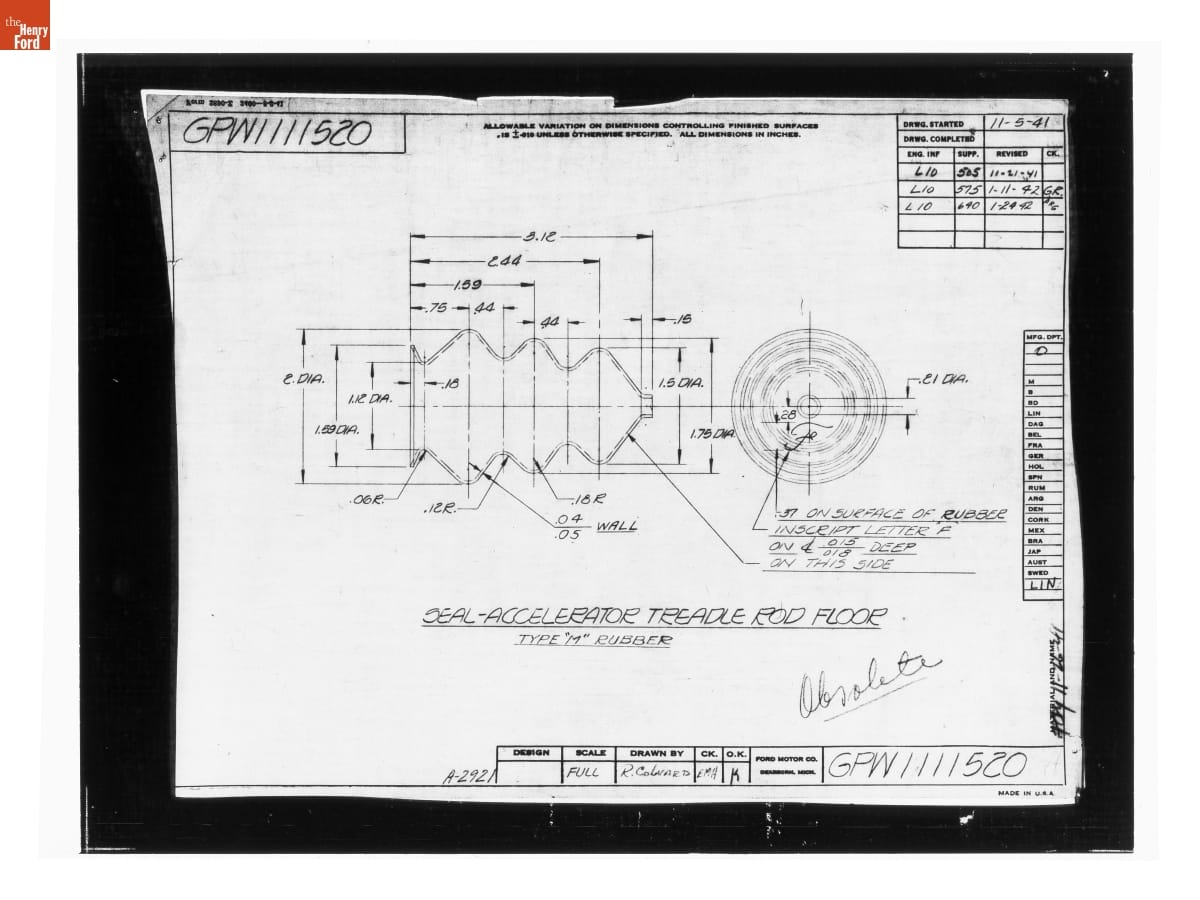
- Drawing, "Seal - Accelerator Treadle Rod Floor," Ford GPW, January 24, 1942 - The Ford Motor Company created over a million parts drawings from 1903 to 1957. Many of these drawings specify engineering requirements for the components of Ford-made vehicles--including automobiles, trucks, tractors, military vehicles and Tri-motor airplanes. Others document assembly components, stages of casting and forging, or experimental designs. Beginning in the 1940s, Ford transferred the drawings to microfilm.
- January 24, 1942
- Collections - Artifact
Drawing, "Seal - Accelerator Treadle Rod Floor," Ford GPW, January 24, 1942
The Ford Motor Company created over a million parts drawings from 1903 to 1957. Many of these drawings specify engineering requirements for the components of Ford-made vehicles--including automobiles, trucks, tractors, military vehicles and Tri-motor airplanes. Others document assembly components, stages of casting and forging, or experimental designs. Beginning in the 1940s, Ford transferred the drawings to microfilm.
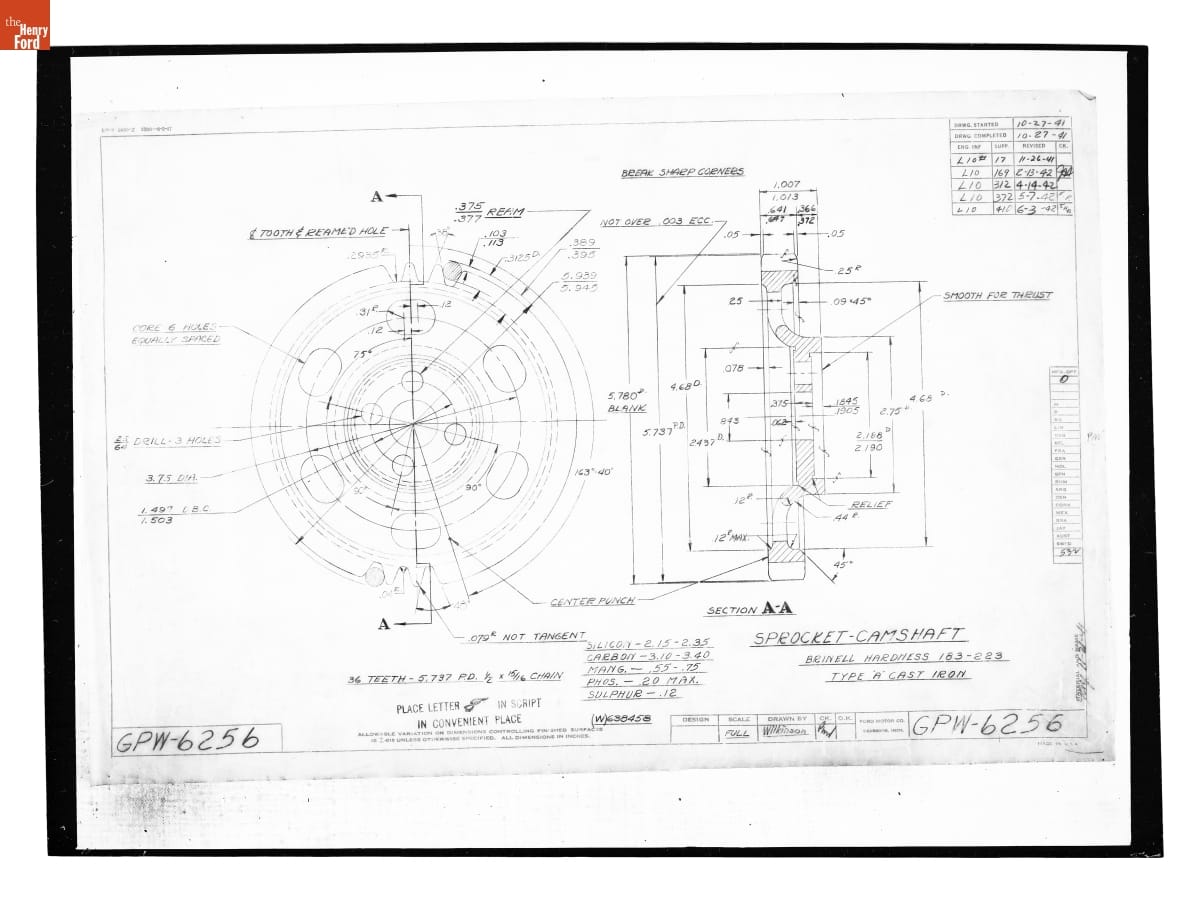
- Drawing, "Sprocket - Camshaft," Ford GPW, June 3, 1942 - The Ford Motor Company created over a million parts drawings from 1903 to 1957. Many of these drawings specify engineering requirements for the components of Ford-made vehicles--including automobiles, trucks, tractors, military vehicles and Tri-motor airplanes. Others document assembly components, stages of casting and forging, or experimental designs. Beginning in the 1940s, Ford transferred the drawings to microfilm.
- June 03, 1942
- Collections - Artifact
Drawing, "Sprocket - Camshaft," Ford GPW, June 3, 1942
The Ford Motor Company created over a million parts drawings from 1903 to 1957. Many of these drawings specify engineering requirements for the components of Ford-made vehicles--including automobiles, trucks, tractors, military vehicles and Tri-motor airplanes. Others document assembly components, stages of casting and forging, or experimental designs. Beginning in the 1940s, Ford transferred the drawings to microfilm.
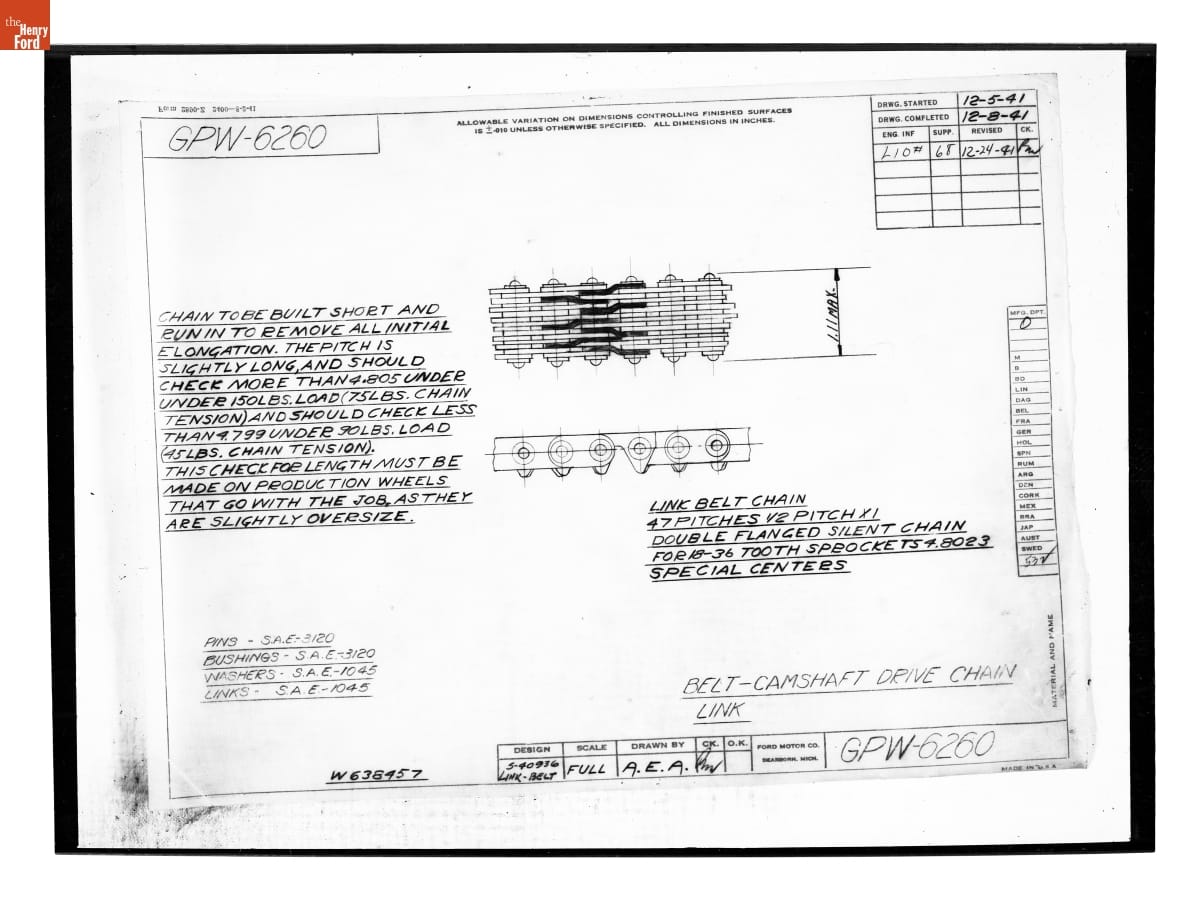
- Drawing, "Belt - Camshaft Drive Chain Link," Ford GPW, June 24, 1941 - The Ford Motor Company created over a million parts drawings from 1903 to 1957. Many of these drawings specify engineering requirements for the components of Ford-made vehicles--including automobiles, trucks, tractors, military vehicles and Tri-motor airplanes. Others document assembly components, stages of casting and forging, or experimental designs. Beginning in the 1940s, Ford transferred the drawings to microfilm.
- June 24, 1941
- Collections - Artifact
Drawing, "Belt - Camshaft Drive Chain Link," Ford GPW, June 24, 1941
The Ford Motor Company created over a million parts drawings from 1903 to 1957. Many of these drawings specify engineering requirements for the components of Ford-made vehicles--including automobiles, trucks, tractors, military vehicles and Tri-motor airplanes. Others document assembly components, stages of casting and forging, or experimental designs. Beginning in the 1940s, Ford transferred the drawings to microfilm.
- Drawing, "Striker - Tool Compartment Lid Lock," Ford GPW, November 5, 1943 - The Ford Motor Company created over a million parts drawings from 1903 to 1957. Many of these drawings specify engineering requirements for the components of Ford-made vehicles--including automobiles, trucks, tractors, military vehicles and Tri-motor airplanes. Others document assembly components, stages of casting and forging, or experimental designs. Beginning in the 1940s, Ford transferred the drawings to microfilm.
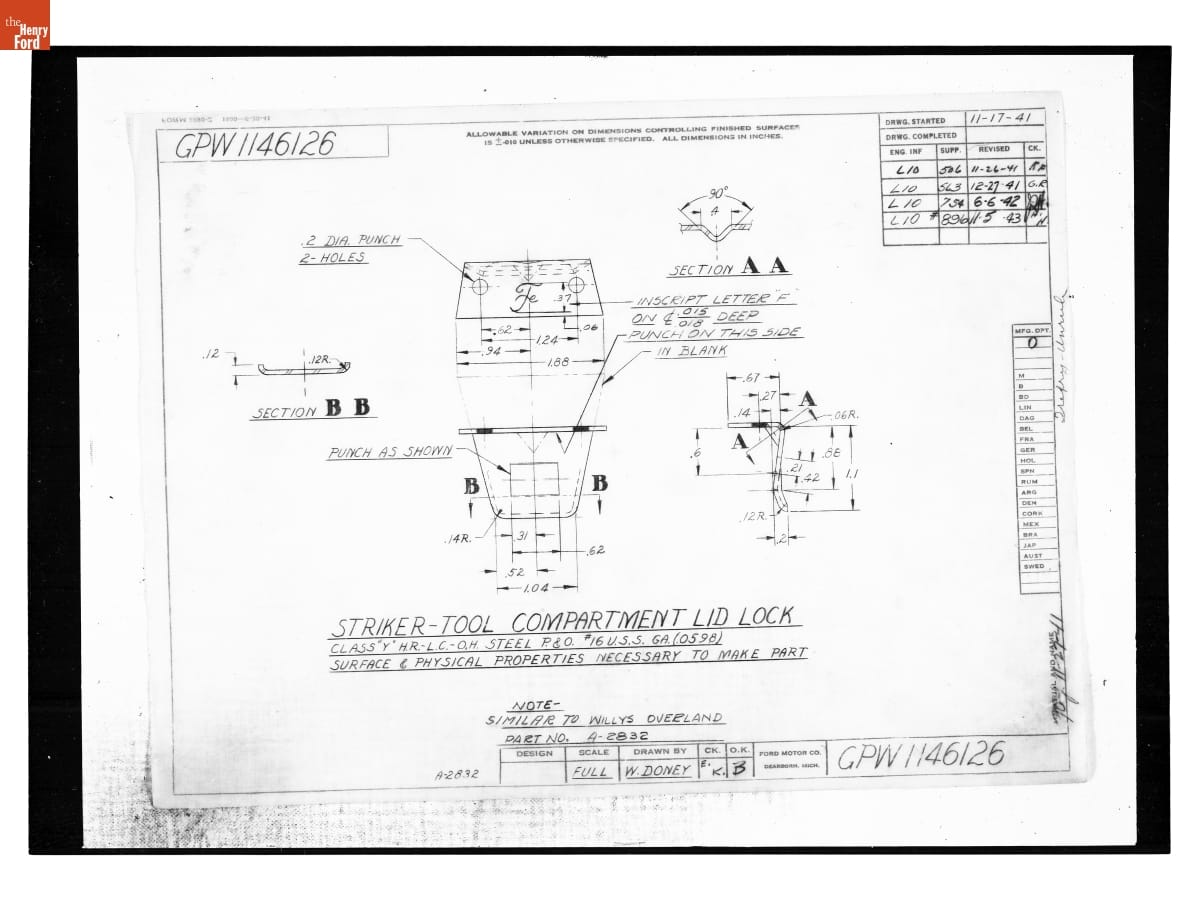
- November 05, 1943
- Collections - Artifact
Drawing, "Striker - Tool Compartment Lid Lock," Ford GPW, November 5, 1943
The Ford Motor Company created over a million parts drawings from 1903 to 1957. Many of these drawings specify engineering requirements for the components of Ford-made vehicles--including automobiles, trucks, tractors, military vehicles and Tri-motor airplanes. Others document assembly components, stages of casting and forging, or experimental designs. Beginning in the 1940s, Ford transferred the drawings to microfilm.
- Drawing, "Shaft - Steering," Ford GPW, February 19, 1944 - The Ford Motor Company created over a million parts drawings from 1903 to 1957. Many of these drawings specify engineering requirements for the components of Ford-made vehicles--including automobiles, trucks, tractors, military vehicles and Tri-motor airplanes. Others document assembly components, stages of casting and forging, or experimental designs. Beginning in the 1940s, Ford transferred the drawings to microfilm.
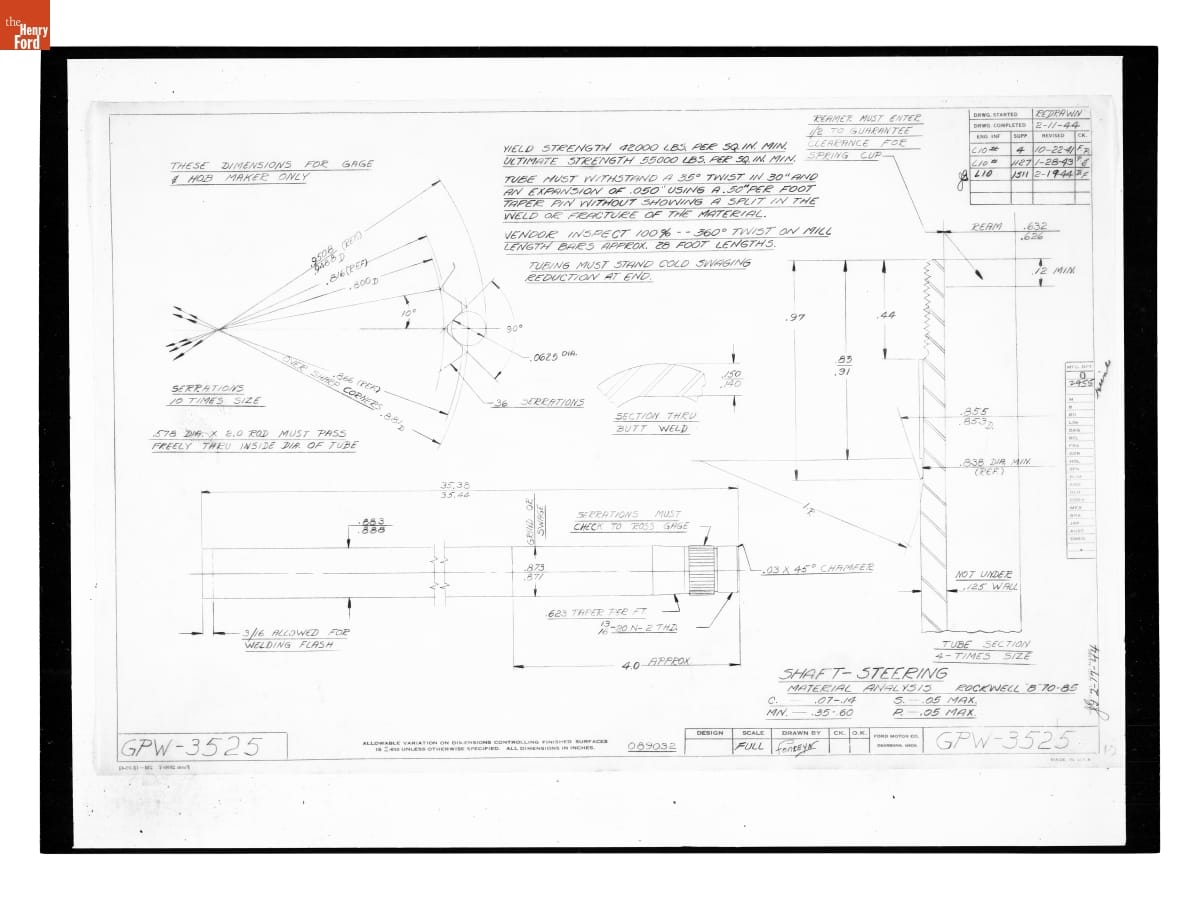
- February 19, 1944
- Collections - Artifact
Drawing, "Shaft - Steering," Ford GPW, February 19, 1944
The Ford Motor Company created over a million parts drawings from 1903 to 1957. Many of these drawings specify engineering requirements for the components of Ford-made vehicles--including automobiles, trucks, tractors, military vehicles and Tri-motor airplanes. Others document assembly components, stages of casting and forging, or experimental designs. Beginning in the 1940s, Ford transferred the drawings to microfilm.
- Drawing, "Stud - Steering Sector Shaft," Ford GPW, July 27, 1945 - The Ford Motor Company created over a million parts drawings from 1903 to 1957. Many of these drawings specify engineering requirements for the components of Ford-made vehicles--including automobiles, trucks, tractors, military vehicles and Tri-motor airplanes. Others document assembly components, stages of casting and forging, or experimental designs. Beginning in the 1940s, Ford transferred the drawings to microfilm.
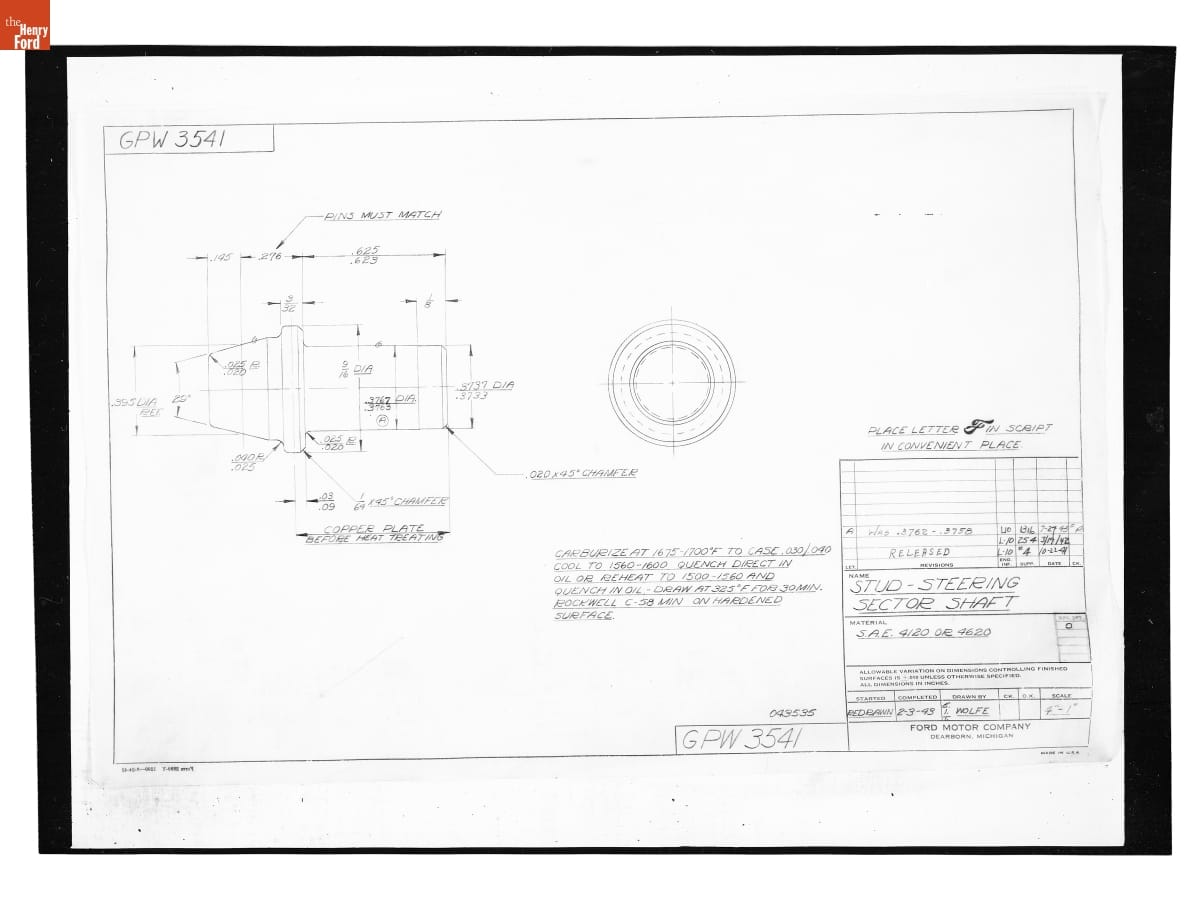
- July 27, 1945
- Collections - Artifact
Drawing, "Stud - Steering Sector Shaft," Ford GPW, July 27, 1945
The Ford Motor Company created over a million parts drawings from 1903 to 1957. Many of these drawings specify engineering requirements for the components of Ford-made vehicles--including automobiles, trucks, tractors, military vehicles and Tri-motor airplanes. Others document assembly components, stages of casting and forging, or experimental designs. Beginning in the 1940s, Ford transferred the drawings to microfilm.
- Drawing, "Insulator - Horn Switch Commutator," Ford GPW, October 30, 1941 - The Ford Motor Company created over a million parts drawings from 1903 to 1957. Many of these drawings specify engineering requirements for the components of Ford-made vehicles--including automobiles, trucks, tractors, military vehicles and Tri-motor airplanes. Others document assembly components, stages of casting and forging, or experimental designs. Beginning in the 1940s, Ford transferred the drawings to microfilm.
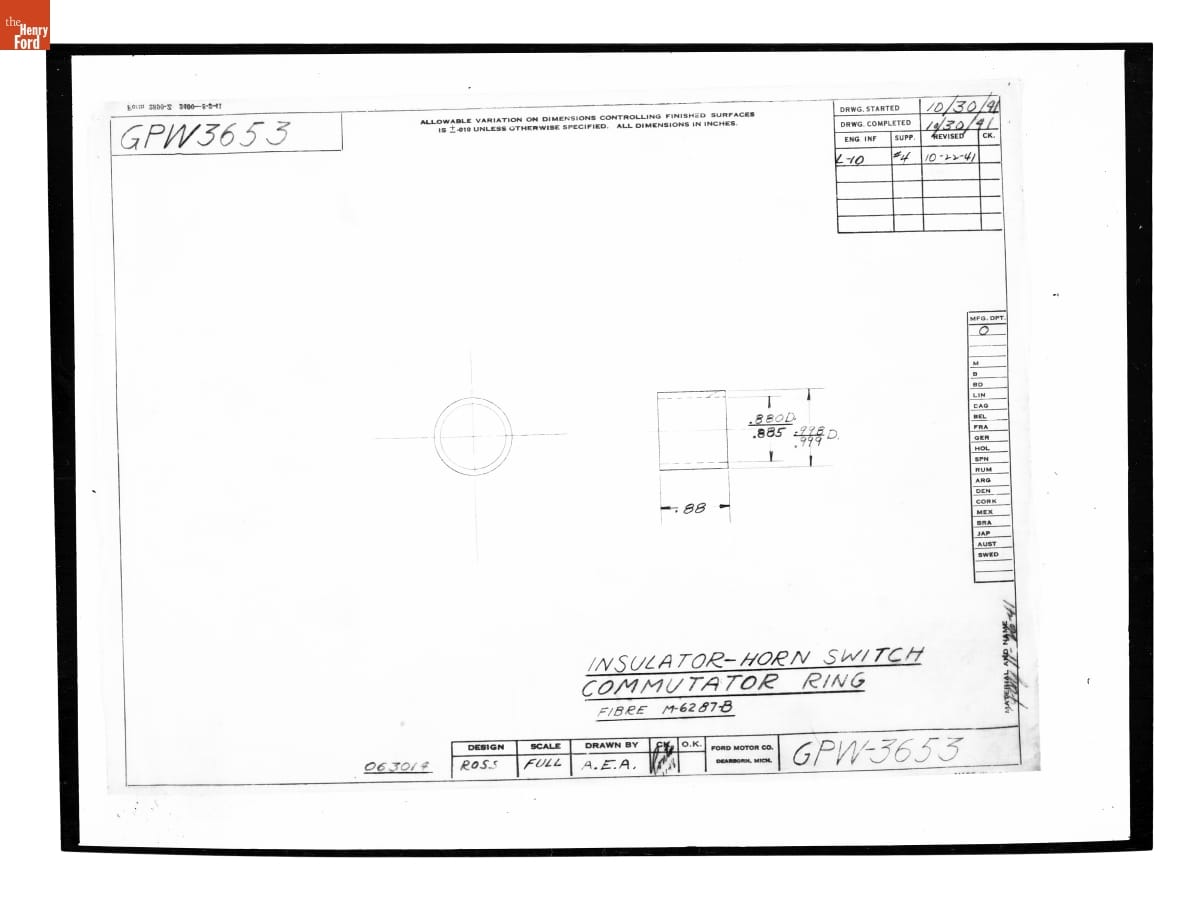
- October 30, 1941
- Collections - Artifact
Drawing, "Insulator - Horn Switch Commutator," Ford GPW, October 30, 1941
The Ford Motor Company created over a million parts drawings from 1903 to 1957. Many of these drawings specify engineering requirements for the components of Ford-made vehicles--including automobiles, trucks, tractors, military vehicles and Tri-motor airplanes. Others document assembly components, stages of casting and forging, or experimental designs. Beginning in the 1940s, Ford transferred the drawings to microfilm.
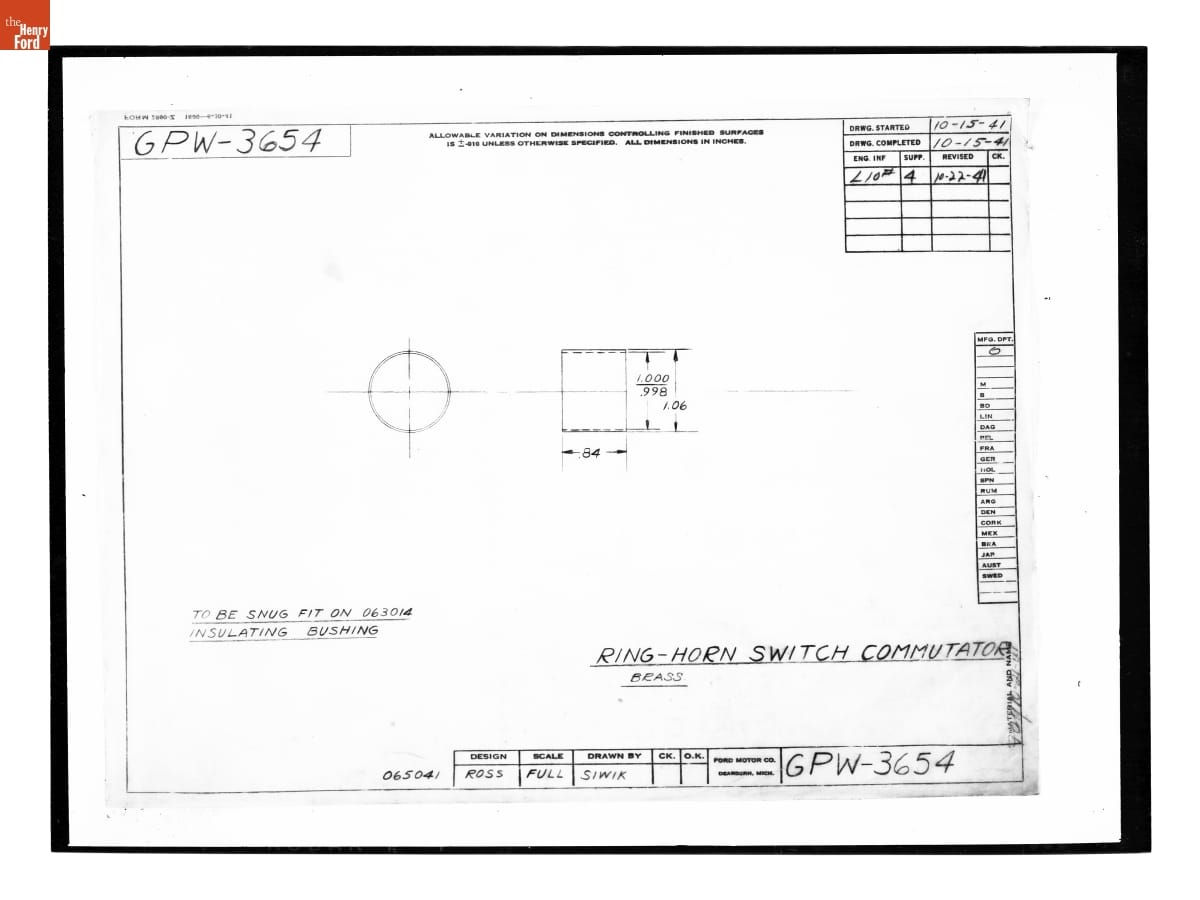
- Drawing, "Ring - Horn Swich Commutator," Ford GPW, October 22, 1941 - The Ford Motor Company created over a million parts drawings from 1903 to 1957. Many of these drawings specify engineering requirements for the components of Ford-made vehicles--including automobiles, trucks, tractors, military vehicles and Tri-motor airplanes. Others document assembly components, stages of casting and forging, or experimental designs. Beginning in the 1940s, Ford transferred the drawings to microfilm.
- October 22, 1941
- Collections - Artifact
Drawing, "Ring - Horn Swich Commutator," Ford GPW, October 22, 1941
The Ford Motor Company created over a million parts drawings from 1903 to 1957. Many of these drawings specify engineering requirements for the components of Ford-made vehicles--including automobiles, trucks, tractors, military vehicles and Tri-motor airplanes. Others document assembly components, stages of casting and forging, or experimental designs. Beginning in the 1940s, Ford transferred the drawings to microfilm.
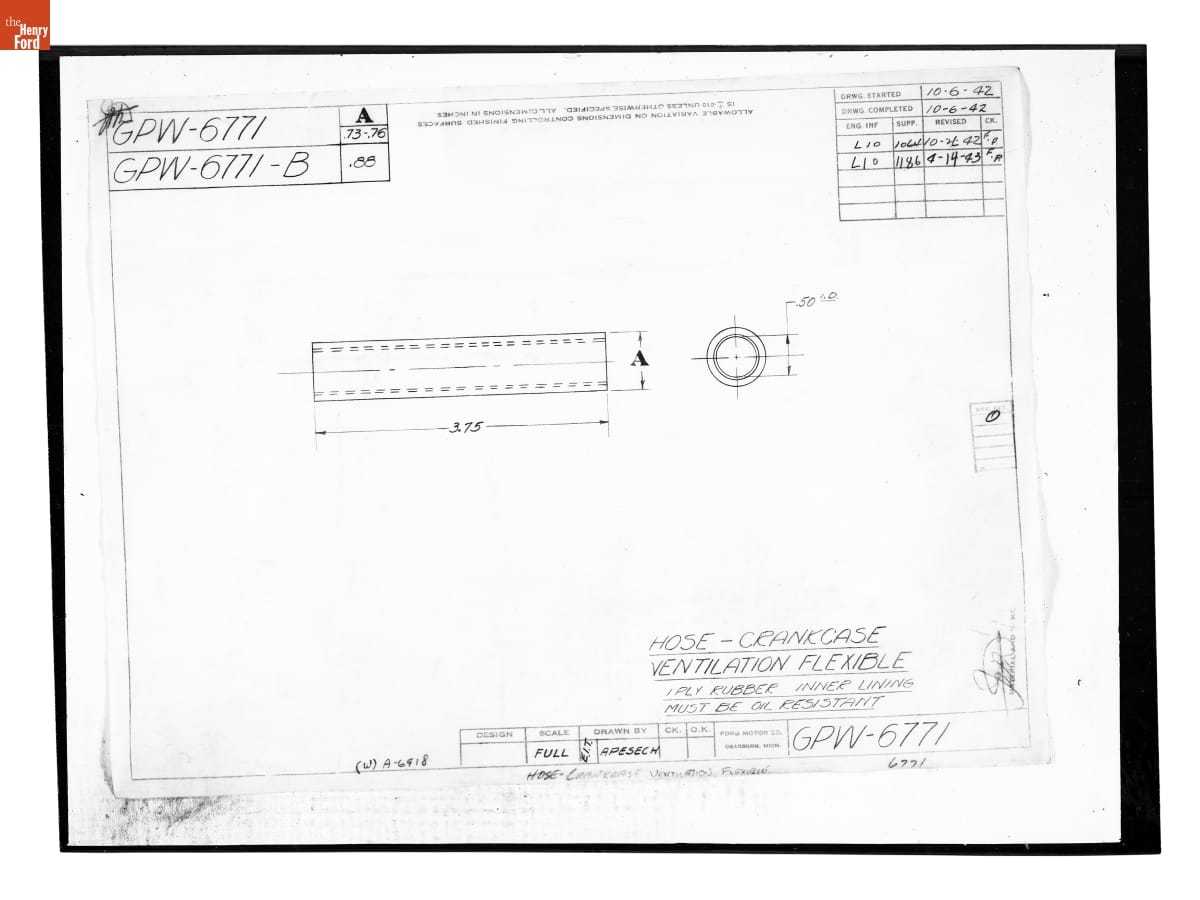
- Drawing, "Hose - Crankcase Ventilation Flexible," Ford GPW, April 14, 1943 - The Ford Motor Company created over a million parts drawings from 1903 to 1957. Many of these drawings specify engineering requirements for the components of Ford-made vehicles--including automobiles, trucks, tractors, military vehicles and Tri-motor airplanes. Others document assembly components, stages of casting and forging, or experimental designs. Beginning in the 1940s, Ford transferred the drawings to microfilm.
- April 14, 1943
- Collections - Artifact
Drawing, "Hose - Crankcase Ventilation Flexible," Ford GPW, April 14, 1943
The Ford Motor Company created over a million parts drawings from 1903 to 1957. Many of these drawings specify engineering requirements for the components of Ford-made vehicles--including automobiles, trucks, tractors, military vehicles and Tri-motor airplanes. Others document assembly components, stages of casting and forging, or experimental designs. Beginning in the 1940s, Ford transferred the drawings to microfilm.