
Search
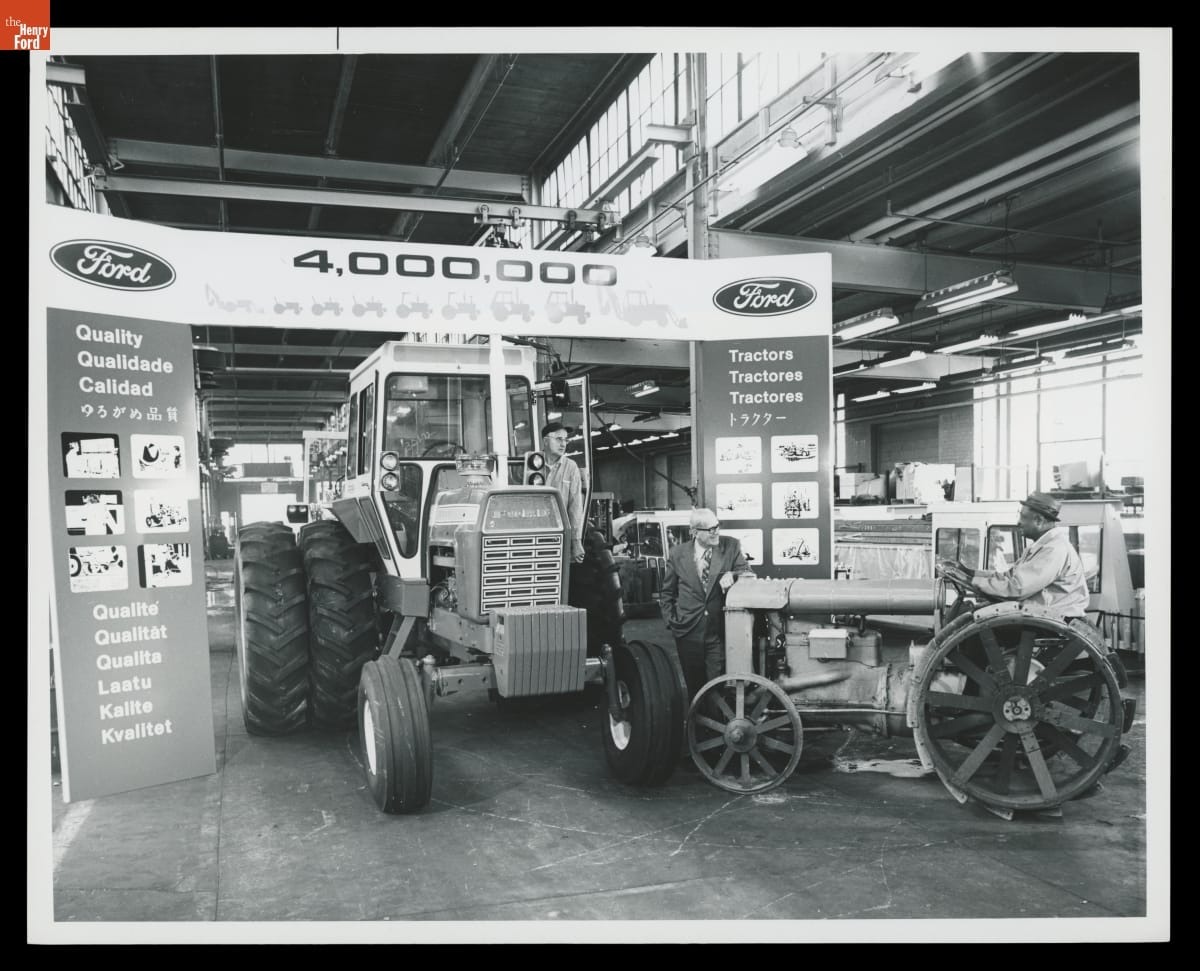
- Employees with the 4,000,000th Ford Tractor and a Fordson Tractor at the Highland Park Plant, 1972 -
- 1972
- Collections - Artifact
Employees with the 4,000,000th Ford Tractor and a Fordson Tractor at the Highland Park Plant, 1972
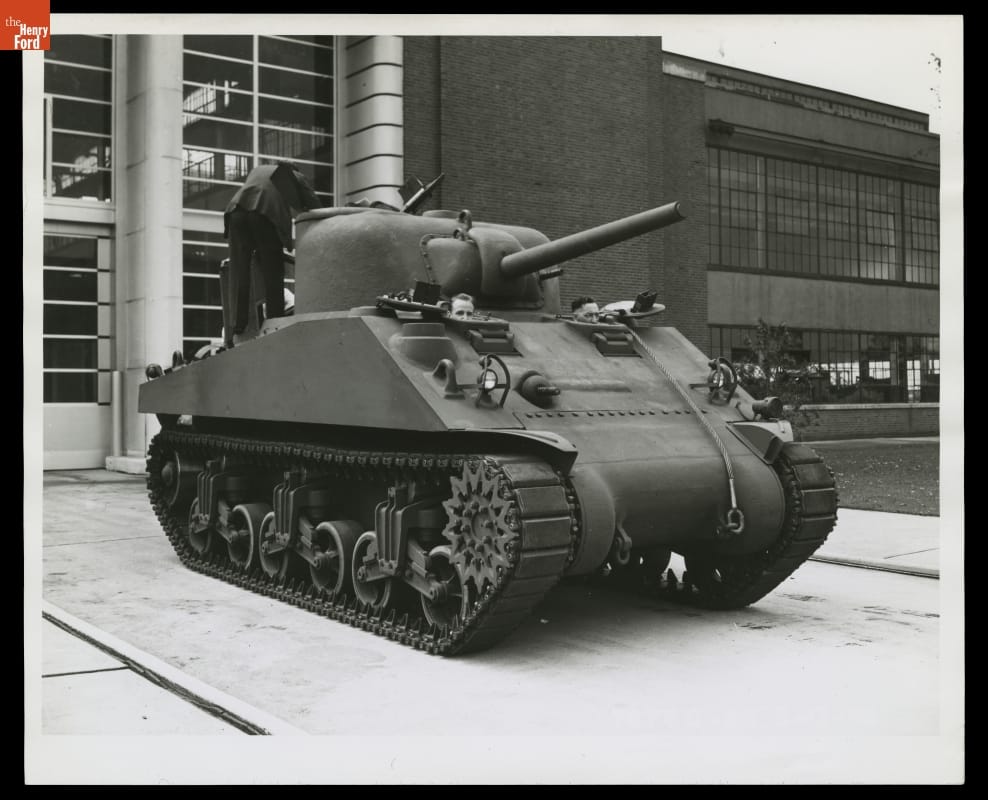
- Ford Motor Company Executives inside Ford M-4 Tank, Highland Park Plant, 1942 - Ford Motor Company repurposed its assembly lines to meet military manufacturing needs during World War II. The last peacetime automobile rolled out of Ford's massive River Rouge plant in 1941, and focus shifted to the wartime production of aircraft engines and military vehicles. The Rouge manufactured M-4 tanks through 1943 and continued producing M-4 engines and armor plates until war's end.
- May 13, 1942
- Collections - Artifact
Ford Motor Company Executives inside Ford M-4 Tank, Highland Park Plant, 1942
Ford Motor Company repurposed its assembly lines to meet military manufacturing needs during World War II. The last peacetime automobile rolled out of Ford's massive River Rouge plant in 1941, and focus shifted to the wartime production of aircraft engines and military vehicles. The Rouge manufactured M-4 tanks through 1943 and continued producing M-4 engines and armor plates until war's end.
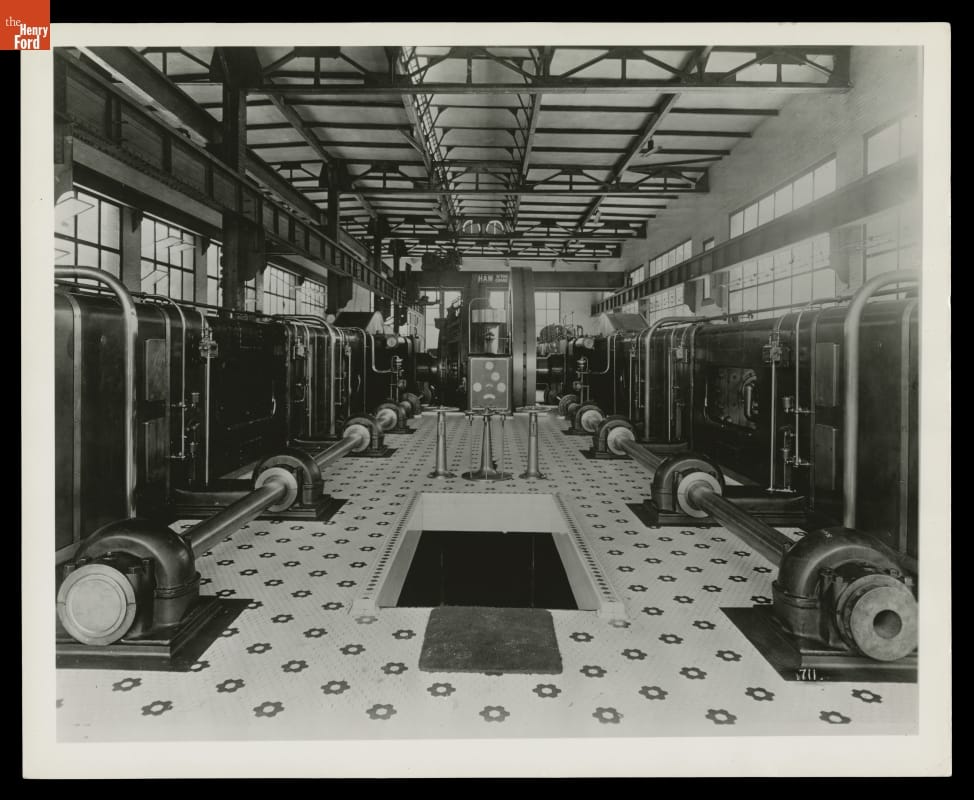
- Powerhouse, Highland Park Plant, Michigan, circa 1914 - One of the nine gas-steam engines installed in Ford Motor Company's Highland Park powerhouse is shown in this 1914 view. Each of these hybrid machines consisted of a gas engine and a steam engine both connected to a single electrical generator. Henry Ford took great pride in the engines, though their hybrid arrangement was not widely adopted elsewhere.
- circa 1914
- Collections - Artifact
Powerhouse, Highland Park Plant, Michigan, circa 1914
One of the nine gas-steam engines installed in Ford Motor Company's Highland Park powerhouse is shown in this 1914 view. Each of these hybrid machines consisted of a gas engine and a steam engine both connected to a single electrical generator. Henry Ford took great pride in the engines, though their hybrid arrangement was not widely adopted elsewhere.
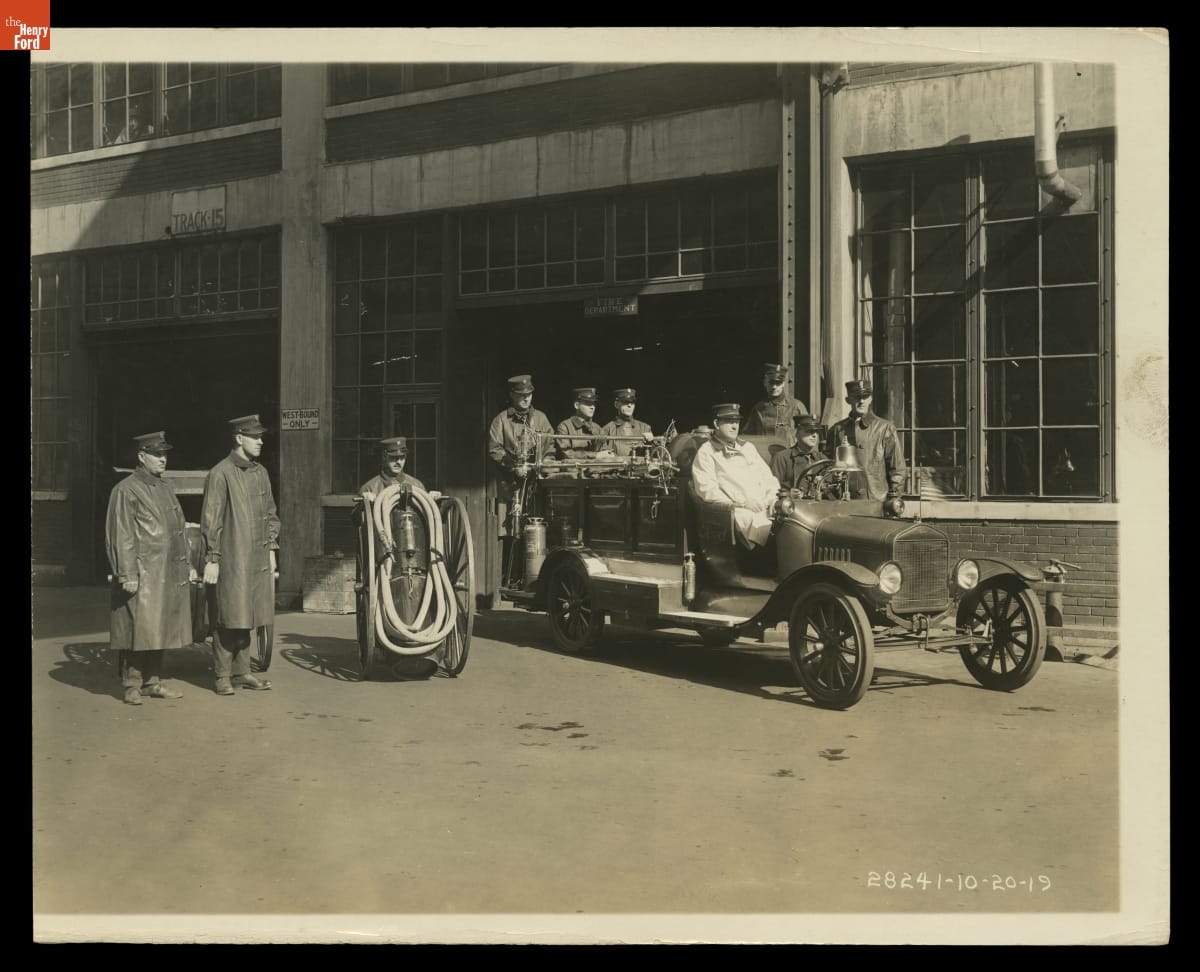
- Ford Highland Park Fire Department, October 20, 1919 - Fire was a constant threat to factories and industrial facilities. Large plants often operated their own fire departments to protect from the danger. Ford Motor Company maintained a fire department at its Highland Park plant near Detroit, Michigan. Naturally, Ford's department used Model T fire trucks.
- October 20, 1919
- Collections - Artifact
Ford Highland Park Fire Department, October 20, 1919
Fire was a constant threat to factories and industrial facilities. Large plants often operated their own fire departments to protect from the danger. Ford Motor Company maintained a fire department at its Highland Park plant near Detroit, Michigan. Naturally, Ford's department used Model T fire trucks.
- French Officers Inspecting Prototype Eagle Boat Being Built at the Ford Highland Park Plant, April 1918 - During World War I, Ford Motor Company built Eagle anti-submarine patrol boats for the U.S. Navy. Ford assembled the prototype boat at Highland Park and then moved it, on railroad flatcars, to the Rouge. The remaining Eagle hulls were constructed on site at the Rouge, but Ford continued to build the boats' turbine engines and propulsion systems at Highland Park.
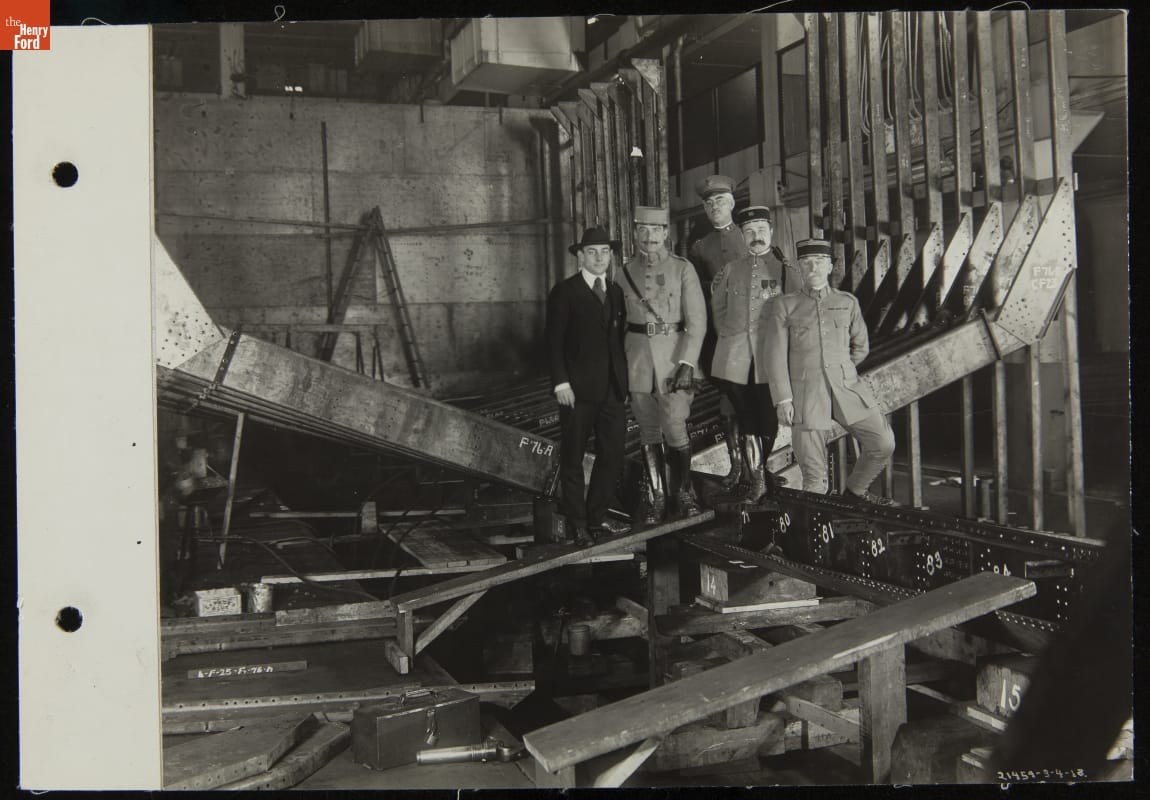
- April 09, 1918
- Collections - Artifact
French Officers Inspecting Prototype Eagle Boat Being Built at the Ford Highland Park Plant, April 1918
During World War I, Ford Motor Company built Eagle anti-submarine patrol boats for the U.S. Navy. Ford assembled the prototype boat at Highland Park and then moved it, on railroad flatcars, to the Rouge. The remaining Eagle hulls were constructed on site at the Rouge, but Ford continued to build the boats' turbine engines and propulsion systems at Highland Park.
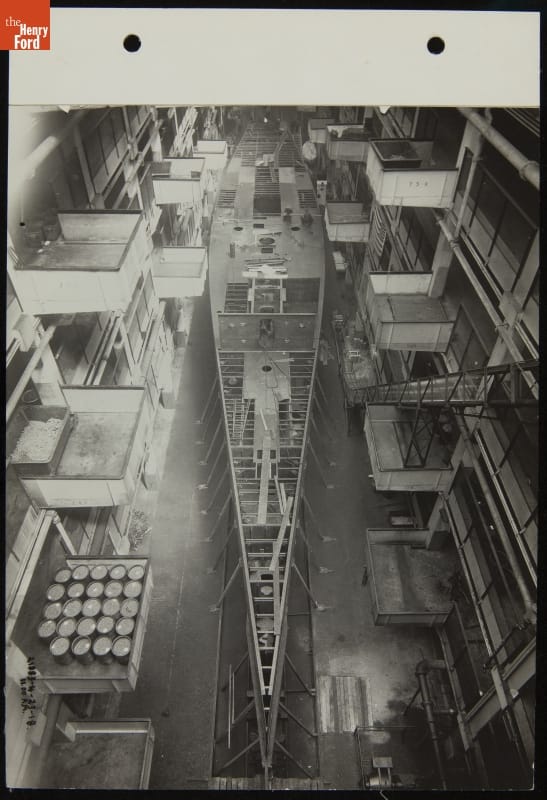
- Prototype Eagle Boat under Construction in the Ford Highland Park Plant Craneway, April 1918 - During World War I, Ford Motor Company built Eagle anti-submarine patrol boats for the U.S. Navy. Ford assembled the prototype boat at Highland Park and then moved it, on railroad flatcars, to the Rouge. The remaining Eagle hulls were constructed on site at the Rouge, but Ford continued to build the boats' turbine engines and propulsion systems at Highland Park.
- April 22, 1918
- Collections - Artifact
Prototype Eagle Boat under Construction in the Ford Highland Park Plant Craneway, April 1918
During World War I, Ford Motor Company built Eagle anti-submarine patrol boats for the U.S. Navy. Ford assembled the prototype boat at Highland Park and then moved it, on railroad flatcars, to the Rouge. The remaining Eagle hulls were constructed on site at the Rouge, but Ford continued to build the boats' turbine engines and propulsion systems at Highland Park.
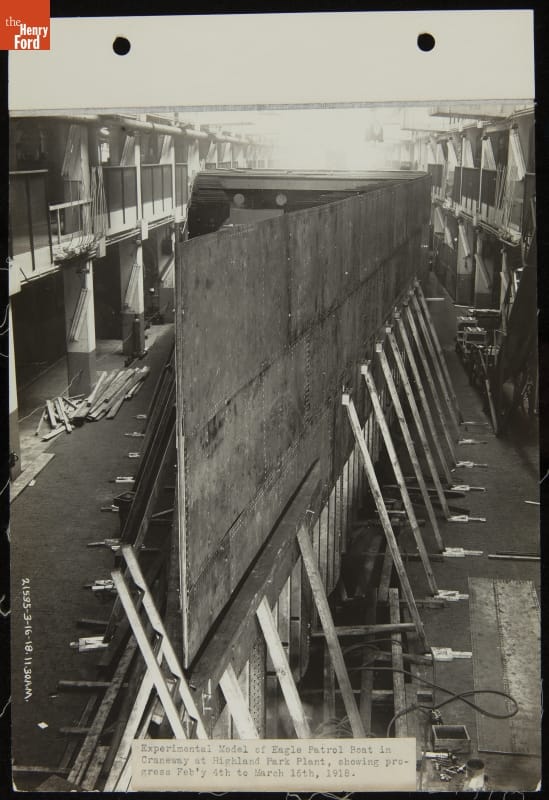
- Progress on Prototype Eagle Patrol Boat, Ford Highland Park Plant Craneway, March 1918 - During World War I, Ford Motor Company built Eagle anti-submarine patrol boats for the U.S. Navy. Ford assembled the prototype boat at Highland Park and then moved it, on railroad flatcars, to the Rouge. The remaining Eagle hulls were constructed on site at the Rouge, but Ford continued to build the boats' turbine engines and propulsion systems at Highland Park.
- March 16, 1918
- Collections - Artifact
Progress on Prototype Eagle Patrol Boat, Ford Highland Park Plant Craneway, March 1918
During World War I, Ford Motor Company built Eagle anti-submarine patrol boats for the U.S. Navy. Ford assembled the prototype boat at Highland Park and then moved it, on railroad flatcars, to the Rouge. The remaining Eagle hulls were constructed on site at the Rouge, but Ford continued to build the boats' turbine engines and propulsion systems at Highland Park.
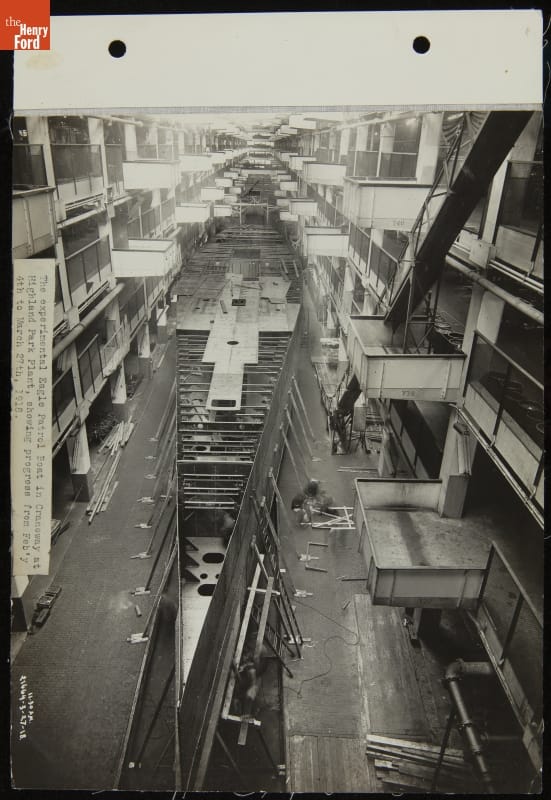
- Progress on Prototype Eagle Patrol Boat, Ford Highland Park Plant Craneway, March 1918 - During World War I, Ford Motor Company built Eagle anti-submarine patrol boats for the U.S. Navy. Ford assembled the prototype boat at Highland Park and then moved it, on railroad flatcars, to the Rouge. The remaining Eagle hulls were constructed on site at the Rouge, but Ford continued to build the boats' turbine engines and propulsion systems at Highland Park.
- March 27, 1918
- Collections - Artifact
Progress on Prototype Eagle Patrol Boat, Ford Highland Park Plant Craneway, March 1918
During World War I, Ford Motor Company built Eagle anti-submarine patrol boats for the U.S. Navy. Ford assembled the prototype boat at Highland Park and then moved it, on railroad flatcars, to the Rouge. The remaining Eagle hulls were constructed on site at the Rouge, but Ford continued to build the boats' turbine engines and propulsion systems at Highland Park.
- Manufacturing M4 Medium Tank Parts at Ford Motor Company Highland Park Plant, August 1942 -
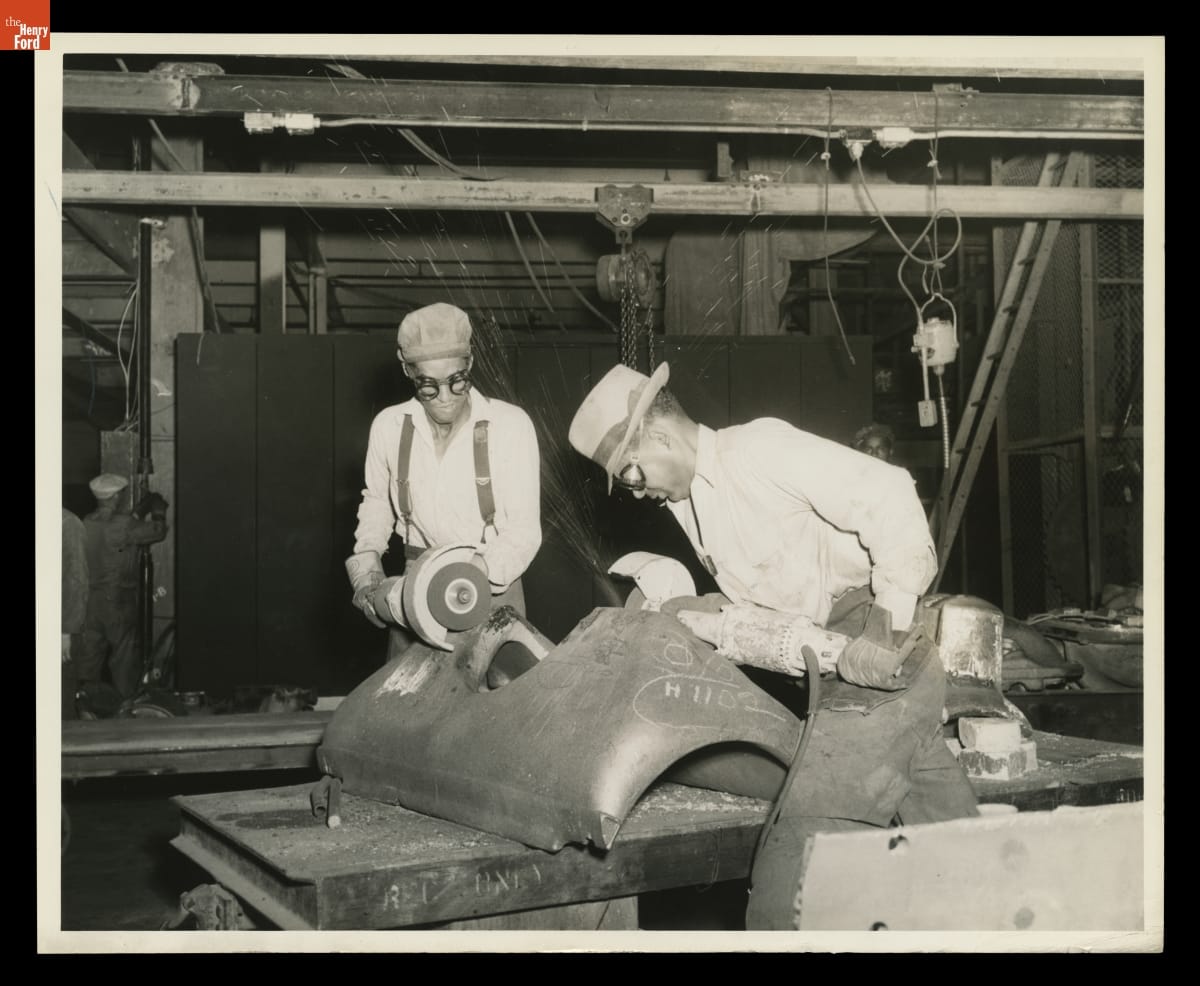
- August 19, 1942
- Collections - Artifact
Manufacturing M4 Medium Tank Parts at Ford Motor Company Highland Park Plant, August 1942
- Gas-Steam Engine at the Ford Motor Company Highland Park Plant Powerhouse, May 1916 - Ford Motor Company opened its Highland Park plant in 1910. It was here that Ford produced most of its 15 million Model T cars, developed its moving assembly line, and instituted its Five Dollar Day. The plant's electricity was supplied by an on-site powerhouse with generators connected to nine gas-steam hybrid engines. Together, the nine engines produced 53,000 horsepower.
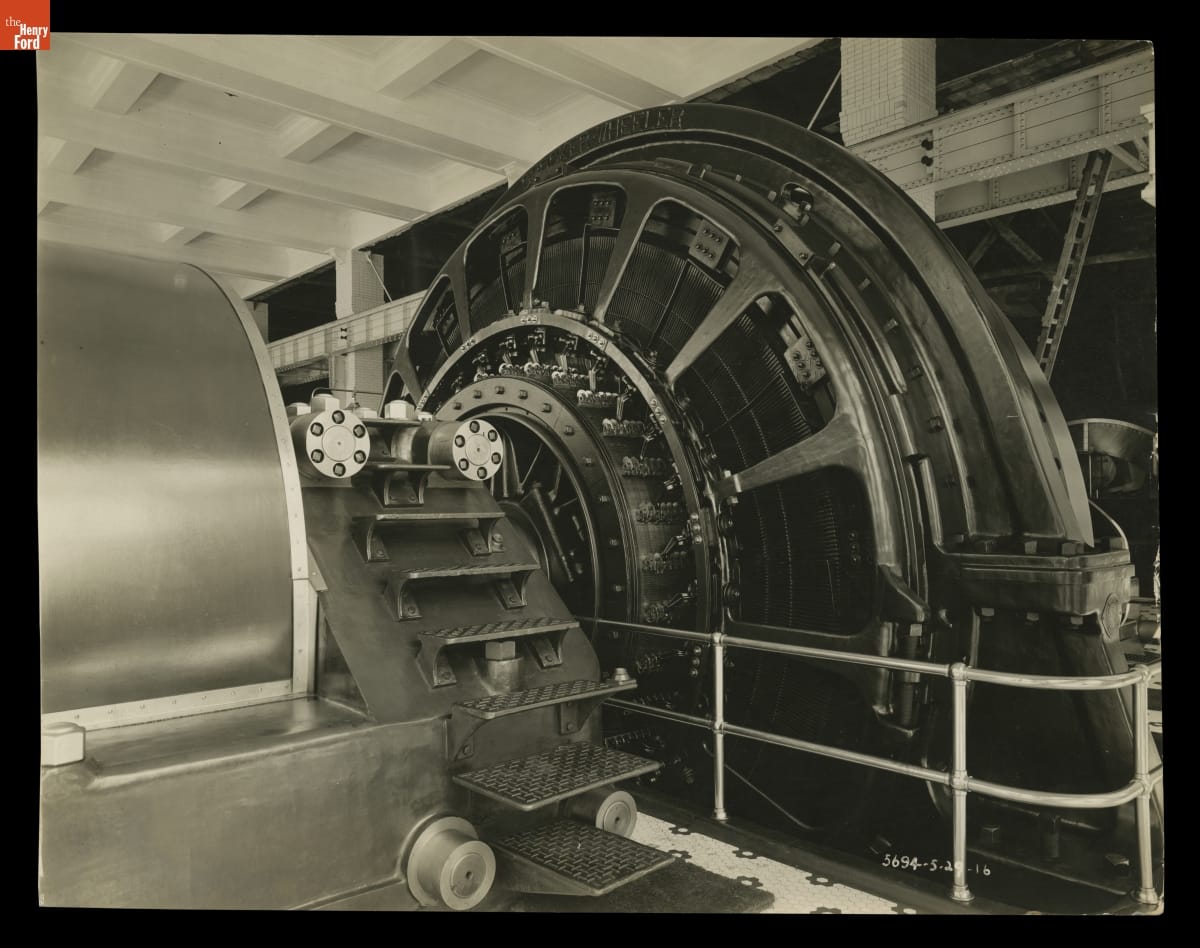
- May 29, 1916
- Collections - Artifact
Gas-Steam Engine at the Ford Motor Company Highland Park Plant Powerhouse, May 1916
Ford Motor Company opened its Highland Park plant in 1910. It was here that Ford produced most of its 15 million Model T cars, developed its moving assembly line, and instituted its Five Dollar Day. The plant's electricity was supplied by an on-site powerhouse with generators connected to nine gas-steam hybrid engines. Together, the nine engines produced 53,000 horsepower.