
Search
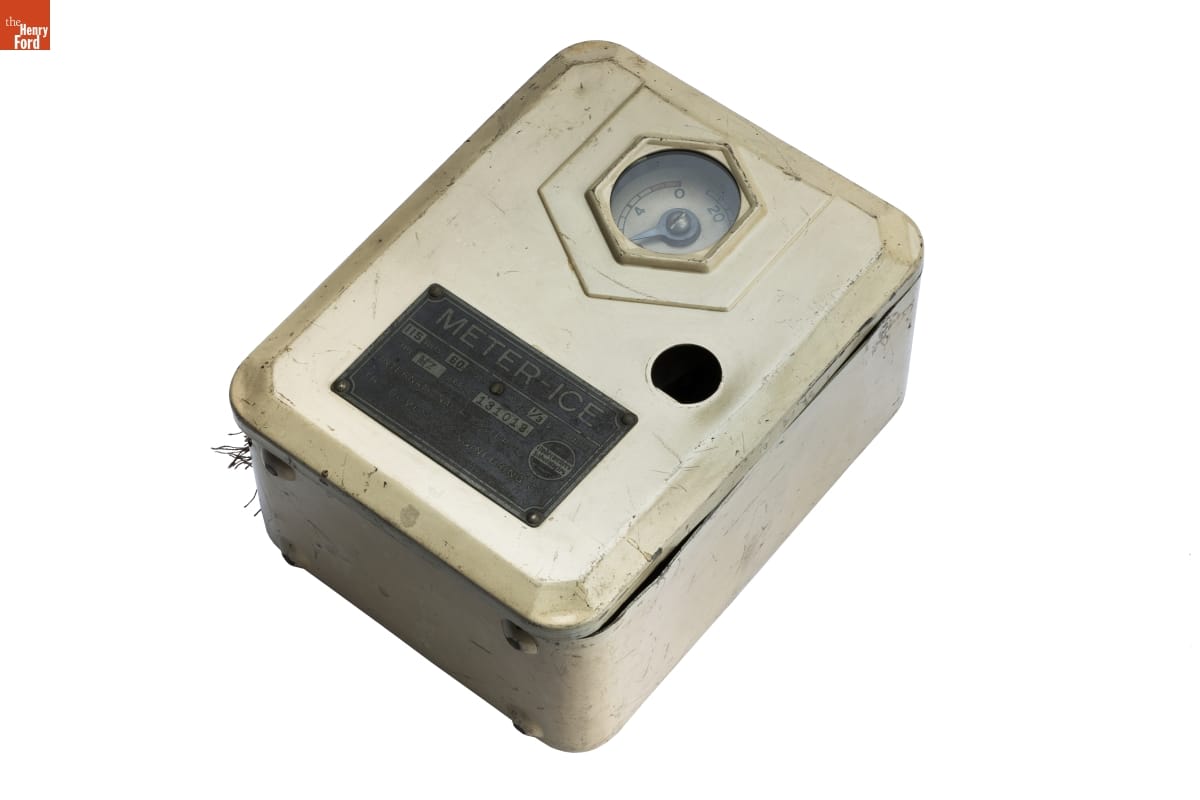
- "Meter-Ice" Coin Operated Refrigerator Meter, 1935-1945 -
- 1935-1945
- Collections - Artifact
"Meter-Ice" Coin Operated Refrigerator Meter, 1935-1945
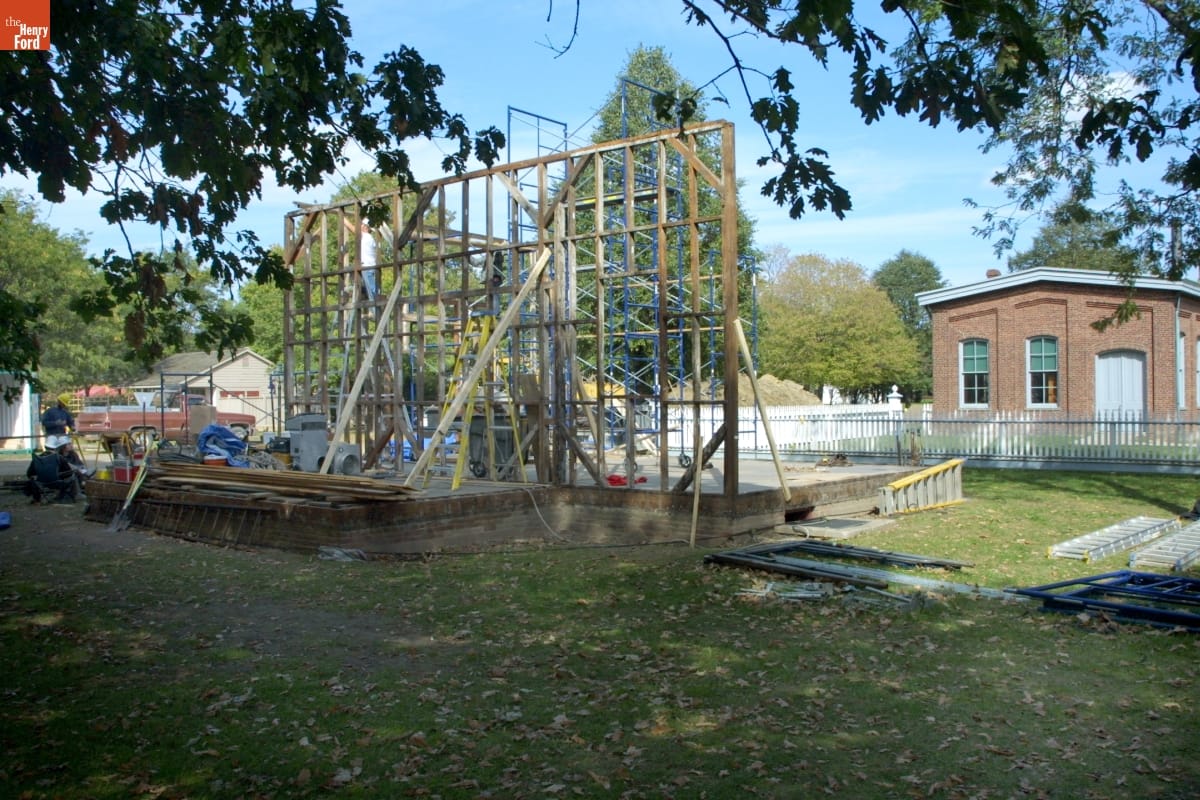
- Thomas Alva Edison Statue Relocation Site during the Greenfield Village Restoration Project, October 2002 - By 2000, Greenfield Village began showing its age. Buildings and crumbling infrastructure desperately needed repair. Museum planners envisioned a revitalized village. They created themed "Historic Districts" by relocating and refurbishing the historic structures. Workers repaved streets and upgraded water, sewer, electric, and gas lines. In June 2003, nine months after restoration began, visitors passed through a new entrance into a reborn Greenfield Village.
- October 01, 2002
- Collections - Artifact
Thomas Alva Edison Statue Relocation Site during the Greenfield Village Restoration Project, October 2002
By 2000, Greenfield Village began showing its age. Buildings and crumbling infrastructure desperately needed repair. Museum planners envisioned a revitalized village. They created themed "Historic Districts" by relocating and refurbishing the historic structures. Workers repaved streets and upgraded water, sewer, electric, and gas lines. In June 2003, nine months after restoration began, visitors passed through a new entrance into a reborn Greenfield Village.
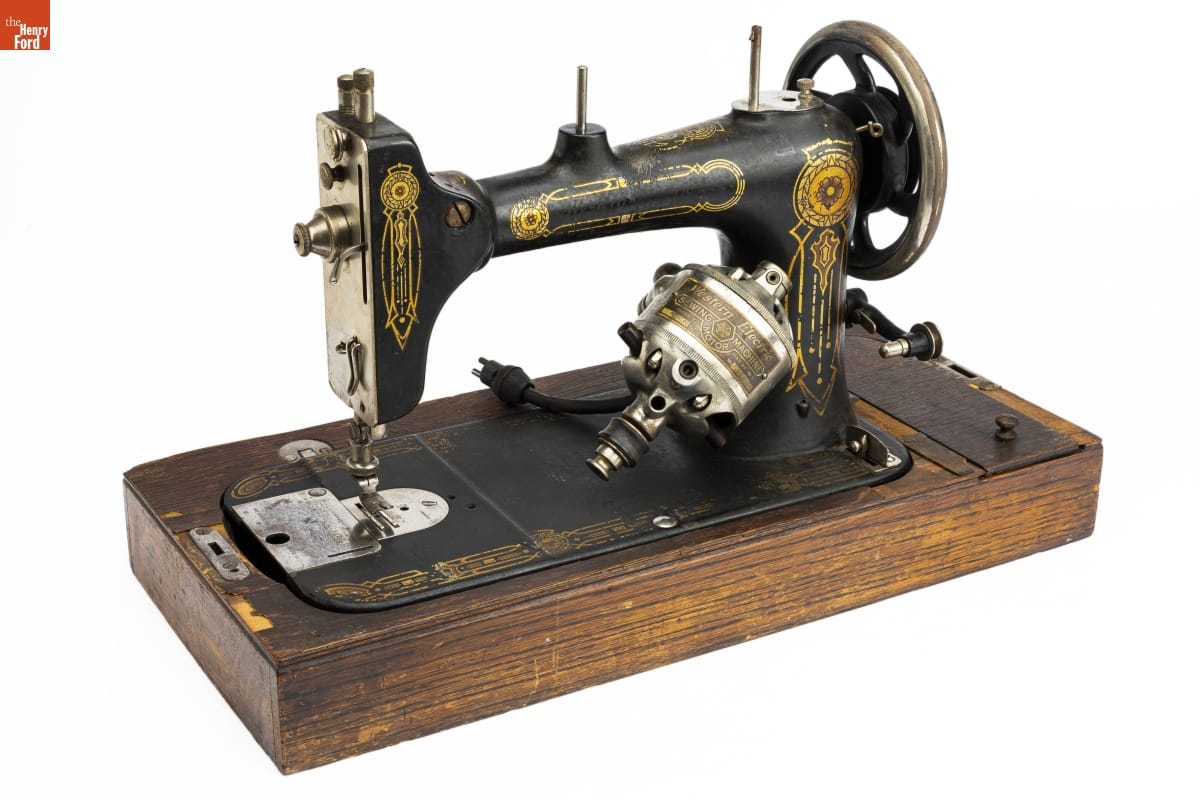
- Western Electric No. 2 Portable Sewing Machine, circa 1920 -
- circa 1920
- Collections - Artifact
Western Electric No. 2 Portable Sewing Machine, circa 1920
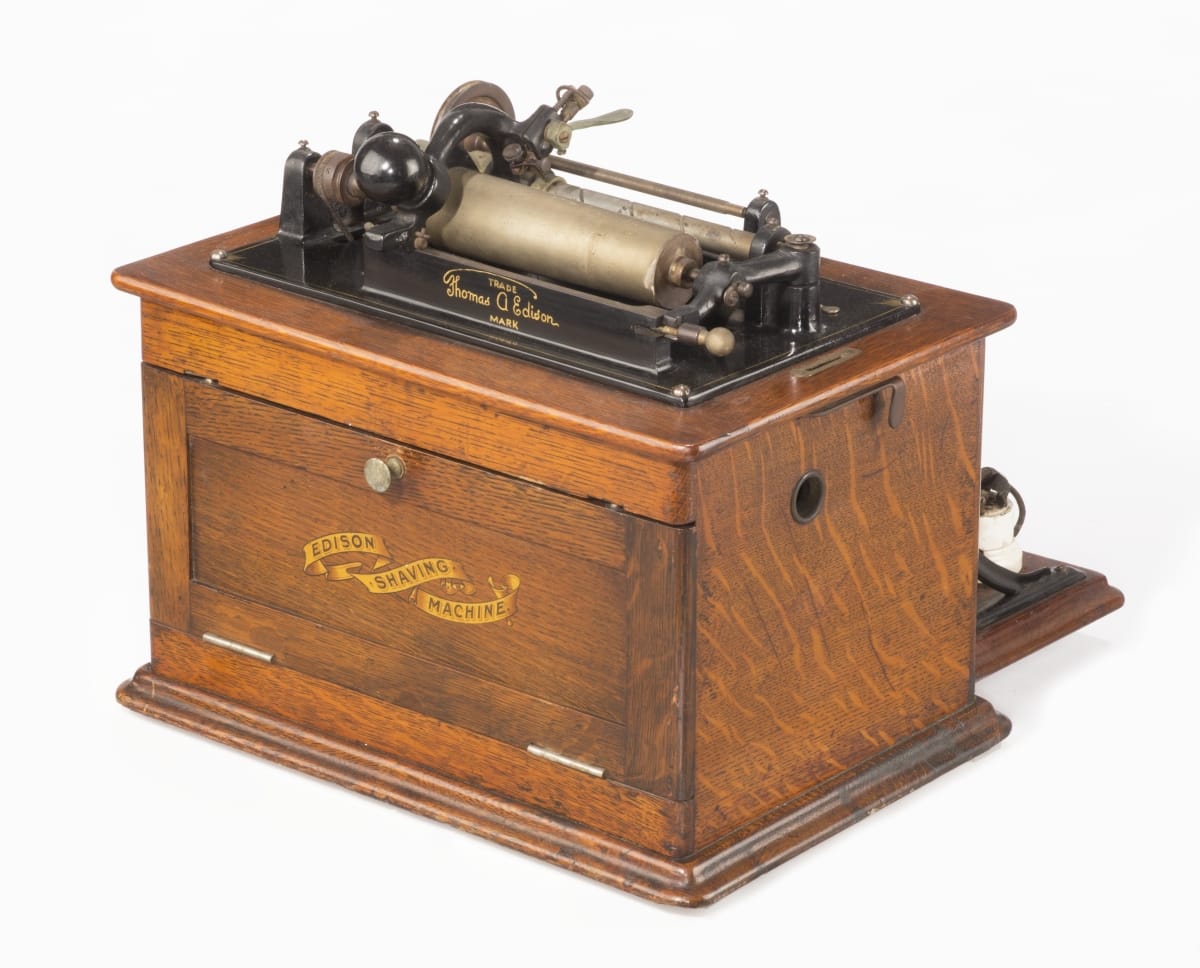
- Cylinder Shaving Machine, circa 1907 - Dictaphones and Ediphones were sound recording devices largely used for oral dictation in business settings. In this scenario, wax cylinder recordings were passed to a secretary, who listened to the recording with a playback-only transcriber and then typed up notes. A shaving machine, such as this one, scraped the previously inscribed layer away allowing a wax cylinder to be reused over 100 times.
- circa 1907
- Collections - Artifact
Cylinder Shaving Machine, circa 1907
Dictaphones and Ediphones were sound recording devices largely used for oral dictation in business settings. In this scenario, wax cylinder recordings were passed to a secretary, who listened to the recording with a playback-only transcriber and then typed up notes. A shaving machine, such as this one, scraped the previously inscribed layer away allowing a wax cylinder to be reused over 100 times.
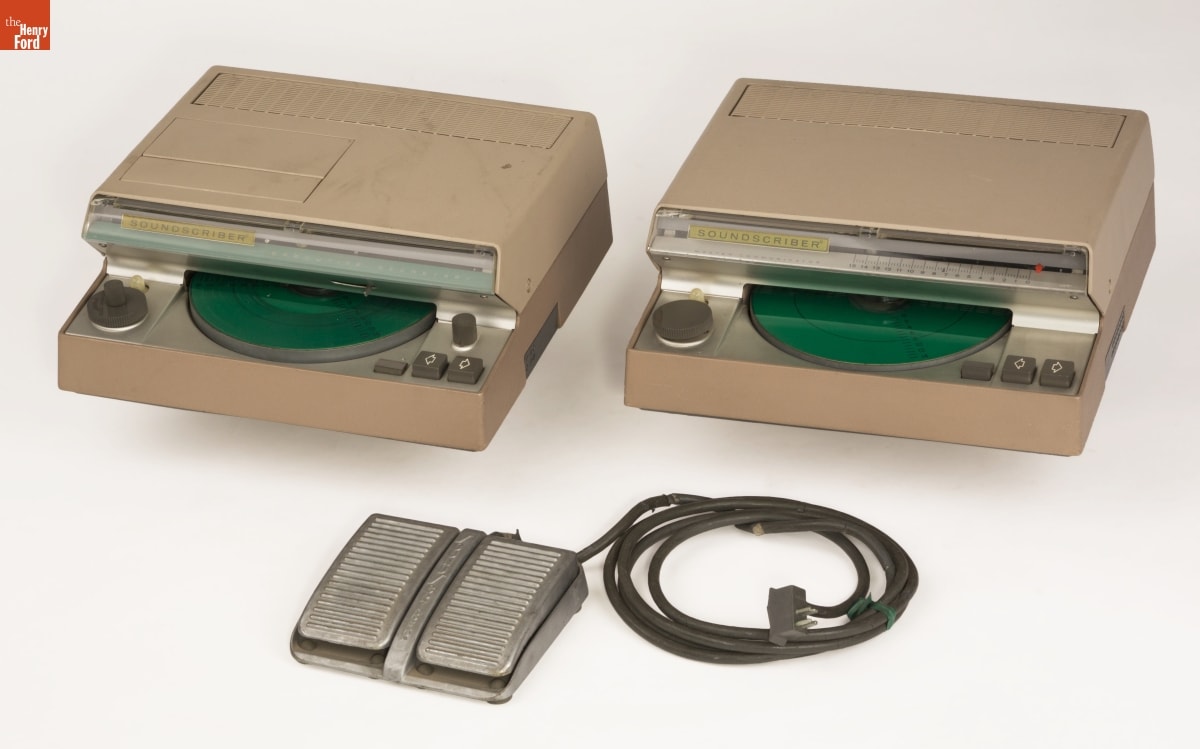
- Soundscriber Dictation System, 1960-1965 -
- 1960-1965
- Collections - Artifact
Soundscriber Dictation System, 1960-1965
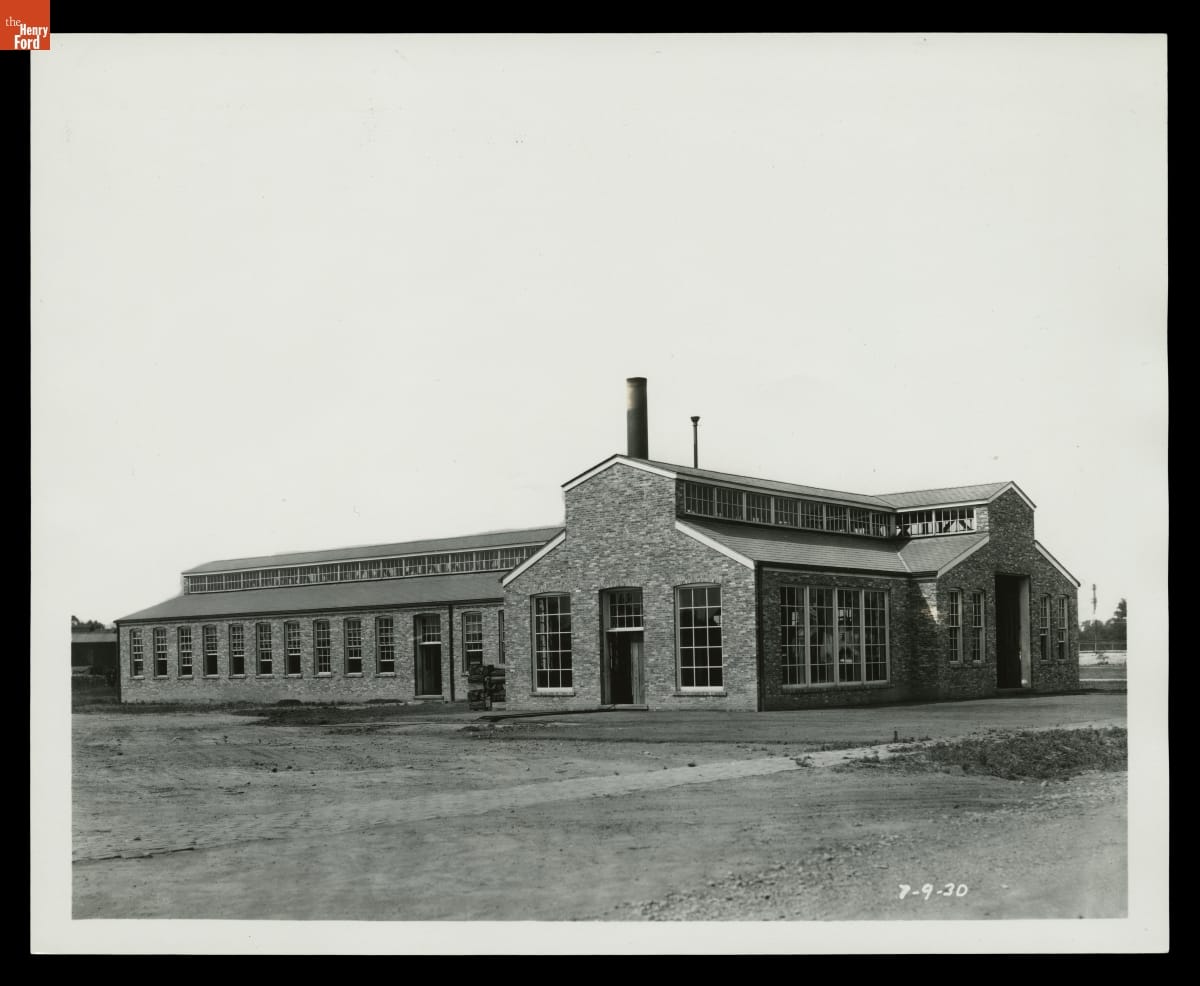
- Armington and Sims Machine Shop in Greenfield Village, July 1930 -
- July 09, 1930
- Collections - Artifact
Armington and Sims Machine Shop in Greenfield Village, July 1930
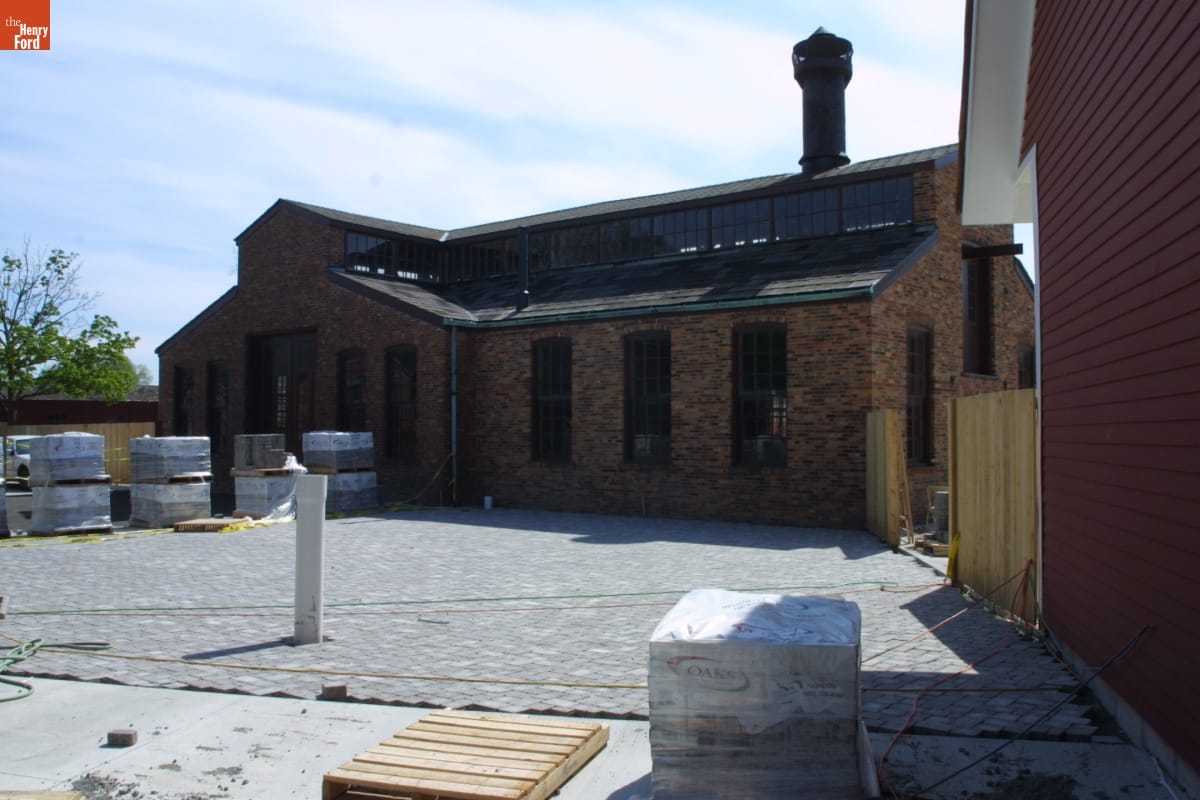
- Armington & Sims Machine Shop during the Greenfield Village Restoration Project, May 2003 - By 2000, Greenfield Village began showing its age. Buildings and crumbling infrastructure desperately needed repair. Museum planners envisioned a revitalized village. They created themed "Historic Districts" by relocating and refurbishing the historic structures. Workers repaved streets and upgraded water, sewer, electric, and gas lines. In June 2003, nine months after restoration began, visitors passed through a new entrance into a reborn Greenfield Village.
- May 01, 2003
- Collections - Artifact
Armington & Sims Machine Shop during the Greenfield Village Restoration Project, May 2003
By 2000, Greenfield Village began showing its age. Buildings and crumbling infrastructure desperately needed repair. Museum planners envisioned a revitalized village. They created themed "Historic Districts" by relocating and refurbishing the historic structures. Workers repaved streets and upgraded water, sewer, electric, and gas lines. In June 2003, nine months after restoration began, visitors passed through a new entrance into a reborn Greenfield Village.
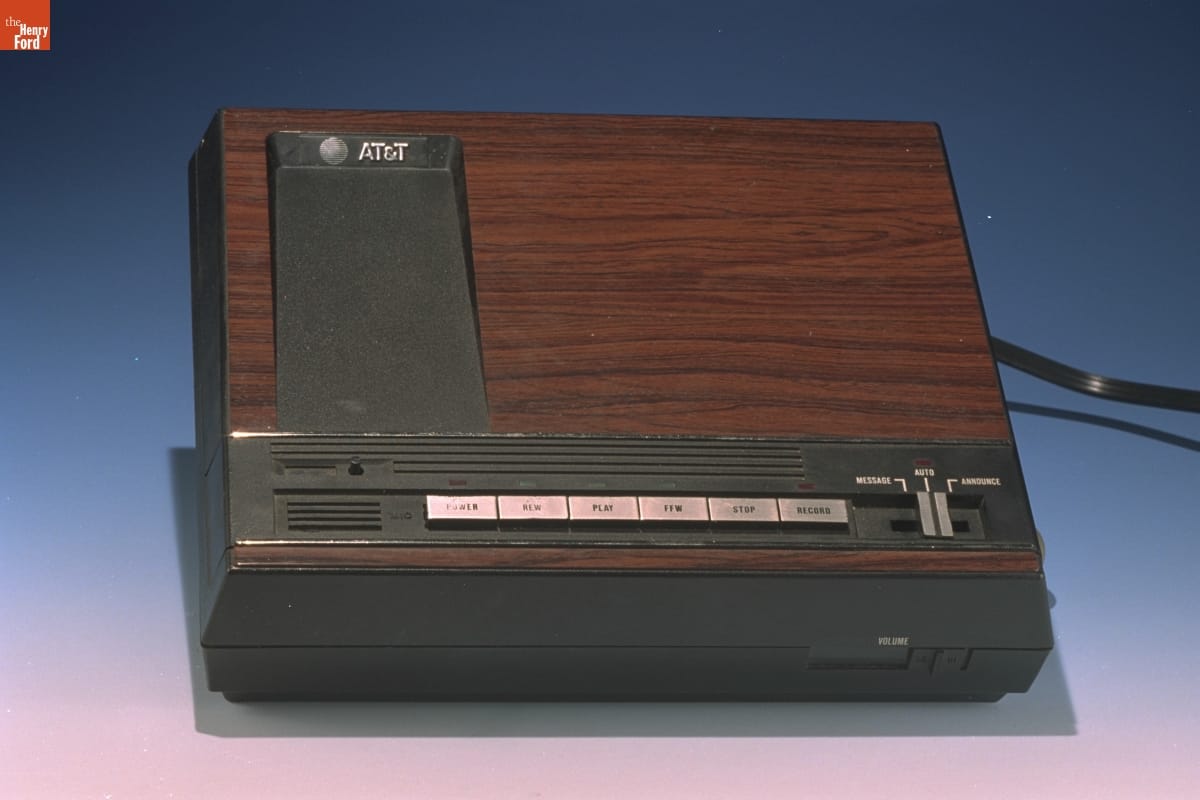
- AT&T Model 2100 Telephone Answering Machine, circa 1983 -
- circa 1983
- Collections - Artifact
AT&T Model 2100 Telephone Answering Machine, circa 1983
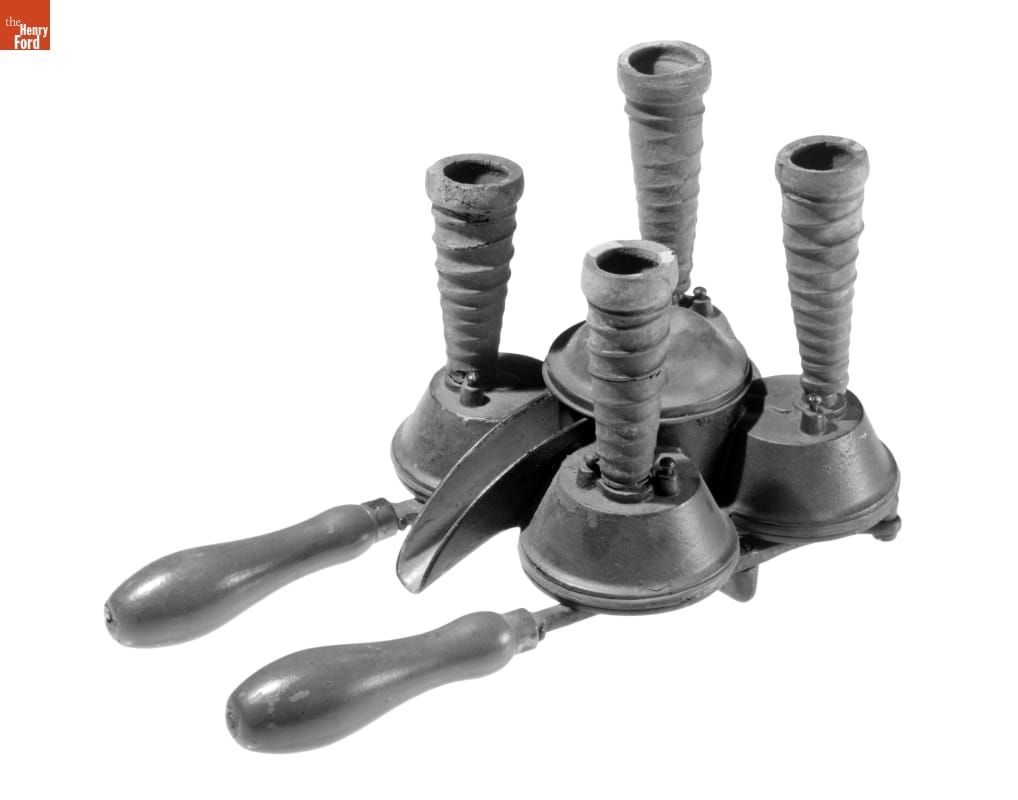
- Milking Machine, circa 1865 - Milking cows by hand is time-consuming. The American Cow Milker was an early attempt to speed up this task and increase production. Farmers operated the handles to create suction in the rubber tubes, which retrieved milk. Its success was limited. Later, as they became cleaner, more efficient, and safer for the animal, milking machines gained popularity and were generally accepted.
- circa 1865
- Collections - Artifact
Milking Machine, circa 1865
Milking cows by hand is time-consuming. The American Cow Milker was an early attempt to speed up this task and increase production. Farmers operated the handles to create suction in the rubber tubes, which retrieved milk. Its success was limited. Later, as they became cleaner, more efficient, and safer for the animal, milking machines gained popularity and were generally accepted.
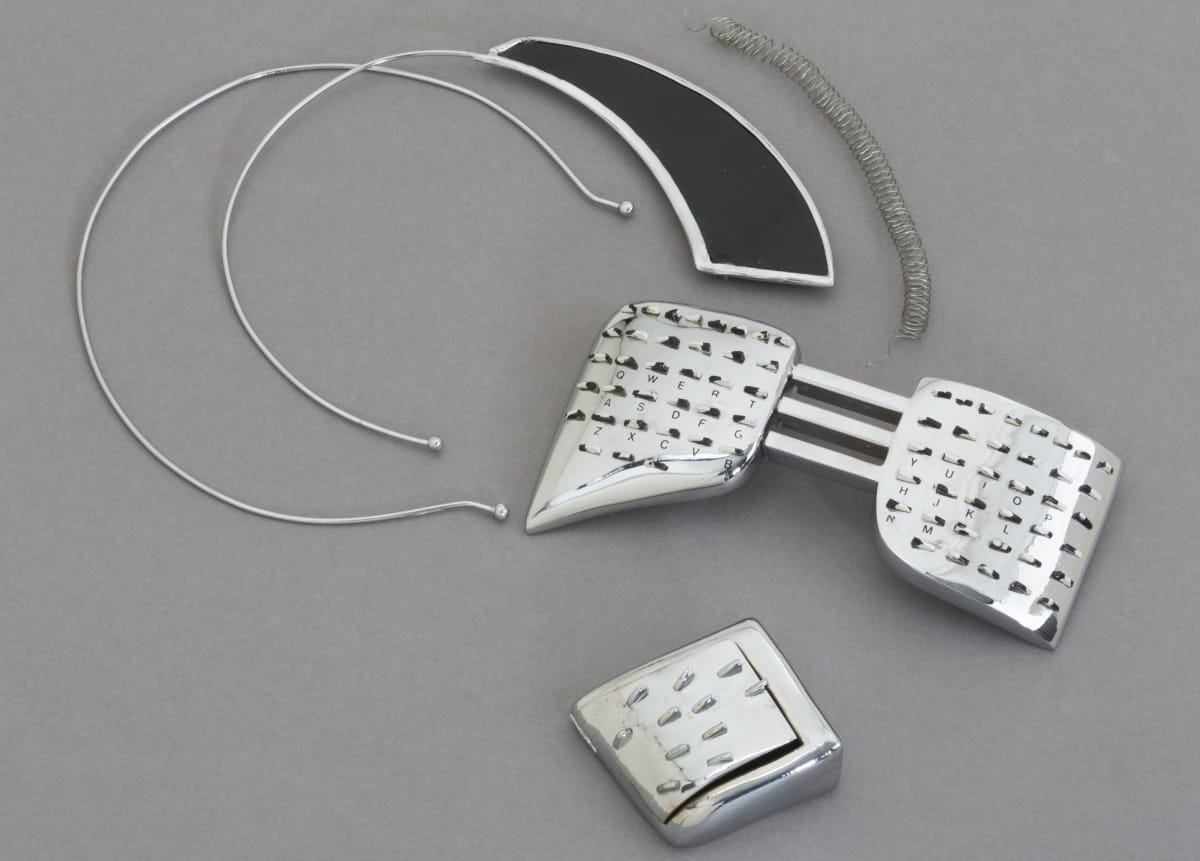
- "The Walking Office" Wearable Computer Prototype, 1984 - The Walking Office Wearable Computer is a prototype model created by the design group Salotto Dinamico. This proposed device subverted where (and when) the office could be, turning the human body into a mobile workstation. A keyboard, display arc, and cassette recorder became personal adornment--also capable of pairing with an acoustic modem to exchange data through telephone lines.
- 1984
- Collections - Artifact
"The Walking Office" Wearable Computer Prototype, 1984
The Walking Office Wearable Computer is a prototype model created by the design group Salotto Dinamico. This proposed device subverted where (and when) the office could be, turning the human body into a mobile workstation. A keyboard, display arc, and cassette recorder became personal adornment--also capable of pairing with an acoustic modem to exchange data through telephone lines.