
Search
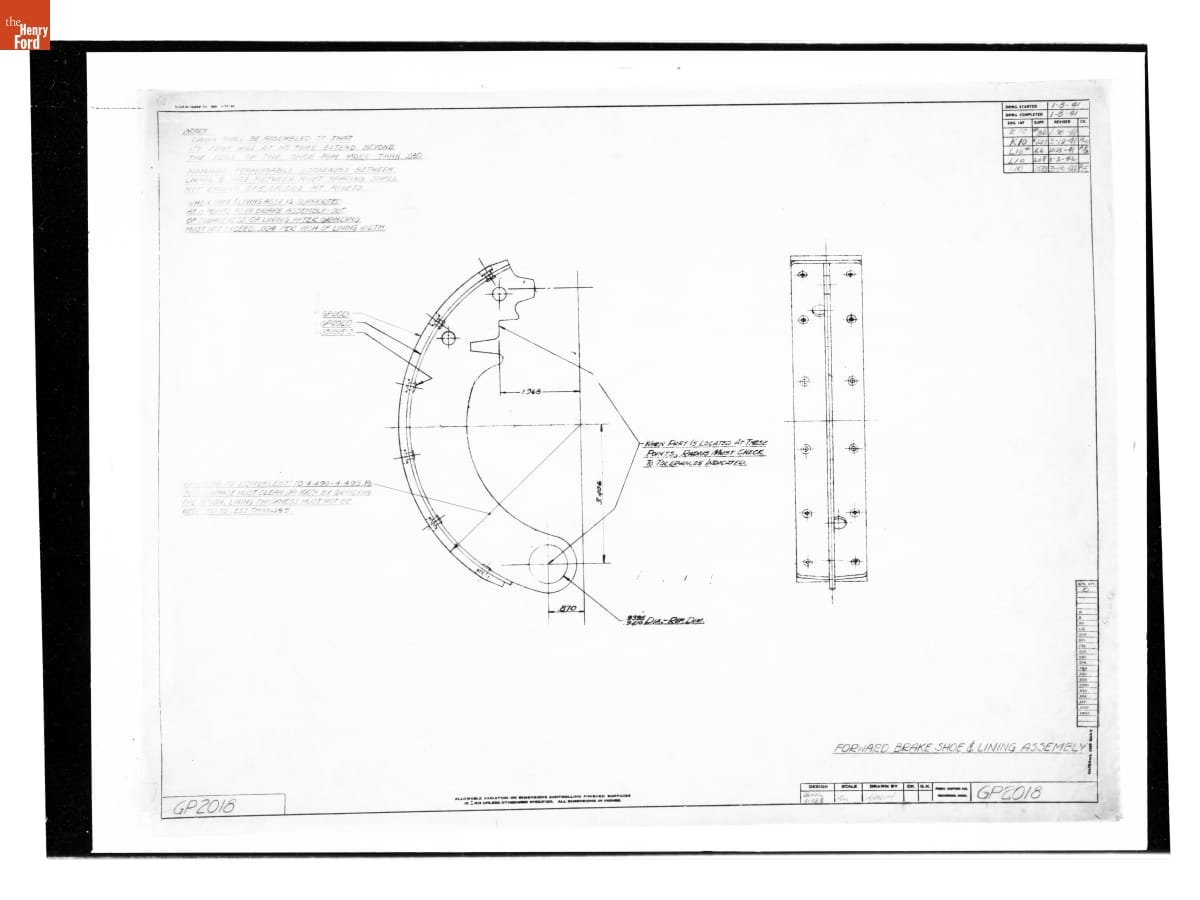
- Drawing, "Forward Brake Shoe & Lining Assembly," Ford GP, March 16, 1944 - The Ford Motor Company created over a million parts drawings from 1903 to 1957. Many of these drawings specify engineering requirements for the components of Ford-made vehicles--including automobiles, trucks, tractors, military vehicles and Tri-motor airplanes. Others document assembly components, stages of casting and forging, or experimental designs. Beginning in the 1940s, Ford transferred the drawings to microfilm.
- March 16, 1944
- Collections - Artifact
Drawing, "Forward Brake Shoe & Lining Assembly," Ford GP, March 16, 1944
The Ford Motor Company created over a million parts drawings from 1903 to 1957. Many of these drawings specify engineering requirements for the components of Ford-made vehicles--including automobiles, trucks, tractors, military vehicles and Tri-motor airplanes. Others document assembly components, stages of casting and forging, or experimental designs. Beginning in the 1940s, Ford transferred the drawings to microfilm.
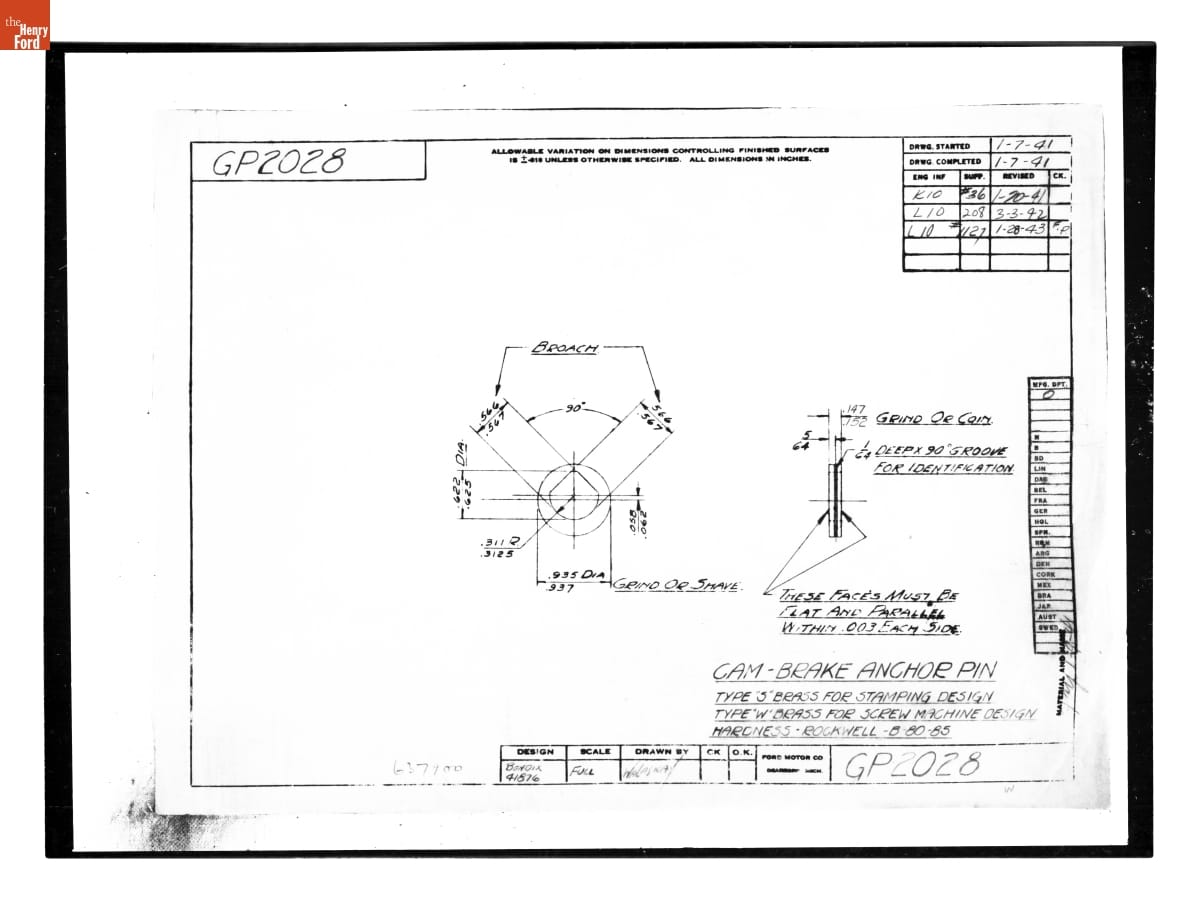
- Drawing, "Cam - Brake Anchor Pin," Ford GP, January 28, 1943 - The Ford Motor Company created over a million parts drawings from 1903 to 1957. Many of these drawings specify engineering requirements for the components of Ford-made vehicles--including automobiles, trucks, tractors, military vehicles and Tri-motor airplanes. Others document assembly components, stages of casting and forging, or experimental designs. Beginning in the 1940s, Ford transferred the drawings to microfilm.
- January 28, 1943
- Collections - Artifact
Drawing, "Cam - Brake Anchor Pin," Ford GP, January 28, 1943
The Ford Motor Company created over a million parts drawings from 1903 to 1957. Many of these drawings specify engineering requirements for the components of Ford-made vehicles--including automobiles, trucks, tractors, military vehicles and Tri-motor airplanes. Others document assembly components, stages of casting and forging, or experimental designs. Beginning in the 1940s, Ford transferred the drawings to microfilm.
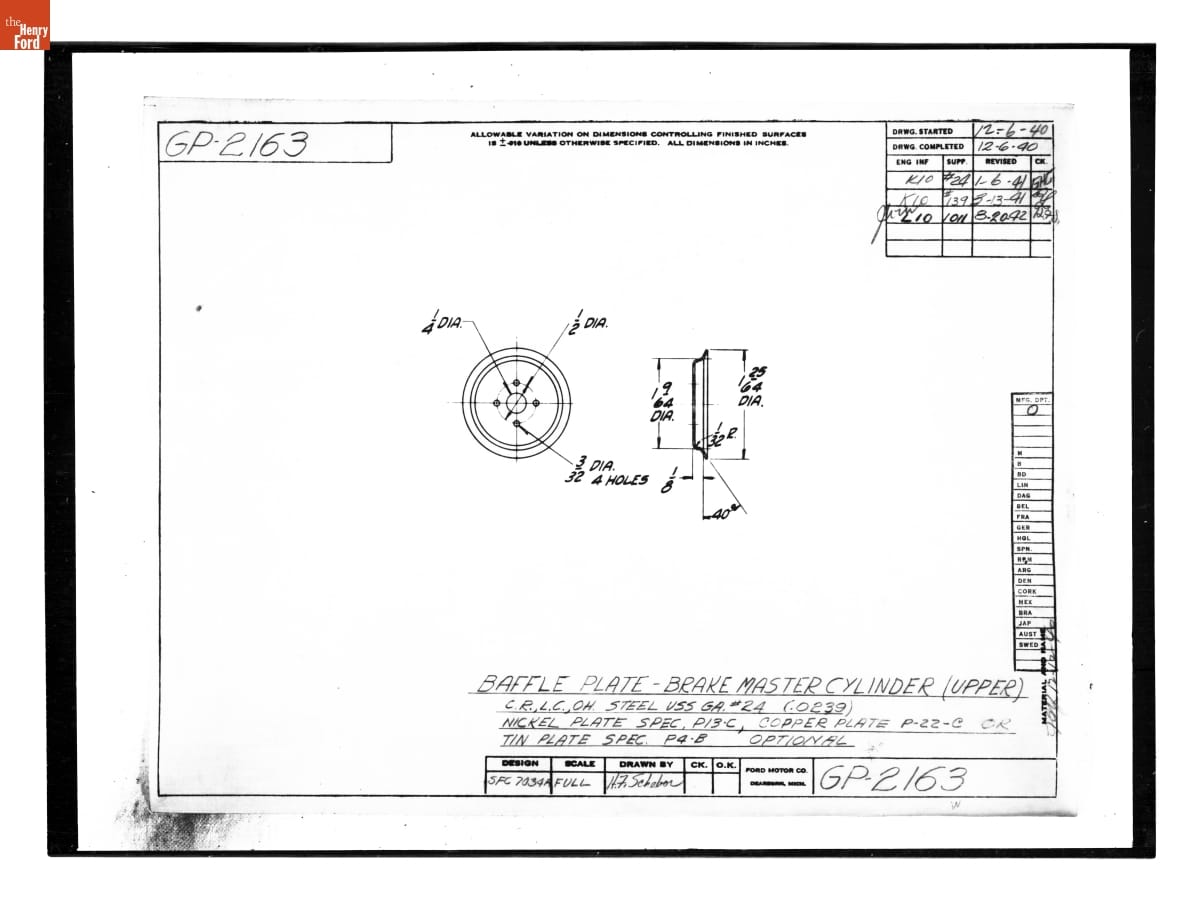
- Drawing, "Baffle Plate - Brake Master Cylinder (Upper)," Ford GP, August 20, 1942 - The Ford Motor Company created over a million parts drawings from 1903 to 1957. Many of these drawings specify engineering requirements for the components of Ford-made vehicles--including automobiles, trucks, tractors, military vehicles and Tri-motor airplanes. Others document assembly components, stages of casting and forging, or experimental designs. Beginning in the 1940s, Ford transferred the drawings to microfilm.
- August 20, 1942
- Collections - Artifact
Drawing, "Baffle Plate - Brake Master Cylinder (Upper)," Ford GP, August 20, 1942
The Ford Motor Company created over a million parts drawings from 1903 to 1957. Many of these drawings specify engineering requirements for the components of Ford-made vehicles--including automobiles, trucks, tractors, military vehicles and Tri-motor airplanes. Others document assembly components, stages of casting and forging, or experimental designs. Beginning in the 1940s, Ford transferred the drawings to microfilm.
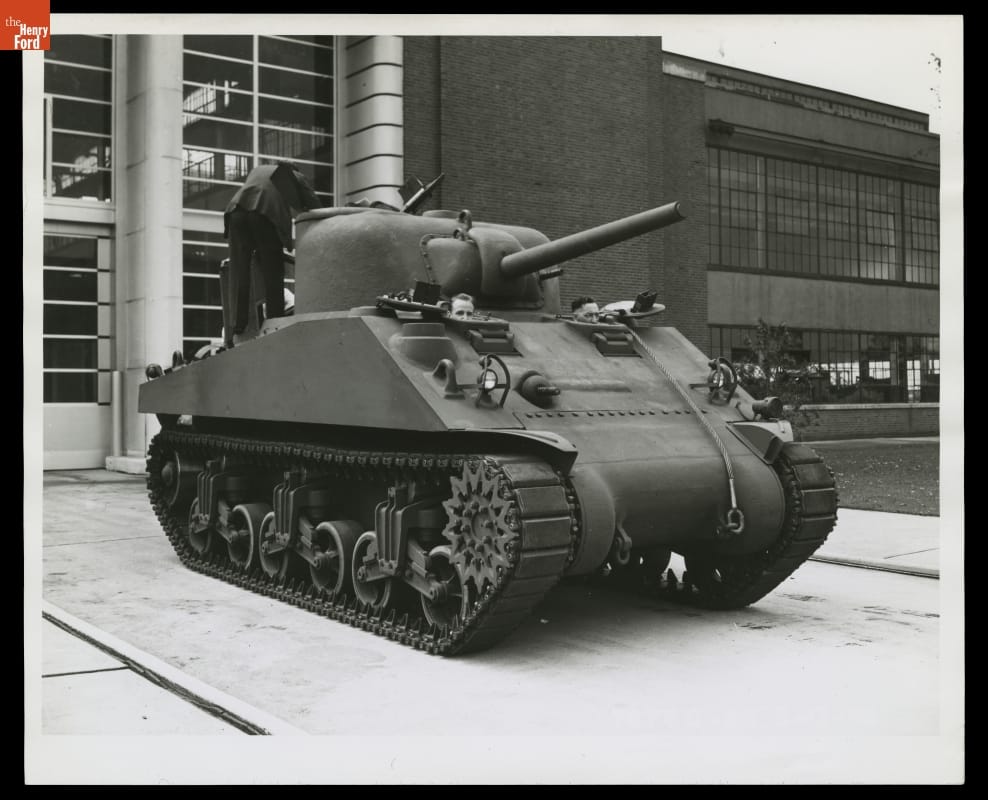
- Ford Motor Company Executives inside Ford M-4 Tank, Highland Park Plant, 1942 - Ford Motor Company repurposed its assembly lines to meet military manufacturing needs during World War II. The last peacetime automobile rolled out of Ford's massive River Rouge plant in 1941, and focus shifted to the wartime production of aircraft engines and military vehicles. The Rouge manufactured M-4 tanks through 1943 and continued producing M-4 engines and armor plates until war's end.
- May 13, 1942
- Collections - Artifact
Ford Motor Company Executives inside Ford M-4 Tank, Highland Park Plant, 1942
Ford Motor Company repurposed its assembly lines to meet military manufacturing needs during World War II. The last peacetime automobile rolled out of Ford's massive River Rouge plant in 1941, and focus shifted to the wartime production of aircraft engines and military vehicles. The Rouge manufactured M-4 tanks through 1943 and continued producing M-4 engines and armor plates until war's end.
- Crossing a Stream in a Willys Military Jeep, circa 1943 - Few things are as iconic of World War II as the jeep. American Bantam created the design in response to a call from the U.S. Army, but Bantam couldn't produce it in the quantities required. Willys-Overland and Ford built the majority of the 650,000 jeeps manufactured for the war effort. Willys built Jeeps for the civilian market after the war.
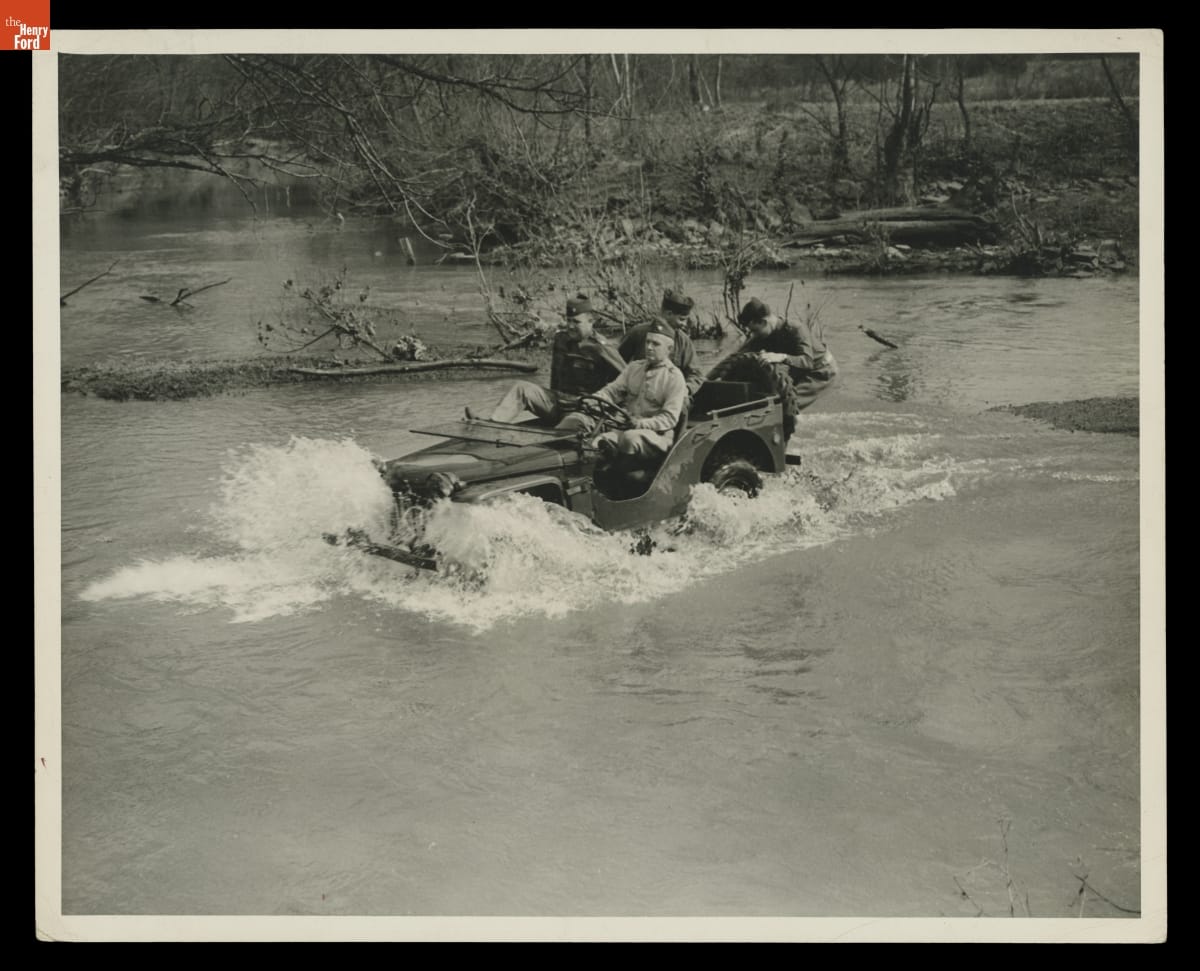
- circa 1943
- Collections - Artifact
Crossing a Stream in a Willys Military Jeep, circa 1943
Few things are as iconic of World War II as the jeep. American Bantam created the design in response to a call from the U.S. Army, but Bantam couldn't produce it in the quantities required. Willys-Overland and Ford built the majority of the 650,000 jeeps manufactured for the war effort. Willys built Jeeps for the civilian market after the war.
- M20 Armored Car Built at the Ford Motor Company Chicago Assembly Plant, March 1945 - Ford's T-26 Command Car, designated M20 by the U.S. Army, combined speed with protection. The vehicle featured six-wheel drive, a cruising range of 400 miles, and a top speed of 56 miles per hour. Armor plating, up to 3/4-inch thick, and a top-mounted .50 caliber machine gun provided further defense. Ford built 3,791 M20 vehicles, all at its Chicago plant.
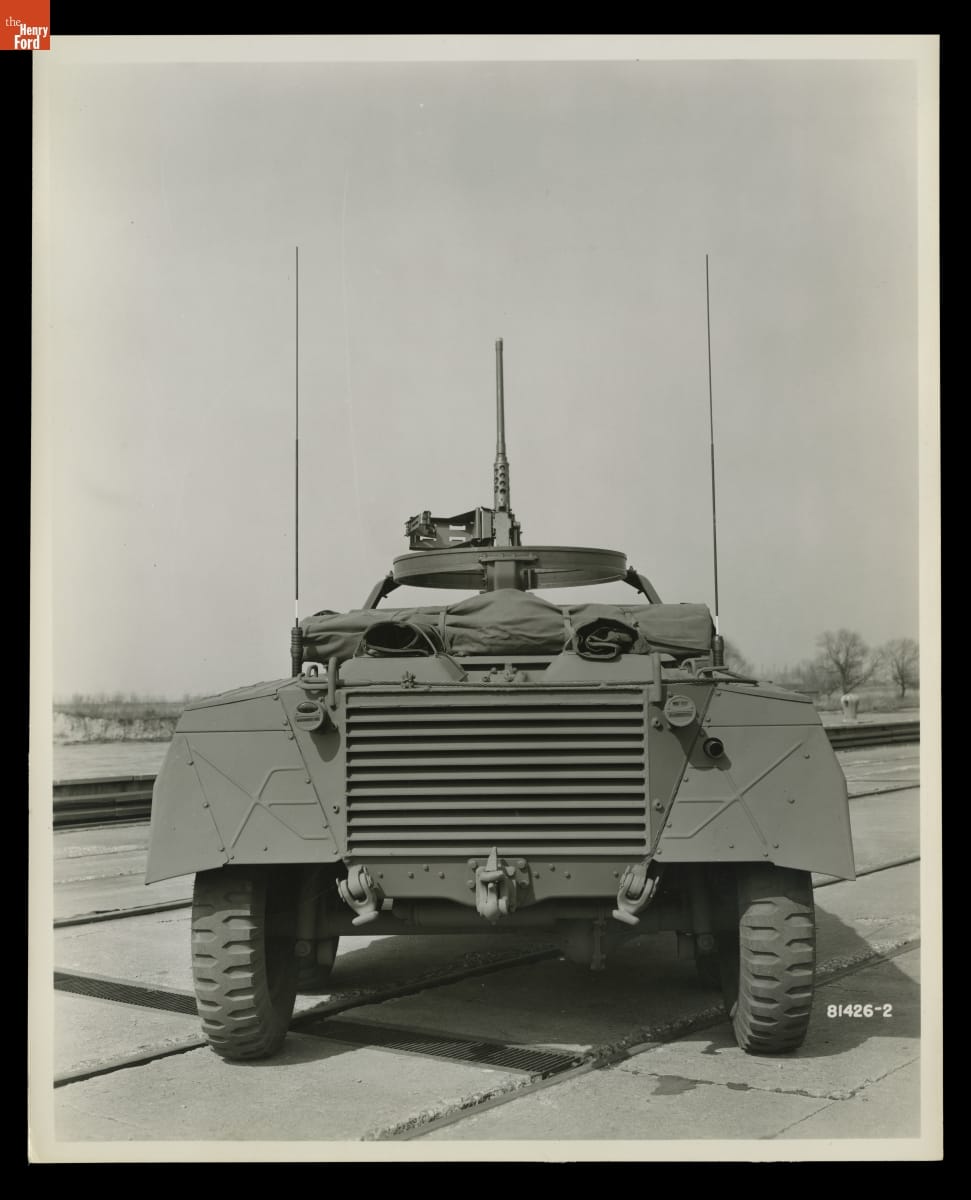
- March 12, 1945
- Collections - Artifact
M20 Armored Car Built at the Ford Motor Company Chicago Assembly Plant, March 1945
Ford's T-26 Command Car, designated M20 by the U.S. Army, combined speed with protection. The vehicle featured six-wheel drive, a cruising range of 400 miles, and a top speed of 56 miles per hour. Armor plating, up to 3/4-inch thick, and a top-mounted .50 caliber machine gun provided further defense. Ford built 3,791 M20 vehicles, all at its Chicago plant.
- Drawing, "Insulator - Engine Mount - Outer," Ford GAA Engine for M4A3 Medium Tank (M4 Sherman), July 9, 1942 - The Ford Motor Company created over a million parts drawings from 1903 to 1957. Many of these drawings specify engineering requirements for the components of Ford-made vehicles--including automobiles, trucks, tractors, military vehicles and Tri-motor airplanes. Others document assembly components, stages of casting and forging, or experimental designs. Beginning in the 1940s, Ford transferred the drawings to microfilm.
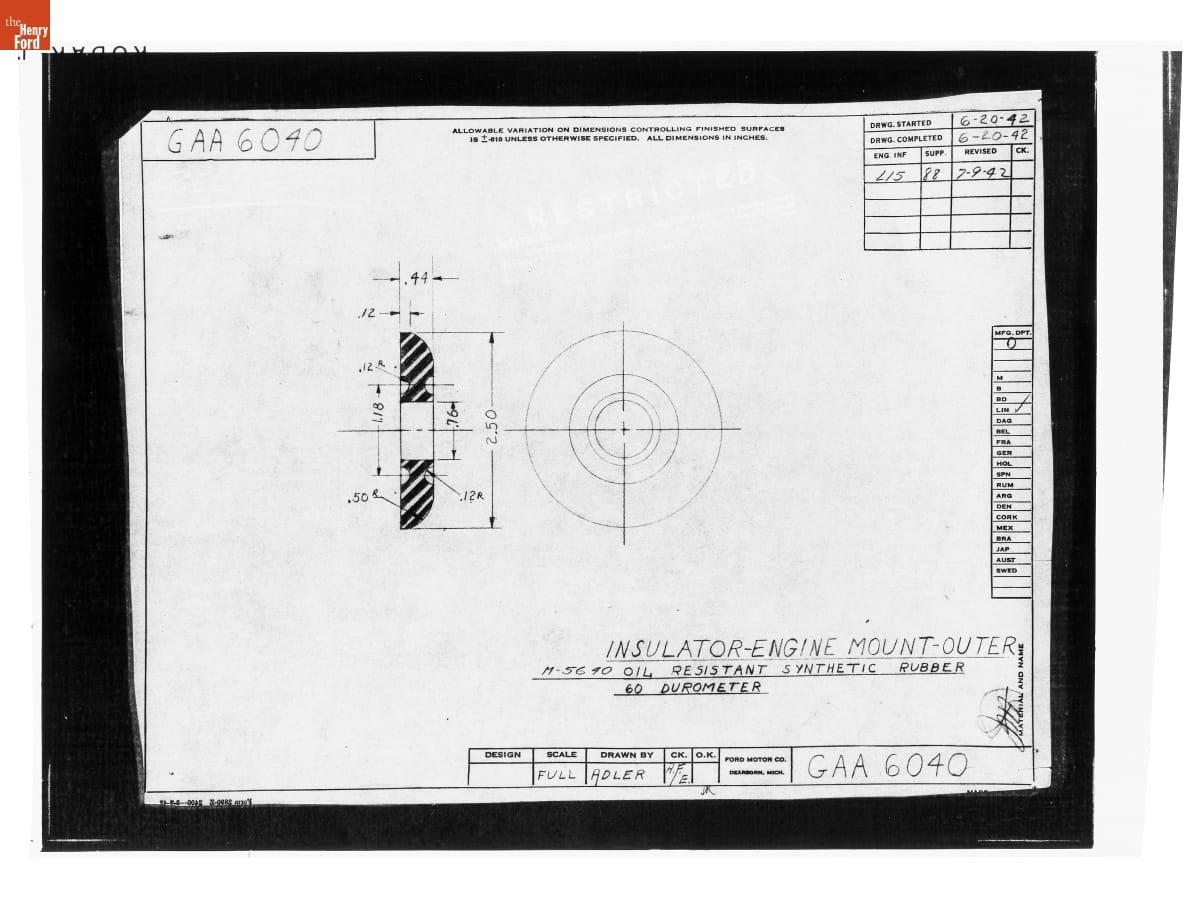
- July 09, 1942
- Collections - Artifact
Drawing, "Insulator - Engine Mount - Outer," Ford GAA Engine for M4A3 Medium Tank (M4 Sherman), July 9, 1942
The Ford Motor Company created over a million parts drawings from 1903 to 1957. Many of these drawings specify engineering requirements for the components of Ford-made vehicles--including automobiles, trucks, tractors, military vehicles and Tri-motor airplanes. Others document assembly components, stages of casting and forging, or experimental designs. Beginning in the 1940s, Ford transferred the drawings to microfilm.
- Drawing, "Housing - Camshaft - L.H.," Ford GAA Engine for M4A3 Medium Tank (M4 Sherman), May 16, 1952 - The Ford Motor Company created over a million parts drawings from 1903 to 1957. Many of these drawings specify engineering requirements for the components of Ford-made vehicles--including automobiles, trucks, tractors, military vehicles and Tri-motor airplanes. Others document assembly components, stages of casting and forging, or experimental designs. Beginning in the 1940s, Ford transferred the drawings to microfilm.
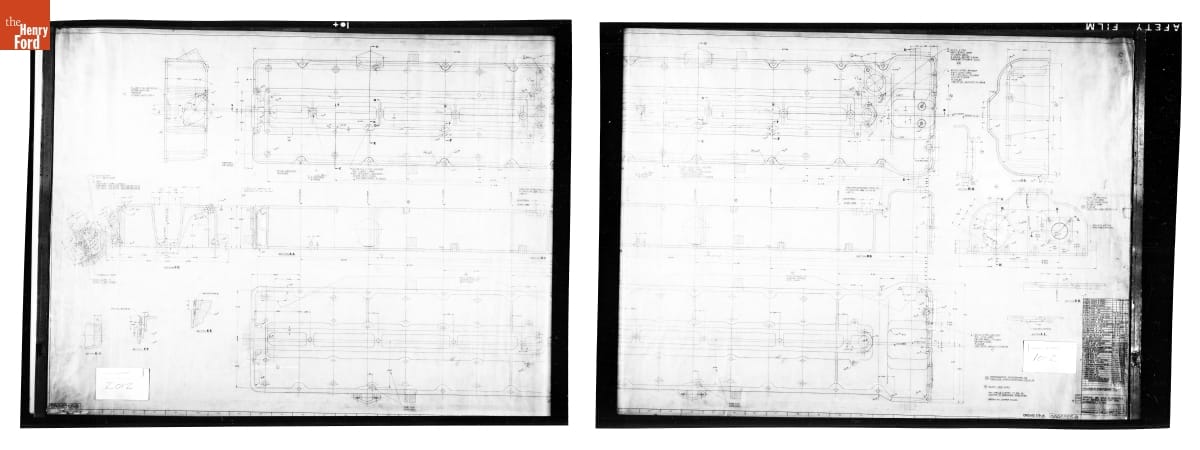
- May 16, 1952
- Collections - Artifact
Drawing, "Housing - Camshaft - L.H.," Ford GAA Engine for M4A3 Medium Tank (M4 Sherman), May 16, 1952
The Ford Motor Company created over a million parts drawings from 1903 to 1957. Many of these drawings specify engineering requirements for the components of Ford-made vehicles--including automobiles, trucks, tractors, military vehicles and Tri-motor airplanes. Others document assembly components, stages of casting and forging, or experimental designs. Beginning in the 1940s, Ford transferred the drawings to microfilm.
- Drawing, "Cover Ass'y. - Camshaft Housing," Ford GAA Engine for M4A3 Medium Tank (M4 Sherman), May 21, 1952 - The Ford Motor Company created over a million parts drawings from 1903 to 1957. Many of these drawings specify engineering requirements for the components of Ford-made vehicles--including automobiles, trucks, tractors, military vehicles and Tri-motor airplanes. Others document assembly components, stages of casting and forging, or experimental designs. Beginning in the 1940s, Ford transferred the drawings to microfilm.
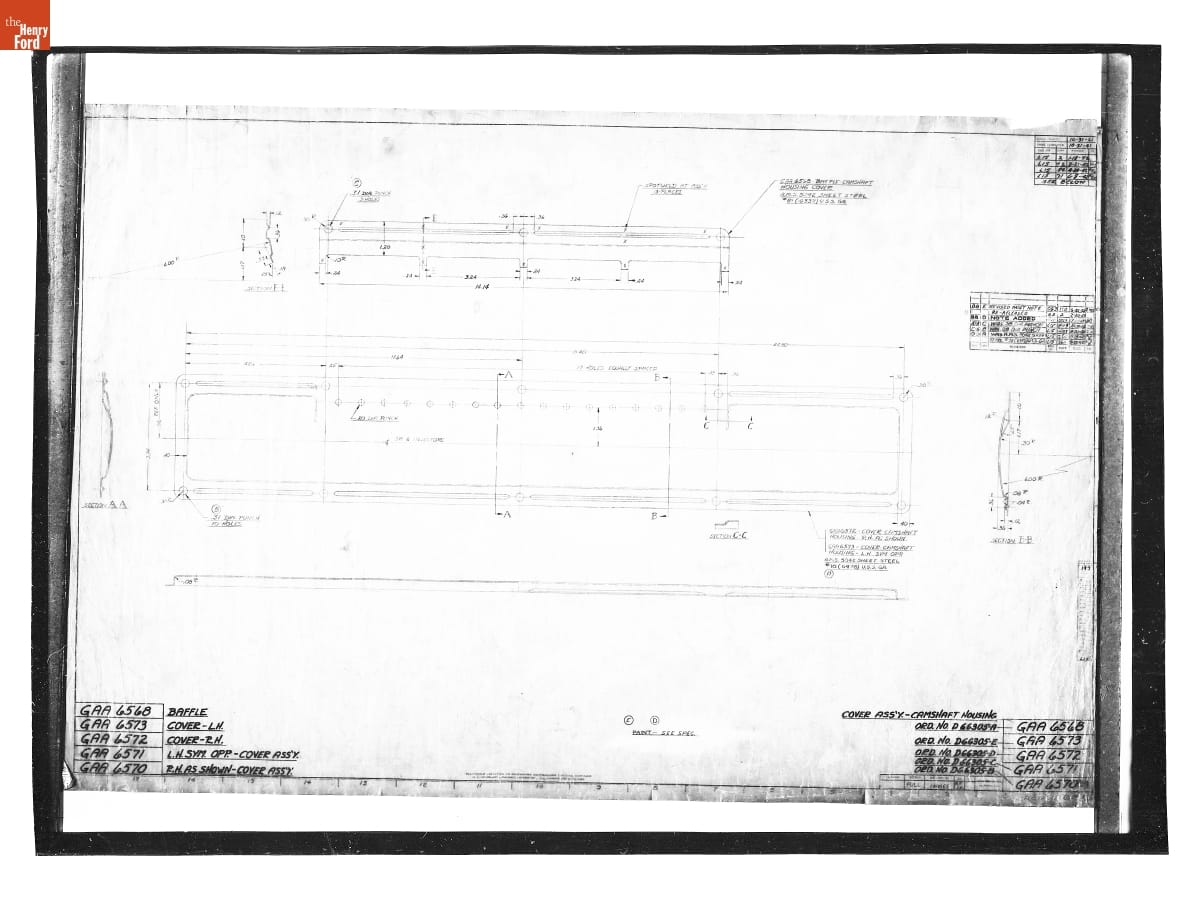
- May 21, 1952
- Collections - Artifact
Drawing, "Cover Ass'y. - Camshaft Housing," Ford GAA Engine for M4A3 Medium Tank (M4 Sherman), May 21, 1952
The Ford Motor Company created over a million parts drawings from 1903 to 1957. Many of these drawings specify engineering requirements for the components of Ford-made vehicles--including automobiles, trucks, tractors, military vehicles and Tri-motor airplanes. Others document assembly components, stages of casting and forging, or experimental designs. Beginning in the 1940s, Ford transferred the drawings to microfilm.
- Drawing, "Cover - Camshaft Housing," Ford GAA Engine for M4A3 Medium Tank (M4 Sherman), August 22, 1944 - The Ford Motor Company created over a million parts drawings from 1903 to 1957. Many of these drawings specify engineering requirements for the components of Ford-made vehicles--including automobiles, trucks, tractors, military vehicles and Tri-motor airplanes. Others document assembly components, stages of casting and forging, or experimental designs. Beginning in the 1940s, Ford transferred the drawings to microfilm.
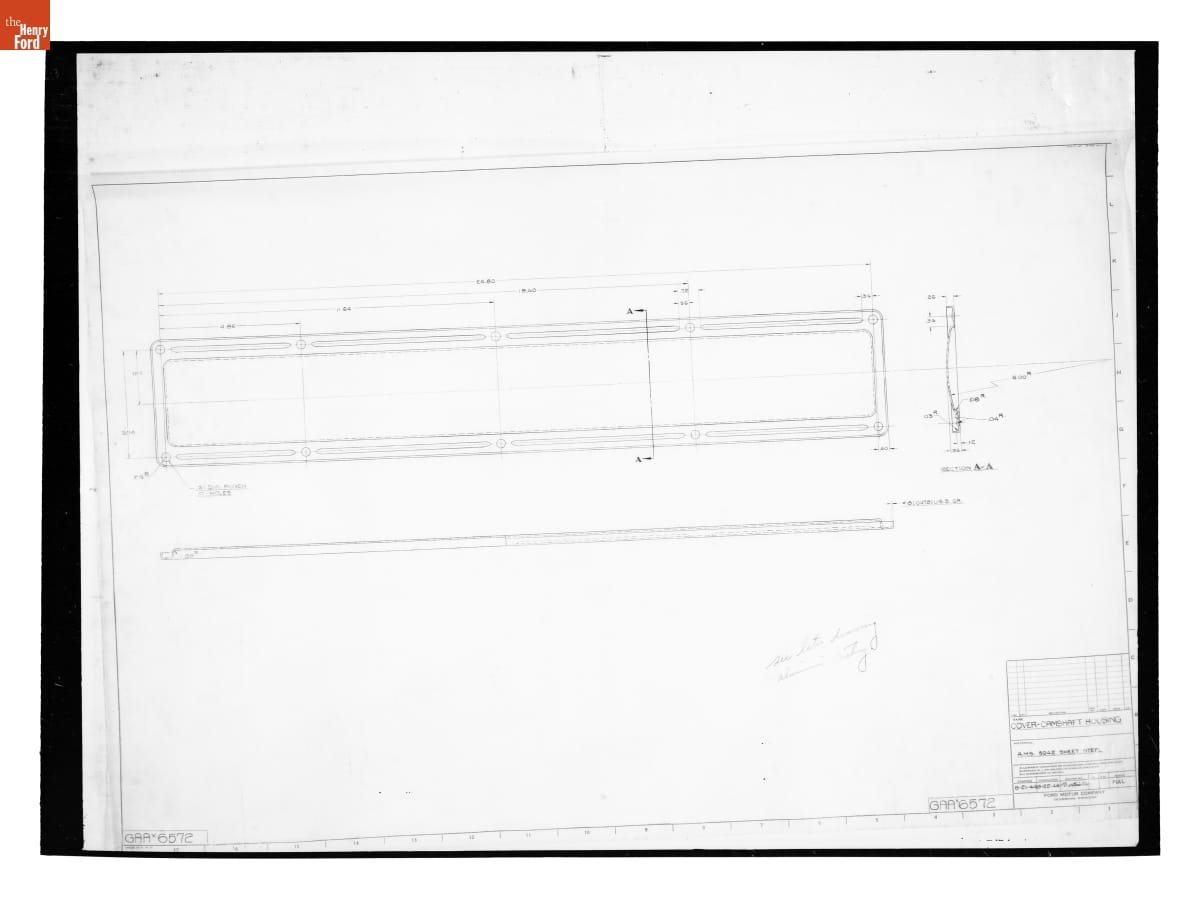
- August 22, 1944
- Collections - Artifact
Drawing, "Cover - Camshaft Housing," Ford GAA Engine for M4A3 Medium Tank (M4 Sherman), August 22, 1944
The Ford Motor Company created over a million parts drawings from 1903 to 1957. Many of these drawings specify engineering requirements for the components of Ford-made vehicles--including automobiles, trucks, tractors, military vehicles and Tri-motor airplanes. Others document assembly components, stages of casting and forging, or experimental designs. Beginning in the 1940s, Ford transferred the drawings to microfilm.