
Search
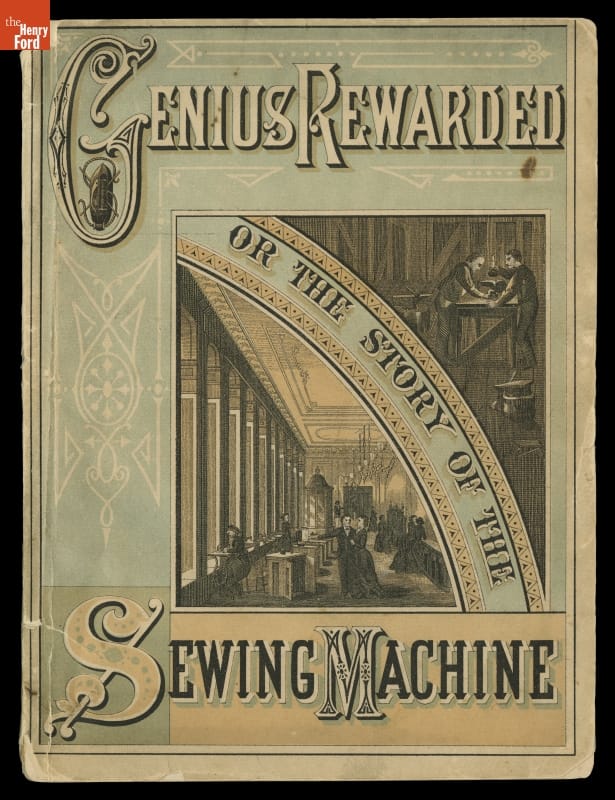
- Genius Rewarded, or the Story of the Sewing Machine, 1880 -
- 1880
- Collections - Artifact
Genius Rewarded, or the Story of the Sewing Machine, 1880
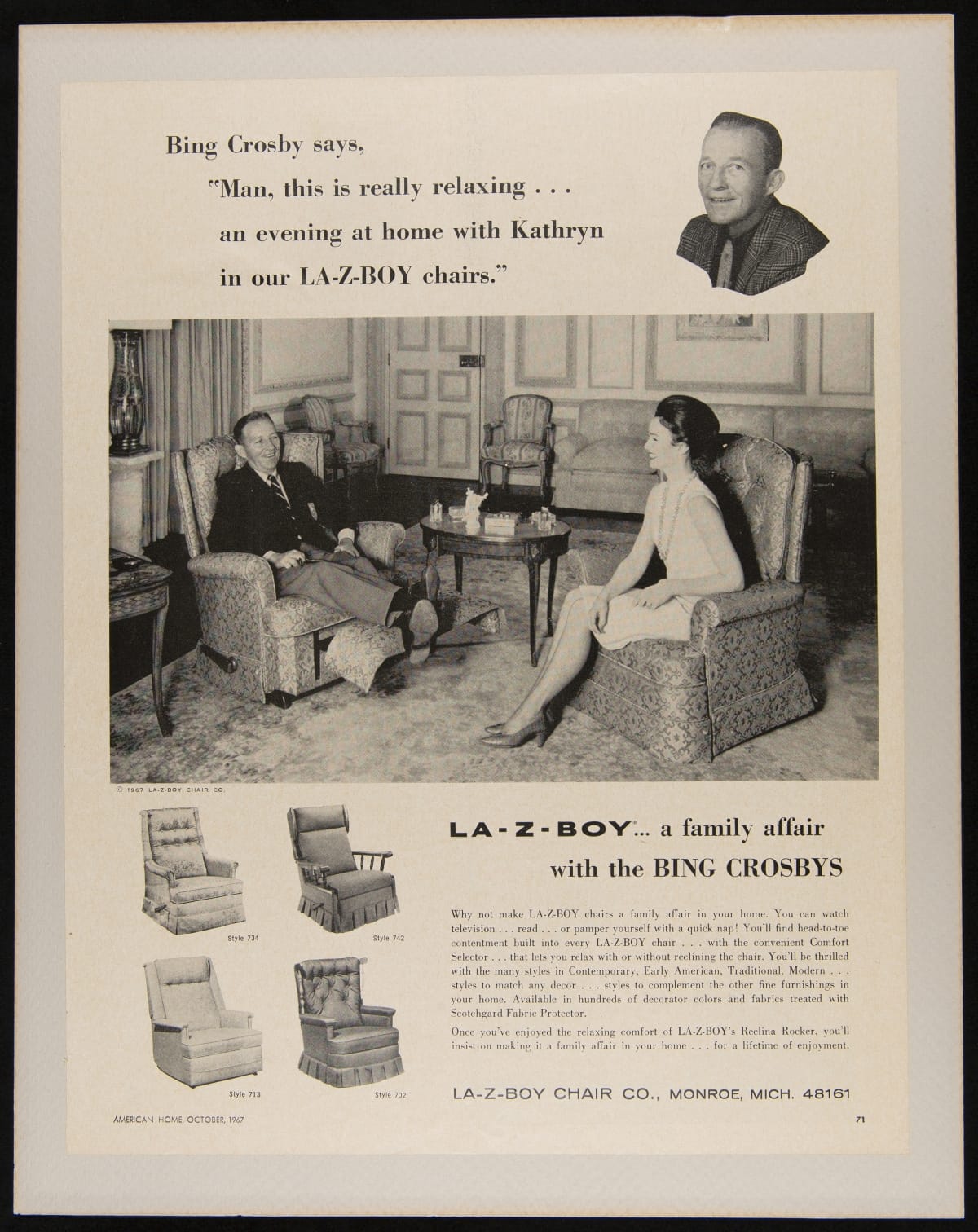
- La-Z-Boy Advertisement in American Home Magazine, "A Family Affair with the Bing Crosbys," October 1967 - In 1927, cousins Edward Knabusch and Edwin Shoemaker, established what would later become La-Z-Boy, Inc. in Monroe, Michigan. They were a perfect pair: Shoemaker was fascinated with technology and Knabusch was a master marketer. Celebrity endorsements, beginning with Bing and Kathryn Crosby in the 1960s, would become an enduring La-Z-Boy advertising strategy.
- October 01, 1967
- Collections - Artifact
La-Z-Boy Advertisement in American Home Magazine, "A Family Affair with the Bing Crosbys," October 1967
In 1927, cousins Edward Knabusch and Edwin Shoemaker, established what would later become La-Z-Boy, Inc. in Monroe, Michigan. They were a perfect pair: Shoemaker was fascinated with technology and Knabusch was a master marketer. Celebrity endorsements, beginning with Bing and Kathryn Crosby in the 1960s, would become an enduring La-Z-Boy advertising strategy.
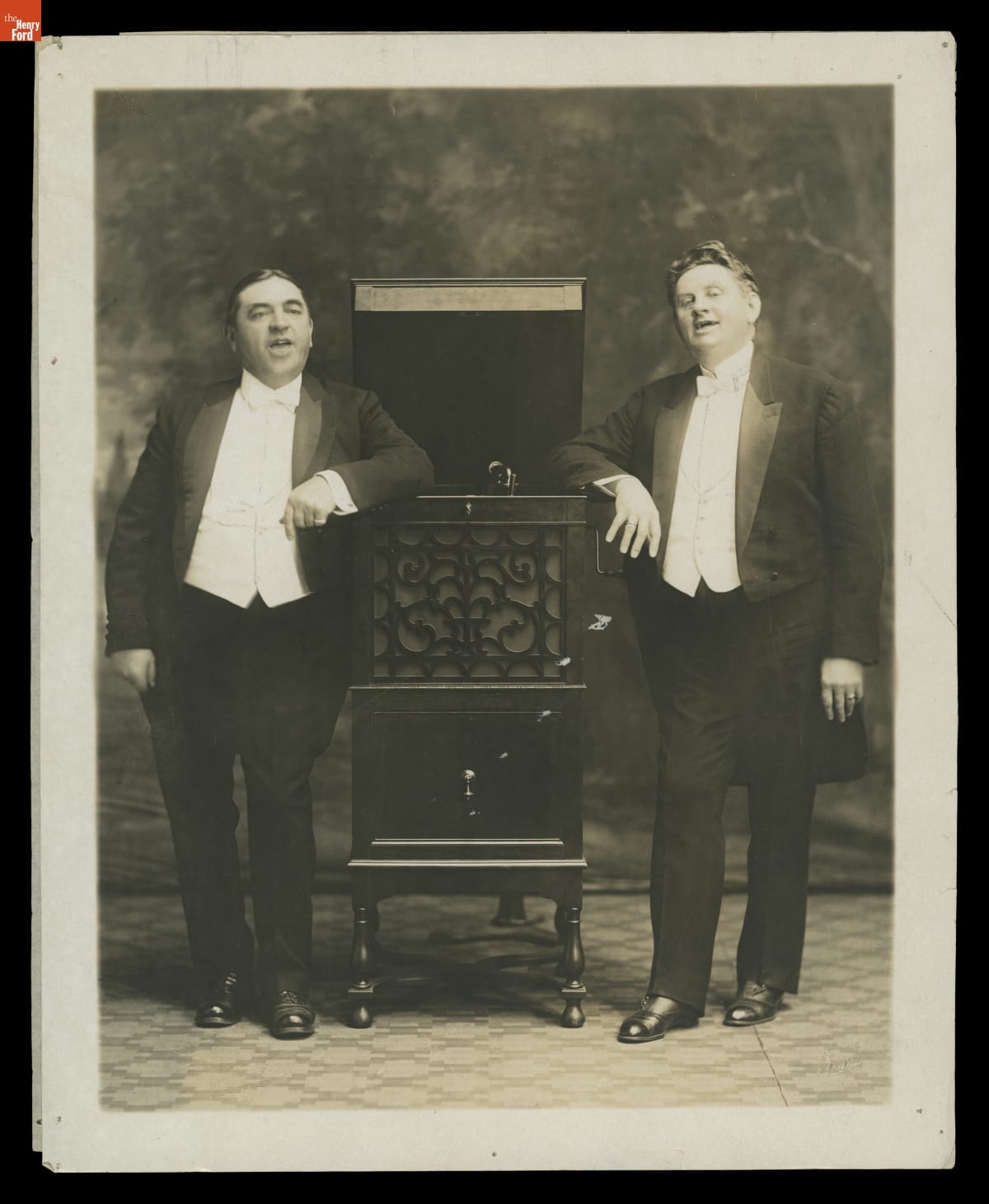
- Edison Recording Artists Arthur Collins and Byron Harlan, circa 1916 -
- February 25, 1920
- Collections - Artifact
Edison Recording Artists Arthur Collins and Byron Harlan, circa 1916
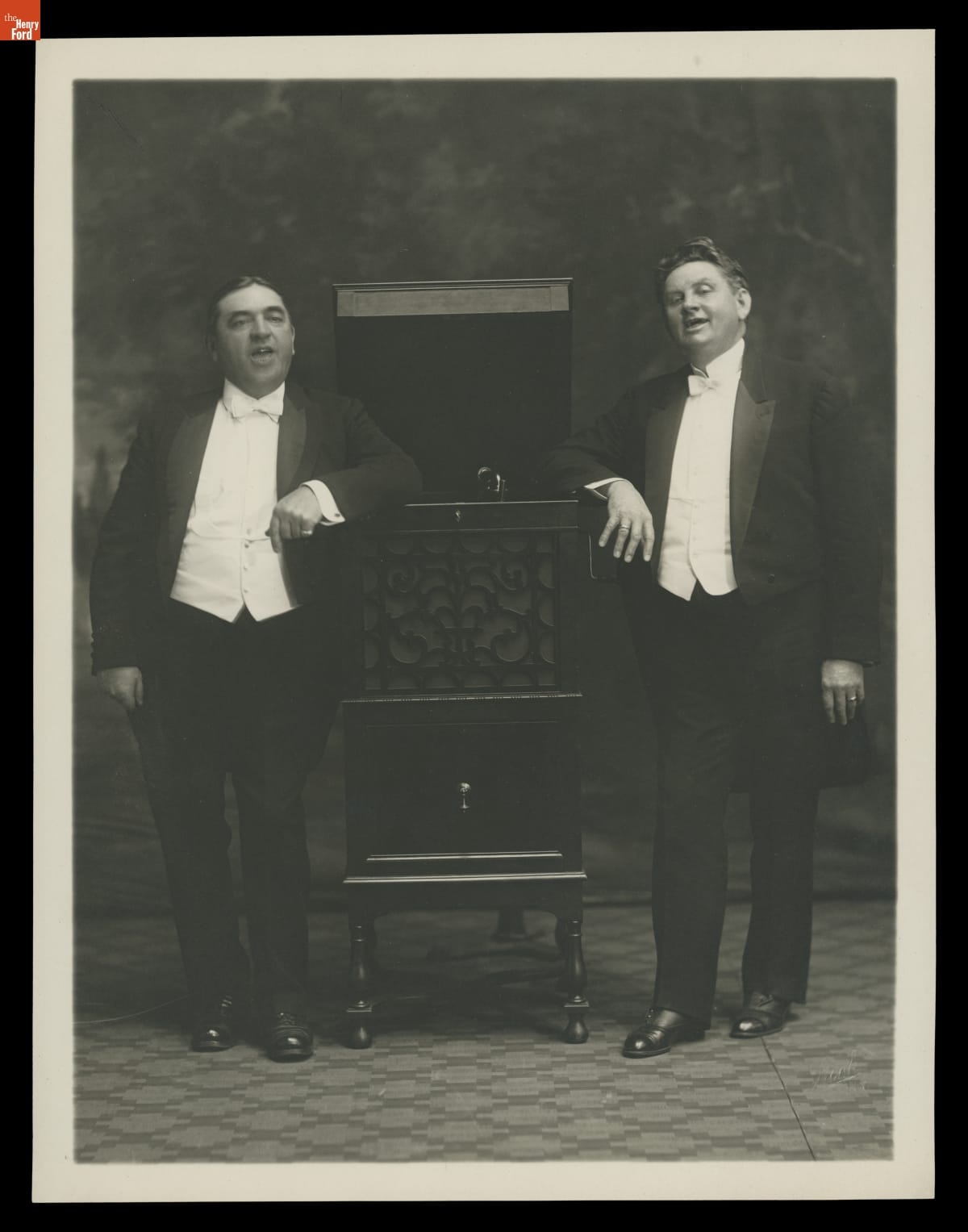
- Edison Recording Artists Arthur Collins and Byron Harlan, 1920 -
- February 25, 1920
- Collections - Artifact
Edison Recording Artists Arthur Collins and Byron Harlan, 1920
- "Tie a Yellow Ribbon Round the Ole Oak Tree," 1973 -
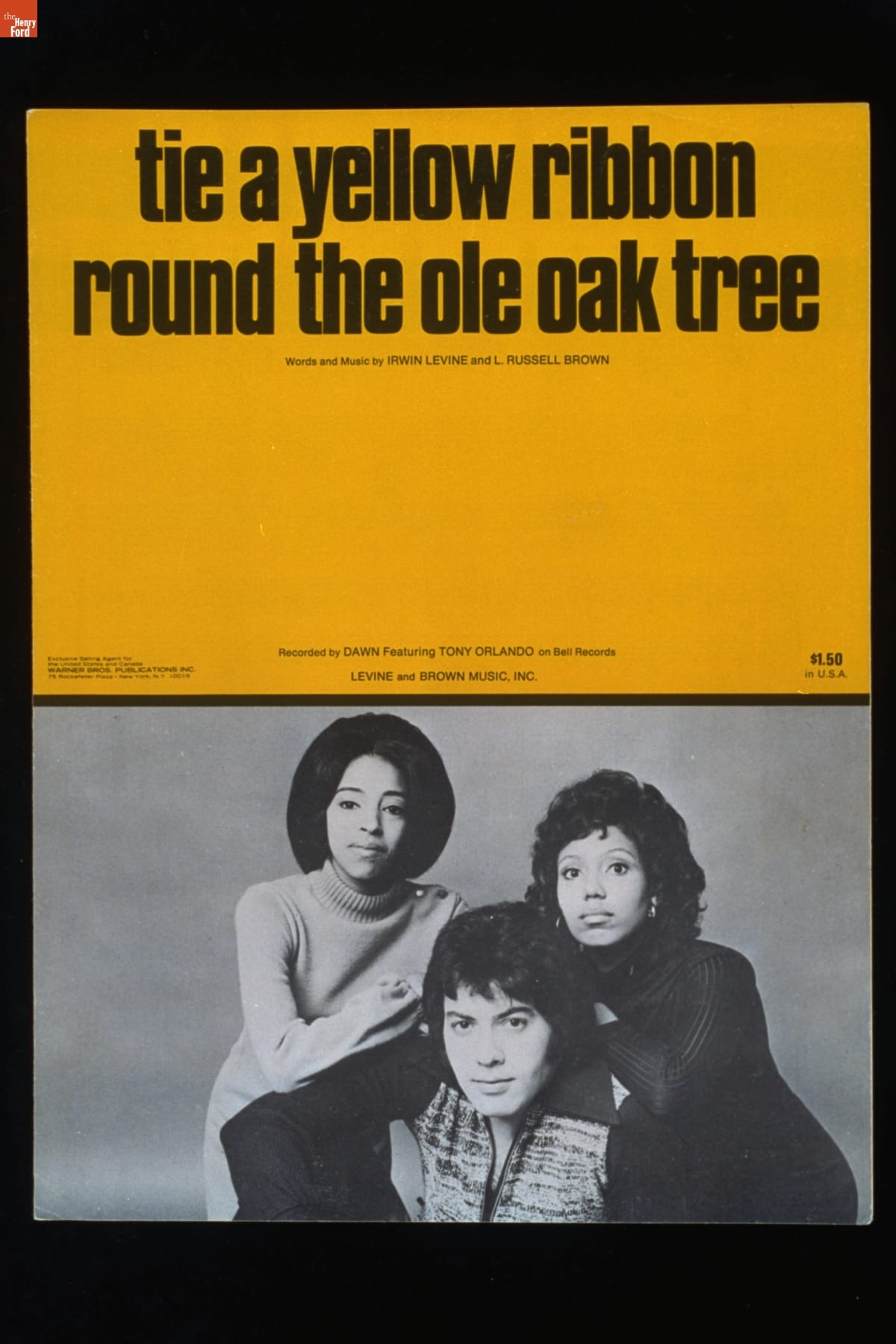
- 1973
- Collections - Artifact
"Tie a Yellow Ribbon Round the Ole Oak Tree," 1973
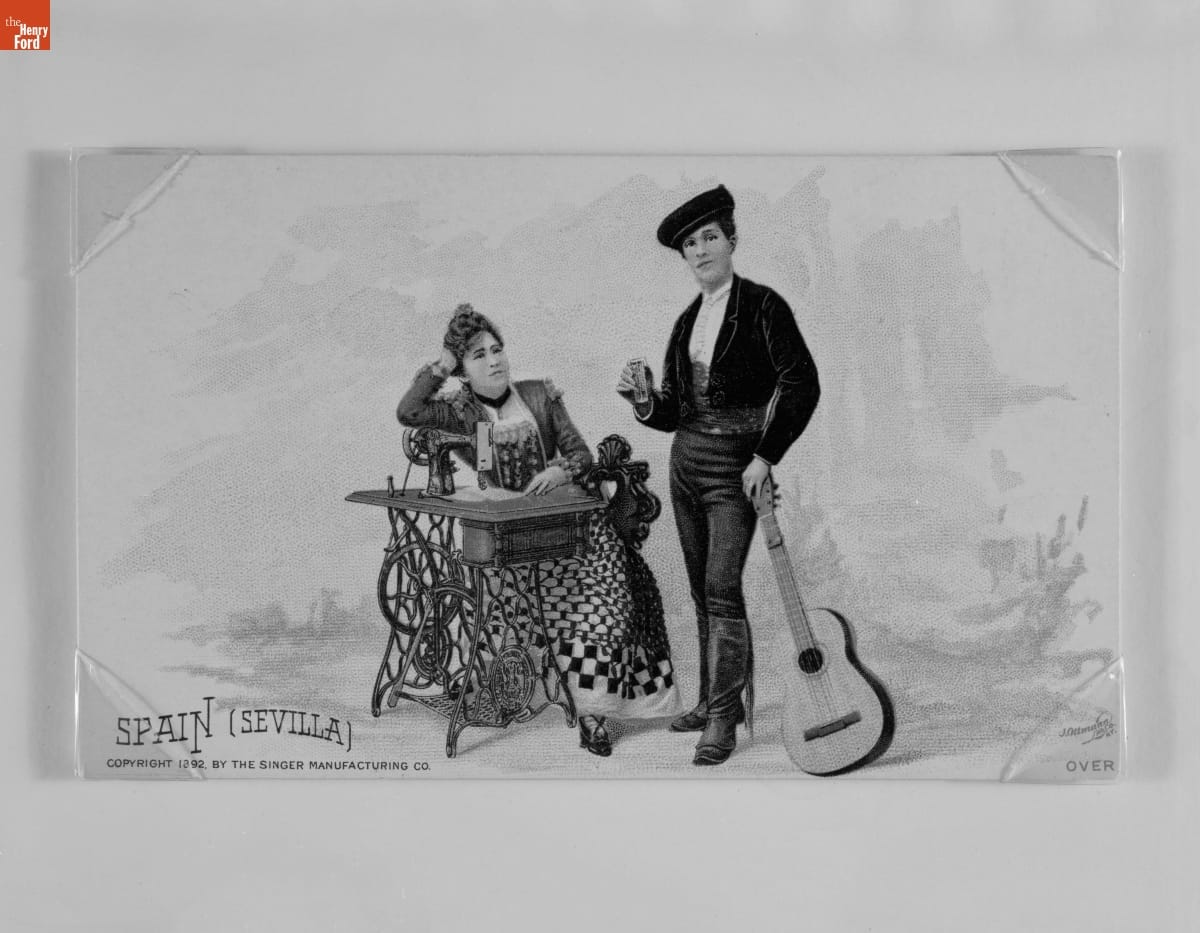
- Trade Card for Singer Sewing Machine, "Spain (Sevilla)," 1892 - In the last third of the nineteenth century, an unprecedented variety of consumer goods and services flooded the American market. Advertisers, armed with new methods of color printing, bombarded potential customers with trade cards. Americans enjoyed and often saved the vibrant little advertisements found in product packages or distributed by local merchants. Many survive as historical records of commercialism in the United States.
- 1892
- Collections - Artifact
Trade Card for Singer Sewing Machine, "Spain (Sevilla)," 1892
In the last third of the nineteenth century, an unprecedented variety of consumer goods and services flooded the American market. Advertisers, armed with new methods of color printing, bombarded potential customers with trade cards. Americans enjoyed and often saved the vibrant little advertisements found in product packages or distributed by local merchants. Many survive as historical records of commercialism in the United States.
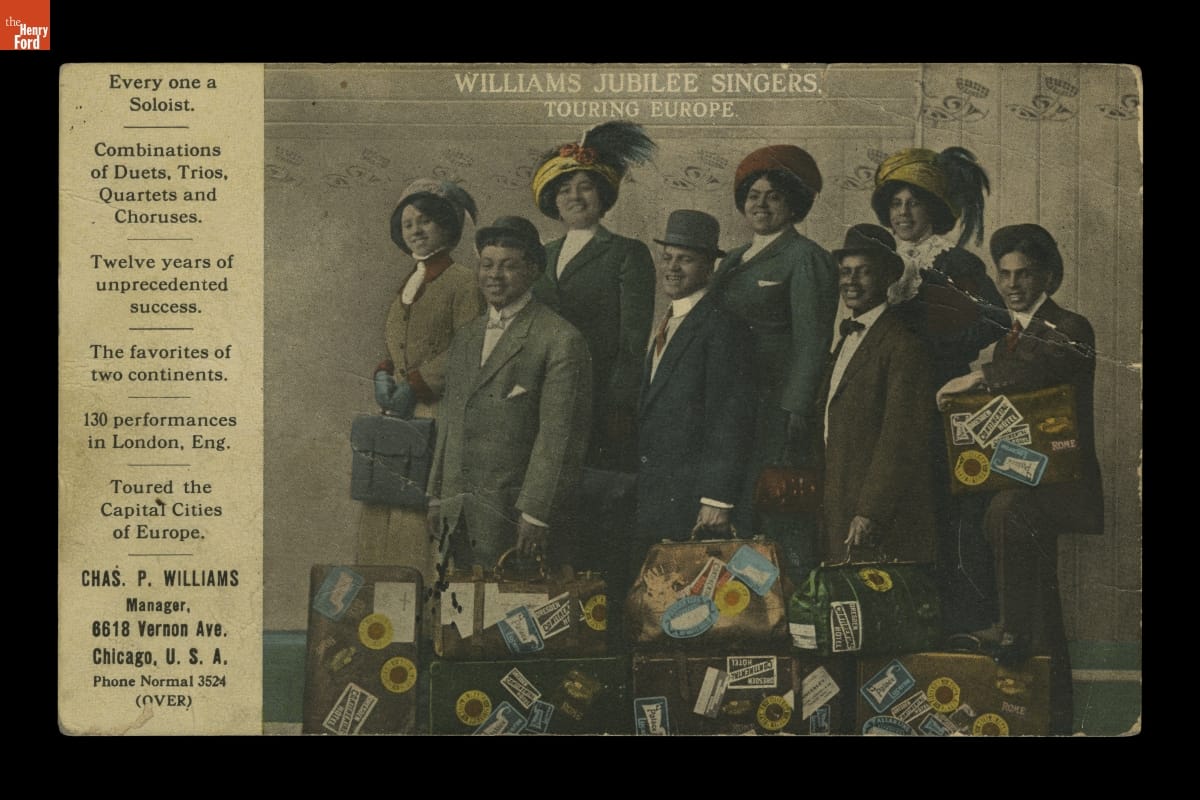
- Postcard, "Williams Jubilee Singers Touring Europe," 1905 - Influenced by the popularity of the Fisk Jubilee Singers, Charles P. Williams founded the Williams Jubilee Singers, a Chicago-based a cappella ensemble, in 1904. The group consisted of classically trained singers who performed traditional Negro spirituals. They toured the United States and Europe with the goal of using music to combat racial discrimination and were especially popular in London, England.
- 1905
- Collections - Artifact
Postcard, "Williams Jubilee Singers Touring Europe," 1905
Influenced by the popularity of the Fisk Jubilee Singers, Charles P. Williams founded the Williams Jubilee Singers, a Chicago-based a cappella ensemble, in 1904. The group consisted of classically trained singers who performed traditional Negro spirituals. They toured the United States and Europe with the goal of using music to combat racial discrimination and were especially popular in London, England.
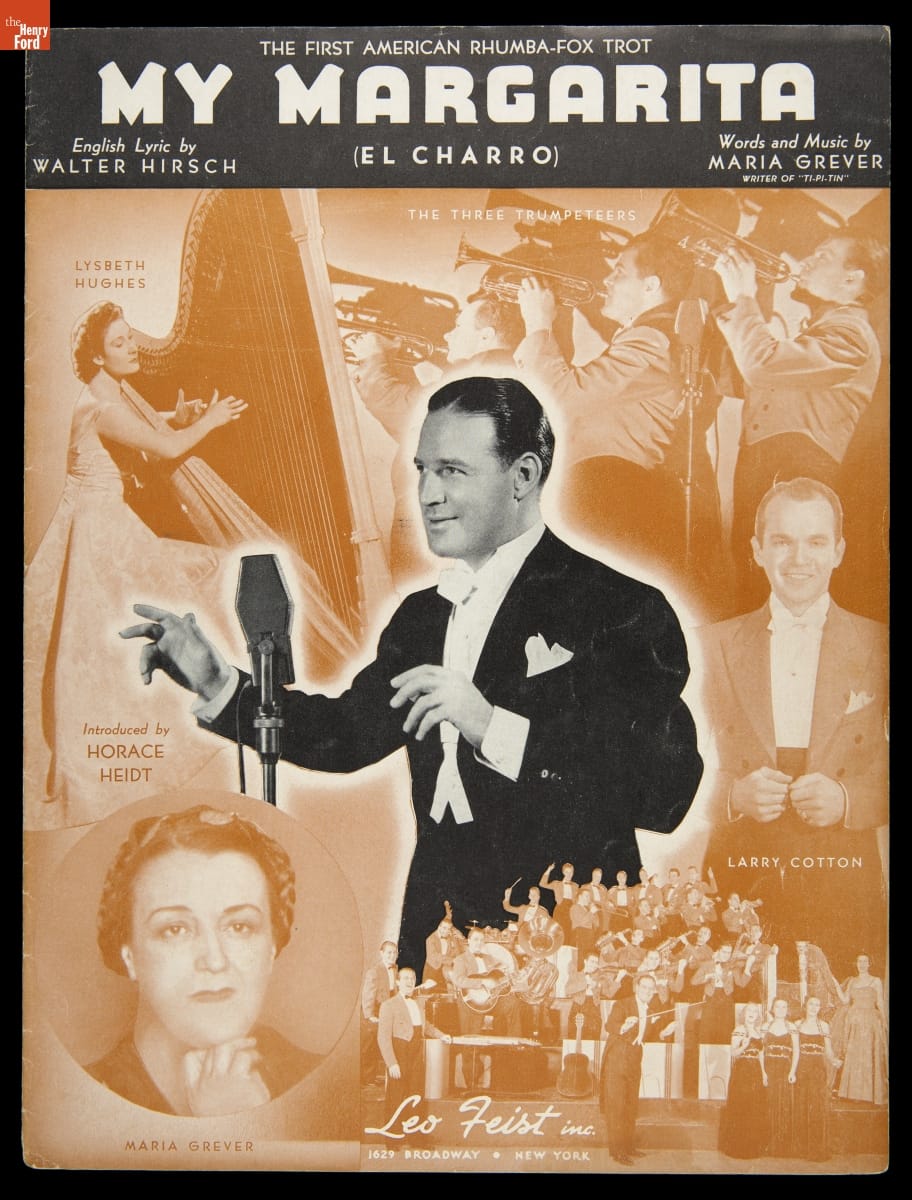
- "My Margarita (El Charro)," 1938 - Maria Grever, the first female Mexican composer and lyricist to attain international attention, moved to the United States in 1916. Here, she continued her musical career for 35 years, navigating the New York City-centered -- and male-dominated -- music industry. Her mix of popular song forms with Latin American rhythms created universal appeal. Grever's photo graced the cover of her song "My Margarita" in 1938.
- 1938
- Collections - Artifact
"My Margarita (El Charro)," 1938
Maria Grever, the first female Mexican composer and lyricist to attain international attention, moved to the United States in 1916. Here, she continued her musical career for 35 years, navigating the New York City-centered -- and male-dominated -- music industry. Her mix of popular song forms with Latin American rhythms created universal appeal. Grever's photo graced the cover of her song "My Margarita" in 1938.
- Advertising Poster, Ebony Magazine Cover, October 1952 -
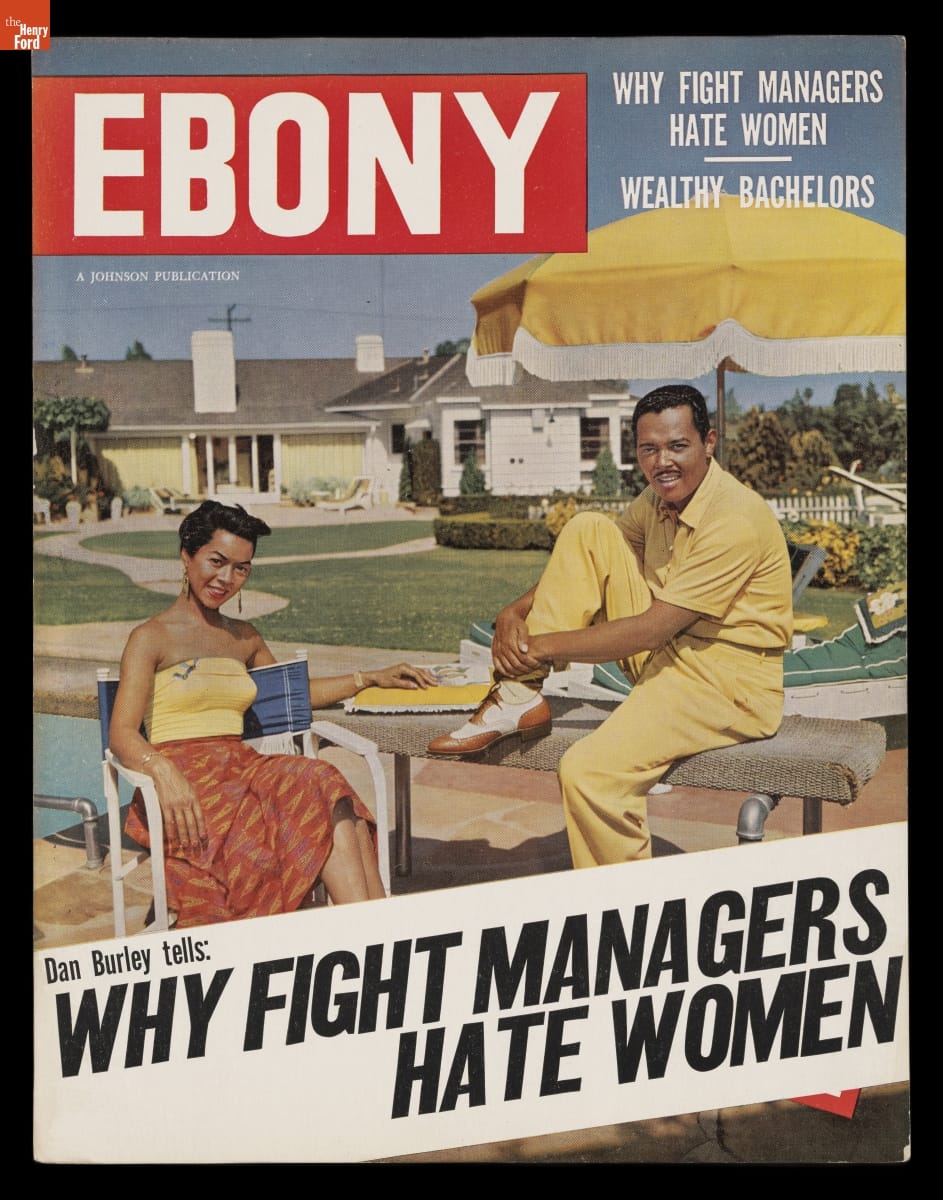
- October 01, 1952
- Collections - Artifact
Advertising Poster, Ebony Magazine Cover, October 1952
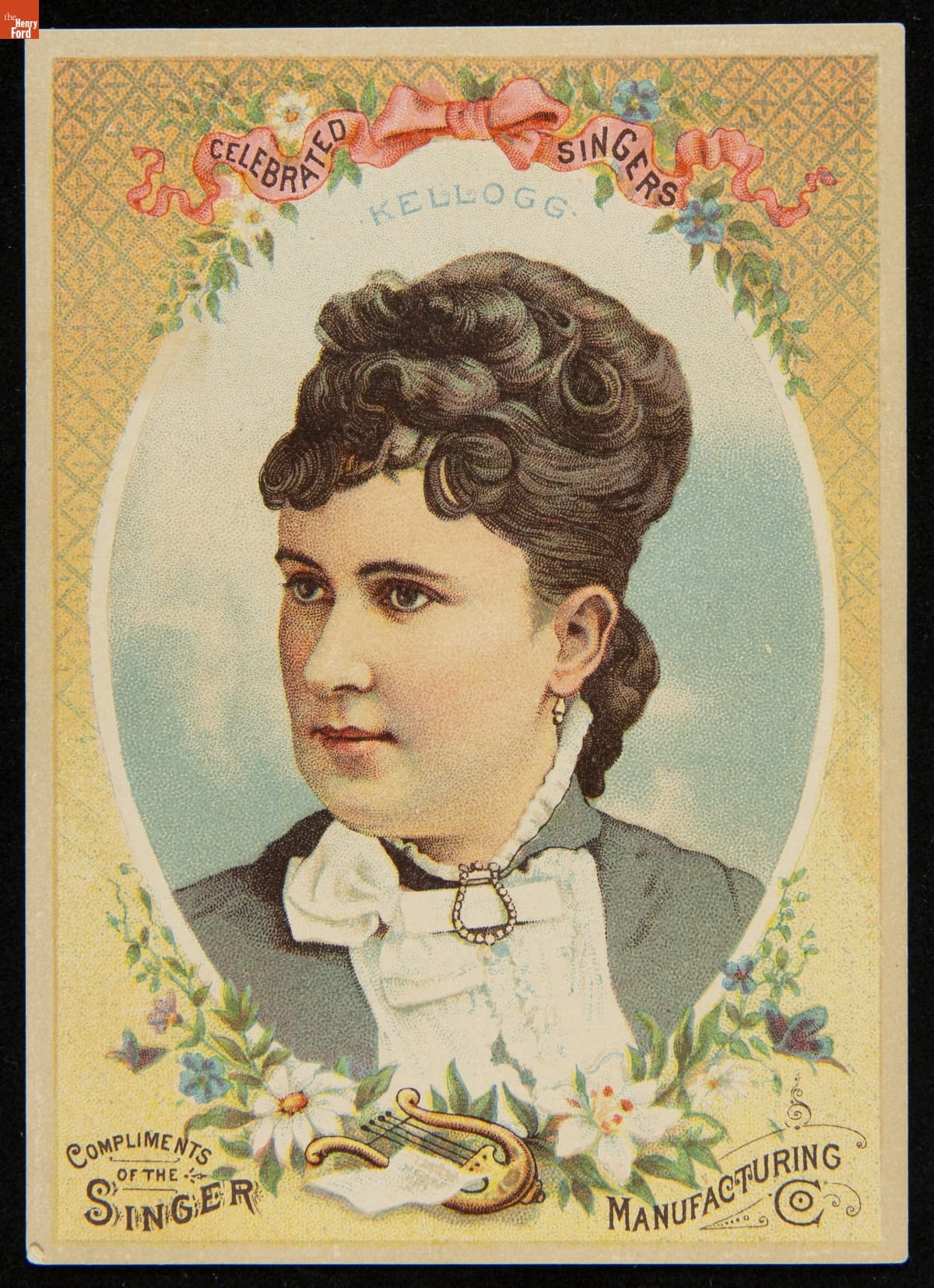
- Trade Card for Singer Sewing Machines, Featuring Opera Singer Clara Louise Kellogg, 1880-1900 - Clara Louise Kellogg (1842-1916), America's preeminent soprano from the 1860s through the 1880s, made her operatic debut in New York in 1861. Six years later, she made her European debut, gaining international recognition. In 1873, Kellogg formed an opera company to perform in English to familiarize American audiences with European opera. After retiring, she taught promising students and authored her autobiography.
- 1880-1900
- Collections - Artifact
Trade Card for Singer Sewing Machines, Featuring Opera Singer Clara Louise Kellogg, 1880-1900
Clara Louise Kellogg (1842-1916), America's preeminent soprano from the 1860s through the 1880s, made her operatic debut in New York in 1861. Six years later, she made her European debut, gaining international recognition. In 1873, Kellogg formed an opera company to perform in English to familiarize American audiences with European opera. After retiring, she taught promising students and authored her autobiography.