
Search
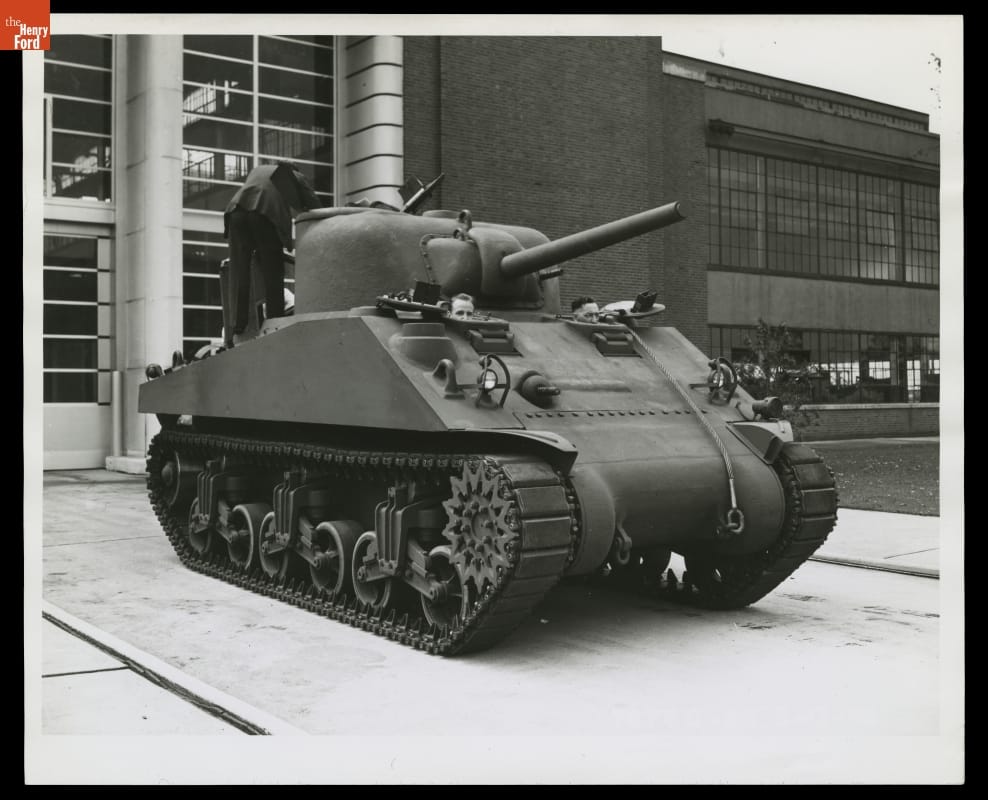
- Ford Motor Company Executives inside Ford M-4 Tank, Highland Park Plant, 1942 - Ford Motor Company repurposed its assembly lines to meet military manufacturing needs during World War II. The last peacetime automobile rolled out of Ford's massive River Rouge plant in 1941, and focus shifted to the wartime production of aircraft engines and military vehicles. The Rouge manufactured M-4 tanks through 1943 and continued producing M-4 engines and armor plates until war's end.
- May 13, 1942
- Collections - Artifact
Ford Motor Company Executives inside Ford M-4 Tank, Highland Park Plant, 1942
Ford Motor Company repurposed its assembly lines to meet military manufacturing needs during World War II. The last peacetime automobile rolled out of Ford's massive River Rouge plant in 1941, and focus shifted to the wartime production of aircraft engines and military vehicles. The Rouge manufactured M-4 tanks through 1943 and continued producing M-4 engines and armor plates until war's end.
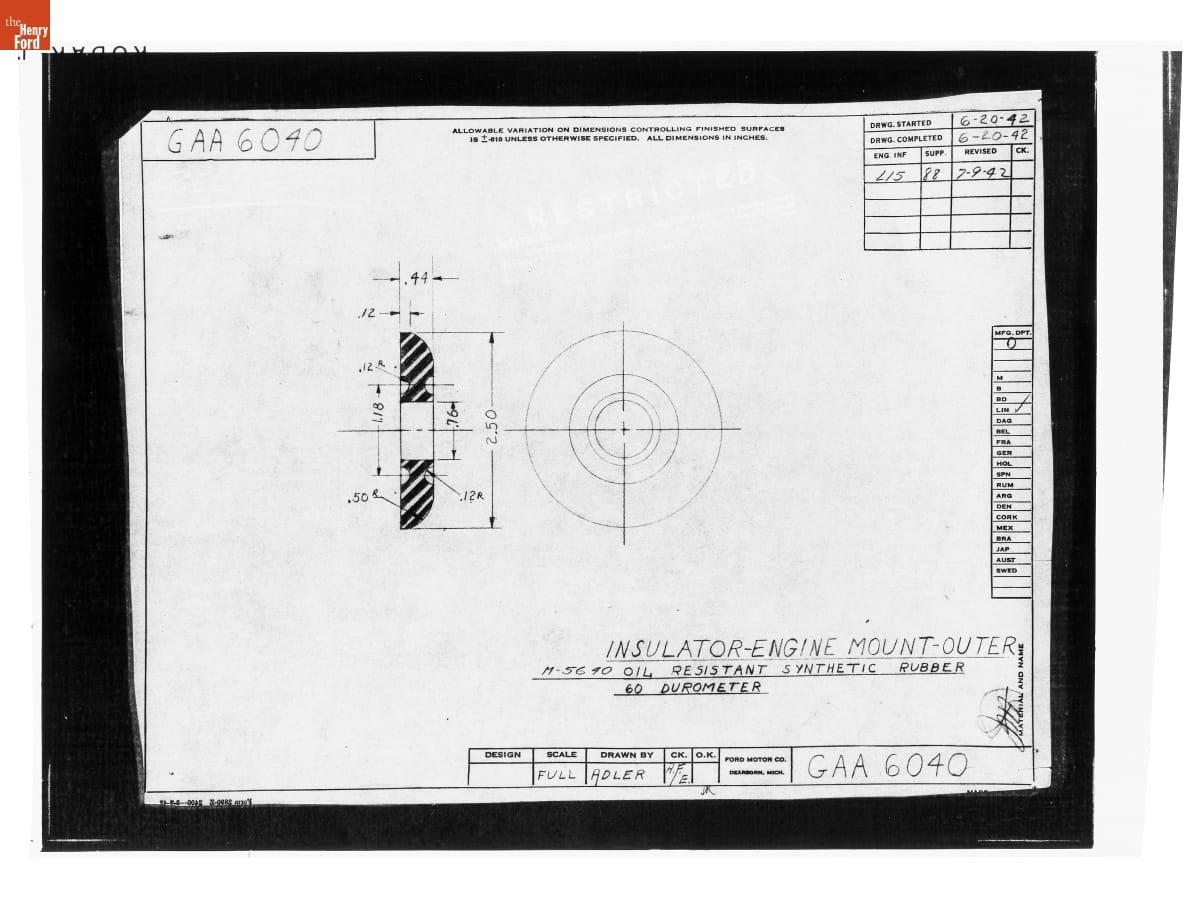
- Drawing, "Insulator - Engine Mount - Outer," Ford GAA Engine for M4A3 Medium Tank (M4 Sherman), July 9, 1942 - The Ford Motor Company created over a million parts drawings from 1903 to 1957. Many of these drawings specify engineering requirements for the components of Ford-made vehicles--including automobiles, trucks, tractors, military vehicles and Tri-motor airplanes. Others document assembly components, stages of casting and forging, or experimental designs. Beginning in the 1940s, Ford transferred the drawings to microfilm.
- July 09, 1942
- Collections - Artifact
Drawing, "Insulator - Engine Mount - Outer," Ford GAA Engine for M4A3 Medium Tank (M4 Sherman), July 9, 1942
The Ford Motor Company created over a million parts drawings from 1903 to 1957. Many of these drawings specify engineering requirements for the components of Ford-made vehicles--including automobiles, trucks, tractors, military vehicles and Tri-motor airplanes. Others document assembly components, stages of casting and forging, or experimental designs. Beginning in the 1940s, Ford transferred the drawings to microfilm.
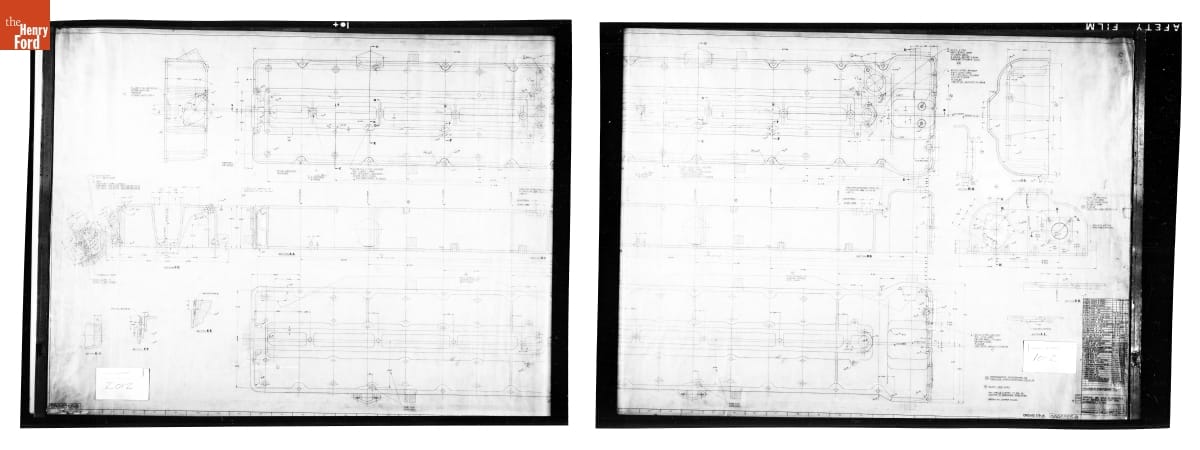
- Drawing, "Housing - Camshaft - L.H.," Ford GAA Engine for M4A3 Medium Tank (M4 Sherman), May 16, 1952 - The Ford Motor Company created over a million parts drawings from 1903 to 1957. Many of these drawings specify engineering requirements for the components of Ford-made vehicles--including automobiles, trucks, tractors, military vehicles and Tri-motor airplanes. Others document assembly components, stages of casting and forging, or experimental designs. Beginning in the 1940s, Ford transferred the drawings to microfilm.
- May 16, 1952
- Collections - Artifact
Drawing, "Housing - Camshaft - L.H.," Ford GAA Engine for M4A3 Medium Tank (M4 Sherman), May 16, 1952
The Ford Motor Company created over a million parts drawings from 1903 to 1957. Many of these drawings specify engineering requirements for the components of Ford-made vehicles--including automobiles, trucks, tractors, military vehicles and Tri-motor airplanes. Others document assembly components, stages of casting and forging, or experimental designs. Beginning in the 1940s, Ford transferred the drawings to microfilm.
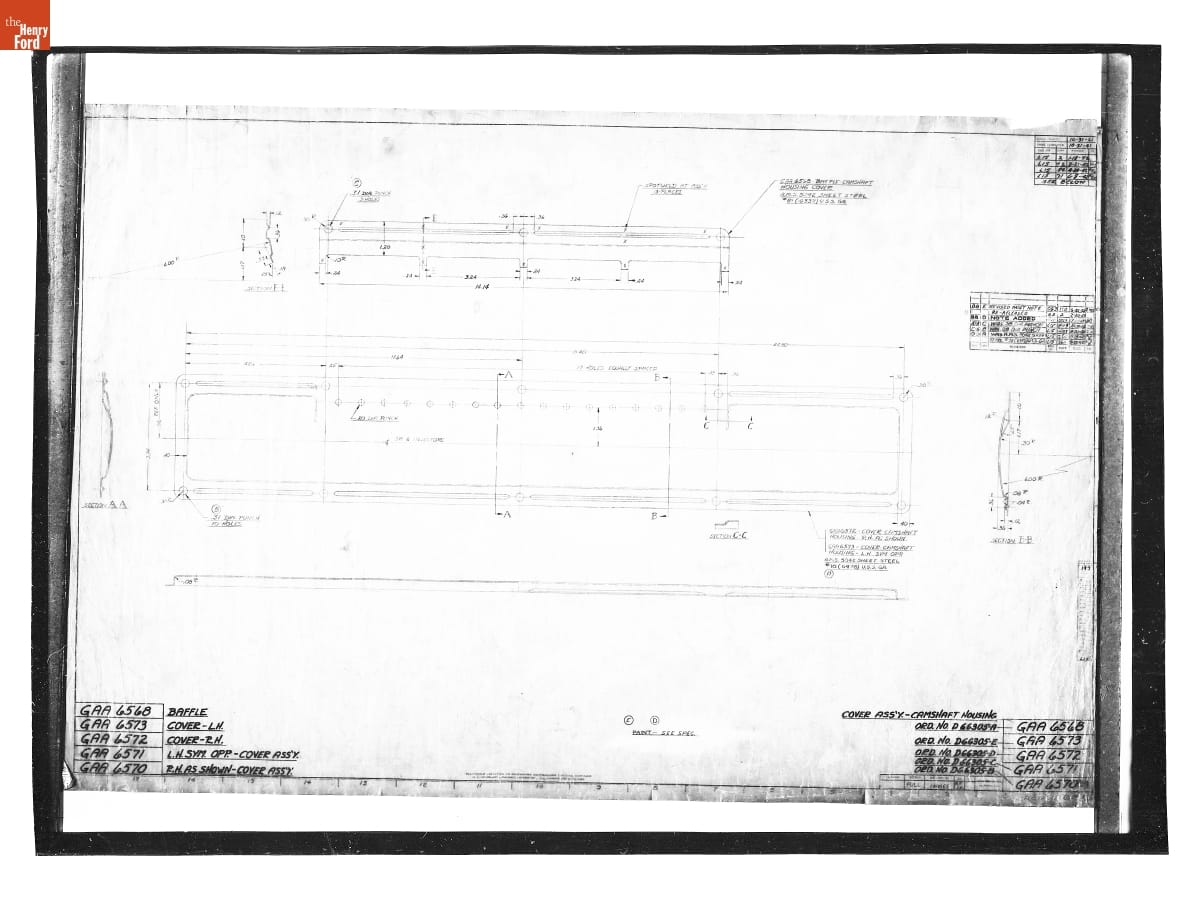
- Drawing, "Cover Ass'y. - Camshaft Housing," Ford GAA Engine for M4A3 Medium Tank (M4 Sherman), May 21, 1952 - The Ford Motor Company created over a million parts drawings from 1903 to 1957. Many of these drawings specify engineering requirements for the components of Ford-made vehicles--including automobiles, trucks, tractors, military vehicles and Tri-motor airplanes. Others document assembly components, stages of casting and forging, or experimental designs. Beginning in the 1940s, Ford transferred the drawings to microfilm.
- May 21, 1952
- Collections - Artifact
Drawing, "Cover Ass'y. - Camshaft Housing," Ford GAA Engine for M4A3 Medium Tank (M4 Sherman), May 21, 1952
The Ford Motor Company created over a million parts drawings from 1903 to 1957. Many of these drawings specify engineering requirements for the components of Ford-made vehicles--including automobiles, trucks, tractors, military vehicles and Tri-motor airplanes. Others document assembly components, stages of casting and forging, or experimental designs. Beginning in the 1940s, Ford transferred the drawings to microfilm.
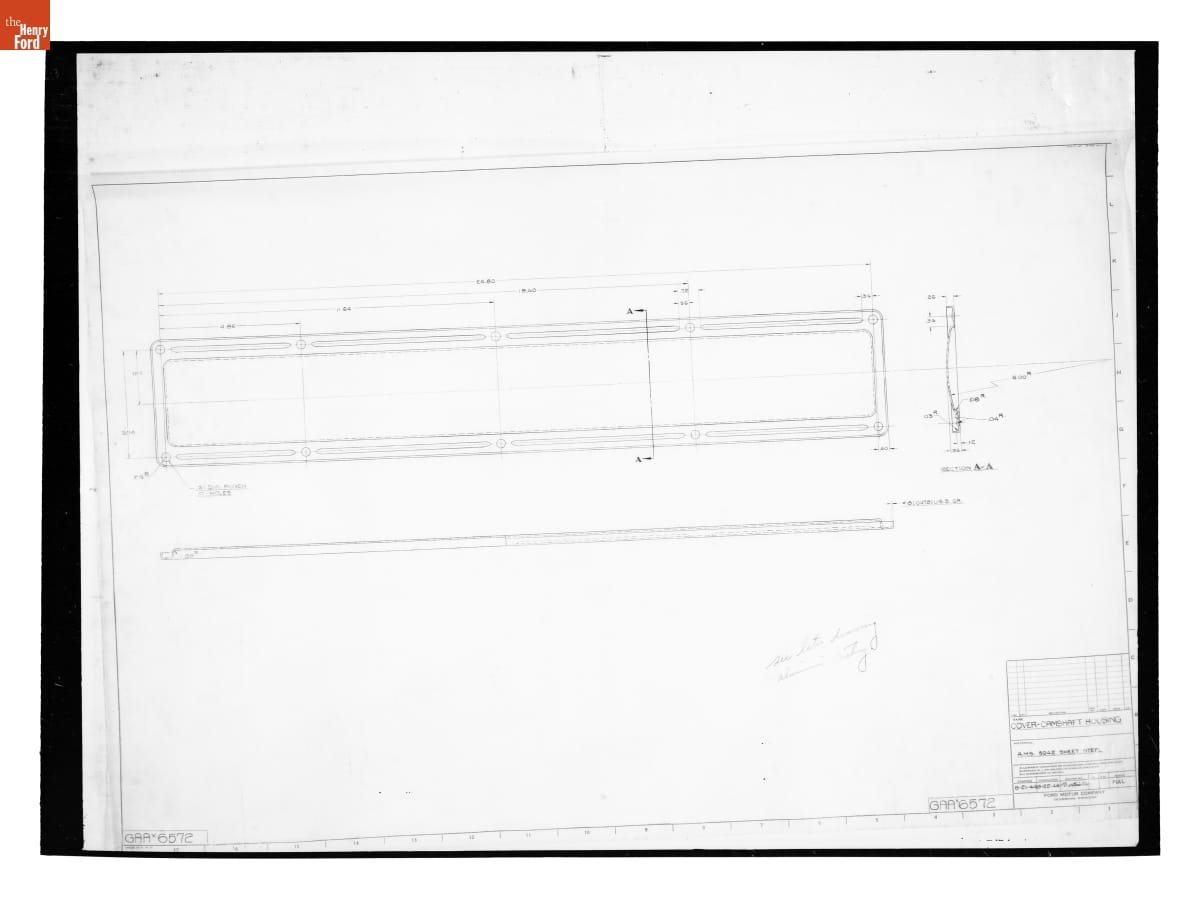
- Drawing, "Cover - Camshaft Housing," Ford GAA Engine for M4A3 Medium Tank (M4 Sherman), August 22, 1944 - The Ford Motor Company created over a million parts drawings from 1903 to 1957. Many of these drawings specify engineering requirements for the components of Ford-made vehicles--including automobiles, trucks, tractors, military vehicles and Tri-motor airplanes. Others document assembly components, stages of casting and forging, or experimental designs. Beginning in the 1940s, Ford transferred the drawings to microfilm.
- August 22, 1944
- Collections - Artifact
Drawing, "Cover - Camshaft Housing," Ford GAA Engine for M4A3 Medium Tank (M4 Sherman), August 22, 1944
The Ford Motor Company created over a million parts drawings from 1903 to 1957. Many of these drawings specify engineering requirements for the components of Ford-made vehicles--including automobiles, trucks, tractors, military vehicles and Tri-motor airplanes. Others document assembly components, stages of casting and forging, or experimental designs. Beginning in the 1940s, Ford transferred the drawings to microfilm.
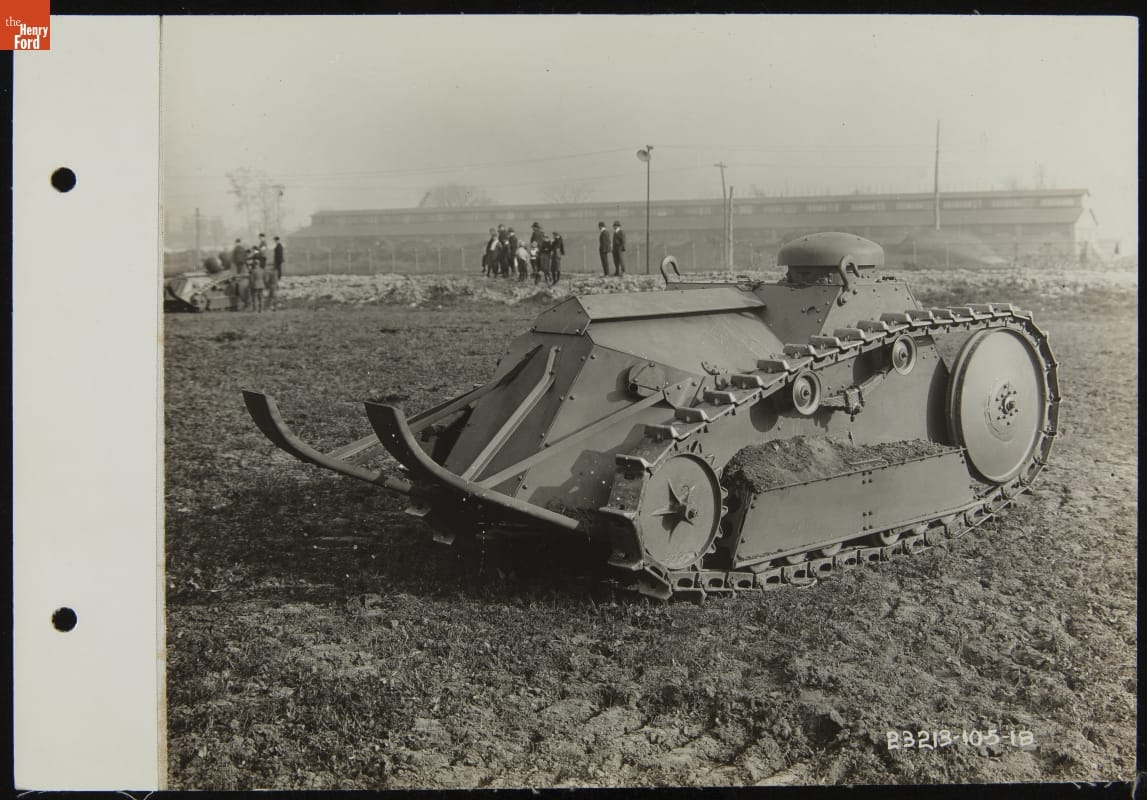
- New Ford Tank on Grounds North of Factory, October 5, 1918 - Tanks emerged during World War I in response to trenches, barbed wire, and machine guns. Their tracks -- rather than tires -- handled rough ground, and their armor protected against wire and gunfire. Ford designed a 2 1/2-ton, 2-man tank and sent several examples to France for testing. Results were encouraging, but the war ended before mass production could begin.
- October 05, 1918
- Collections - Artifact
New Ford Tank on Grounds North of Factory, October 5, 1918
Tanks emerged during World War I in response to trenches, barbed wire, and machine guns. Their tracks -- rather than tires -- handled rough ground, and their armor protected against wire and gunfire. Ford designed a 2 1/2-ton, 2-man tank and sent several examples to France for testing. Results were encouraging, but the war ended before mass production could begin.
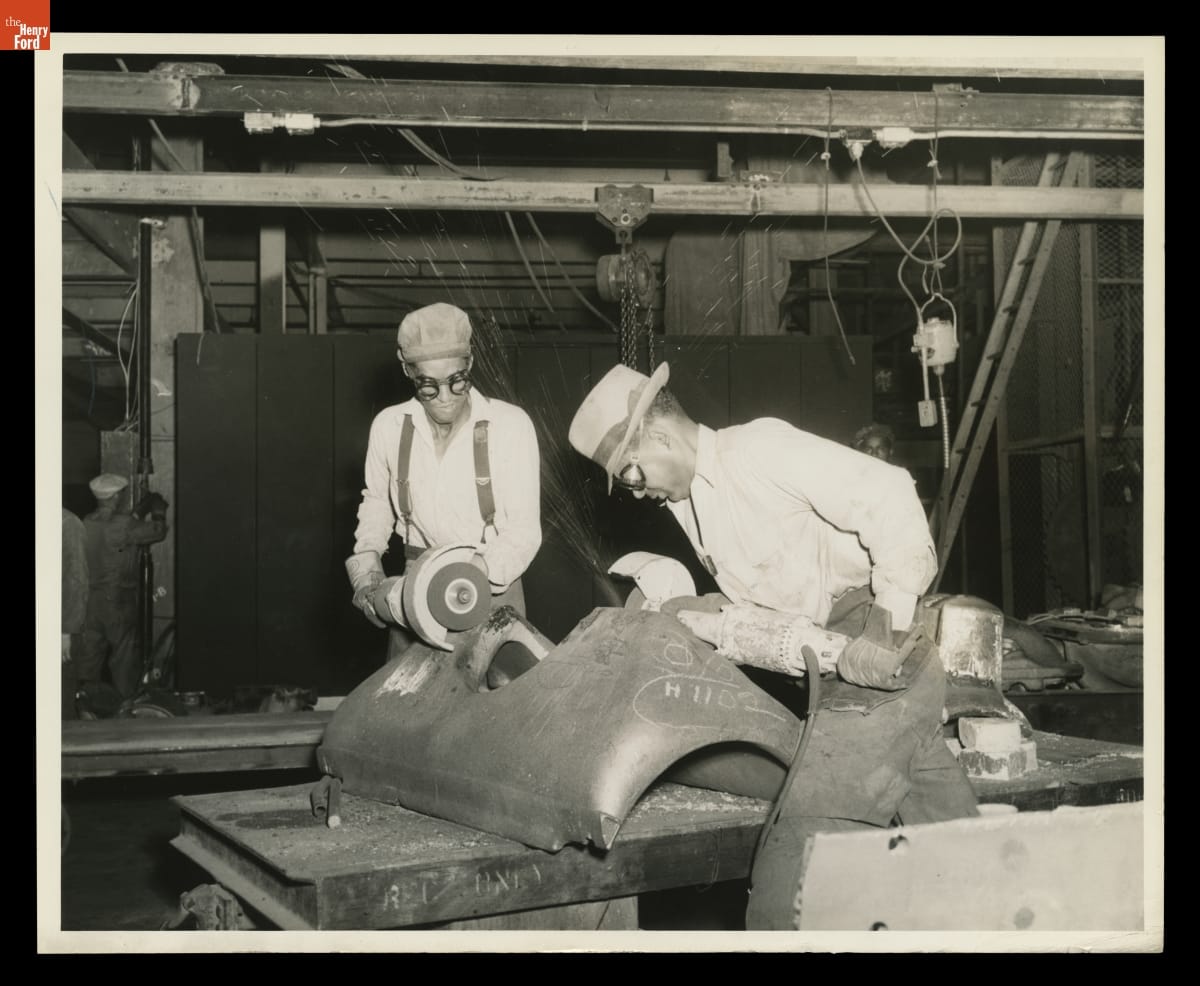
- Manufacturing M4 Medium Tank Parts at Ford Motor Company Highland Park Plant, August 1942 -
- August 19, 1942
- Collections - Artifact
Manufacturing M4 Medium Tank Parts at Ford Motor Company Highland Park Plant, August 1942
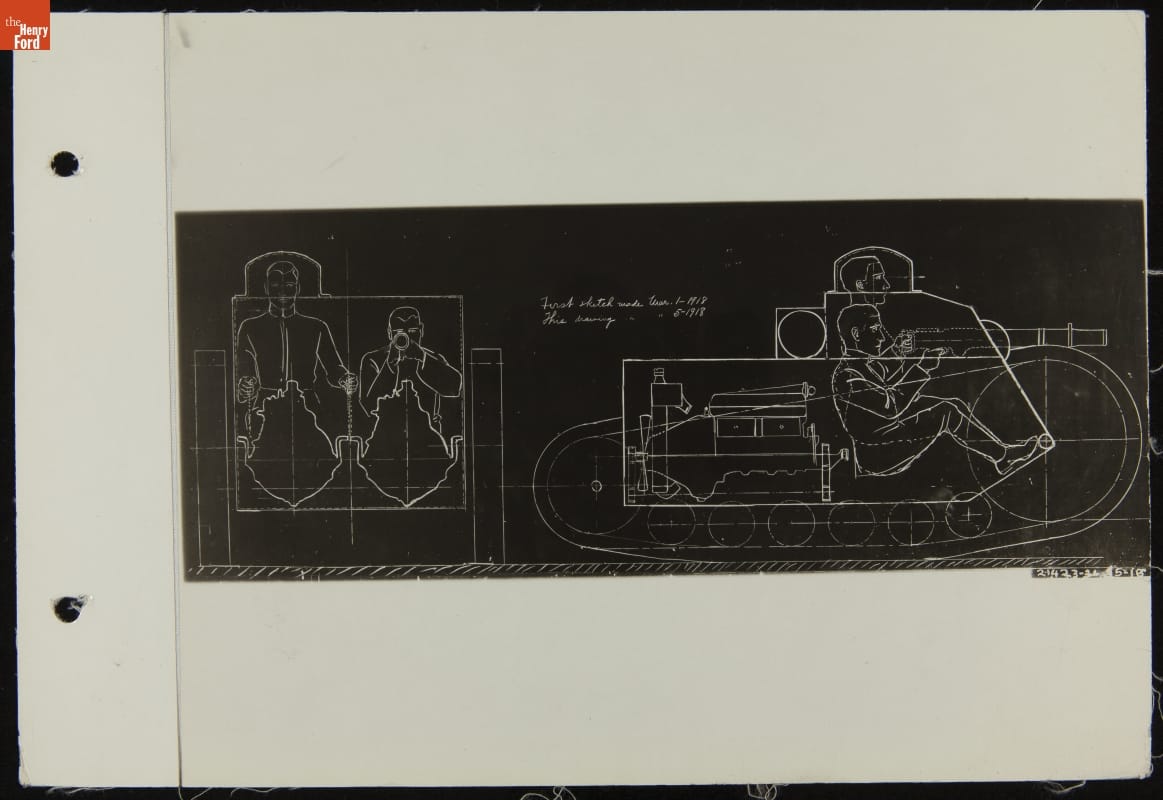
- Blackboard Drawing Showing Seated Figures in a Ford Tank, March 1918 - Tanks emerged during World War I in response to trenches, barbed wire, and machine guns. Their tracks -- rather than tires -- handled rough ground, and their armor protected against wire and gunfire. Ford designed a 2 1/2-ton, 2-man tank and sent several examples to France for testing. Results were encouraging, but the war ended before mass production could begin.
- March 06, 1918
- Collections - Artifact
Blackboard Drawing Showing Seated Figures in a Ford Tank, March 1918
Tanks emerged during World War I in response to trenches, barbed wire, and machine guns. Their tracks -- rather than tires -- handled rough ground, and their armor protected against wire and gunfire. Ford designed a 2 1/2-ton, 2-man tank and sent several examples to France for testing. Results were encouraging, but the war ended before mass production could begin.
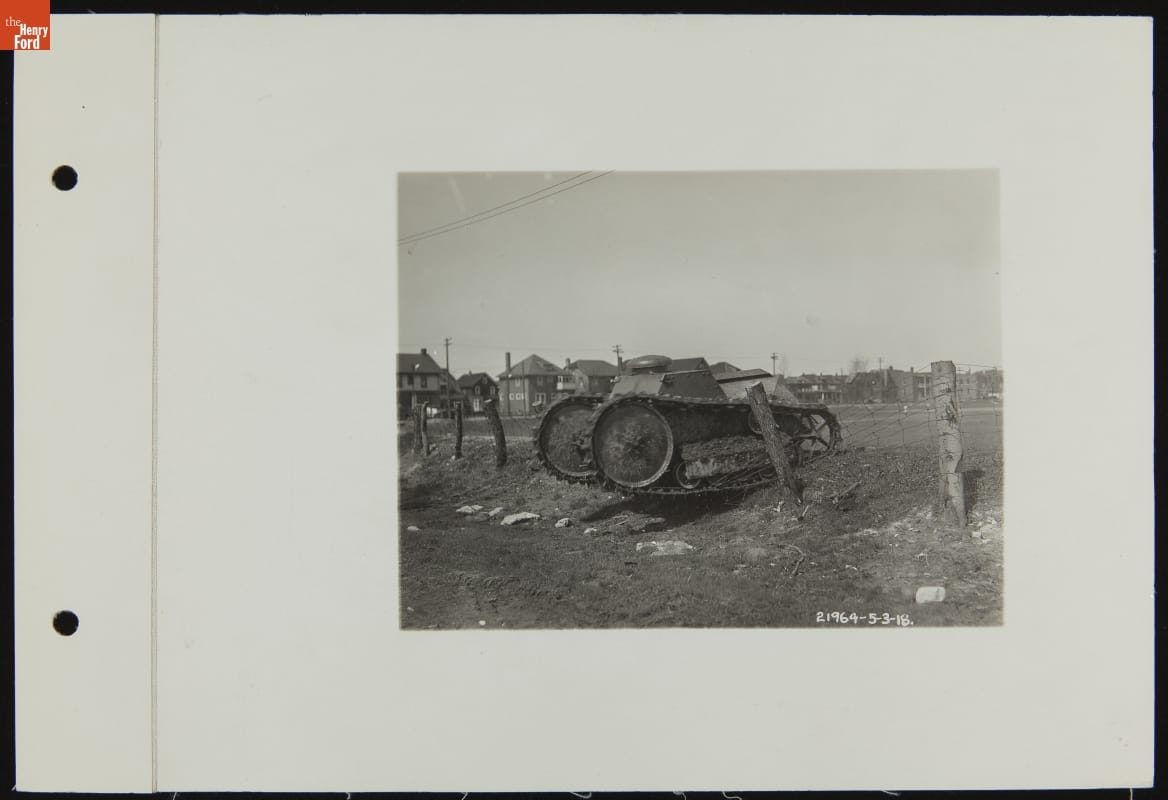
- First Ford Tank Being Tested on Barbed Wire Fence, May 1918 - Tanks emerged during World War I in response to trenches, barbed wire, and machine guns. Their tracks -- rather than tires -- handled rough ground, and their armor protected against wire and gunfire. Ford designed a 2 1/2-ton, 2-man tank and sent several examples to France for testing. Results were encouraging, but the war ended before mass production could begin.
- May 03, 1918
- Collections - Artifact
First Ford Tank Being Tested on Barbed Wire Fence, May 1918
Tanks emerged during World War I in response to trenches, barbed wire, and machine guns. Their tracks -- rather than tires -- handled rough ground, and their armor protected against wire and gunfire. Ford designed a 2 1/2-ton, 2-man tank and sent several examples to France for testing. Results were encouraging, but the war ended before mass production could begin.
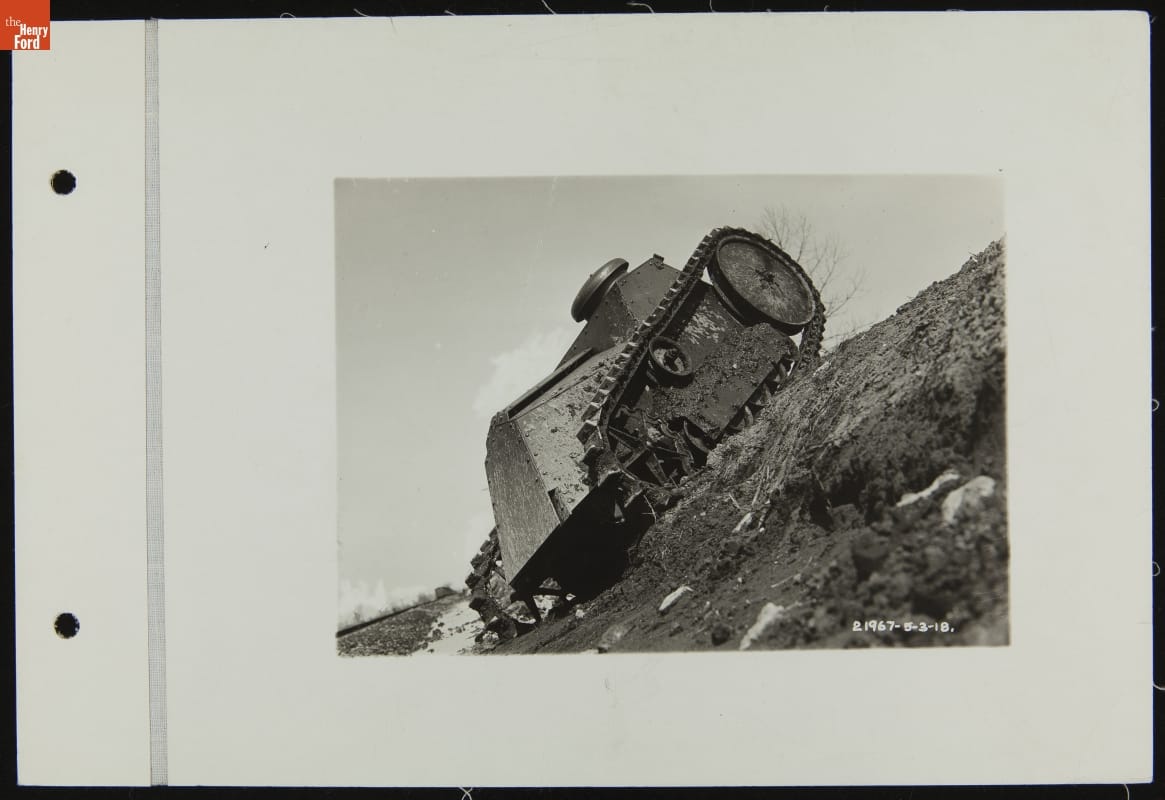
- First Ford Tank Being Tested on Muddy Embankment, May 1918 - Tanks emerged during World War I in response to trenches, barbed wire, and machine guns. Their tracks -- rather than tires -- handled rough ground, and their armor protected against wire and gunfire. Ford designed a 2 1/2-ton, 2-man tank and sent several examples to France for testing. Results were encouraging, but the war ended before mass production could begin.
- May 03, 1918
- Collections - Artifact
First Ford Tank Being Tested on Muddy Embankment, May 1918
Tanks emerged during World War I in response to trenches, barbed wire, and machine guns. Their tracks -- rather than tires -- handled rough ground, and their armor protected against wire and gunfire. Ford designed a 2 1/2-ton, 2-man tank and sent several examples to France for testing. Results were encouraging, but the war ended before mass production could begin.