
Search
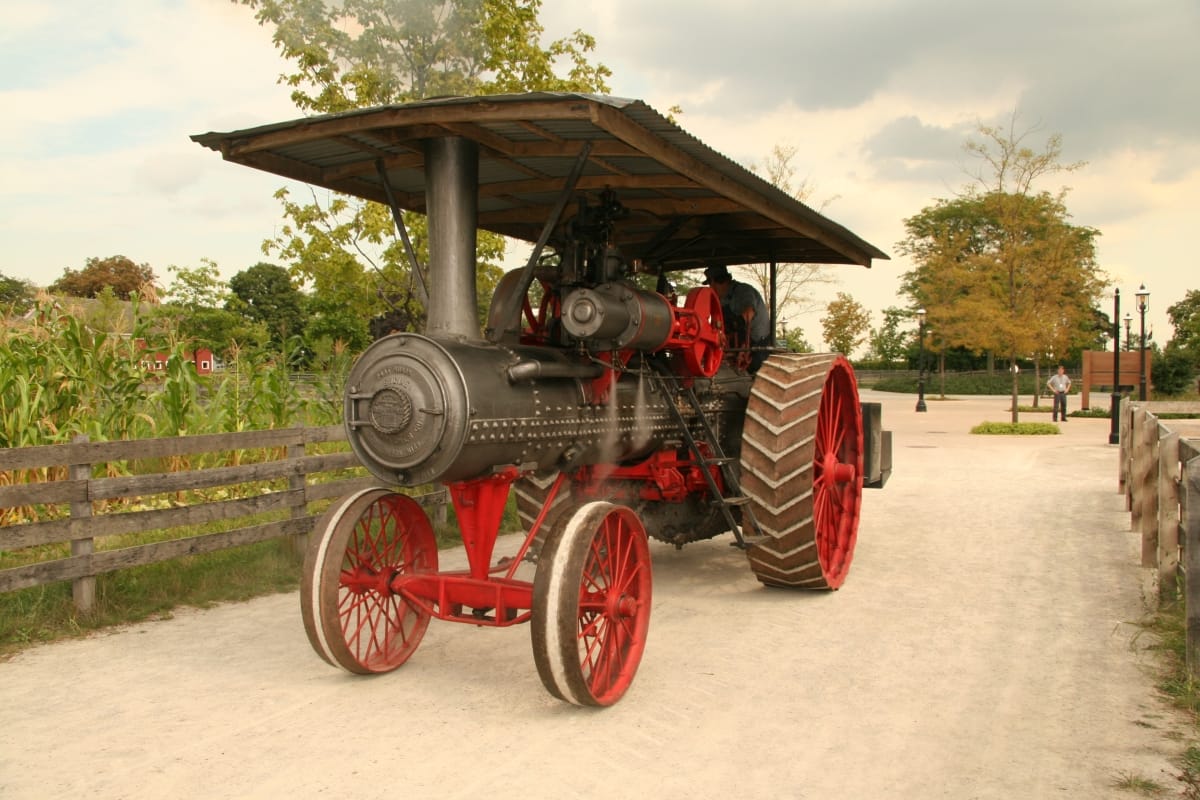
- Port Huron Steam Traction Engine, "Longfellow," 1916 - The late 19th to early 20th centuries saw huge steam engines like this used for threshing grain. They could move over the roads under their own power. Individual farmers generally did not own such machines. Rather, men made a business of moving from farm to farm, threshing grain during harvest time. Joseph Freund of Westphalia, Michigan, bought this machine in 1917 and used it to power a Port Huron "Rusher" thresher-separator in Clinton and Ionia Counties, Michigan.
- December 22, 1916
- Collections - Artifact
Port Huron Steam Traction Engine, "Longfellow," 1916
The late 19th to early 20th centuries saw huge steam engines like this used for threshing grain. They could move over the roads under their own power. Individual farmers generally did not own such machines. Rather, men made a business of moving from farm to farm, threshing grain during harvest time. Joseph Freund of Westphalia, Michigan, bought this machine in 1917 and used it to power a Port Huron "Rusher" thresher-separator in Clinton and Ionia Counties, Michigan.
- Threshing Scene, circa 1870 -
- circa 1870
- Collections - Artifact
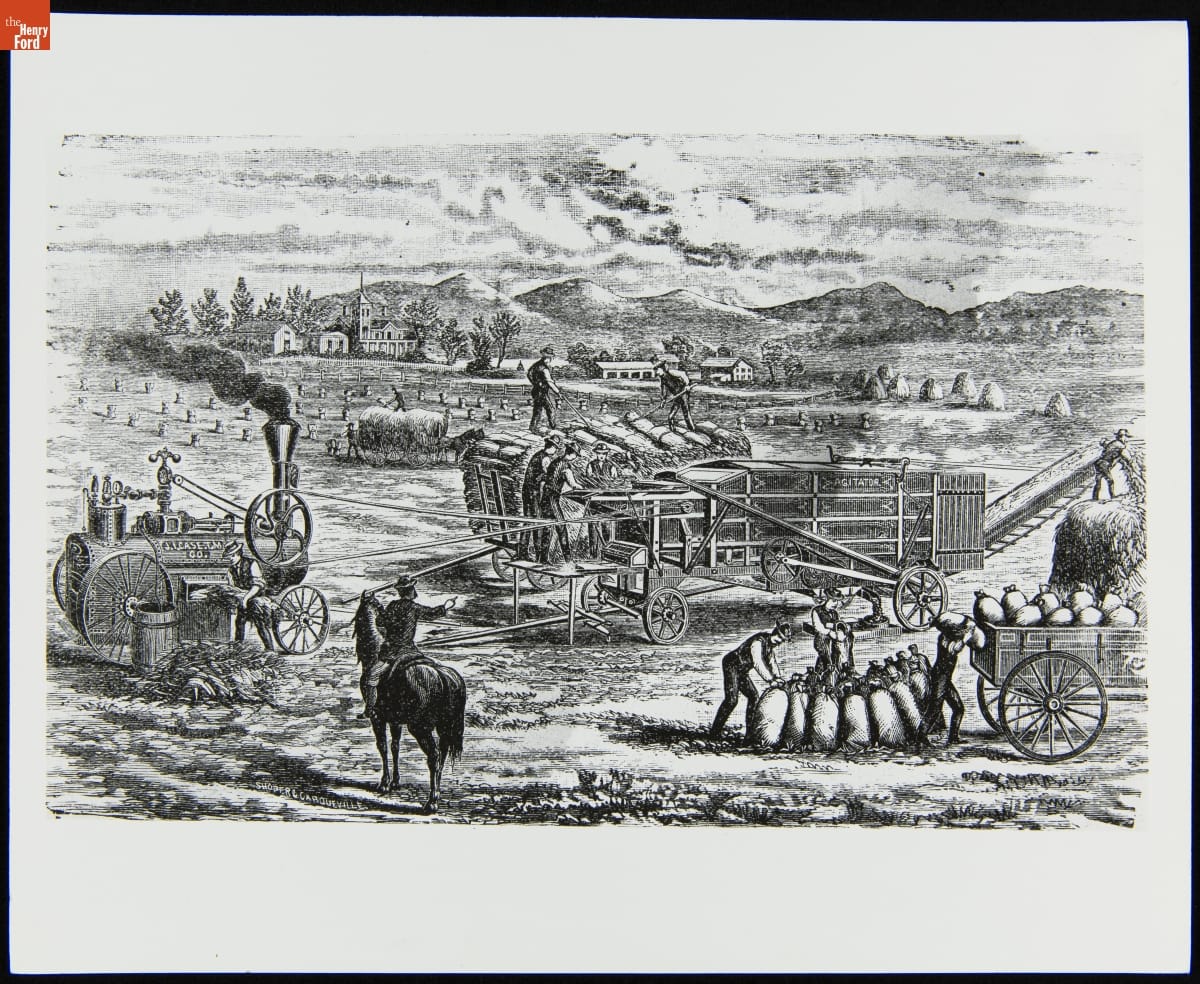
Threshing Scene, circa 1870
- Threshing at the Ford Homestead, Dearborn, Michigan, November 1936 -
- November 13, 1936
- Collections - Artifact
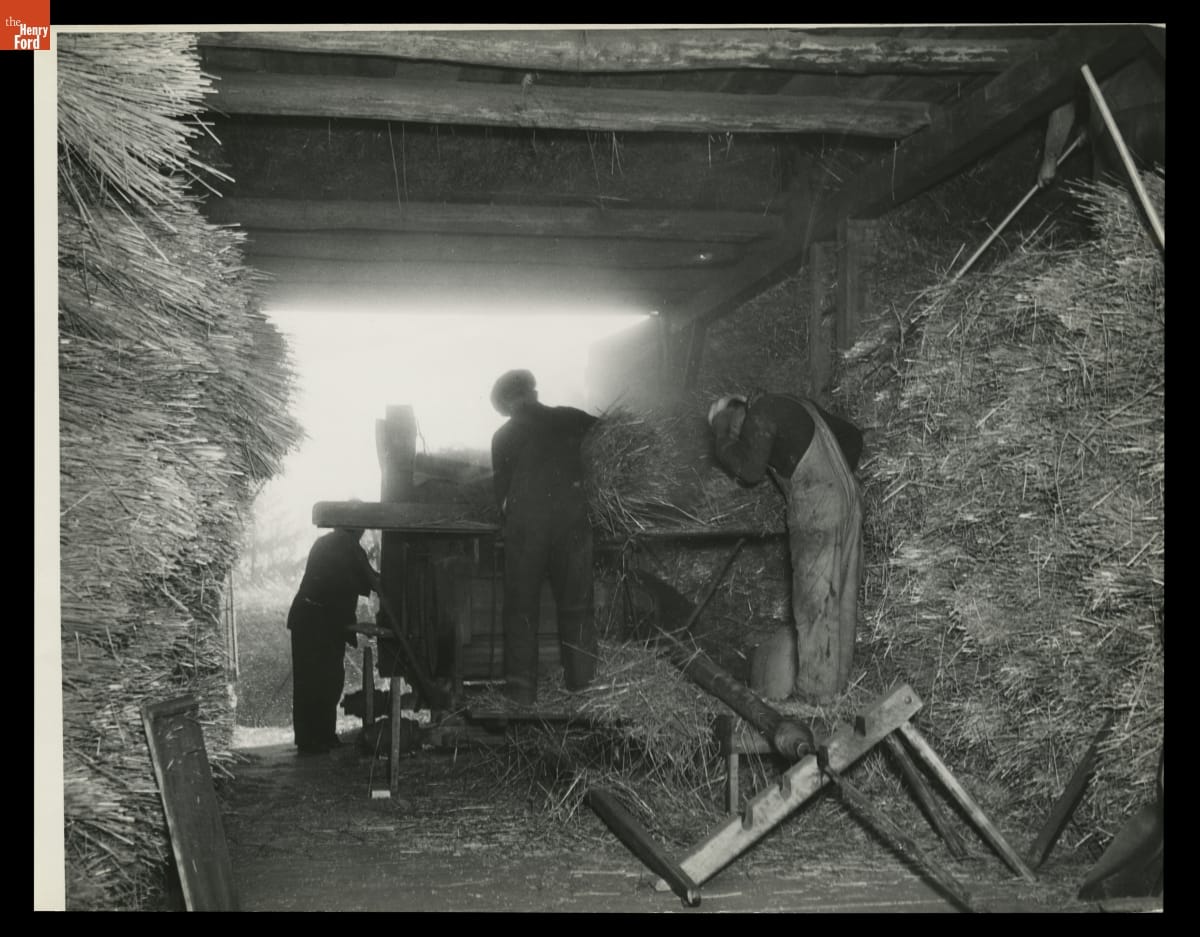
Threshing at the Ford Homestead, Dearborn, Michigan, November 1936
- Threshing at the Ford Homestead, Dearborn, Michigan, November 1936 -
- November 13, 1936
- Collections - Artifact
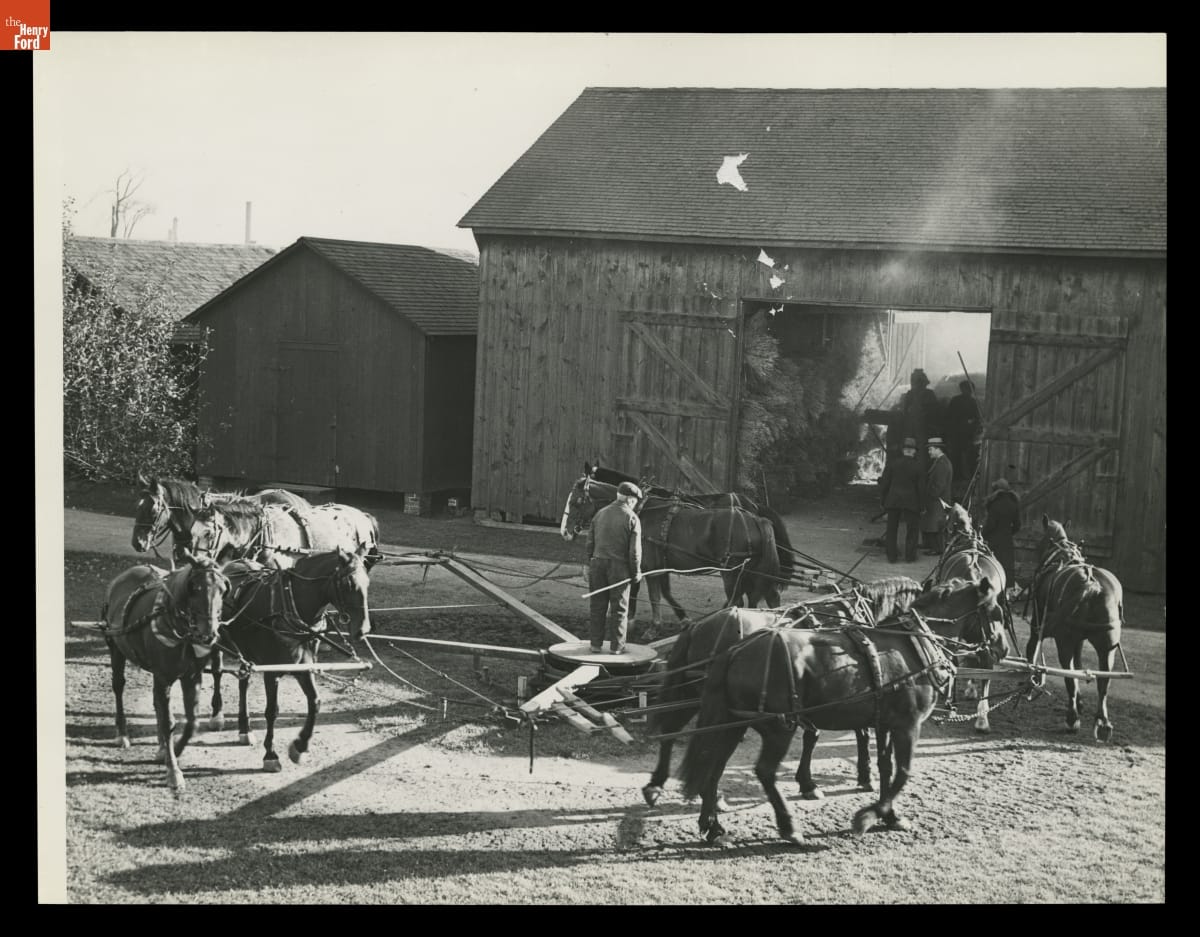
Threshing at the Ford Homestead, Dearborn, Michigan, November 1936
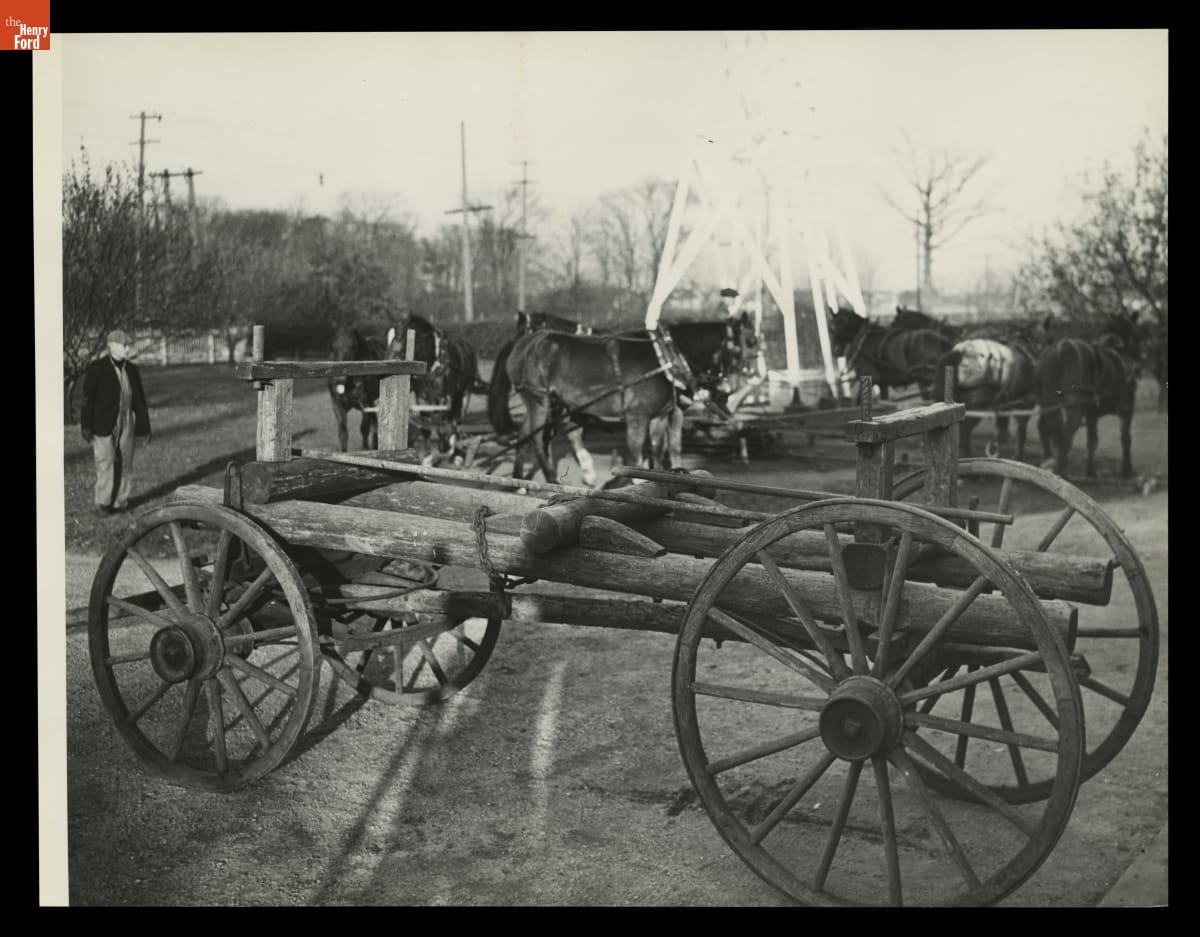
- Threshing at the Ford Homestead, Dearborn, Michigan, November 1936 - As farmers mechanized barn and farmyard work in the nineteenth century, they began to use stationary power sources. Some invested in "sweeps," which converted energy generated by horses walking in a circle into power to operate large machines like grain threshers or separators. Sweep operators hauled these devices on specially designed wagons from farm to farm during threshing season.
- November 13, 1936
- Collections - Artifact
Threshing at the Ford Homestead, Dearborn, Michigan, November 1936
As farmers mechanized barn and farmyard work in the nineteenth century, they began to use stationary power sources. Some invested in "sweeps," which converted energy generated by horses walking in a circle into power to operate large machines like grain threshers or separators. Sweep operators hauled these devices on specially designed wagons from farm to farm during threshing season.
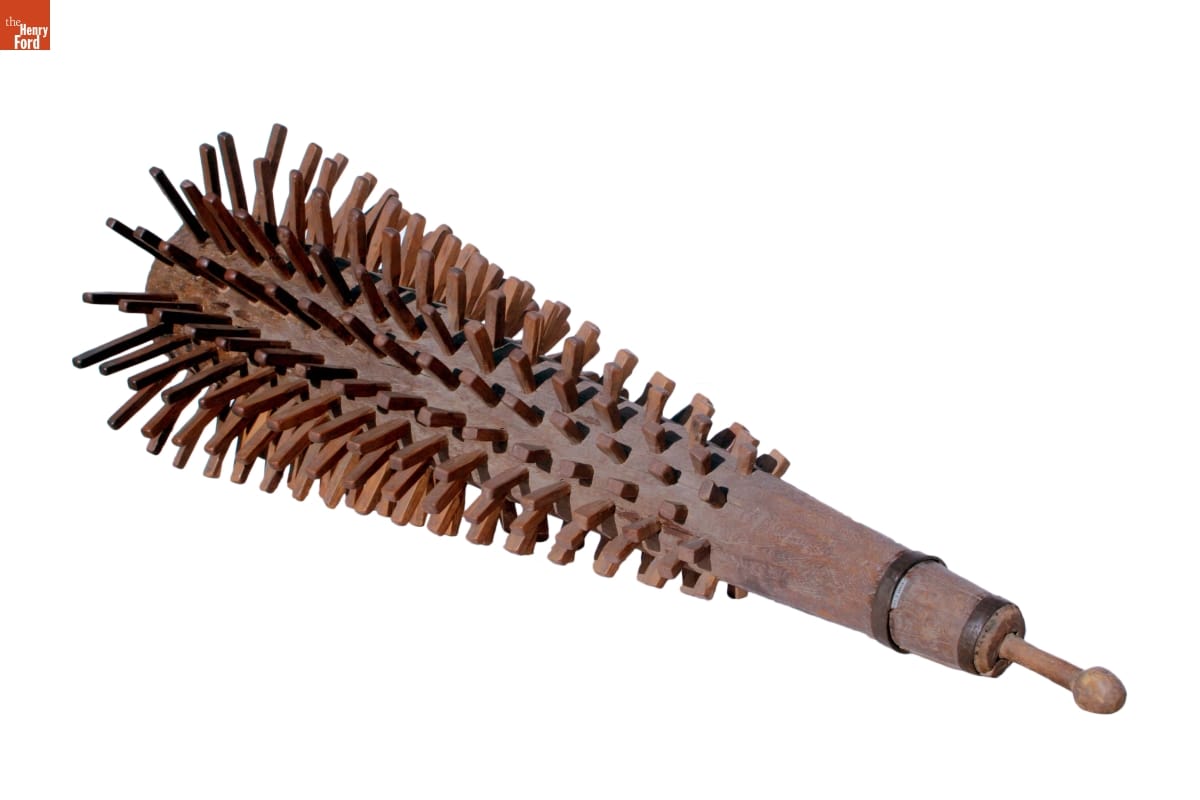
- Porcupine Thresher, circa 1820 - This conical "porcupine" thresher beat the grain with the blunt wooden pegs as it was pulled around in a circle on a barn's threshing floor. The small end of the thresher was attached to a pivot, and the horse pulled the large end. It was used by Dutch and German farmers in the Mohawk Valley west of Albany, New York.
- circa 1820
- Collections - Artifact
Porcupine Thresher, circa 1820
This conical "porcupine" thresher beat the grain with the blunt wooden pegs as it was pulled around in a circle on a barn's threshing floor. The small end of the thresher was attached to a pivot, and the horse pulled the large end. It was used by Dutch and German farmers in the Mohawk Valley west of Albany, New York.
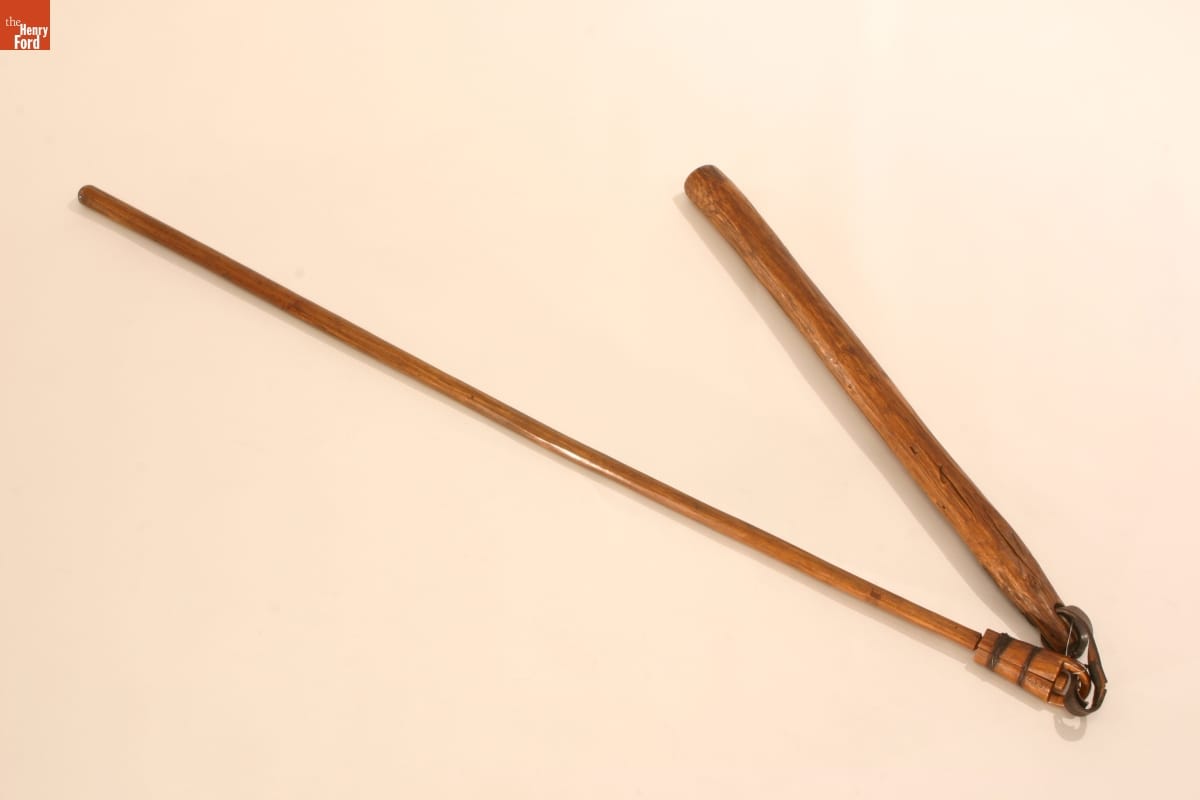
- Flail, circa 1850 - Farmers have used flails to thresh grain for thousands of years. This heavy, wooden club attached with a leather thong to a long handle was swung repeatedly against the harvested grain. This action separated the grains from the stalk. By the mid-1800s, innovative Americans began to patent mechanized threshing machines which replaced this laborious task.
- circa 1850
- Collections - Artifact
Flail, circa 1850
Farmers have used flails to thresh grain for thousands of years. This heavy, wooden club attached with a leather thong to a long handle was swung repeatedly against the harvested grain. This action separated the grains from the stalk. By the mid-1800s, innovative Americans began to patent mechanized threshing machines which replaced this laborious task.
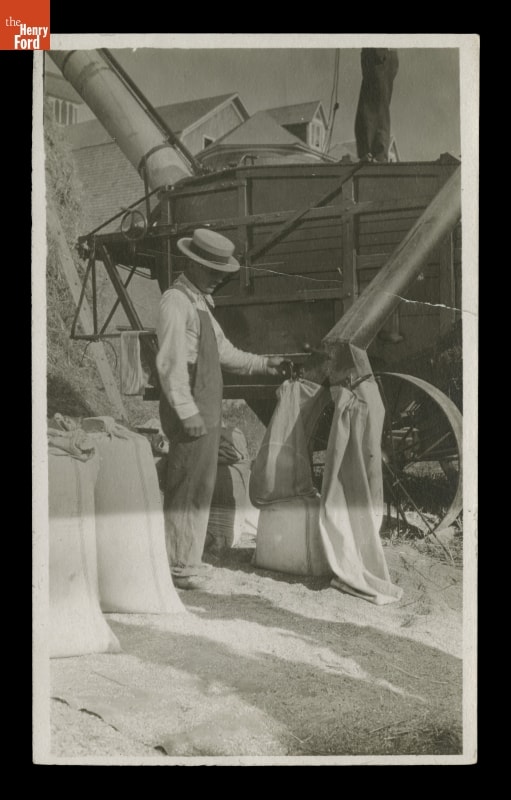
- Grain Harvest at Ford Farms, Southeastern Michigan, circa 1923 -
- circa 1923
- Collections - Artifact
Grain Harvest at Ford Farms, Southeastern Michigan, circa 1923
- Grain Harvest at Ford Farms, Southeastern Michigan, circa 1925 -
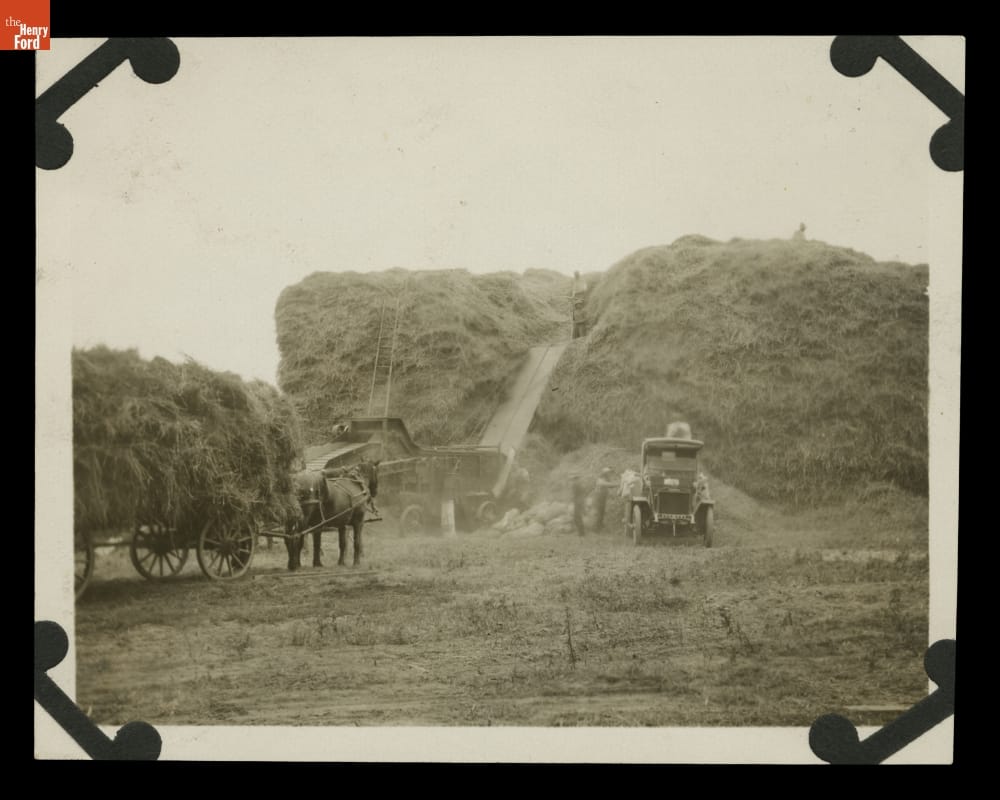
- circa 1925
- Collections - Artifact
Grain Harvest at Ford Farms, Southeastern Michigan, circa 1925
- Gray's Latest Improved Horse Powers Threshing Machines and Wood Sawing Machines, 1891 - As farmers mechanized barn and farmyard work in the nineteenth century, they began to use stationary power sources. These included devices such as treadmills that converted the movement of animals to drive a variety of agricultural machines. Enterprising manufacturers, like Vermont-based A.W. Gray's Sons, specialized in producing and selling these devices and the machines they were designed to power.
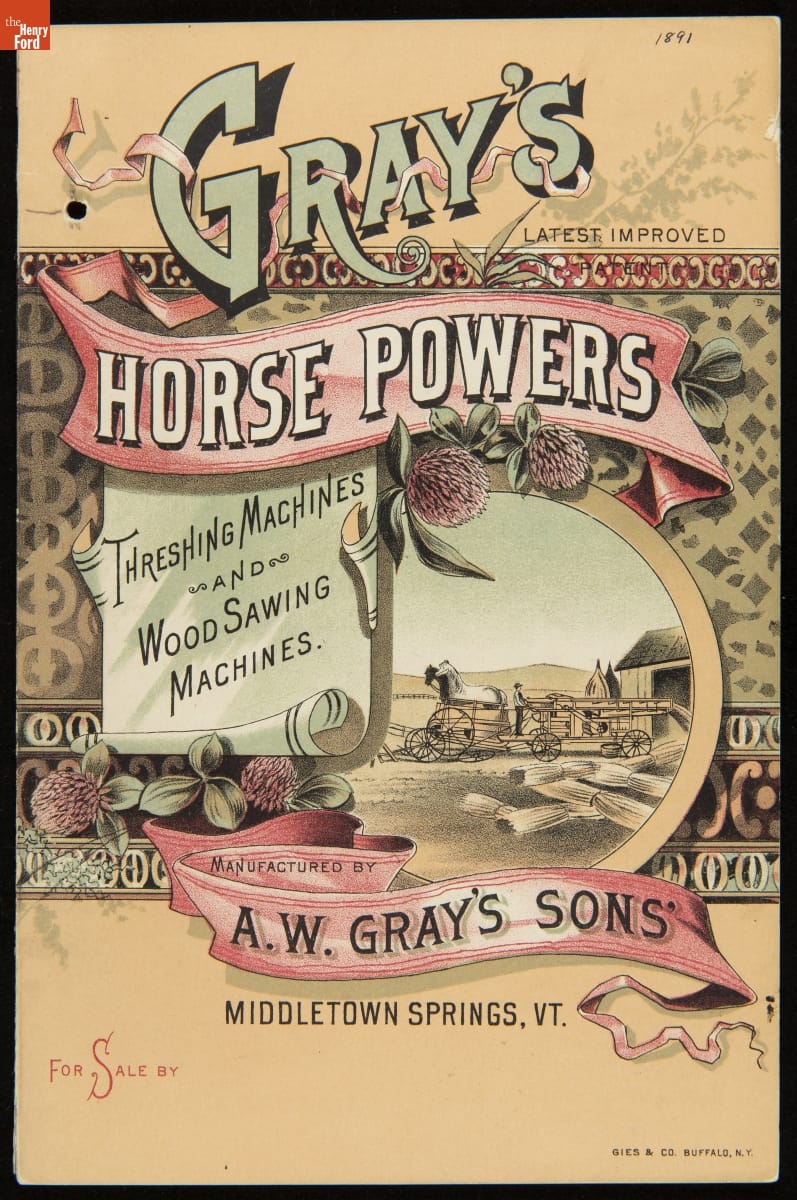
- 1891
- Collections - Artifact
Gray's Latest Improved Horse Powers Threshing Machines and Wood Sawing Machines, 1891
As farmers mechanized barn and farmyard work in the nineteenth century, they began to use stationary power sources. These included devices such as treadmills that converted the movement of animals to drive a variety of agricultural machines. Enterprising manufacturers, like Vermont-based A.W. Gray's Sons, specialized in producing and selling these devices and the machines they were designed to power.