
Search
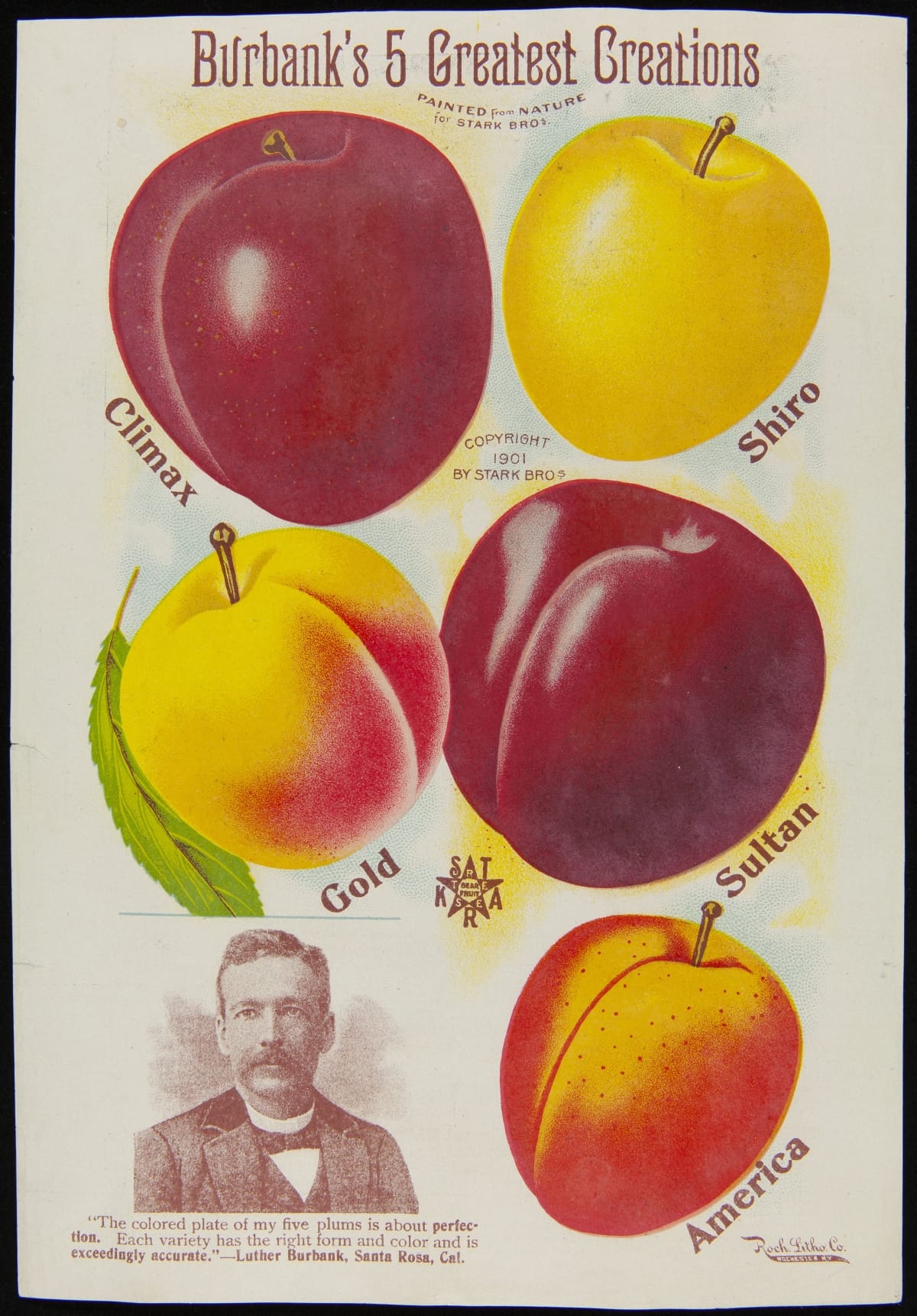
- Stark Bro's Nurseries & Orchards Company Trade Card, "Burbank's 5 Greatest Creations," 1901 - Luther Burbank's 1893 catalog, <em>New Creations in Fruits and Flowers</em>, captured the attention of established nursery businesses, including Stark Brothers Nurseries in Missouri. Clarence Stark traveled to California to see Burbank's creations for himself and purchased the rights to sell some of Burbank's plum varieties. This began an exclusive distribution partnership that continued after Burbank's death.
- 1901
- Collections - Artifact
Stark Bro's Nurseries & Orchards Company Trade Card, "Burbank's 5 Greatest Creations," 1901
Luther Burbank's 1893 catalog, New Creations in Fruits and Flowers, captured the attention of established nursery businesses, including Stark Brothers Nurseries in Missouri. Clarence Stark traveled to California to see Burbank's creations for himself and purchased the rights to sell some of Burbank's plum varieties. This began an exclusive distribution partnership that continued after Burbank's death.
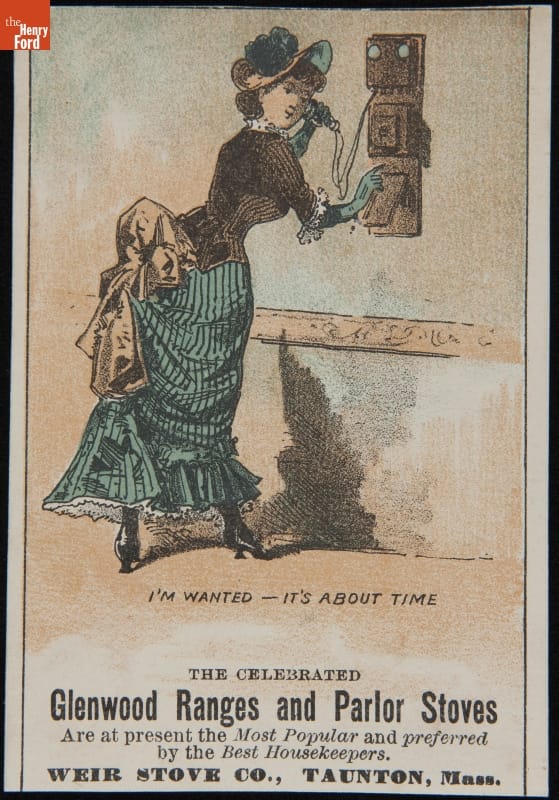
- Trade Card for Glenwood Ranges and Parlor Stoves, Taunton, Massachusetts, circa 1882 - In the last third of the nineteenth century, an unprecedented variety of consumer goods and services flooded the American market. Advertisers, armed with new methods of color printing, bombarded potential customers with trade cards. Americans enjoyed and often saved the vibrant little advertisements found in product packages or distributed by local merchants. Many survive as historical records of commercialism in the United States.
- circa 1882
- Collections - Artifact
Trade Card for Glenwood Ranges and Parlor Stoves, Taunton, Massachusetts, circa 1882
In the last third of the nineteenth century, an unprecedented variety of consumer goods and services flooded the American market. Advertisers, armed with new methods of color printing, bombarded potential customers with trade cards. Americans enjoyed and often saved the vibrant little advertisements found in product packages or distributed by local merchants. Many survive as historical records of commercialism in the United States.
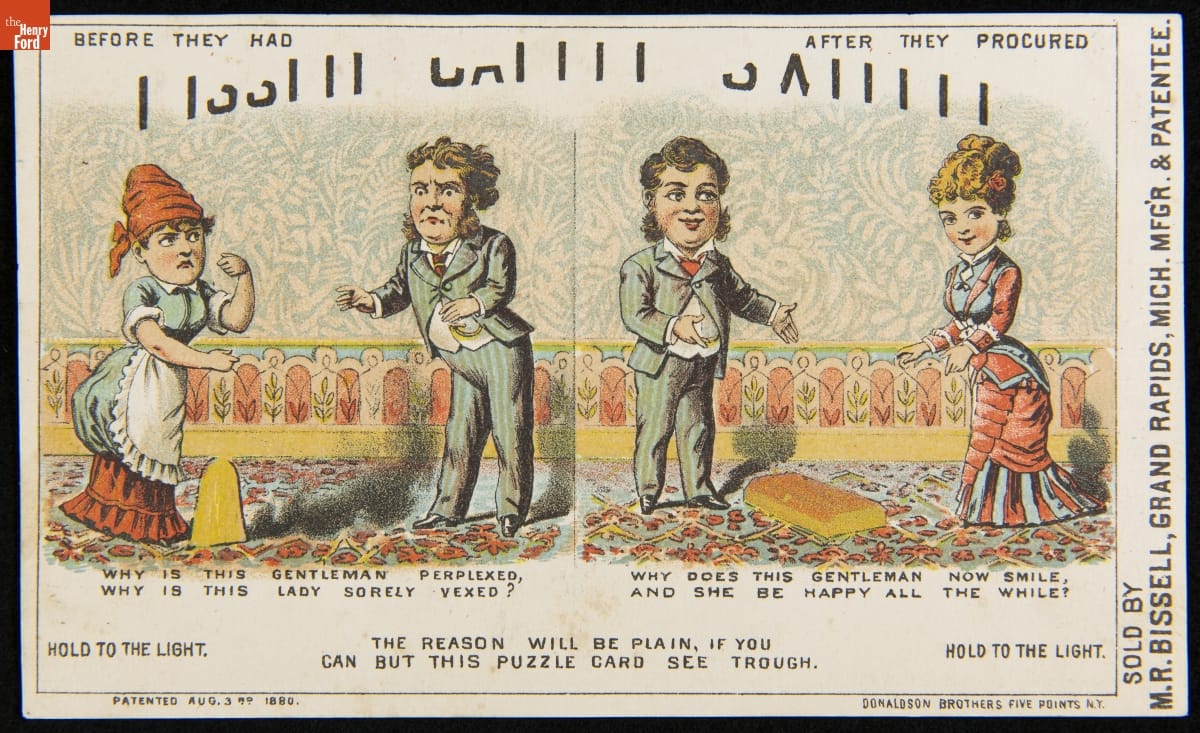
- Trade Card for Bissell Carpet Sweeper, circa 1880 - In the last third of the nineteenth century, an unprecedented variety of consumer goods flooded the American market. Some enterprising advertisers sought to distinguish their products from the competition by distributing trade cards. Special versions revealed hidden images and words when held to the light. Americans enjoyed and often saved the popular little advertisements, which survive as historical records of consumerism in the United States.
- circa 1880
- Collections - Artifact
Trade Card for Bissell Carpet Sweeper, circa 1880
In the last third of the nineteenth century, an unprecedented variety of consumer goods flooded the American market. Some enterprising advertisers sought to distinguish their products from the competition by distributing trade cards. Special versions revealed hidden images and words when held to the light. Americans enjoyed and often saved the popular little advertisements, which survive as historical records of consumerism in the United States.
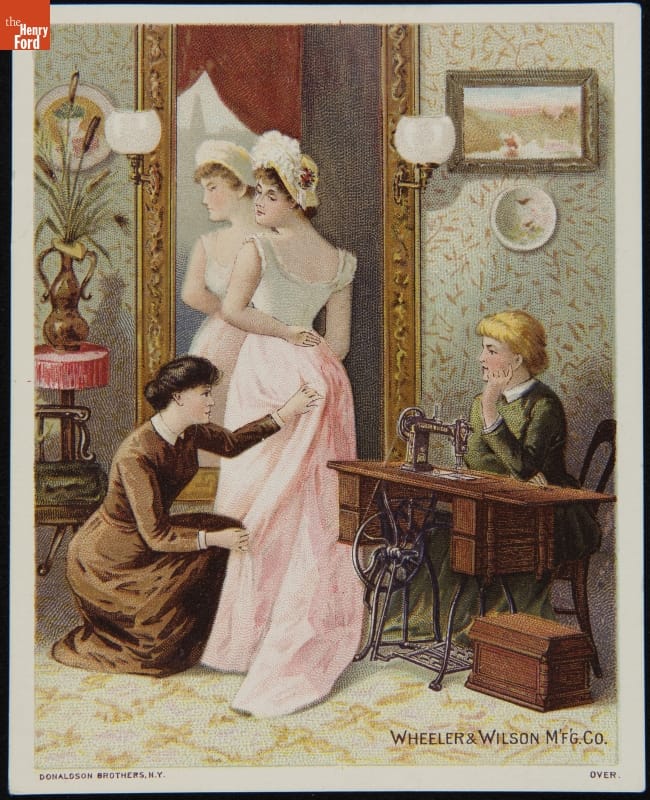
- Trade Card for Wheeler & Wilson's New High-Arm Family Sewing Machine, the "No. 9," circa 1890 - As color printing gained momentum in the late 19th century, trade cards became a major means of advertising goods and services. Americans enjoyed and often saved the little advertisements found in product packages or distributed by local merchants. This trade card advertises products available from Wheeler & Wilson Manufacturing Company.
- circa 1890
- Collections - Artifact
Trade Card for Wheeler & Wilson's New High-Arm Family Sewing Machine, the "No. 9," circa 1890
As color printing gained momentum in the late 19th century, trade cards became a major means of advertising goods and services. Americans enjoyed and often saved the little advertisements found in product packages or distributed by local merchants. This trade card advertises products available from Wheeler & Wilson Manufacturing Company.
- Trade Card for The Gem Freezer, "The Best in the World," 1887-1910 -
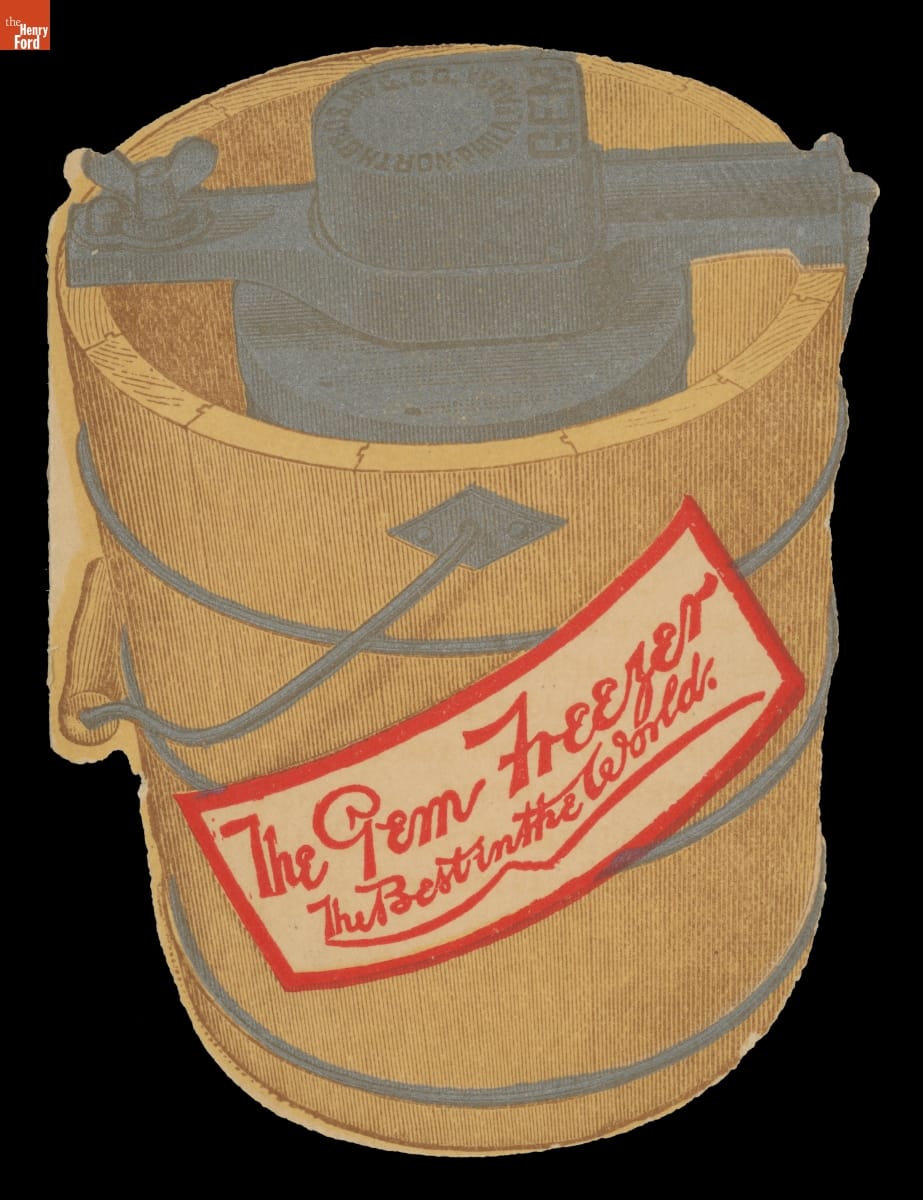
- 1887-1910
- Collections - Artifact
Trade Card for The Gem Freezer, "The Best in the World," 1887-1910
- Trade Card for the Tahoe Inn, circa 1945 -
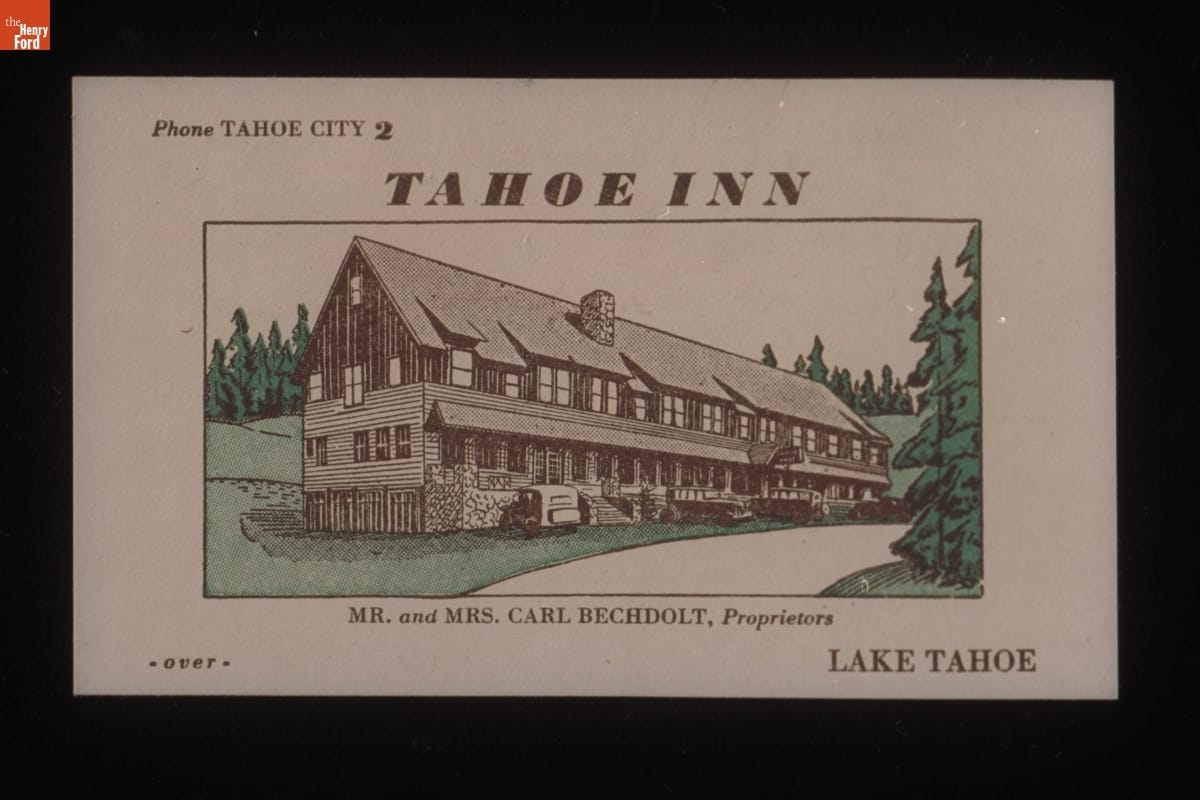
- circa 1945
- Collections - Artifact
Trade Card for the Tahoe Inn, circa 1945
- Trade Card for Singer Sewing Machine, "Spain (Sevilla)," 1892 - In the last third of the nineteenth century, an unprecedented variety of consumer goods and services flooded the American market. Advertisers, armed with new methods of color printing, bombarded potential customers with trade cards. Americans enjoyed and often saved the vibrant little advertisements found in product packages or distributed by local merchants. Many survive as historical records of commercialism in the United States.
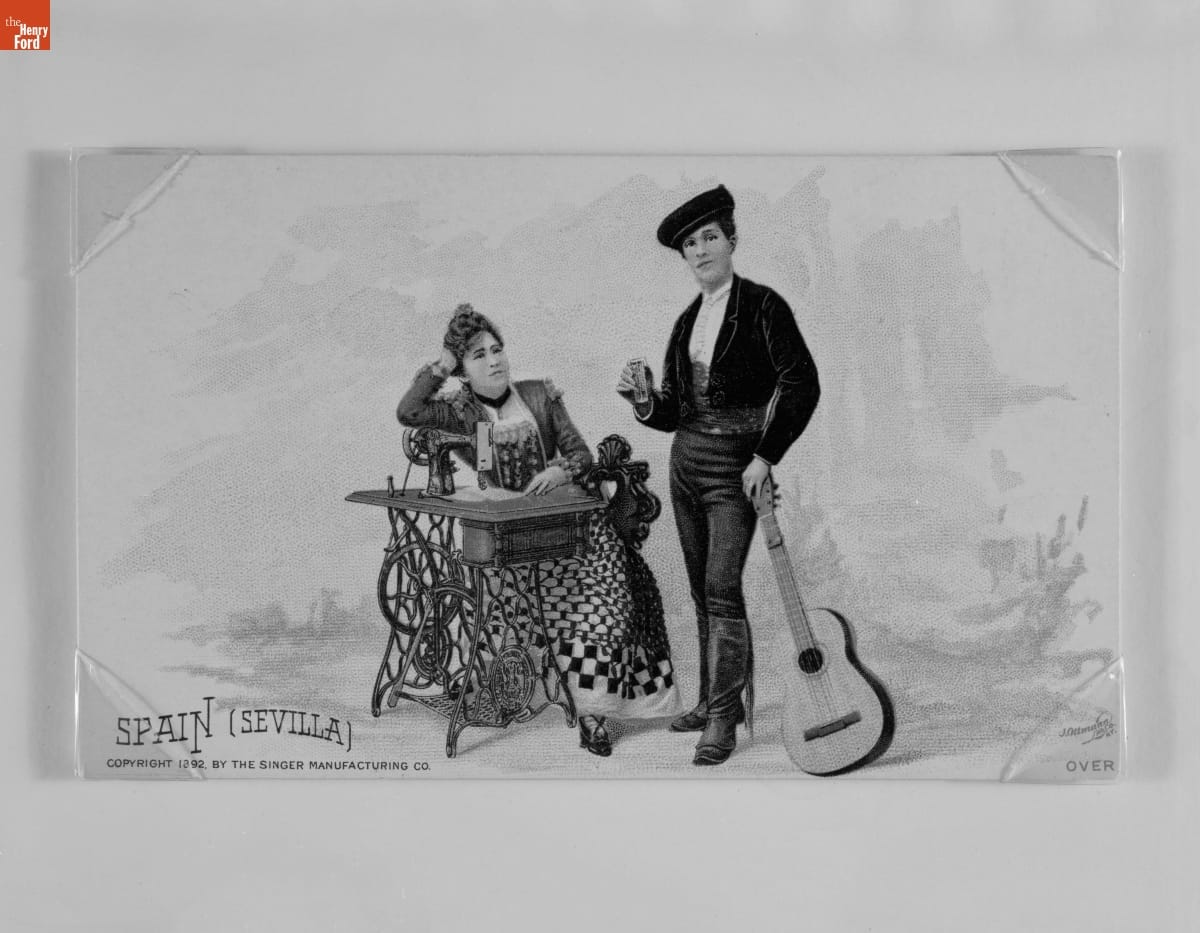
- 1892
- Collections - Artifact
Trade Card for Singer Sewing Machine, "Spain (Sevilla)," 1892
In the last third of the nineteenth century, an unprecedented variety of consumer goods and services flooded the American market. Advertisers, armed with new methods of color printing, bombarded potential customers with trade cards. Americans enjoyed and often saved the vibrant little advertisements found in product packages or distributed by local merchants. Many survive as historical records of commercialism in the United States.
- Trade Card for Hoyt's German Cologne and Rubifoam, 1880-1900 - In the last third of the nineteenth century, an unprecedented variety of consumer goods and services flooded the American market. Advertisers, armed with new methods of color printing, bombarded potential customers with trade cards. Americans enjoyed and often saved the vibrant little advertisements found in product packages or distributed by local merchants. Many survive as historical records of commercialism in the United States.
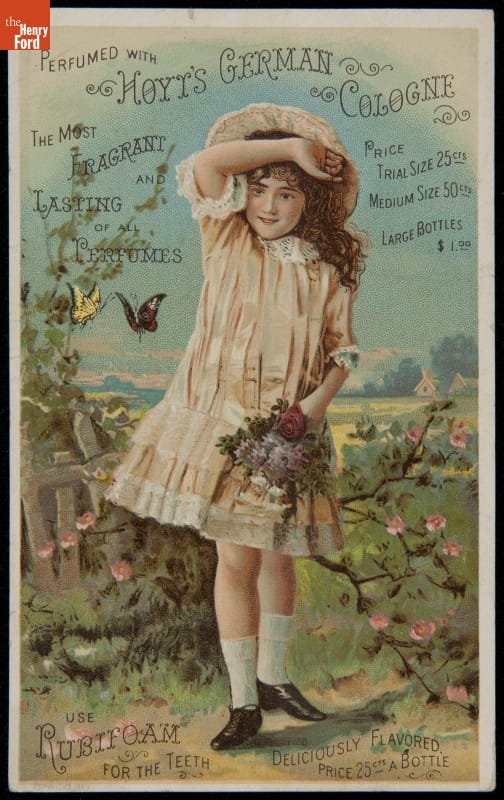
- 1880-1900
- Collections - Artifact
Trade Card for Hoyt's German Cologne and Rubifoam, 1880-1900
In the last third of the nineteenth century, an unprecedented variety of consumer goods and services flooded the American market. Advertisers, armed with new methods of color printing, bombarded potential customers with trade cards. Americans enjoyed and often saved the vibrant little advertisements found in product packages or distributed by local merchants. Many survive as historical records of commercialism in the United States.
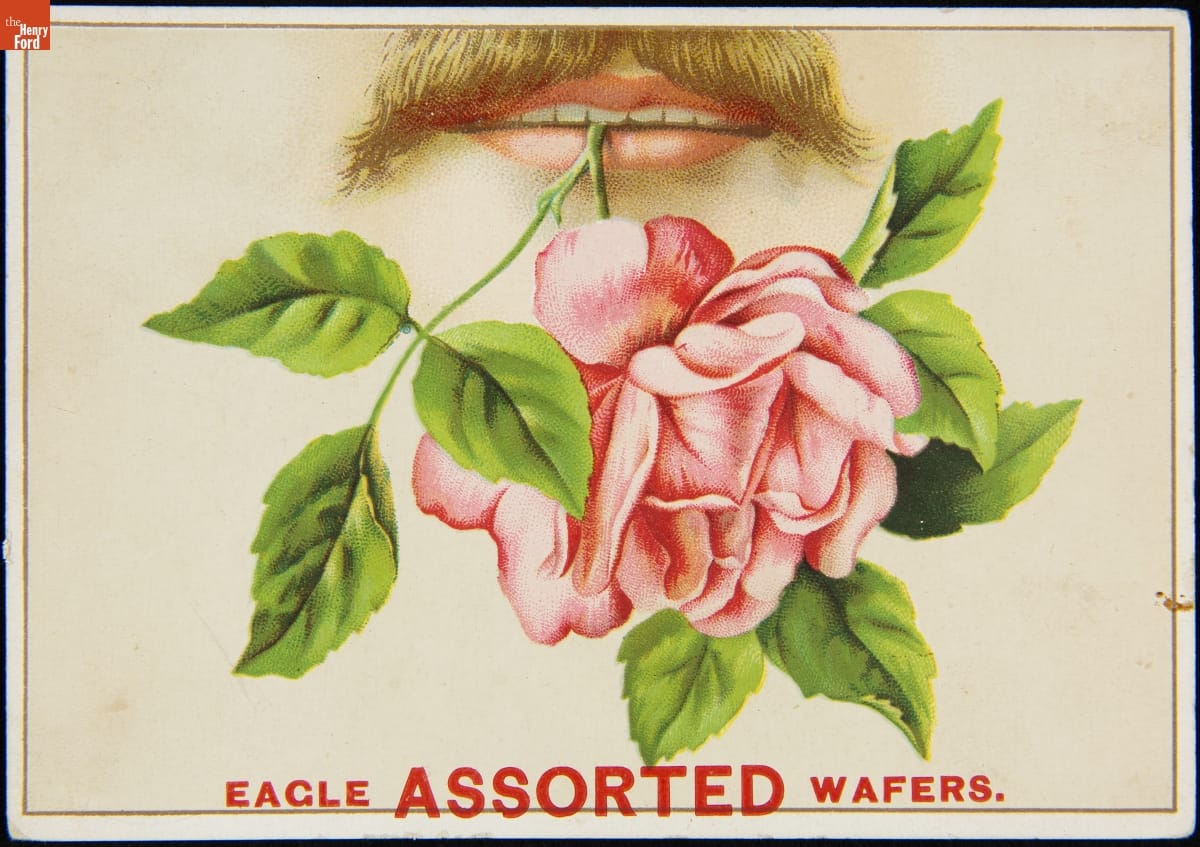
- Trade Card for Eagle Assorted Wafers, 1880-1900 - In the last third of the nineteenth century, an unprecedented variety of consumer goods and services flooded the American market. Advertisers, armed with new methods of color printing, bombarded potential customers with trade cards. Americans enjoyed and often saved the vibrant little advertisements found in product packages or distributed by local merchants. Many survive as historical records of commercialism in the United States.
- 1880-1900
- Collections - Artifact
Trade Card for Eagle Assorted Wafers, 1880-1900
In the last third of the nineteenth century, an unprecedented variety of consumer goods and services flooded the American market. Advertisers, armed with new methods of color printing, bombarded potential customers with trade cards. Americans enjoyed and often saved the vibrant little advertisements found in product packages or distributed by local merchants. Many survive as historical records of commercialism in the United States.
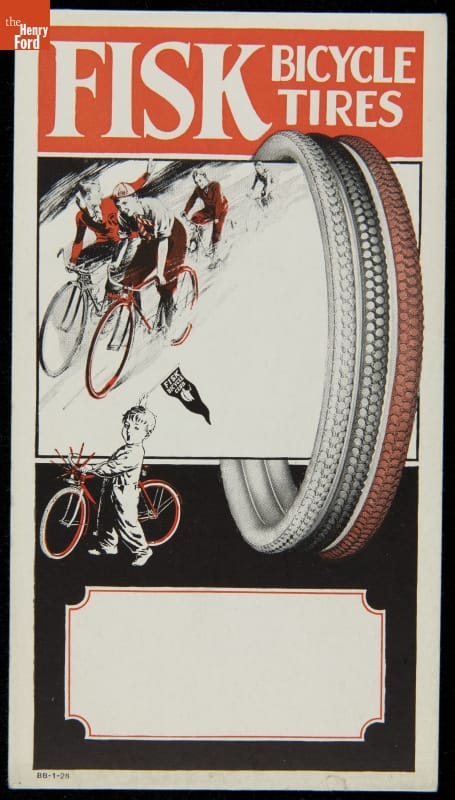
- Trade Card for Fisk Bicycle Tires, circa 1938 - In the last third of the nineteenth century, American consumers could choose from an unprecedented variety of goods and services. Seeking to distinguish certain products and businesses from the competition, advertisers began to print and distribute trade cards. Though the popularity of these cards diminished after 1900, some companies employed the informative, often vibrant little advertisements well into the twentieth century.
- circa 1938
- Collections - Artifact
Trade Card for Fisk Bicycle Tires, circa 1938
In the last third of the nineteenth century, American consumers could choose from an unprecedented variety of goods and services. Seeking to distinguish certain products and businesses from the competition, advertisers began to print and distribute trade cards. Though the popularity of these cards diminished after 1900, some companies employed the informative, often vibrant little advertisements well into the twentieth century.